Lighting and Reflection question

Kim

Suspended / Banned
Messages
759
Name
Kim
Edit My Images
Yes
Not a question for me but for a friend.
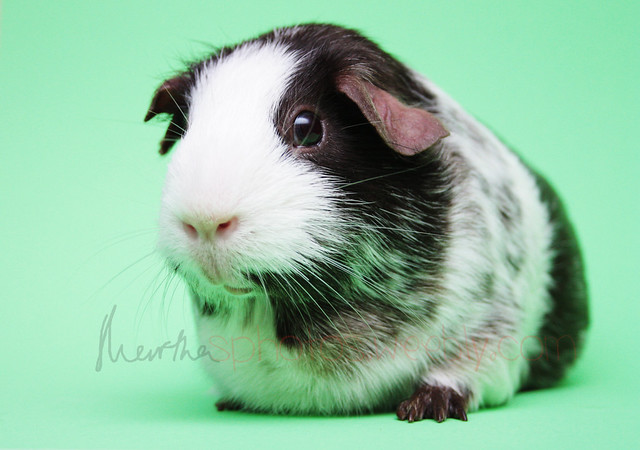
She shoots small animals and up til now has been using a white backdrop.
She has been playing with coloured backdrops but it getting the colour refelcting back onto her subjuects.

When I asked her what her set up was she replied: background is boards in an L shape, then the card curved to the L shape... lighting is just off my flash gun positioned ontop of the camera, facing slightly backwards up at the ceiling.

I am no expert when it comes to lighting so I thought i would ask those who are.

Thankies in advance.
 
The experts will be along in a moment - but until they arrive I'll try to lend a hand :)

Is the actual colour of the BG giving the subject a cast, or is it the bounced flash (you say up at the ceiling, backwards) giving it a cast? Some example photos would be nice to help...

I probably don't know the problem, but one solution will be to use two seperate light sources, one lighting the background, the other on the subject. You can not only control the exposure of the background (in relation to the exposure on the subject), but you can also control just how far away from the background the subject is because the subject can be followed by a light.

Do you know how big her curved background is?
 
Last edited:
Sounds to me like it is light bouncing back off the backdrop. Unless the backdrop is a long way behind the subject you'll always have this problem with the flash on camera. The best solution would be to get the flash off camera.
 
The backrgound will inevitably reflect off the subject. You can reduce it by cutting out any area of colour that doesn't appear in the shot and moving the background back, but it will always be there.
 
Hi, thank you Kim for posting here, I was having a nightmare explaining what was wrong.

Here is what is wrong, and I do think as you have said that it is the way I have lit the photo that is the problem, and the light is bouncing off my background onto the subject. It's only doing it to their underside though...


Cherry in the Green by Vi27, on Flickr

This one is perhaps the worst effected, the green has almost taken over the subject. It's a real shame as otherwise i really love the backgrounds.

I am using A2 card, so it's not a very large area I am working on. I don't know how I could possibly get them further away from the background, seeing as it's the bottom that is being reflected, not the back...

Again thank you Kim for asking, and to those who have given answers already xx
 
Last edited:
Well there's your problem...

The light from your flash is bouncing down onto the 'floor' and then bouncing back up from the floor, picking up the colour as it goes (reflected light aquires the colour of whatever it bounces off)

Take your flash off the camera, and maybe use a white floor? :thumbs:
 
Where would I position the flash off camera?

I usually use a white or a pale lilac coloured background and obviously don't get this problem, but I'd really like to know how to solve this so I can use these coloured backgrounds.... I can't see how using a white floor would get rid of this and still enable me to have the photo set up as the above one is... I'd still like all of the background to be one solid colour..

Thanks x
 
Unless someone else has an idea, I'm not sure you could do this with a coloured floor, and not get coloured reflected light, not on this scale anyway. Maybe use of a light tent would work?
 
The backrgound will inevitably reflect off the subject. You can reduce it by cutting out any area of colour that doesn't appear in the shot and moving the background back, but it will always be there.
This is the right answer, all other answers are wrong and won't help.

There are just 2 ways of getting around this problem, other than the obvious one of not using a coloured product base.

1. Sit the subject on a glass shelf suspended well above the base. Depending on the angle at which light hits the base, this may or may not be a complete answer - but it's the best there is
2. Photograph it on either a white or a black base, cut it out in PS and stick it on a background of your choice, then add a shadow to make it look real.
 
This is the right answer, all other answers are wrong and won't help.

Garry darling, you have a habit of telling people they're wrong but without explaining why. My answer was 'right' in explaining why this is happening, as far as I know. ie the light is bouncing up from the floor and picking up the colour as it does so. I bow to your superior knowledge of course but c'mon, it's incredibly arrogant to just say everyone is wrong and you're right without at least saying why. I'm not saying you're wrong, of course not but its the way you say it, perhaps a little more tact wouldn't go amiss?

p.s. I'm still waiting to find out why you say I can't use a 580EX2 Speedlite in a 80x120 Softbox?? Been doing it for over 18 months and it works lovely as far as my uneducated eyes can tell?
 
Last edited:
Ste Manns said:
Garry darling, you have a habit of telling people they're wrong but without explaining why. My answer was 'right' in explaining why this is happening, as far as I know. ie the light is bouncing up from the floor and picking up the colour as it does so. I bow to your superior knowledge of course but c'mon, it's incredibly arrogant to just say everyone is wrong and you're right without at least saying why. I'm not saying you're wrong, of course not but its the way you say it, perhaps a little more tact wouldn't go amiss?

p.s. I'm still waiting to find out why you say I can't use a 580EX2 Speedlite in a 80x120 Softbox?? Been doing it for over 18 months and it works lovely as far as my uneducated eyes can tell?

+1
 
Garry darling, you have a habit of telling people they're wrong but without explaining why. My answer was 'right' in explaining why this is happening, as far as I know. ie the light is bouncing up from the floor and picking up the colour as it does so. I bow to your superior knowledge of course but c'mon, it's incredibly arrogant to just say everyone is wrong and you're right without at least saying why. I'm not saying you're wrong, of course not but its the way you say it, perhaps a little more tact wouldn't go amiss?

p.s. I'm still waiting to find out why you say I can't use a 580EX2 Speedlite in a 80x120 Softbox?? Been doing it for over 18 months and it works lovely as far as my uneducated eyes can tell?

I didn't say that everyone else was wrong and that I was right, what I actually said was that everyone else was wrong and that Richard was right. And I didn't bother to explain why he was right because he had already given the reasons
The backrgound will inevitably reflect off the subject. You can reduce it by cutting out any area of colour that doesn't appear in the shot and moving the background back, but it will always be there.
p.s. I'm still waiting to find out why you say I can't use a 580EX2 Speedlite in a 80x120 Softbox?? Been doing it for over 18 months and it works lovely as far as my uneducated eyes can tell?
If you're using more than one you can point them in different directions so that the light bounces off of the sides instead of just hitting (some of) the inner diffuser. If you're only using 1 then the light won't distribute evenly, although up to a point you can improve things by using a stofen or similar diffuser.

If you're happy with the results then that's all that matters, but if you compared the eveness of the light to that of a studio flash or to 3 heads inside the softbox, you'd see a big difference.
 
I will give a softbox a try, and also see if I can lift the subject onto a glass shelf.

Thank you very much for ALL answers, I appreciate that you have taken the time to try and help xx
 
So you're saying the colour being reflected to the underside of the Guinea pig is coming from the background? I would say that's light picking up colour after reflecting off the floor having already bounced off of whatever surface it was bounced off originally. I can't see how I'm "wrong" and being unhelpful :thinking:

The speedlite in a softbox isn't really related to this thread, sorry to OP for raising it. That said, I'm using a double diffused softbox Garry, yeah I'd be prepared to agree it will be better to use a conventional studio head with it, but it does work with a speedlite, quite well in fact, the statement "it can't work" is just wrong. A better statement might have been "it would be better to use the type of light it was designed for, because of...blah...blah"
 
So you're saying the colour being reflected to the underside of the Guinea pig is coming from the background? I would say that's light picking up colour after reflecting off the floor having already bounced off of whatever surface it was bounced off originally. I can't see how I'm "wrong" and being unhelpful :thinking:

The speedlite in a softbox isn't really related to this thread, sorry to OP for raising it. That said, I'm using a double diffused softbox Garry, yeah I'd be prepared to agree it will be better to use a conventional studio head with it, but it does work with a speedlite, quite well in fact, the statement "it can't work" is just wrong. A better statement might have been "it would be better to use the type of light it was designed for, because of...blah...blah"
The 'floor' and the 'background' are really just different names for the same thing when the background is also the floor of the product, and as Richard has already explained, light will always reflect from any adjacent surface onto the subject. In fact, it will always reflect whether it's adjacent or not, it's just a question of degree. In this case, the reflected light is green because the product floor is green, which filters out all visible light except green. By placing the subject on a glass shelf as I suggested, the light has further to travel from the coloured product base (floor) and so will have less effect.

You get exactly the same effect if you photograph someone laying on grass. It's inevitable.
 
Last edited:
Garry Edwards said:
The 'floor' and the 'background' are really just different names for the same thing when the background is also the floor of the product, and as Richard has already explained, light will always reflect from any adjacent surface onto the subject. In fact, it will always reflect whether it's adjacent or not, it's just a question of degree. In this case, the reflected light is green because the product floor is green, which filters out all visible light except green.

You get exactly the same effect if you photograph someone laying on grass. It's inevitable.

So, in essence, Ste was also correct.
 
I'm sorry Garry, it sounds like I'm being argumentative and I'm not.

Isn't that the same as what I said, just I put it in a different way? :shrug:

The light is being reflected off of the floor up at the guinea pig, and picking up the colour.

I like the glass floor idea.
 
So, in essence, Ste was also correct.

In the sense that the problem is caused by colour reflected from the product base, yes. But taking the flash off camera won't help (at least not with this) and neither would using a light tent.

The problem with the immutable laws of physics is... that they're immutable:)
 
Garry Edwards said:
In the sense that the problem is caused by colour reflected from the product base, yes. But taking the flash off camera won't help (at least not with this) and neither would using a light tent.

The problem with the immutable laws of physics is... that they're immutable:)

Yeah, sorry, I meant he was correct re cause not solution.
 
In the sense that the problem is caused by colour reflected from the product base, yes. But taking the flash off camera won't help (at least not with this) and neither would using a light tent.

The problem with the immutable laws of physics is... that they're immutable:)

Nope, wouldn't argue with you on that point, it was the whole light reflecting and picking up colour business you were confusing me with. I only suggested OCF because I reckoned the light being bounced from the ceiling (as per OP description) was then also bouncing up from the floor. However I see your point in that even off camera the light will still bounce off of the floor. Hence my second "I dunno" post :D
 
next question is where could I get this glass? I presume it needs to be elevated from the floor?
 
I will give a softbox a try, and also see if I can lift the subject onto a glass shelf.

Thank you very much for ALL answers, I appreciate that you have taken the time to try and help xx

Probably the easiest way would be as Garry suggested and to shoot on white, do a cut-out in post production, mask the animal, and then overlay a colour to the background and floor.

It needs a bit of photoshoppping skill, but it's actually quite an easy subject in that respect, with a relatively simple outline apart from a few places.

Even if you do the shoot on glass thing, you will end up with the little fella floating in space and it will then need a shadow creating for it to sit on and appear natural. And you might still get some unwanted colour in there, even then.

ChromaKey is another possibility, but that's really a video technique when the PP thing isn't an option. Always looks naff though IMHO.

Suggestion - shoot on white and just add the colour as a vignette in post. Real easy, might look nice?
 
Last edited:
HoppyUK said:
Probably the easiest way would be as Garry suggested and to shoot on white, do a cut-out in post production, mask the animal, and then overlay a colour to the background and floor.
(...)
ChromaKey is another possibility, but that's really a video technique when the PP thing isn't an option.

Be aware that you'll be adding a white bounce instead of a green bounce - not as obvious, but may still be undesirable (or alternatively, may be a helpful fill light...)

In video terms, over-lighting a chroma key is the most common mistake (even in broadcast use), although you always light background separatly from the subject. Its surprising quite how little light is needed!

The solution to stop nasty colour casts is basically the same whichever way you do it - either less light, or better separation between subject and background (which is two ways of achieving exactly the same thing when you look at the physics of reflected light...).

As you have a single light source for both subject and background, you are a bit stuffed unless you move the subject further away! Maybe reduce the flash power, increase sensitivity of camera, and use more ambient light...?
 
Back
Top