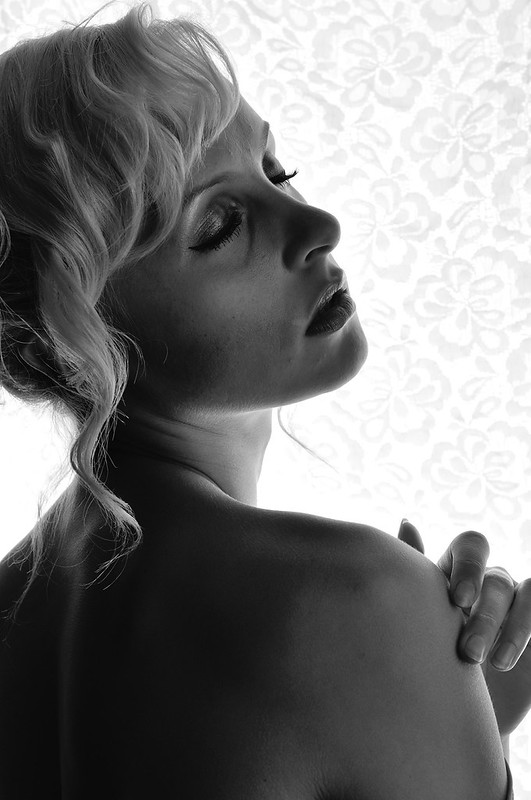
In fact, a Hi-Lite will solve some problems but not all.
What it does, superbly well, is to
1. Dramatically reduce the amount of studio space needed - the subject can be literally right up against if if needed
2. Make it easy to light evenly, partly because of its design and partly because it's a pretty small area.
What it
doesn't do is to deal with the by products of having a bright white light right behind the subject. These by products are
1. Flare
2. Wrap
3. Loss of lighting control
Flare is an overall loss of contrast, sharpness and colour saturation caused by having a bright light source in the shot. Sometimes, for example a photo that includes the sun, produces very obvious flare, but even when it isn't obvious, it's still there.
Wrap is light behind and to the sides of the subject that spills onto the sides of the face etc, putting light where it isn't wanted. This can be reduced (as can flare) by moving the subject further from the background, and it can also be reduced by masking off (flagging) any parts of the background that aren't needed, effectively making it only as wide as it really needs to be. But it can't be avoided all together.
Loss of lighting control is the inability to create shadows where they are needed, and most people, even if they understand the need for shadows, can't create them. Even experienced, skilled people struggle with this.
So, what you end up with is a flat lit shot with very little lighting control, reduced contrast and a degree of flare. It's a look that a lot of people love, it's part of the process, but it's a one trick pony.
I don't have a Hi-Lite, but we used something very similar (in effect) in my studio on Sunday (see
this thread) - a fake window with a couple of lights inside it and a lace curtain over its front.
This shot, by Anand, was "correctly" exposed - I'm guessing f/11 at 200 ISO.
There was no lighting on the subject, the light you see is all just wrap.
And there's this one, by Phil V. Here, he has overexposed the shot, exaggerating the effect. I would guess f/5.6 - f/8 ISO 200, and has processed the image to amplify the effect.
This one does have a little added frontal light, from a reflector