

You are using an out of date browser. It may not display this or other websites correctly.
You should upgrade or use an alternative browser.
You should upgrade or use an alternative browser.
Lens to shoot moon
- Thread starter Demonid3e
- Start date

realspeed
Suspended / Banned
- Messages
- 8,827
- Name
- Bazza
- Edit My Images
- No
I had one of these with a doubler
http://opteka.com/6501300.aspx
and got this with a nikon D300+ doubler supplied with the copy I had

Just a warning, it is not rigid when fully extended, I found I had to support it by hand towards the end. Another problem getting a shot like this is apart from a clear sky and full moon you have to predict the moons path and capture a photo at the right moment. To the eye it sems to move slowly but this close up it moves like a rocket.. Another problem is getting the camera settings right, you have to get focus right for a start and doing that manually just ain't easy, Nothing to focus on, let alone guessing Apeture and everything else. It is all guess work in the pitch black using a torch to see settings.
After all that your waiting prepared in the moons obit track all set up and along come a big cloud, so all your effort is in vain, I know been there got the T shirt
exif data left for you to see my settings
http://opteka.com/6501300.aspx
and got this with a nikon D300+ doubler supplied with the copy I had
Just a warning, it is not rigid when fully extended, I found I had to support it by hand towards the end. Another problem getting a shot like this is apart from a clear sky and full moon you have to predict the moons path and capture a photo at the right moment. To the eye it sems to move slowly but this close up it moves like a rocket.. Another problem is getting the camera settings right, you have to get focus right for a start and doing that manually just ain't easy, Nothing to focus on, let alone guessing Apeture and everything else. It is all guess work in the pitch black using a torch to see settings.
After all that your waiting prepared in the moons obit track all set up and along come a big cloud, so all your effort is in vain, I know been there got the T shirt
exif data left for you to see my settings
Last edited:
Kodiak Qc
Suspended / Banned
- Messages
- 20,285
- Name
- French Canadian living in Europe since 1989!
- Edit My Images
- Yes
Well… I surely can't Demon.Can anyone recommend the cheapest option lens wise to shoot the moon.
In photography, wanting to reach any extremes will
always cost you a finger… at least!
For this take, I used a prime 600mm ƒ4 on a D810;
long lens on a FF high sensel count (36,3 MS) sensor.
This is the result of a capture using no converter or
anything else that could impair the final quality but
on a proper tripod with gimbal head…

The next image is a crop of the same frame.

Using a DX format sensor is of no advantage to you
since what is needed is long focal length and high
sensel count.
Of course, any gear equation should integrate the de-
sired quality of the final rendition in it.

MatBin
Suspended / Banned
- Messages
- 5,334
- Name
- matt
- Edit My Images
- Yes
It "might" work out cheaper to buy a telescope and mount, a small (80mm) refractor and decent mount (say eq5 or similar) wouldnt cost as much as an L series long lens, partly because creating a telescope is a "simple" task and is designed to do one thing only, as opposed to a 400/500 AF camera lens. Plus an eq mount will then allow you to do other astro photography (and then you'll be spending lots, hence the "might" comment  )
)
Matt
)Matt

GeeJay57
Suspended / Banned
- Messages
- 2,894
- Name
- Glenn
- Edit My Images
- Yes
http://www.skyandtelescope.com/astr...otography-tips/basic-lunar-imaging-031020167/
Might be of interest.
Might be of interest.
Kodiak Qc
Suspended / Banned
- Messages
- 20,285
- Name
- French Canadian living in Europe since 1989!
- Edit My Images
- Yes
•
I forgot to mention…
The weather has a very important impact on the captures
as it can be seen in this thread… Spooky Moon
I forgot to mention…
The weather has a very important impact on the captures
as it can be seen in this thread… Spooky Moon

Cagey75
Suspended / Banned
- Messages
- 17,146
- Name
- Keith
- Edit My Images
- No
Depends, do you want to isolate the moon and get nice crater detail? Or have the moon in a scene? Very different type shots.
Some of my better isolated moon shots were using a Nikon 300mm F4 + 1.4 TC
 September Moon 2014 by Enticing Imagery, on Flickr
And even at that, heavily cropped.
But I also enjoy scenic shots with the moon included -
70-200, not much crop:
 Waxing crescent by Enticing Imagery, on Flickr
55-200, again not as much crop needed
 Mistic Moon by Enticing Imagery, on Flickr
What changes more is the settings
Some of my better isolated moon shots were using a Nikon 300mm F4 + 1.4 TC
September Moon 2014 by Enticing Imagery, on FlickrAnd even at that, heavily cropped.
But I also enjoy scenic shots with the moon included -
70-200, not much crop:
Waxing crescent by Enticing Imagery, on Flickr55-200, again not as much crop needed
Mistic Moon by Enticing Imagery, on FlickrWhat changes more is the settings

cosmicma
Suspended / Banned
- Messages
- 1,920
- Name
- Mark
- Edit My Images
- No
http://www.ebay.co.uk/itm/Sigma-APO...997489&hash=item4b23044803:g:VPEAAOSwSblZrF9S
reasonable magnification for not a lot of money but starts getting a little soft above 400mm ( it did with the copy i owned ) 400mm and below was quite sharp but lacked in contrast compared to better lenses
took a couple of moon shots with it when i had it attached to a canon 50d and a cheap kenko 2x converter which was awful but never the less i still got acceptable results
took in 2008 with above lens on a canon 50d

of course better results can be had but how much do you want to spend ?
reasonable magnification for not a lot of money but starts getting a little soft above 400mm ( it did with the copy i owned ) 400mm and below was quite sharp but lacked in contrast compared to better lenses
took a couple of moon shots with it when i had it attached to a canon 50d and a cheap kenko 2x converter which was awful but never the less i still got acceptable results
took in 2008 with above lens on a canon 50d
of course better results can be had but how much do you want to spend ?

Orangecroc
Suspended / Banned
- Messages
- 2,559
- Name
- Ben
- Edit My Images
- Yes
Superzoom bridge cameras would probably work well too and be cheaper than buying 1200mm lenses.

Csaba
Suspended / Banned
- Messages
- 55
- Edit My Images
- Yes
Superzoom bridge cameras would probably work well too and be cheaper than buying 1200mm lenses.
Shot taken using a Pansonic FZ80, which has an effective range of 1200mm. It has been slightly cropped.
 Moon - Amani Nature Reserve by Halfw1t, on Flickr
Gaz J
Suspended / Banned
- Messages
- 3,294
- Name
- Gary
- Edit My Images
- No
Second hand 150-600 would probably be the cheapest way to get long focal length shots. That would give you 960 mm.
This is taken just slightly longer than that at 1000mm

This is taken just slightly longer than that at 1000mm

GreenNinja67
Suspended / Banned
- Messages
- 6,176
- Name
- Terry
- Edit My Images
- Yes
I have a Sigma 15-600 Contemporary for Canon in the Classifieds at the moment.
And yes I tested it on the moon on an FX camera.
It would be fantastic on a 1.6 crop @ 960mm EFL.
And yes I tested it on the moon on an FX camera.
It would be fantastic on a 1.6 crop @ 960mm EFL.

chris malcolm
Suspended / Banned
- Messages
- 1,369
- Name
- Chris
- Edit My Images
- Yes
Can anyone recommend the cheapest option lens wise to shoot the moon.
It can be even manual lens for canon.
Always wanted to try but 70-200 too short even on 1.6 crop.
Here's a quick shot of a half moon in the daytime, not the best time for detail with the low contrast and blue hazing, taken with my Minolta 80-200mm (an old film era lens) @ 200mm on my 1.5 crop 24MP Sony A77, cropped down to just show the moon. For comparison I also shot it with my Tamron 16-300mm @ 300mm, a very wide range zoom which has sacrificed image quality for zoom range, and again with my Sony 500mm reflex lens. Night time shots in a good clear sky would supply better detail. However, you can see some crater detail at 200mm, a bit more at 300mm, and more again at 500mm. I was rather surprised to find this clear ordering, since the 80-200mm is a lens particularly revered for its sharpness and image quality, the 16-300mm is a very wide range general purpose zoom which has sacrificed image quality for a very wide zoom range, and the 500mm reflex lenses are "well known" to be much inferior in image quality to refracting prime lenses.
However, all these shots were taken at f8, since it was as usual a very bright sunny day on the moon. An f8 aperture reduces the differences in image quality between lenses. When cropping down as severely as is needed to fill the frame with the moon, which subtends about half a degree of arc, clearly focal length is the king. When shooting through such large distances of atmosphere the quality of the atmosphere, the "seeing" as astronomers refer to it, is the biggest killer of sharp detail. If you have a tracking telescope mount you can take long exposures to average out the atmospheric distortions. If on a fixed tripod you can stack multiple images to achieve the same effect.
View media item 12898
View media item 12899
View media item 12900
Based on this comparison I'm tempted to suggest that the cheapest option for good detailed moon shots will be the longest focal length you can get, with image quality a rather secondary consideration. You don't need a wide aperture since it's very brightly sunny on the moon - f8 is quite good enough. Good focus is however VERY critical, which ideally means manual focusing with the best focusing aids you can get.
OP

Demonid3e
Suspended / Banned
- Messages
- 733
- Name
- Demon
- Edit My Images
- Yes
The one that I posted is a 50 shot stack to try and offset atmospheric pollution.
I used AF in live view to focus and then gave it 10 secs at max FPS to give me some overlap.
DId you stack with different exposures?
Cracking shot btw!
Gaz J
Suspended / Banned
- Messages
- 3,294
- Name
- Gary
- Edit My Images
- No
DId you stack with different exposures?
Cracking shot btw!
Thanks.
No same exposure. Shot in manual. Took a few to get the exposure right. Took 30 times as long to set it all up as it did to take the shots.

allanm
Suspended / Banned
- Messages
- 3,727
- Name
- Allan
- Edit My Images
- No
I think if you're serious about getting more than the ' moon at a distance ' shots with little detail, you should invest in a telescope.
You can buy a computer controlled telescope and cheap webcam for less than the cost of s long lens, and you have another hobby!
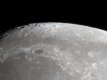
This was shot with a 1/3 mp camera through a medium size telescope with a focal length equivalent of 1000m
You can buy a computer controlled telescope and cheap webcam for less than the cost of s long lens, and you have another hobby!
This was shot with a 1/3 mp camera through a medium size telescope with a focal length equivalent of 1000m
Last edited: