would the extension tubes enable my lens to focus in at that range?
cheers
You could use extension tubes or add-on close-up lenses.
I don't use extension tubes, but as I understand it you fit them between your camera and your lens. I believe you need compatible ones to retain autofocus and autoexposure. That said, a lot of/most people don't care much about autofocus for macro work as they either use manual focus in the usual way, or set the focus to infinity (or whatever) and then rock the camera back and forth until the picture comes into focus. Autoexposure is worth retaining though I would have thought.
I do use close-up lenses, three of them. They work best on zoom lenses with a longer focal length than your 18-55mm, but they do work to some extent with shorter focal length zooms like yours. For example, this was taken with one of my close-up lenses on a micro four thirds 14-42mm zoom, at 42mm, which is 84mm in 35mm equivalent terms.
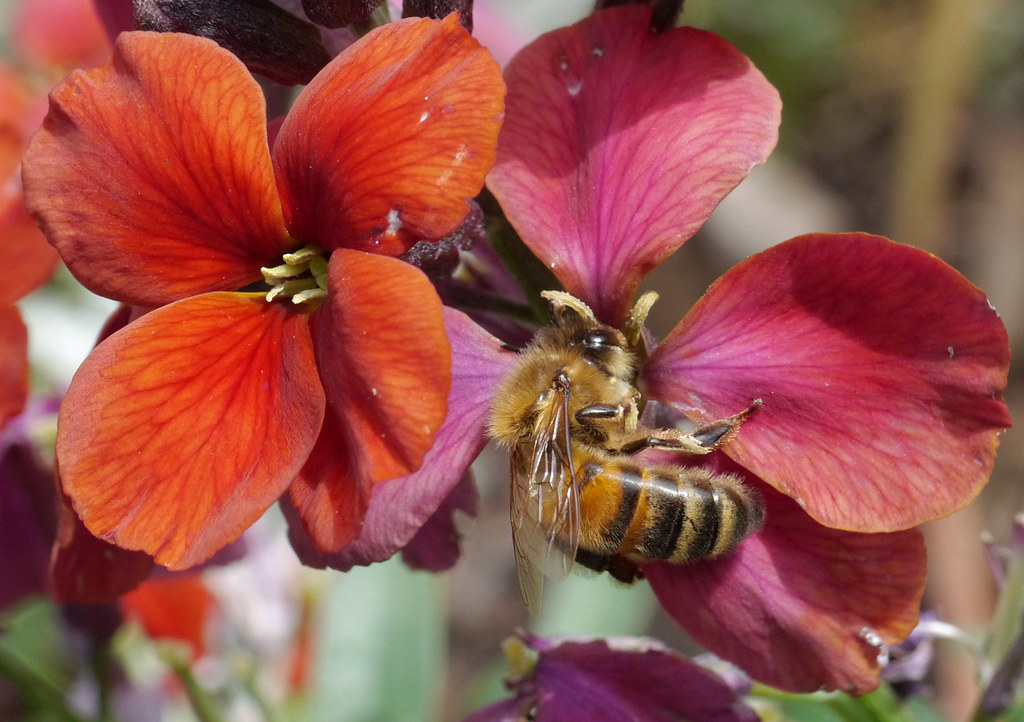 0371 22 2011_08_14 P1000497 PS1 CrThrLeDf4x30LebCu900hSS32x0.3
 by
gardenersassistant, on Flickr
By "to some extent" I mean that if you use a close-up lens on a short focal length zoom like yours then at the wide end you will probably get quite serious vignetting, so you will probably only be able to use the longer end.
You can use "filter sets", which are really inexpensive, for example see
http://www.amazon.co.uk/s/ref=nb_sb_noss?url=search-alias%3Daps&field-keywords=close-up+filter+set&x=0&y=0
The set has filters with several different magnifications, and you can use more than one at a time to get different magnifications. However, these inexpensive filters are single pieces of glass and tend to be prone to chromatic aberration, and especially when you use more than one at a time the results may not be entirely crisp or sharp.
Add-on close-up lenses known as "achromatic" lenses have two or more layers of glass so as to reduce the chromatic aberration. They can produce fairly crisp and sharp results. They are more expensive than filters.
I use the Raynox 250 and Raynox 150 filters, which are quite popular. They each cost around £40. I also use the Canon 500D close-up lens. This costs about twice as much.
The Raynox 150 and 250 come with a universal adaptor which will clip onto any lens with a filter thread of between 52mm and 67mm. I use step rings and screw the Raynoxes (and the Canon 500D) onto the filter thread of my 45-200mm lens.
The amount of magnification you get depends on what close-up lens you are using. Of these three, the Raynox 250 is the most powerful, the Canon 500D the least powerful, and the Raynox 150 is in the middle. I use the 500D mainly for small flowers and the Raynox 150 mainly for flies, bees and similar sized animals. I use the Raynox 250 for really small flies and other little things, including sometimes dewdrops.
The more powerful the close-up lens, the more difficult it is to use, for several reasons. (This post is probably already too long, but if you are interested I will say a bit more about this and perhaps some other practical issues too.)
Most people who are into macros seem to prefer rather smaller things than I do and prefer to use the Raynox 250 (and sometimes even more powerful add-on close-up lenses), which lets them take pictures which concentrate on fly's eyes, spiders' mouth parts and the like.
With my 45-200mm lens the Raynox 250 gives me images that cover a scene between 11mm and 50mm across, depending on the amount of zoom I use. With the same lens, the Raynox 150 covers scenes between 19mm and 83mm, and the Canon 500D covers scenes between 45mm and 200mm.
Many/most people who are into macros use flash to illuminate their subjects, and they typically diffuse the flash with a home-made diffuser. If you don't use flash it can be difficult to get enough light on to the subject, especially at higher magnifications.



