

You are using an out of date browser. It may not display this or other websites correctly.
You should upgrade or use an alternative browser.
You should upgrade or use an alternative browser.
Lens hoods
- Thread starter Rosso86
- Start date


HoppyUK
Suspended / Banned
- Messages
- 23,200
- Name
- Richard
- Edit My Images
- No
You mean a 'petal' type hood, vs round.
The ideal lens hood is rectangular, same shape as the image, and shading the lens as much as possible without actually protruding into the picture. If you look through a petal hood from the lens side, it appears rectangular, but unlike an actually rectangular hood, it can be reversed for storage around the barrel, and they're also more robust, and cheaper to make.
Most lens hoods are more for physical protection than any really useful shading, though they're excellent for that and of course they do help with side lighting, reducing flare. But on a zoom for example, the hood is only the optimum size at the shortest focal length, and with lenses designed for full-frame cameras, the hood is also optimised for full-frame too so it's not as tight to the frame as it could be when used on a crop-format camera.
The ideal lens hood is rectangular, same shape as the image, and shading the lens as much as possible without actually protruding into the picture. If you look through a petal hood from the lens side, it appears rectangular, but unlike an actually rectangular hood, it can be reversed for storage around the barrel, and they're also more robust, and cheaper to make.
Most lens hoods are more for physical protection than any really useful shading, though they're excellent for that and of course they do help with side lighting, reducing flare. But on a zoom for example, the hood is only the optimum size at the shortest focal length, and with lenses designed for full-frame cameras, the hood is also optimised for full-frame too so it's not as tight to the frame as it could be when used on a crop-format camera.
You mean a 'petal' type hood, vs round.
The ideal lens hood is rectangular, same shape as the image, and shading the lens as much as possible without actually protruding into the picture. If you look through a petal hood from the lens side, it appears rectangular, but unlike an actually rectangular hood, it can be reversed for storage around the barrel, and they're also more robust, and cheaper to make.
Most lens hoods are more for physical protection than any really useful shading, though they're excellent for that and of course they do help with side lighting, reducing flare. But on a zoom for example, the hood is only the optimum size at the shortest focal length, and with lenses designed for full-frame cameras, the hood is also optimised for full-frame too so it's not as tight to the frame as it could be when used on a crop-format camera.
Top answer


meonshore
Suspended / Banned
- Messages
- 1,413
- Name
- Mike
- Edit My Images
- No
Richards answer is a good one - and he is right the ideal shape for a lens hood would be as tight around the actual image area of a lens as is possible. You'll see this with Leica lenses which were designed specifically to only fit a limited number of bodies with a singular image area.
Where I would disagree is on the point that lens hoods are mainly for protection. They are designed to shade the lens to improve contrast and remove or reduce flare. Protection is a side benefit.
3rd party lens hoods for generic filter diameters tend to be "solid" rather than petal because they are not designed with a specific lens/body combination and a shorter solid hood is a compromise. They are also cheaper to manufacture - especially in a rubber material which many of them are.
Manufacturers dedicated hoods are designed specifically with that lens in mind. The petals are as long as they can be to shield the top and bottom of the frame, the sides tends to be shorter to allow for the wider area they need to shade. The exact shape does depend on the width of the lens, and is optimised for the wider end and FF - as above - that doesn't mean to say they don't work at the long end.
Typically long prime telephotos (135mm and above) have solid round hoods because the field of view is far narrower than that of the solid lens hood and there is no issue with clipping the frame with the hood design. The length of the hood is therefore determined by the amount of hood required to prevent flare in all bar directly backlit images.
Richard is also correct about lenses designed for FF bodies and crop sensors. The original Nikkor 70-200mm f2.8 G VR was designed when Nikon had "no plans" for a FF sensor. The design of the hood changed with the VRII model which was designed with the FF sensor firmly as a target for this lens because it needed to cope with a wider field of view at 70mm.
Where I would disagree is on the point that lens hoods are mainly for protection. They are designed to shade the lens to improve contrast and remove or reduce flare. Protection is a side benefit.
3rd party lens hoods for generic filter diameters tend to be "solid" rather than petal because they are not designed with a specific lens/body combination and a shorter solid hood is a compromise. They are also cheaper to manufacture - especially in a rubber material which many of them are.
Manufacturers dedicated hoods are designed specifically with that lens in mind. The petals are as long as they can be to shield the top and bottom of the frame, the sides tends to be shorter to allow for the wider area they need to shade. The exact shape does depend on the width of the lens, and is optimised for the wider end and FF - as above - that doesn't mean to say they don't work at the long end.
Typically long prime telephotos (135mm and above) have solid round hoods because the field of view is far narrower than that of the solid lens hood and there is no issue with clipping the frame with the hood design. The length of the hood is therefore determined by the amount of hood required to prevent flare in all bar directly backlit images.
Richard is also correct about lenses designed for FF bodies and crop sensors. The original Nikkor 70-200mm f2.8 G VR was designed when Nikon had "no plans" for a FF sensor. The design of the hood changed with the VRII model which was designed with the FF sensor firmly as a target for this lens because it needed to cope with a wider field of view at 70mm.
 and killwilly, hijack away :-D
HoppyUK
Suspended / Banned
- Messages
- 23,200
- Name
- Richard
- Edit My Images
- No
Example here of my DIY ideal 'zooming' lens hood, and illustrations of the improvement it makes - bottom of this page and continued on the next http://www.talkphotography.co.uk/forums/showthread.php?t=424241
Here it is more pics on the link
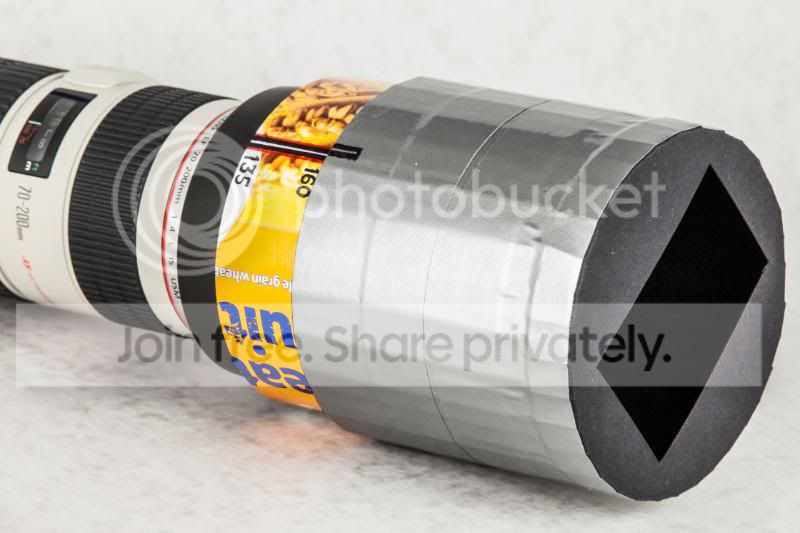
Here it is
more pics on the link
Last edited:

tijuana taxi
Suspended / Banned
- Messages
- 15,748
- Name
- Rich
- Edit My Images
- Yes
Here you are Alan, bought a hood from them for a Canon lens and it was fine, didn't have the felt lining, but can't have everything http://www.premier-ink.co.uk/photographic/lens-hoods/bayonet-lens-hoods/canon-ew78e-compatible-lens-hood-p-2766.htmlcan anyone recommend any after market hoods. I want a 72mm for my Canon 15-85 and the Canon hoods appear to be way overpriced?
tijuana taxi
Suspended / Banned
- Messages
- 15,748
- Name
- Rich
- Edit My Images
- Yes
Same place I just linked to, look up Bayonet fitting ones here Richie http://www.premier-ink.co.uk/photographic/lens-hoods/bayonet-lens-hoods/-c-60_397_403.html

killwilly
Suspended / Banned
- Messages
- 1,081
- Name
- Alan
- Edit My Images
- No
Here you are Alan, bought a hood from them for a Canon lens and it was fine, didn't have the felt lining, but can't have everything http://www.premier-ink.co.uk/photographic/lens-hoods/bayonet-lens-hoods/canon-ew78e-compatible-lens-hood-p-2766.html
That's great, thanks, Rich. I bought a none petal hood off eBay for my 55-250 and I have seen yogurt cups made of more substantial material, but as you said, "can't have everything".
HoppyUK
Suspended / Banned
- Messages
- 23,200
- Name
- Richard
- Edit My Images
- No
Another hi-jack if i can..........some fantastic and very helpfull answers but.......how do i find a hood that locks/fits to the outside edge of the lens as appossed to the filter screw (internal) ?
Thanks Richie
Hoods are specific to the lens - check the lens manufacturer's part reference. If you go cheaper third-party they're often not very well blackened inside and can even make things worse in strong side lighting where the semi-shiny surface of the hood collects the light and reflects a lot of it straight into the lens.
Genuine Canon hoods for example are lined with black flocking that is very effective. You can get as good as this by lining the hood with black self-adhesive felt. Easy job - 79p from Hobbycraft. Here http://direct.hobbycraft.co.uk/products-HobbyCraft-Black-Stick-On-Felt-Sheets_272679.htm
Last edited:
tijuana taxi
Suspended / Banned
- Messages
- 15,748
- Name
- Rich
- Edit My Images
- Yes
No problem Alan, one I bought was of good build quality and fitted on nice and securely
Cheers
Rich
Cheers
Rich

K88 MUD
Suspended / Banned
- Messages
- 200
- Name
- MUD
- Edit My Images
- Yes
Same place I just linked to, look up Bayonet fitting ones here Richie http://www.premier-ink.co.uk/photographic/lens-hoods/bayonet-lens-hoods/-c-60_397_403.html
Thanks for that......best get the plastic out

K88 MUD
Suspended / Banned
- Messages
- 200
- Name
- MUD
- Edit My Images
- Yes
Hoods are specific to the lens - check the lens manufacturer's part reference. If you go cheaper third-party they're often not very well blackened inside and can even make things worse in strong side lighting where the semi-shiny surface of the hood collects the light and reflects a lot of it straight into the lens.
Genuine Canon hoods for example are lined with black flocking that is very effective. You can get as good as this by lining the hood with black self-adhesive felt. Easy job - 79p from Hobbycraft. Here http://direct.hobbycraft.co.uk/products-HobbyCraft-Black-Stick-On-Felt-Sheets_272679.htm
Nice tip.....thanks very much


andyred
Suspended / Banned
- Messages
- 11,116
- Name
- And
- Edit My Images
- No
Example here of my DIY ideal 'zooming' lens hood, and illustrations of the improvement it makes - bottom of this page and continued on the next http://www.talkphotography.co.uk/forums/showthread.php?t=424241
Here it is
Very interesting read and surprised with the results...
Might be worth a play to make one
Can I ask why the rectangle slot in the foam, rather than a circle ?
K88 MUD
Suspended / Banned
- Messages
- 200
- Name
- MUD
- Edit My Images
- Yes
Very interesting read and surprised with the results...
Might be worth a play to make one
Can I ask why the rectangle slot in the foam, rather than a circle ?
Im sure its something to do with the sensor size been that shape.
HoppyUK
Suspended / Banned
- Messages
- 23,200
- Name
- Richard
- Edit My Images
- No
Very interesting read and surprised with the results...
Might be worth a play to make one
Can I ask why the rectangle slot in the foam, rather than a circle ?
See post #2
It's thin black card, not foam.If you fancy making something, make sure to check it carefully at all focusing distances and apertures, as well as focal lengths - shoot a plain wall. When you think it's clear, you may find it can still cause some very minor shading around the edges of the frame. You can't see this clearly enough through the viewfinder, need to shoot real pictures.
andyred
Suspended / Banned
- Messages
- 11,116
- Name
- And
- Edit My Images
- No
See post #2
If you fancy making something, make sure to check it carefully at all focusing distances and apertures, as well as focal lengths - shoot a plain wall. When you think it's clear, you may find it can still cause some very minor shading around the edges of the frame. You can't see this clearly enough through the viewfinder, need to shoot real pictures.
Oops, missed that bit
 ,
, Thanks Richard
HoppyUK
Suspended / Banned
- Messages
- 23,200
- Name
- Richard
- Edit My Images
- No
See post #2
If you fancy making something, make sure to check it carefully at all focusing distances and apertures, as well as focal lengths - shoot a plain wall. When you think it's clear, you may find it can still cause some very minor shading around the edges of the frame. You can't see this clearly enough through the viewfinder, need to shoot real pictures.
And one more thing, switch on vignetting correction if the camera has it, 'peripheral illumination' with Canons. At lower f/numbers particularly, there will be some natural lens vignetting (darkening of the corners) that's unrelated to the hood.

weybourne
Suspended / Banned
- Messages
- 1,223
- Name
- Adrian
- Edit My Images
- Yes
Not wishing to hijack Matt's thread, but can anyone recommend any after market hoods. I want a 72mm for my Canon 15-85 and the Canon hoods appear to be way overpriced?
I bought a compatible hood from 7dayshop for my 28-135mm - apart from the subtle markings, you would never suspect it wasn't the 'real thing'. Here's the link for the 18-55 version. They've gone up in price considerably since I got mine last July, but they still look like a better buy than the Canon one.
killwilly
Suspended / Banned
- Messages
- 1,081
- Name
- Alan
- Edit My Images
- No
I bought a compatible hood from 7dayshop for my 28-135mm - apart from the subtle markings, you would never suspect it wasn't the 'real thing'. Here's the link for the 18-55 version. They've gone up in price considerably since I got mine last July, but they still look like a better buy than the Canon one.
Thanks, Adrian.
andyred
Suspended / Banned
- Messages
- 11,116
- Name
- And
- Edit My Images
- No
If you do go down the 3rd party route, ensure the inside of the hood is at least a matt black finish, you can follow Richards advice below if you wish to add a flock lining as some of the genuine ones have...
Hoods are specific to the lens - check the lens manufacturer's part reference. If you go cheaper third-party they're often not very well blackened inside and can even make things worse in strong side lighting where the semi-shiny surface of the hood collects the light and reflects a lot of it straight into the lens.
Genuine Canon hoods for example are lined with black flocking that is very effective. You can get as good as this by lining the hood with black self-adhesive felt. Easy job - 79p from Hobbycraft. Here http://direct.hobbycraft.co.uk/products-HobbyCraft-Black-Stick-On-Felt-Sheets_272679.htm