lens hoods

hayley.price

Suspended / Banned
Messages
1,796
Name
hayley
Edit My Images
Yes
lens hoods

this might be a silly question but to my understanding them help control sun light is this right??

what are there main usage??
 
Lens hoods serve two main puposes. They protect the lens against stray light which can reduce contrast and produce flare. They also physically protect the front element from scratches and impact.
 
Lens hoods serve two main puposes. They protect the lens against stray light which can reduce contrast and produce flare. They also physically protect the front element from scratches and impact.
What he said, but it is also important to get the correct hood for the lens.
 
correct lens hood for the lens??

i have a circler one for my tamron that come with it and a flower petal one for my kit lens???
 
the flower petal one has the corners cut away so they don't show in an image at wide angles.

Handy for reducing flare, when the sun or light source is at an oblique angle to the front element.
 
correct lens hood for the lens??

i have a circler one for my tamron that come with it and a flower petal one for my kit lens???

If they came with the lens, or if they are the correct model number 3rd party, then no problem! An incorect lens hood can cause vigneting.
If you are not having problems, then fine! :thumbs:
 
As above, they offer protection and help with reducing sun flare etc...

If you want to check you have the correct hood for the lens - a quick google to the lens manufactorer site and it should list the hood model name for you to double check
 
the lens hood portects the front element and also it helps stop stray light entering the lens from the sides. Just make sure you get the right one for the lens
 
You can generally find aftermarket ones on ebay at a fraction of the cost of the proprietary ones, but you take your chances in what you actually get. Sometimes the fitment might not be quite right, they might not have the velvet(?) lining inside the hood etc.

For a few quid you might consider it worth a try first.
 
Bear in mind that for 'super zooms' (ie any lens with a zoom factor of greater than about 3 -4 [100-400, 24-105] one hood will not work over the full zoom range. You'll either find vignetting at the wide end, or may get little or no protection against flair at the other. But it'll still protect against knocks, so worth having anyway.
 
graphilly said:
You can generally find aftermarket ones on ebay at a fraction of the cost of the proprietary ones, but you take your chances in what you actually get. Sometimes the fitment might not be quite right, they might not have the velvet(?) lining inside the hood etc.

For a few quid you might consider it worth a try first.

What's the point of the velvet lining?
 
What's the point of the velvet lining?

It's not always velvet, flock or foam is also used.
It's to reduce flare and or reflections from the inside of hood.
 
What's the point of the velvet lining?

Velvet is very black - the light goes in between the fibres and doesn't come out again. Black flock lining is pretty good, as Canon uses, but some matt black paint and plastic is not very black at all and if you're unlucky with the angle of the sun it can actually make things worse.

Black self-adhesive felt is quite effective, only a few pence from Hobbycraft.
 
jon ryan said:
Bear in mind that for 'super zooms' (ie any lens with a zoom factor of greater than about 3 -4 [100-400, 24-105] one hood will not work over the full zoom range. You'll either find vignetting at the wide end, or may get little or no protection against flair at the other. But it'll still protect against knocks, so worth having anyway.

The OEM hood for my 18-135 works perfectly all the way across. No vignetting at the wide end and still effective at 135mm.
 
The OEM hood for my 18-135 works perfectly all the way across. No vignetting at the wide end and still effective at 135mm.

The point being though Jim, that if it clears at the wide end, which of course it must, then it's got to be a long way short of optimum length to be as effective as it could be at the long end.

You'd need a zooming hood for that, and AFAIK, the only two lenses which do that are the 24-70s from Nikon and Canon. While the hood doesn't zoom as such, the front element on those two lenses moves in the opposite to normal direction and the hoods, because they're secured to the barrel and not the front part of the lens that moves as you change focal length, effectively become much deeper at the longer end. It's a cool trick, that is sadly not a feature of the new Canon 24-70 Mk2.
 
HoppyUK said:
The point being though Jim, that if it clears at the wide end, which of course it must, then it's got to be a long way short of optimum length to be as effective as it could be at the long end.

You'd need a zooming hood for that, and AFAIK, the only two lenses which do that are the 24-70s from Nikon and Canon. While the hood doesn't zoom as such, the front element on those two lenses moves in the opposite to normal direction and the hoods, because they're secured to the barrel and not the front part of the lens that moves as you change focal length, effectively become much deeper at the longer end. It's a cool trick, that is sadly not a feature of the new Canon 24-70 Mk2.

I had no idea that this is why my 24-70 had the reverse zoom mechanism. Thats really thought out. Kudos to Canon...but black marks for not carrying out their genius to the mark II.

I use lens hoods with every lens, every time as they are my protection for the lens. No uv filters for me.
 
Does anyone have some example shots of the same photo shot with and without a lens hood? I don't have any lens hoods, I only have a 50mm and I'm looking at a 17-50mm, so I'm not sure if I need one.
 
HoppyUK said:
The point being though Jim, that if it clears at the wide end, which of course it must, then it's got to be a long way short of optimum length to be as effective as it could be at the long end.

You'd need a zooming hood for that, and AFAIK, the only two lenses which do that are the 24-70s from Nikon and Canon. While the hood doesn't zoom as such, the front element on those two lenses moves in the opposite to normal direction and the hoods, because they're secured to the barrel and not the front part of the lens that moves as you change focal length, effectively become much deeper at the longer end. It's a cool trick, that is sadly not a feature of the new Canon 24-70 Mk2.

I didnt know that either!
 
Does anyone have some example shots of the same photo shot with and without a lens hood? I don't have any lens hoods, I only have a 50mm and I'm looking at a 17-50mm, so I'm not sure if I need one.

I've done a few tests, though nothing I've kept. A really good hood, that is properly black and as large as it can be and only just outside intruding into the image, certainly makes a difference in conditions of bright side lighting or with the sun beaming down just out of shot.

But TBH, the difference is not as great as it used to be. Modern lenses are much, much better at controlling flare than they were maybe 30 years ago when lenses mostly only had basic single anti-reflection coatings. Now we have multi-coating, super multi-coating, nano coating and all sorts. Plus designers now pay very close attention to internal baffling inside the lens barrel so that any stray reflections are trapped and not allowed to bounce back as that foggy haze which reduces image contast.

Designers have had to do this, as we all use zooms and as described above, their hoods can only be of real benefit at the wide end. For example, I use a Canon 24-105L for portraits quite a lot, usually around the 100mm zone for head and shoulders and often against a bright white background. There's tons of light about, so I swap the standard hood, which is less than 2in deep, for one off a 100-400L, which is almost 4in deep. It is completely clear of the image area (on full frame) from about 85mm onwards. It makes a slight difference to image quality.

But at the end of the day, the main reason I always use a hood is for physical protection, particulary protection from my own fingers. Greasy finger marks are death to image quality and can be hard to remove ;)

Edit: in really difficult conditions, like with the sun just out of shot, shading the lens with your hand, as you would do your eyes, can be very effective.

 
Last edited:
I assume it also depends on the layout of the lens. I use a Canon 50 1.8 and the lens is recessed a fair bit with the front of the barrel providing a small amount of 'hooding', whereas other lenses have the glass right at the front.

No testing to back this up but seemed logical to me!

And as an official hood is around £25 I take the risk without one as the lens in question was only £70...
 
And as an official hood is around £25 I take the risk without one as the lens in question was only £70...

I managed to get hoods lined with felt for all 3 of my lenses for around £10.

Cheap imitation hoods from a well known auction site and sticky backed felt. 5 minutes with a pair of scissors and they were all done.
 
also if you buy a petal hood for a lens that rotates when zooming it wont work as it spins the hood
ive read a thread about somone wanting a petal hood to look profesional but for a kit lens
 
I have a petal hood for my kit lens.. protects it

Yes, but the point is, the irregular petal shape is effectively a rectangle as seen by the lens - aspect ratio 3:2 to match the sensor.

So if the front of your lens turns as you focus, when the hood moves out of the correct rotation position, you will get some vignetting.

Check it - set the lens to it's widest focal length and see if the hood intrudes into the corners of the viewfinder as you turn it.
 
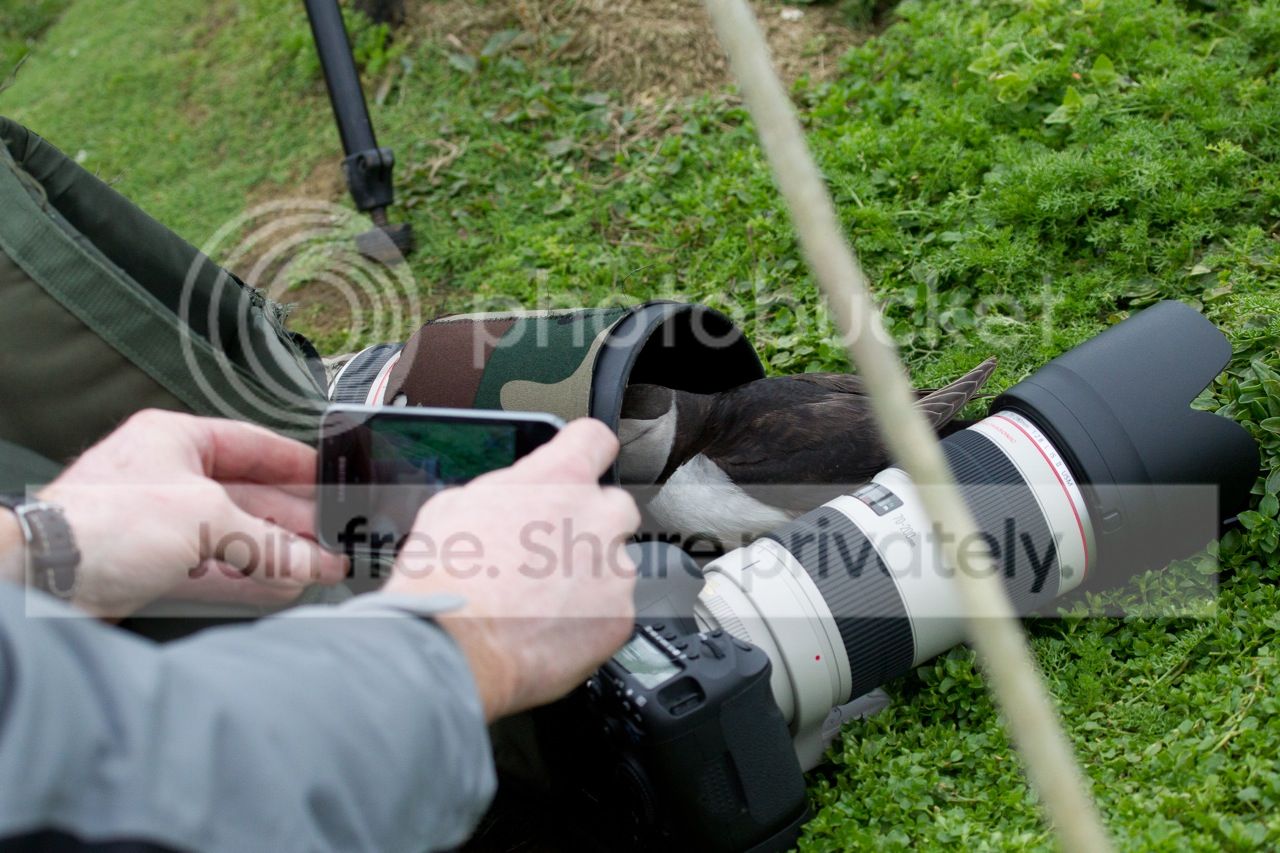
they can also be used by puffins for a des res

2079d784.jpg
 
Mine Isint a large One like the One in that picture its made for the 18-55mm kit lens and is quite shallow to stop that but will check once I get my camera back
 
The point being though Jim, that if it clears at the wide end, which of course it must, then it's got to be a long way short of optimum length to be as effective as it could be at the long end.

You'd need a zooming hood for that, and AFAIK, the only two lenses which do that are the 24-70s from Nikon and Canon. While the hood doesn't zoom as such, the front element on those two lenses moves in the opposite to normal direction and the hoods, because they're secured to the barrel and not the front part of the lens that moves as you change focal length, effectively become much deeper at the longer end. It's a cool trick, that is sadly not a feature of the new Canon 24-70 Mk2.
Well burger me,lot of people don't know that.:thumbs:
they can also be used by puffins for a des res

2079d784.jpg

:lol::lol::lol:
 
Back
Top