

You are using an out of date browser. It may not display this or other websites correctly.
You should upgrade or use an alternative browser.
You should upgrade or use an alternative browser.
Left or Right
- Thread starter Barney
- Start date
Do you consciously engage the right side of your brain when taking photographs?
And if so what is the trigger that you use?
I didn't know you could choose.

- Messages
- 2,722
- Name
- Neville
- Edit My Images
- Yes
Or, in layman's terms the right hand side of the brain is associated with creativity. And you're asking what makes us creative? This might be a long thread.....  However, for my tuppence ha'penny worth I'd have to say that what triggers you is possibly more external than a calculated thought process. It can be light, or shadow, or a shape that is aesthetically pleasing.
However, for my tuppence ha'penny worth I'd have to say that what triggers you is possibly more external than a calculated thought process. It can be light, or shadow, or a shape that is aesthetically pleasing.
Last edited:
AndrewFlannigan
Suspended / Banned
- Messages
- 11,977
- Edit My Images
- No
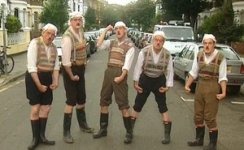
My brain is ambidextrous.
One side is just as confused as the other...
One side is just as confused as the other...


- Messages
- 5,607
- Name
- Stephen
- Edit My Images
- Yes
I'm not really sure I understand the question; but when I take photographs other than record snapshots I have a mental checklist of things that I run through:
Why do I want to photograph this?
What happens/would happen if I changed position left or right, forward or back, up or down?
Do objects line up as I would like, or can I simplify things by a change of position (I think there's a brief article with illustrations on this on my website)
What's at the corners/edges of the frame and framing in general?
What about the shadows - any pitfalls there (I've seen a photo of a young girl with a shadow beard that once seen can't be unseen - not one of mine...)
What about tonal differentiation (I am a Black and white photographer (note that I now always use a capital B for black, as mandated by Oxford University...) after all
Converging verticals or horizontals?
And probably a few other things...
This probably would not be a checklist for a sports or birds in flight photographer...
Why do I want to photograph this?
What happens/would happen if I changed position left or right, forward or back, up or down?
Do objects line up as I would like, or can I simplify things by a change of position (I think there's a brief article with illustrations on this on my website)
What's at the corners/edges of the frame and framing in general?
What about the shadows - any pitfalls there (I've seen a photo of a young girl with a shadow beard that once seen can't be unseen - not one of mine...)
What about tonal differentiation (I am a Black and white photographer (note that I now always use a capital B for black, as mandated by Oxford University...) after all
Converging verticals or horizontals?
And probably a few other things...
This probably would not be a checklist for a sports or birds in flight photographer...

- Messages
- 12,294
- Name
- Brian
- Edit My Images
- Yes
Well I think the guys e.g. who think Andreus Gursky Rhein II (sold for $4.3 million ) and Kevin Abosch potato on a black background (sold for $1 million)...and think they are great photos have something wrong with their brains.

myotis
Suspended / Banned
- Messages
- 4,503
- Name
- Graham
- Edit My Images
- No
I think that neurology has moved on a bit from the idea of left and right hand parts of the brain, for although some functions are dominantly carried out by parts of the brain that happen to be in a particular place, it also seems that the whole brain is involved in probably everything we do.Do you consciously engage the right side of your brain when taking photographs?
And if so what is the trigger that you use?
But to stick with the left/right concept. I think you are starting in the wong place, because the question should start with whether it's the left hand part of the brain or the right hand part of the brain that triggers the "need" for the photograph.
Thereafter, I think it's outside your control as to what side of the brain you use, and even within the context of left hand and right sides of the brain, I doubt anyone, can do very much of anything without engaging both sides of the brain.
But to return to triggers, I might be triggered entirely emotionally to take a photograph of a flower because of how it looks, how it's lit and it's locational context, but then take a combined analytical and creative approach in deciding how I might capture my emotional reaction to that flower in my photograph.
On another day, (with the same flower) I might be triggered by it being a particularly good example to photograph as a scientific record of flowers in my local woodland.
I will still want to make it an aesthetically pleasing photograph, but "exactly" how I compose and light it will be more analytical because there will be specific botanical aspect of the plant I will want to show in the picture: this will restrict my creative freedom. This may well put more pressure on both sides of my brain than the first photograph, where I have no need to consider the scientific value of the photograph.
OP

Barney
Suspended / Banned
- Messages
- 3,043
- Name
- Wayne
- Edit My Images
- No
The Abosch image is interesting, he has photographed worldwide superstars for years against black backgrounds. Reportedly charging between £150,000 and £500,000 per sitting.
I see the potoato as a his cynical, sneering expose of the vacuous nature of his portraits no fancy lighting, no backround objects or context. Of course he can only take that stance or opinion because he has been there.
But is that what he wanted me to see?
Is it a fierce mirror?
I see the potoato as a his cynical, sneering expose of the vacuous nature of his portraits no fancy lighting, no backround objects or context. Of course he can only take that stance or opinion because he has been there.
But is that what he wanted me to see?
Is it a fierce mirror?
Last edited:
OP
Barney
Suspended / Banned
- Messages
- 3,043
- Name
- Wayne
- Edit My Images
- No
I sometimes think that the very medium we have selected to portray our photography is an unconscious effort by the right side of the brain to encourage us to try and take a more contemplative approach. 50 or even 30 years ago It seems that photography was mostly a left sided function, of course there was little choice. The technical and analytical left side seems to me to be the door that opened, a prerequisite, before the right side could exert its influence.
- Messages
- 12,294
- Name
- Brian
- Edit My Images
- Yes
...and in Rhein II the guy cheated, while it was ok to remove people walking in the foreground, he removed a factory in the background...but then who's to know unless you live there.The Abosch image is interesting, he has photographed worldwide superstars for years against black backgrounds. Reportedly charging between £150,000 and £500,000 per sitting.
I see the potoato as a his cynical, sneering expose of the vacuous nature of his portraits no fancy lighting, no backround objects or context. Of course he can only take that stance or opinion because he has been there.
But is that what he wanted me to see?
Is it a fierce mirror?
OP
Barney
Suspended / Banned
- Messages
- 3,043
- Name
- Wayne
- Edit My Images
- No
mmmmm.......... Subtraction...and in Rhein II the guy cheated, while it was ok to remove people walking in the foreground, he removed a factory in the background...but then who's to know unless you live there.
I see several photos in that image, the people and factories would have tied the separate images together and make it impossible to see each image within that total photo. Very clever.
Thanks for making me think Brian!
- Messages
- 12,294
- Name
- Brian
- Edit My Images
- Yes
.......and what part of the brain gets your mojo back for taking photosI think that neurology has moved on a bit from the idea of left and right hand parts of the brain, for although some functions are dominantly carried out by parts of the brain that happen to be in a particular place, it also seems that the whole brain is involved in probably everything we do.
But to stick with the left/right concept. I think you are starting in the wong place, because the question should start with whether it's the left hand part of the brain or the right hand part of the brain that triggers the "need" for the photograph.
Thereafter, I think it's outside your control as to what side of the brain you use, and even within the context of left hand and right sides of the brain, I doubt anyone, can do very much of anything without engaging both sides of the brain.
But to return to triggers, I might be triggered entirely emotionally to take a photograph of a flower because of how it looks, how it's lit and it's locational context, but then take a combined analytical and creative approach in deciding how I might capture my emotional reaction to that flower in my photograph.
On another day, (with the same flower) I might be triggered by it being a particularly good example to photograph as a scientific record of flowers in my local woodland.
I will still want to make it an aesthetically pleasing photograph, but "exactly" how I compose and light it will be more analytical because there will be specific botanical aspect of the plant I will want to show in the picture: this will restrict my creative freedom. This may well put more pressure on both sides of my brain than the first photograph, where I have no need to consider the scientific value of the photograph.


Ed Sutton
Suspended / Banned
- Messages
- 8,556
- Name
- Dave
- Edit My Images
- No
I try NOT to consciously use my brain when I want to make a picture with a camera.Do you consciously engage the right side of your brain when taking photographs?
And if so what is the trigger that you use?
OP
Barney
Suspended / Banned
- Messages
- 3,043
- Name
- Wayne
- Edit My Images
- No
Do you have automatic unconscious control of all immediate functions ED?I try NOT to consciously use my brain when I want to make a picture with a camera.
Shutter, exposure, Iso etc.
Ed Sutton
Suspended / Banned
- Messages
- 8,556
- Name
- Dave
- Edit My Images
- No
Do you have automatic unconscious control of all immediate functions ED?
Shutter, exposure, Iso etc.

No, but my camera does. Remember, P is for Pro.


trypdal
Suspended / Banned
- Messages
- 358
- Edit My Images
- No
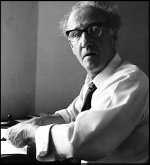
Great portrait, Andrew! Whichever side of the brain you used on this occasion, it worked! EDIT just read you used both

Last edited:
trypdal
Suspended / Banned
- Messages
- 358
- Edit My Images
- No
Well I think the guys e.g. who think Andreus Gursky Rhein II (sold for $4.3 million ) and Kevin Abosch potato on a black background (sold for $1 million)...and think they are great photos have something wrong with their brains.
I think Andreas Gursky and the entire Dusseldorf school of photography are incredible. Great photography indeed.
Mind you, I think Winogrand, Ansel Adams or Michael Kenna and the likes are s***e, so maybe you're right and there's something wrong with my brain! I'm left handed FWIW!
OP
Barney
Suspended / Banned
- Messages
- 3,043
- Name
- Wayne
- Edit My Images
- No
I would have expected that prerequisite for taking an image without using your brain
No, but my camera does. Remember, P is for Pro.
Ed Sutton
Suspended / Banned
- Messages
- 8,556
- Name
- Dave
- Edit My Images
- No
Nobody's said anything about not using the brain.I would have expected that prerequisite for taking an image without using your brain

Last edited:

GeeJay57
Suspended / Banned
- Messages
- 2,894
- Name
- Glenn
- Edit My Images
- Yes
I think both ‘sides’ of the brain are needed in photography.
If I’m just ‘out and about’ with the camera, I think it’s the creative side of my head that ‘sees the image’ and leads me to take a picture. Often relying on the camera to sort out the techy ‘right brain’ stuff. Subsequent shots of the same scene/subject have more input from the logical side, maybe changing camera modes, settings, lens and so on.
If I have a specific agenda, then logical brain kicks in first. What equipment should I take/need? What, where and when am I shooting? Where’s the light coming from? The creative thinking comes in a bit later on, and to be honest can for me be a bit harder to do. Sometimes the creative thoughts come easily sometimes not.
If I’m just ‘out and about’ with the camera, I think it’s the creative side of my head that ‘sees the image’ and leads me to take a picture. Often relying on the camera to sort out the techy ‘right brain’ stuff. Subsequent shots of the same scene/subject have more input from the logical side, maybe changing camera modes, settings, lens and so on.
If I have a specific agenda, then logical brain kicks in first. What equipment should I take/need? What, where and when am I shooting? Where’s the light coming from? The creative thinking comes in a bit later on, and to be honest can for me be a bit harder to do. Sometimes the creative thoughts come easily sometimes not.
- Messages
- 12,294
- Name
- Brian
- Edit My Images
- Yes
Well still in topic as you see with your brain, for Rhein II my eyes are wandering to focus on something, the best remark I could give it is..... it's a "reasonable" pleasant photo but no way a great shot.I think Andreas Gursky and the entire Dusseldorf school of photography are incredible. Great photography indeed.
Mind you, I think Winogrand, Ansel Adams or Michael Kenna and the likes are s***e, so maybe you're right and there's something wrong with my brain! I'm left handed FWIW!
Last edited:
trypdal
Suspended / Banned
- Messages
- 358
- Edit My Images
- No
Well still in topic as you see with your brain, for Rhein II my eyes are wandering
I love it when I find a photo that achieves that on me!
OP
Barney
Suspended / Banned
- Messages
- 3,043
- Name
- Wayne
- Edit My Images
- No
I try NOT to consciously use my brain when I want to make a picture with a camera.
- Messages
- 12,294
- Name
- Brian
- Edit My Images
- Yes
I love it when I find a photo that achieves that on me!
and the common phrase used now is "nothing to see"
trypdal
Suspended / Banned
- Messages
- 358
- Edit My Images
- No
Well I tend to think one person's nothing is another person's a lot!

droj
Suspended / Banned
- Messages
- 5,069
- Name
- droj
- Edit My Images
- No
The terms 'left & right brain' are oversimplified popular parlance, & maybe we should be talking about logic vs intuition. Logic may have its input in monitoring light levels & camera settings, and intuition may govern the whole gamut of framing, focus and the orchestration of the 'picture space', all of which can have a vital import concerning the possible meaning of the picture.
Seeing a picture, my dad would want to know who, what or where it was of, and maybe when it was taken. He would apparently have little concern with the picture as a statement of anything beyond that.
And there are different types (purposes) of photography. But using the left / right brain simplification, and referring to the original question, I'd say that I engage the right brain more by 'switching the left brain off'. No trigger as such, but more allowing / cultivating a kind of alert relaxation - 'getting in the groove'.
Seeing a picture, my dad would want to know who, what or where it was of, and maybe when it was taken. He would apparently have little concern with the picture as a statement of anything beyond that.
And there are different types (purposes) of photography. But using the left / right brain simplification, and referring to the original question, I'd say that I engage the right brain more by 'switching the left brain off'. No trigger as such, but more allowing / cultivating a kind of alert relaxation - 'getting in the groove'.

- Messages
- 11,730
- Name
- Chris
- Edit My Images
- Yes
I persist in taking photos without thinking enough about them. I have tried for over a decade to develop a more methodical approach, but generally it hasn't worked. Mind you, after taking that first, spontaneous photo without thinking much, I do sometimes manage to re-engage the methodical part of my brain, and try to make the photo better. Often times the bird has flown. Sometimes the second image is better, sometimes worse. It's a continuing struggle.
I do know I was right to abandon the 4x5 field camera that absolutely required a methodical approach. I couldn't get excited enough to take photos with it!
I do know I was right to abandon the 4x5 field camera that absolutely required a methodical approach. I couldn't get excited enough to take photos with it!
OP
Barney
Suspended / Banned
- Messages
- 3,043
- Name
- Wayne
- Edit My Images
- No
I persist in taking photos without thinking enough about them. I have tried for over a decade to develop a more methodical approach, but generally it hasn't worked. Mind you, after taking that first, spontaneous photo without thinking much, I do sometimes manage to re-engage the methodical part of my brain, and try to make the photo better. Often times the bird has flown. Sometimes the second image is better, sometimes worse. It's a continuing struggle.
I do know I was right to abandon the 4x5 field camera that absolutely required a methodical approach. I couldn't get excited enough to take photos with it!
The upside down view of the Field type cameras is reportedly severely disruptive to left side viewing and forces the brain to go right and contemplate lines, angles, shadows, spaces and relationships. I find the left/right counter-position of MF very disruptive and annoying.
- Messages
- 5,607
- Name
- Stephen
- Edit My Images
- Yes
The view camera gives an image that is completely divorced from the normal perception of the scene. You can't assume anything, you can't ignore your perceptual blind spots for certain things because you don't immediately see them to visually skip over them. Naturally you look more at the balance of the composition because it's just taken a step into the realm of abstraction.
Like Chris, I fail to be methodical if using an eye level camera - it becomes an extention of my eye, I look at the objects not their surroundings through the camera. I see the main subject, not what's lurking behind or to the sides. I need the discipline of a view camera to not make a visual mess.
Like Chris, I fail to be methodical if using an eye level camera - it becomes an extention of my eye, I look at the objects not their surroundings through the camera. I see the main subject, not what's lurking behind or to the sides. I need the discipline of a view camera to not make a visual mess.
AndrewFlannigan
Suspended / Banned
- Messages
- 11,977
- Edit My Images
- No
That indicates how personal viewing arrangements can be.I need the discipline of a view camera to not make a visual mess.
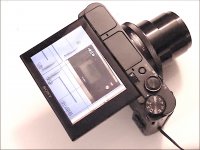
When I used film, I always liked bright line, optical finders, my favourite being that on a Leica M3. The next most effective optical finder for me was the large, waist level finder of a 6x6 camera, such as the Rolleiflex E and F series or a Hasselblad 500cm.
I generally get on quite well with the finders of most digital cameras as wel. Those which have tilt screens, rather than the ones that fold out sideways, are nearly as pleasurable for me as the screens on the better 6x6 film cameras...
- Messages
- 12,294
- Name
- Brian
- Edit My Images
- Yes
Well the price of film should helpI persist in taking photos without thinking enough about them. I have tried for over a decade to develop a more methodical approach, but generally it hasn't worked. Mind you, after taking that first, spontaneous photo without thinking much, I do sometimes manage to re-engage the methodical part of my brain, and try to make the photo better. Often times the bird has flown. Sometimes the second image is better, sometimes worse. It's a continuing struggle.
I do know I was right to abandon the 4x5 field camera that absolutely required a methodical approach. I couldn't get excited enough to take photos with it!
Ed Sutton
Suspended / Banned
- Messages
- 8,556
- Name
- Dave
- Edit My Images
- No
I would have expected that prerequisite for taking an image without using your brain
I try NOT to consciously use my brain when I want to make a picture with a camera.
Using brain unconsciously.
OP
Barney
Suspended / Banned
- Messages
- 3,043
- Name
- Wayne
- Edit My Images
- No
That is fantastic ED you have it sorted, enjoy your photography.Using brain unconsciously.

zx9
Suspended / Banned
- Messages
- 864
- Name
- Keith
- Edit My Images
- Yes
Sub consciously, move to the right spot, set correct focal length then raise camera to eye and take photograph. Then move , re frame, retake several times , review images and use the first 'un thinking' shot, I find it happens a lot.Using brain unconsciously.
droj
Suspended / Banned
- Messages
- 5,069
- Name
- droj
- Edit My Images
- No
In my case, the left brain's good for interfacing with the camera (& all its bloody knobs & dials) - choosing an aperture & checking the histogram (if there is one). Then as one homes in, framing & focus are more fluid & in the intuitive realm (right brain).
I've never used a view camera (it would be interesting, but is unlikely to happen in my lifetime), but I've engaged with slrs & tlrs with 'waist' level focussing screens (image reversed but right way up), as well as slrs & dslrs with optical & digital finders, and rangefinder cameras. I've found that the processes of mind & heart whilst framing a shot are very similar in all cases, & can't really think that I have a preference. The process of image making is the same. The aim is to make the machine disappear.
I've never used a view camera (it would be interesting, but is unlikely to happen in my lifetime), but I've engaged with slrs & tlrs with 'waist' level focussing screens (image reversed but right way up), as well as slrs & dslrs with optical & digital finders, and rangefinder cameras. I've found that the processes of mind & heart whilst framing a shot are very similar in all cases, & can't really think that I have a preference. The process of image making is the same. The aim is to make the machine disappear.
Last edited:
droj
Suspended / Banned
- Messages
- 5,069
- Name
- droj
- Edit My Images
- No
That was an interesting narrative, Keith. And helps to illustrate how various we all are ...Sub consciously, move to the right spot, set correct focal length then raise camera to eye and take photograph. Then move , re frame, retake several times , review images and use the first 'un thinking' shot, I find it happens a lot.
AndrewFlannigan
Suspended / Banned
- Messages
- 11,977
- Edit My Images
- No
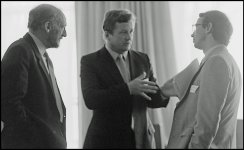
It certainly happens to me....use the first 'un thinking' shot, I find it happens a lot.
Recording a commercial training event, I saw this and grabbed it. I then took four or five more in quick succession, You guessed: this is the one that went into the brochure... (Nikon F, probably a 58mm f1.4)
- Messages
- 5,607
- Name
- Stephen
- Edit My Images
- Yes
The aim is to make the machine disappear.
Good point; my preference for a camera is one that doesn't get in the way, and in my case I find a simple camera with the minimum of built in features suits me best.
It's a trait in my mental makeup, I suppose. In the computer world, I found assembler straightforward and easy to use, and BASIC incomprehensible and difficult.