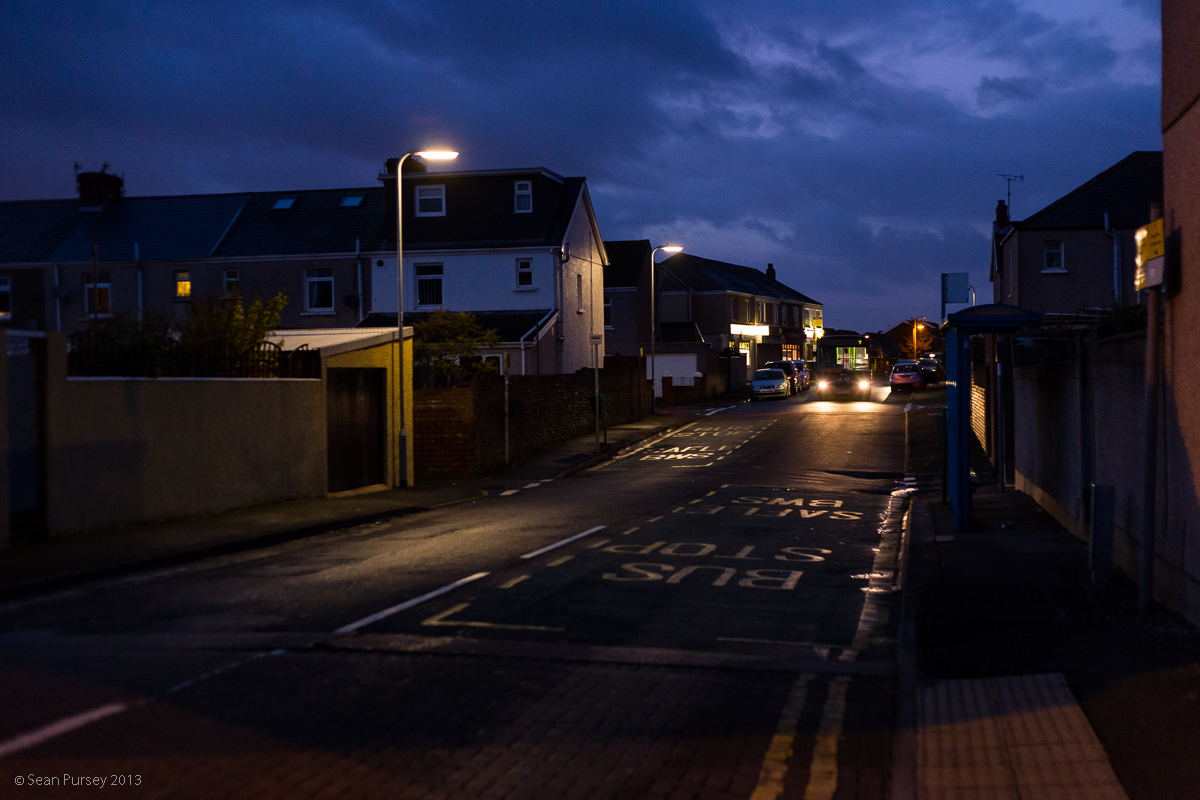
LED Street lighting

beyond the blue

Suspended / Banned
Messages
2,036
Name
Neil
Edit My Images
Yes
Just received a letter from the local council to say we are having our street lighting replaced with LED lighting. Apparently this is going to give us whiter light with better night-time colour recognition, more light concentration and a lot less light pollution. I didn't know this was on the cards, has anyone already got it?
 
We already have it round here, its rubbish, you just get spots of light directly under the light and nothing between lights.
 
We also have it and I think it's great. Proper white light instead of orange, much less upwards light pollution and they use about a tenth of the power of normal lights.


Steve.
 
We've gone for non LED lighting around my way. Main roads still use high pressure sodium (SON) and side streets use Phillips Cosmo lamps... which are a very warm white.
 
The lumen outout was noticeably considerably lower on the LED street lights I've seen. Yes, the colour recognition is obviously better being a white light, but the lights are there for a reason - to light the streets not to see more true colours. There's a lot of technology and engineering that goes in to the design of street lighting including the positioning, height, light type etc to get the best coverage for the purpose. These new lights might be ok for newly designed lighting but certainly seem to be a compromise on older designed lighting arrangements.

I'd rather see better auto control of street lighting and only have it switched on when needed.
 
Here they are just replacing the light units on existing posts. Ideally there would be three lights in the space taken up by two at the moment to give a better spread of light.

However, walking along streets with the LED lights on, There is plenty of light to see where you are going.

As they are more directional, you do not see so much light directly from the light itself and I think this leads a lot of people to think that they are no good, but actual light on the ground where it matters is fine.


Steve.
 
LED floodlights have come on greatly the last couple of years and are an excellent option for domestic outside lights too.
The astonishing thing is the low power usage and instant maximum output when they come on.
I can live with a more focused beam even if that means two units where one sufficed before.
In a typical domestic situation 10w LED floods will be ample.
The point source makes the light 'crisp' so it is easier to read finer details should the need arise.
 
LED lighting in general has improved a lot.

The company I work for puts LEDs onto flexible circuits. We have been working with this company on domestic and architectural lighting: http://designledproducts.com/


Steve.
 
We have moved onto led lights here. They are great. Plenty of light. The street is illuminated very well.
I have recently installed a 100w cree floodlight at work. (equivalent to 850w) Its great! I have just this last week experimented with converting a 1200 x 600mm 4 tube light in the workshop to cree led tubes. Again, superb. I will be converting the rest in the New Year. The standard tubes use about 140w in total, per unit. The new ones use 72w in total, per unit. I have 25 units in the workshop. There should be quite an energy saving.

Kev.
 
Last edited:
100% LED lights in my house. First rate with a very small power consumption. Just about to go over to LED security lights.
 
Cardiff County Council is planning on dimming lights between certain hours,quite how this works with sodium lights I dont know. I would have thought the cost of conversion would be higher than replacing with LED lights. I understand the need to use high outputs on main roads etc but side streets etc could be switched to LED. The school opposite my house uses floodlights around the school and for the car park,the light output is sufficient for me to do without lights in my house most of the time!:)

eddie
 
Last edited:
They also reduce light pollution through better direction of the light. Its being rolled out up here also.
 
They also reduce light pollution through better direction of the light. Its being rolled out up here also.
Hope they do it everywhere, the orange glow to our north from Teesside is shocking some nights.
 
We could do with an all new street lighting along my street as the current set up is a mish mash of originals (when the street was first built in 1953) and some from the 60's, 70's and 80's and half of them doesn't work.
However, I am going to miss that orange glow associated with heavy snowfall at night time what with me living in a town but I bet those LED lights must look good lit up in fog.
 
Our local council has experimentally equipped a street near me with LED lights and they are terrible.
The lights at the top of the pole are so bright you cannot look directly at them without being dazzled, and yet on the ground below there is a dark shadow.
There seems to be no diffusion of the lamp beam and no spread of light, it's all concentrated in one spot.
When you look down the road you can see alternating light and dark patches.
I hate the upward pollution from sodium lights, but at least you get a reasonable spread of light between them on the ground.

I was thinking of photographing the LED lit street and comparing it with one with sodium lights.
 
We could do with an all new street lighting along my street as the current set up is a mish mash of originals (when the street was first built in 1953) and some from the 60's, 70's and 80's and half of them doesn't work.
However, I am going to miss that orange glow associated with heavy snowfall at night time what with me living in a town but I bet those LED lights must look good lit up in fog.

Ah. I know the glow that you mention. Sometimes other-worldly.
 
Be good to see what they do in the way of light pollution.
 
I personally cannot wait for the entire country to go LED it is the future....the reduction in light pollution should be amazing not to mention the savings in maintenance and power
 
Can anyone else remember when street lights were turned off at night? I remember as a kid.... back in the 70s, we had old mercury vapour lamps, which were much better for light pollution.. I remember being able to see far more stars than I can now. Also... they switched off around midnight. The only ones left on were at road junctions and on main roads. It was brilliant for astronomy.

What is this obsession with floodlighting everything all the time these days?
 
Can anyone else remember when street lights were turned off at night? I remember as a kid.... back in the 70s, we had old mercury vapour lamps, which were much better for light pollution.. I remember being able to see far more stars than I can now. Also... they switched off around midnight. The only ones left on were at road junctions and on main roads. It was brilliant for astronomy.

What is this obsession with floodlighting everything all the time these days?

I remember they did that during the miners strike in the 70s. As for remembering, I can remember gas lights!! You youngsters I don't know what you're like!
 
Yes I can remember lights going off at midnight, I can't see the need for them after then to be honest, most decent folk are in bed by then, apart from astronomers that is :D
 
Yes I can remember lights going off at midnight, I can't see the need for them after then to be honest, most decent folk are in bed by then, apart from astronomers that is :D
Yes, of course.
Only footpads and highwaymen venture out after midnight.
 
We now have LED streetlights, all on new and repositioned poles. They are wonderful, far better light than we had previously. Love 'em.
 
I've got to counter all of the enthusiasm for the new LED lights and echo the concerns already highlighted by people that they throw a much smaller pool of light.

In general I'm against the urbanisation of the UK, with the addition of more signage and lighting in rural areas, but in towns the replacement of existing streetlighting with these LED units is not an improvement. The idea of streetlighting is to provide light, which helps reduce crime because it's possible to see people and see what they're doing. By reducing the throw of the light by replacing existing units with LED ones you give ne'er-do-wells more places to hide. The only way of seeing if it actually changes the crime figures in the areas where the lights have been replaced. That will define whether these lights are empirically 'good' or 'bad'.
 
A railway station near me still had gas lights in the late 1980s. They worked so they saw no reason to replace them.


Steve.
FYI There are still a lot of areas in London that are lit by gas lamps.
Covent Garden area to name but one.
 
It would appear that there are various opinions on LED street lighting varying from awful to excellent. I wonder if we all have the same type or if there are different styles.

Our light units have 24 individual LEDs and have a fairly good spread of light. Perhaps there are units with fewer LEDs which are not so good.

Our hospital car park has units with even more LEDs like these:

3726850549.jpg


Steve.
 
We have LED lights in our area on repositioned poles, a much better light source and adequate coverage.

Steve
 
Our whole house is now on LED (240 lights) apart from five lights where we wanted finer control on the dimming. LEDs are bloody marvellous.
 
Our whole house is now on LED (240 lights) apart from five lights where we wanted finer control on the dimming. LEDs are bloody marvellous.
:plus1:
 
The LED lights have significantly less light pollution than sodium, the BBC had a report on the new Northumberland Dark Park, and one of the requirements to get the Dark certification was the replacement of all streetlights with LED.

The bright white light is far better IMO.
 
It would appear that there are various opinions on LED street lighting varying from awful to excellent. I wonder if we all have the same type or if there are different styles.

I agree with you Steve, it seems that not all councils are using the same ones in the same way. Our LEDs, which as I said are wonderful, are on much higher poles than the old yellow ones. They must be a good 8-10ft higher and that presumably increases the area they illuminate whereas if they were on the original poles then it's possible we'd have seen the same smaller pool of light that others are seeing. They've also repositioned them and overall we now have much better coverage of the area with fewer darker corners for muggers to hide so it may well be combination of type, height and position that causes the wide disparity between success and failure in different areas.
 
They trialled LED lights in a few streets in our area.


They ended up rolling out non LED 'white' street lighting in all the side streets - its fantastic for photographing against at dusk.

10857769064_251b7b7a20_o.jpg


Can anyone else remember when street lights were turned off at night? I remember as a kid.... back in the 70s, we had old mercury vapour lamps, which were much better for light pollution.. I remember being able to see far more stars than I can now. Also... they switched off around midnight. The only ones left on were at road junctions and on main roads. It was brilliant for astronomy.

What is this obsession with floodlighting everything all the time these days?

Here in Essex they've been gradually switching the lights off in more and more towns after a two year trial (if I recall correctly). It reached us in September and now at midnight the orange glow disappears for 5 hours and it has made a real difference to stargazing. They keep some of the cycle paths and main junctions lit but I think it's a really positive move!
 
They trialled LED lights in a few streets in our area.


They ended up rolling out non LED 'white' street lighting in all the side streets - its fantastic for photographing against at dusk.

10857769064_251b7b7a20_o.jpg


Just like the ones they are testing in my area.
Intense bright patch underneath and darkness in between - rubbish.

I must get out and take some shots for comparison.
 
Just like the ones they are testing in my area.
Intense bright patch underneath and darkness in between - rubbish.

I must get out and take some shots for comparison.

Sounds more like poor planning and siting, rather than that the lights are "rubbish". It's well accepted that sited correctly LED's are superior to the older tech lights, cost cutting by just replacing the old light fitting with LED fittings will never work well.
 
If you are my age or older (49) you will probably remember the old street lights with either an iron or concrete post, about half the height of current lights with an ordinary domestic 100 watt bulb in them. Now they were terrible!


Steve.
 
Last edited:
If you are my age, older (49) you will probably remember the old street lights with either an iron or concrete post, about half the height of current lights with an ordinary domestic 100 watt bulb in them. Now they were terrible!


Steve.
You youngster. I remember in the Manchester suburb I lived in. We had gas lamps cast iron lamp posts.
 
Back
Top