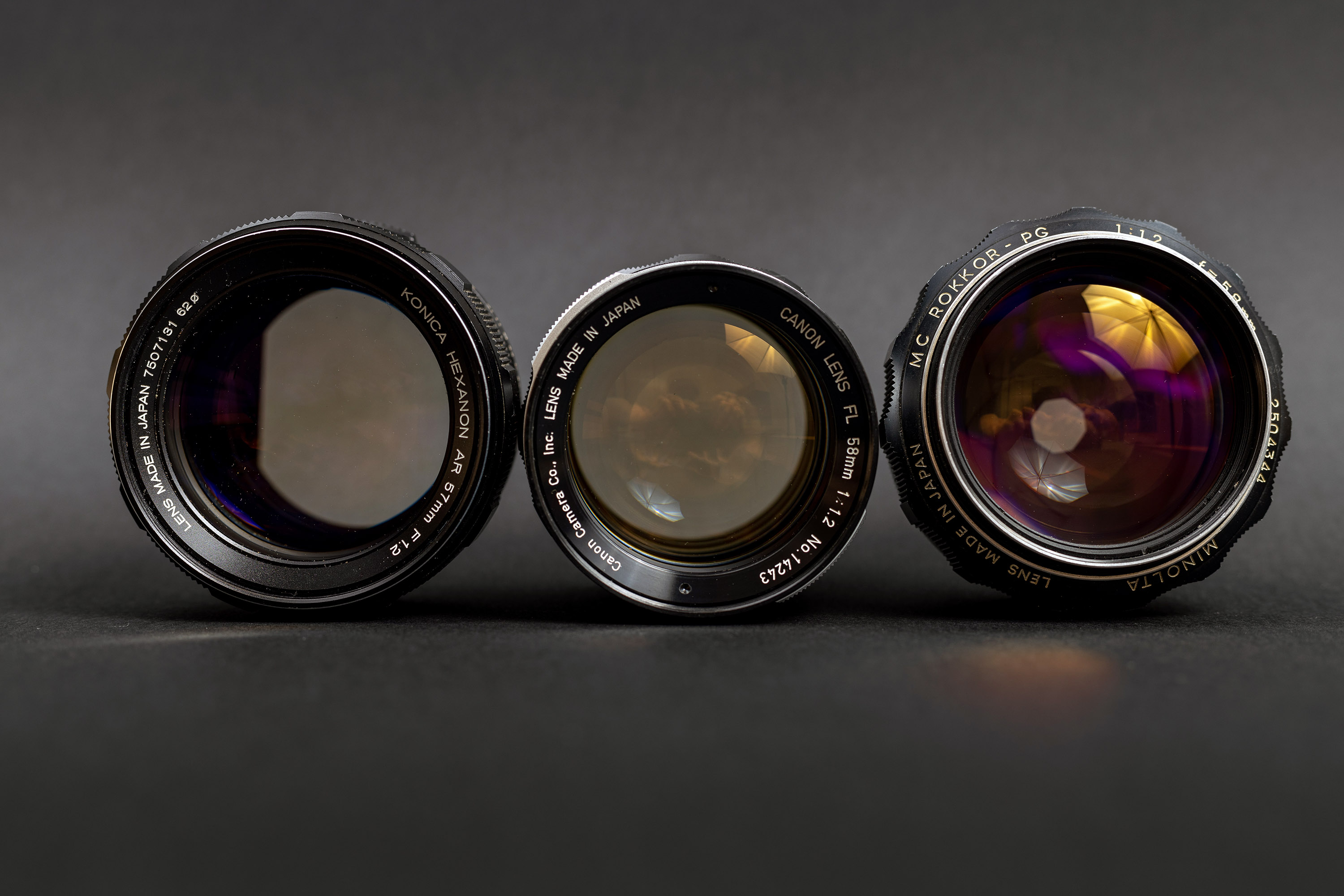
How to tell a radioactive lens?

Fuju

Suspended / Banned
Messages
118
Edit My Images
Yes
Just got an older but mint condition G3 and decided to get a couple of cheap vintage lenses to see what I like but I've just read about some lenses being radioactive! My lenses haven't arrived yet and I couldn't find any info on if they might glow yellow . They are a: Pentacon Auto 50mm f/1.8 and a Sun Zoom YS-85 80-210mm - that Sun one will probably go straight back on eBay, it was a bit of an impulse buy tbh.

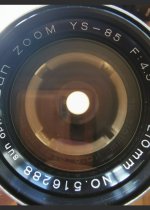
I did find a website listing radioactive glass but mine above wasn't listed. Looking at the Sun lens' listing it does appear to be really yellow but I'm not sure if it's just the lighting.
 

Attachments

  • yellowlens.jpeg
    yellowlens.jpeg
    153.8 KB · Views: 7
The only thing I recall about 'radioactive' glass was nothing to do with optical glass but decorative glass from I think the 1930's.

They put uranium salts into the glass mixture to get a yellow'ish colour. As far as I recall the glass is not hazardous!

So none too sure why optical glass making in the 20th Century would utilise radioactive elements of any variety :thinking:

Have you got a link about this from any academic source i.e. not speculation or guesswork/supposition?

Edit ~ as for how to tell if such objects are emitting. I would think put it in a film changing bag with a sheet (Panchromatic?) film for a few hours.......develop it and look for (patterned?) fogging???
 
Last edited:
It was a real thing. They used to add thorium deliberately to change the refractive index of the glass. Some lenses, like the Aero-Ektar, various Takumars and early serial number Leica collapsible Summicrons are notorious for it. It has also been claimed that rare earth elements like lanthanum used in other glass formulas are sometimes contaminated with radioactive elements (I don't think I've seen a solid citation for that one). The risk from most thoriated lenses for 35mm cameras is considered low, though you wouldn't want to use them as loupes! The main practical consequence is yellowing of the glass over time, though that may not be what is going on here. It could just be the lighting, or less exotic grime or haze on the lens. UV light exposure can supposedly reverse the yellowing in thoriated glass, or there's always this solution:
 
So none too sure why optical glass making in the 20th Century would utilise radioactive elements of any variety :thinking:
Thorium was used in some lens elements in the 1960s - especially by Pentax. I did ask a colleague about this several years ago. As a physicist he presumably knows what he's talking about. His opinion was that you'd get more exposure from walking around Cornwall for a day than using one of those lenses for a year.
 
It was a real thing. They used to add thorium deliberately to change the refractive index of the glass. Some lenses, like the Aero-Ektar, various Takumars and early serial number Leica collapsible Summicrons are notorious for it. It has also been claimed that rare earth elements like lanthanum used in other glass formulas are sometimes contaminated with radioactive elements (I don't think I've seen a solid citation for that one). The risk from most thoriated lenses for 35mm cameras is considered low, though you wouldn't want to use them as loupes! The main practical consequence is yellowing of the glass over time, though that may not be what is going on here. It could just be the lighting, or less exotic grime or haze on the lens. UV light exposure can supposedly reverse the yellowing in thoriated glass, or there's always this solution:

Have a read of this:


Thorium was used in some lens elements in the 1960s - especially by Pentax. I did ask a colleague about this several years ago. As a physicist he presumably knows what he's talking about. His opinion was that you'd get more exposure from walking around Cornwall for a day than using one of those lenses for a year.

Well, every day is indeed a school day :)

Of note as I understand it....
Lanthanum is too low a radiation risk to be fussed over
Thorium for a longer period than the human race will likely survive is an alpha emitter and as a combined element in the glass.......I would be surprised if the detection amount is high enough to register as any health issue, especially as a sheet of paper can 'block' alpha let alone the metal and other components on the lens and camera body.

So long term exposure does perhaps represent a miniscule risk but is of limited concern ~ phew!

As for the link above showing the smashing up of the lens.......crass stupidity if anyone is concerned about radiation. Smashing vastly increases surface area and potential of ingestion/breathing in particulate dust!
 
I looked into this when thinking about buying a radioactive lens and decided it was a non issue. Nothing I've read since has convinced me otherwise.

I may be wrong, but I don't think it's a worry at all.
 
I looked into this when thinking about buying a radioactive lens and decided it was a non issue. Nothing I've read since has convinced me otherwise.

I may be wrong, but I don't think it's a worry at all.

This is WW's second head posting.

Since I've grown I've had time to think about this and I don't think radioactive lenses are anything to worry about either.
 
Thorium was used in some lens elements in the 1960s - especially by Pentax. I did ask a colleague about this several years ago. As a physicist he presumably knows what he's talking about. His opinion was that you'd get more exposure from walking around Cornwall for a day than using one of those lenses for a year.
I lived in Cornwall for the first half of my life. A couple of years before I emigrated to England I was part of a survey by the National Radiological Protection Board into radiation in Cornish houses. Turned out that the background radiation in my granite house was higher than that permitted in nuclear power station.
 
I think the dangers of radiation in Cornwall must have been exaggerated... I mean, thousands of years and not one giant lizard yet!
 
This is WW's second head posting.

Since I've grown I've had time to think about this and I don't think radioactive lenses are anything to worry about either.
Alright Zaphod I think it is time to fire up the Infinite Improbability Drive again ;) but not right now as I cannot recall where my towel is?
 
I think the dangers of radiation in Cornwall must have been exaggerated... I mean, thousands of years and not one giant lizard yet!
...on the other hand, have you met any of the humans? :naughty: :coat:
 
I got it today, it's actually not too bad at all! This was a quick shot of my scruffy dog after going into some hedges after his walk. I have done a levels adjustment and added a tiny amount of high pass filtering. https://ibb.co/jJdSffR

I'll post a video of the lens in a bit so you can take a look, I'm not sure it is nuclear lol.
 
Of note as I understand it....
Lanthanum is too low a radiation risk to be fussed over
Yes, natural lanthanum contains only a small proportion of a relatively low activity isotope. But some lenses containing it are reportedly hotter than they should be, and it has been suggested that the lanthanum may not have been sufficiently refined from ores like monazite that also contain radioactive elements. See for example this thread (Google translated from Italian):
The biggest issue is with deliberately added thorium, though. Some lenses apparently contained pretty large quantities, tens of percent by weight. Measured at the surface, radiation from an Aero-Ektar is reportedly 100x background levels, though typical vintage lenses for 35mm systems probably won't be as hot as this. Even so, it makes sense to take sensible precautions. Radiation falls off rapidly with distance and can be shielded, so better to store that Aero-Ektar in another room than to sleep with it on your bedside table every night. It's probably not a good idea to keep one of these lenses mounted on a loaded camera with a cloth shutter for a long period, as you might eventually see fogging. And never hold one of these lenses to your eye, which is particularly vulnerable to radiation.
View: https://www.youtube.com/watch?v=9TtqxJTVu0g
 
Here is my video. Not too bad to play around with but just ordered an Olympus M.Zuiko ED 40-150mm off MPB so I'll pop the Sun lens on eBay this afternoon.

 
Here is my video. Not too bad to play around with but just ordered an Olympus M.Zuiko ED 40-150mm off MPB so I'll pop the Sun lens on eBay this afternoon.

You should link to that video in your listing - makes it look a much more attractive proposition than the previous seller's photo!
 
I think I'll go the whole hog and get my backdrops out too, I've not used them for ages! Putting in the video is a good idea.
 
The biggest issue is with deliberately added thorium, though. Some lenses apparently contained pretty large quantities, tens of percent by weight.
Other reports are quite different. One claims that...
  • A radioactive lens that contains thorium will give off approximately 0.01 millirem.
  • A chest X-Ray gives you about 10 millirem.
  • You receive about 310 millirem from background radiation.
( https://www.dpreview.com/news/8448160792/humor-the-horrifying-truth-about-radioactive-lenses )

So any harmful radiation from a lens is completely drowned out by, well, just living. :tumbleweed:
 
Other reports are quite different. One claims that...
  • A radioactive lens that contains thorium will give off approximately 0.01 millirem.
  • A chest X-Ray gives you about 10 millirem.
  • You receive about 310 millirem from background radiation.
( https://www.dpreview.com/news/8448160792/humor-the-horrifying-truth-about-radioactive-lenses )

So any harmful radiation from a lens is completely drowned out by, well, just living. :tumbleweed:
Here's a calculation from some physicists who noticed they had a radioactive Takumar back in the 80s, and did some proper measurements:

Gamma Radiation from Camera Lenses

'If the camera is hung by the neck from the carrying strap in the usual fashion, a dose of about 0.5 mrad would be delivered to the user's abdominal wall in a 6 hour carrying day'.

Since this is gamma radiation, 1 rad = 1 rem, so you'd get a 10 mrem dose to the abdomen in about 3 weeks of using the camera in this way. The usual figure for whole-body radiation dose per year calculated in the US is 620 mrem (half from natural sources, half from man-made sources), so that's about 1.7 mrem per day. The camera would give you nearly an extra 30% per day (localised to one part of your body if you carry the camera the same way). Of course there are other things we do that give us higher radiation doses that we barely think about, including long-haul flights. But doctors do avoid giving us any more X-rays than is strictly necessary. I don't think there's anything to be alarmed about in normal use, but at the same time I wouldn't use one of these lenses as a loupe. And anyone who is attached enough to their Pentax to snuggle up next to it every night wearing their camera pyjamas might want to think about changing the lens.
003286207alt3
 
I've got an old Canon SLR, and I was quite surprised to find the FD lens on that is yellow. And this would have been made in the Seventies. Whether it's radioactive or not, I don't know. But as far as I know it's not a lens that's generally regarded to be a culprit.
 
I'm pretty sure we'd have heard if anyone had got sick from a lens - the tabloids would have been all over it for a start.

My guess is that the whole thing is in the "I was abducted by aliens" class.
 
I'm pretty sure we'd have heard if anyone had got sick from a lens - the tabloids would have been all over it for a start.

My guess is that the whole thing is in the "I was abducted by aliens" class.
Nobody expects anyone to get ill from this or any other small radiation exposure on its own, which is why Mathieu Stern's video is a bit silly (and also underestimates the dose by about 50-fold compared to the study linked above, if the 50/1.4 Takumar they assessed is typical). But there's a reason your dentist steps back when taking an X-ray, even though the dose is only in the 0.1-0.5 mrem range these days (equivalent to around 1-6 hours wearing a camera with that lens) - it's to avoid the cumulative effect of many small unnecessary exposures. I wouldn't hesitate to use one of these lenses, any more than I would hesitate to get on a flight because of the (significantly larger) radiation dose from cosmic rays. But I would avoid using a thoriated Takumar as a handy eye magnifier if I wanted to spend a few hours sorting through a box of negatives, even if they offered definitive proof of alien abductions.
 
....even if they offered definitive proof of alien abductions.
Obviously, we each have a different view of the frequency of alien abductions. They do seem to increase towards the end of October...

Star Wars Trooper.jpg
 
Back
Top