How do you process your HDR images?

Daymouse

Suspended / Banned
Messages
876
Name
Simon
Edit My Images
No
Just wondering how everyone processes HDR images?

I’m currently using Affinity Photo on iPad to merge the 3 bracketed photos together and then edit the image but I really don’t like it.
I much prefer Lightroom on iPad but not you can’t merge the photos in there so I’m thinking do I merge in Affinty then import into Lightroom

Are there any other apps that can merge images?
 
This might not be the answer you are looking for but I just don't use HDR any more. Exposure blending is the way to go. Open your 3 images as layers in Affinity or Photoshop or whatever and then use masks to reveal the parts you want from each photo
 
As above , I though HDR had died with colour popping and the likes .
 
I use one of the presets ( or do it free hand as it were) in DSO NIK collection, on a single image, and tweak if necessary.
It doesn't work 100% of the time though.

There is a thread about a free ( but older version) HERE
 
Last edited:
Back in the day, I used HDR quite a bit. 2 programs I used were Photomatix Pro and the Nik software, as Chris mentions ^ .

I stopped using it about 10 years ago though and started trying to get the best exposure I could over one file, or bracketing and then blending if the dynamic range was too much for one file. That said, I rarely blend now, as camera sensors improve, so does their dynamic range. Even a now older one, like my 5Div, still provides excellent files when exposed correctly and it's suprising what can be processed from a good file. This will only get even better with newer sensors and cameras.

Talking landscapes, decent filters can help too. (y)
 
Last edited:
I agree that with the much increased dynamic range of modern cameras the need for HDR processing has diminished. For the occasional HDR subject I take 3 exposures and process in LR. LR does not use the tone mapping which brought HDR into disrepute. LR produces a 32 bit image (floating point) so it can easily cover the high dynamic range. You then edit as normal in LR but will find the various sliders then have enormously increased range. The effect it to allow more freedom of editing but colours remain real.

I recall that one of my club members used to give a talk on HDR and how to use the various software (including Oloneo which no one has mentioned) but as soon as LR brought out this merge feature he stopped, as he could see not point in anyone choosing a different solution.

Dave
 
I use it at times, does not matter how good the camera is, it can't see what the eye can see :)
Either use Affinity or Fusion.
Hardly ever use the in camera solutions

I often don't worry about blown highlights, as in many cases that is how the eye would see them (if you could look at them)
 
I use it quite often when shooting indoors where it is fairly dark but bright windows are present, ( church's and the like) In this situation I will shoot +-6 stops and then bring highlights down and shadows up a little to suit. My Sony's dynamic range is not good enough and I just end up usually blowing the highlights. That said I only shoot in .jpeg files and doing HDR in camera saves me a lot of time in post processing ( the part of Digital photography I really don't like) Sometimes I find colour needs to be backed off a bit and a bit more contrast !

I find snapseed very good for editing on my Android tablet it has plenty of options but I'm not sure if there is a version for Apple devices.
 
Last edited:
My favorite is photomatix, it works for me, dont know if theres an app though, I use the PC version.
 
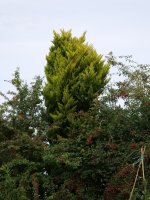
Almost no texture in the light grey cloud today

dr9u.jpg
If I increased the exposure for the shadows in the bush, the sky would be totally lost.


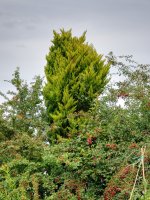
dr9a.jpg

Merging in Affinity, I can see the bush as it looks to the eye, and have not lost the sky, in fact it looks more like I see it.

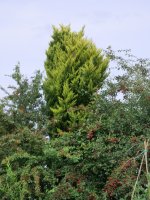
The in camera works, but the images don't align perfectly hand held.


dr9ic.jpg
 
I use the Lightroom built in HDR feature.

There is nothing wrong with using HDR, it's just another technique that can be used to achieve the image you want.

The HDR images from 10 years ago that were over done have certainly done a lot of damage to the credibility of HDR.
 
Back
Top