Oops, I've only just noticed this thread so apologies for my tardiness Lee.
I've been trying to incorporate this style into all my first dance shots recently as they seem to go down well. It really was trial and error to begin with but I use just two sppedlights on lightweight stands (Manfrotto Nano's) and I'll explain the positioning in a mo. Exposure wise you will have to shoot in manual mode and I use ISO200, anything from 1/80th - 1/125th and f/5.6 - f/7.1, the flashes are fired by Pocketwizards and are usually on 1/8th power but sometimes up to 1/4 power depending on distance - this is more or less the same for each wedding as the rooms are pretty dark by first dance time this late in the year.
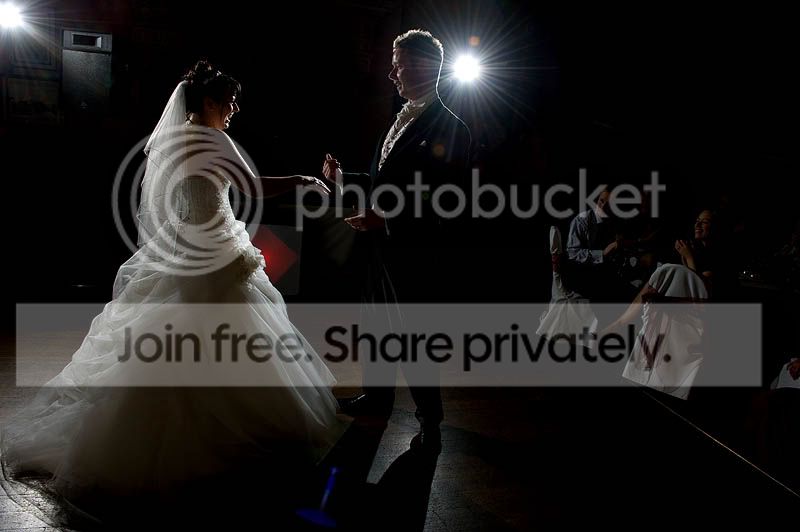
As to spacing, if the room is large enough I cross light the couple by placing the lights opposite each other on the 'corners' of the dance floor, I have to stress that you do need a large room for this as if it is narrow or small one of the flashes will light the opposite wall as was the case with the image you posted above. In this instance I had to place the lights each side of the DJ and because the room was narrow some light was reflected back off the lightish coloured wall giving a little bit of fill. You will also notice that because of the angle of the lights not much of Anna's dress is in shadow because of their placement, the trick is to keep moving around the dancefloor, I always try and have at least one light in the shot. I also often try and have one light behind the couple to add a rim light which can work very well with veils.
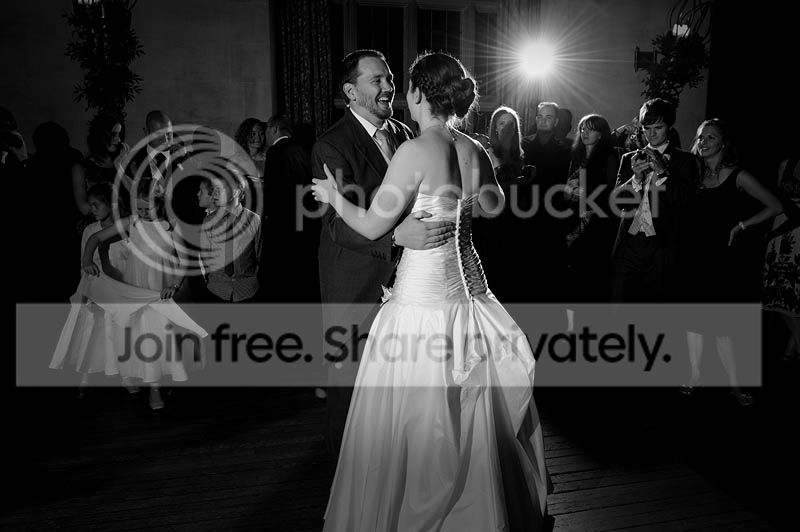
Here are another couple of examples which have more less the same exposure values but different light positioning:
1. This was cross lit and shot from beside the DJ, the speedlight to my left has lit the couple and the one against the back wall has provided the spot, this was a narrow room and both lights should have been on the same wall or plane so I had to be careful when shooting these as you can get harsh shadows showing up opposite you.
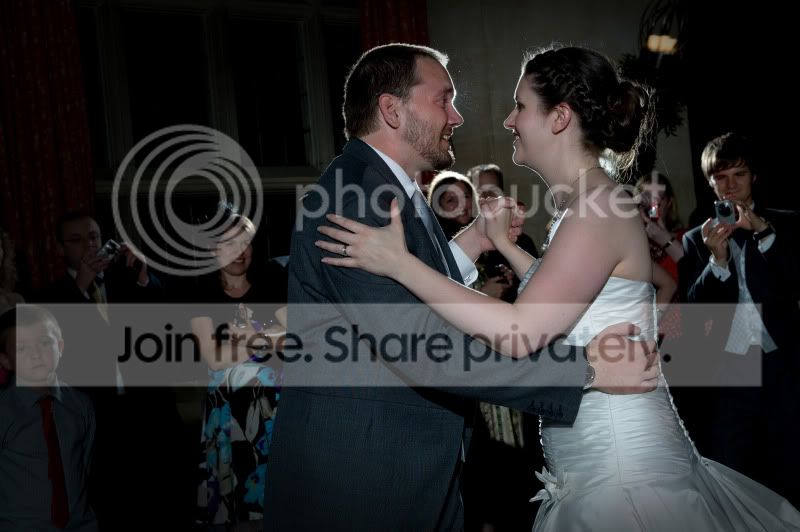
2. This is another from the same wedding but this time the rear speedlight is hidden and provides the rim light shown. The camera settings haven't changed which is the beauty of this method, once you have the exposure set just keep it the same.
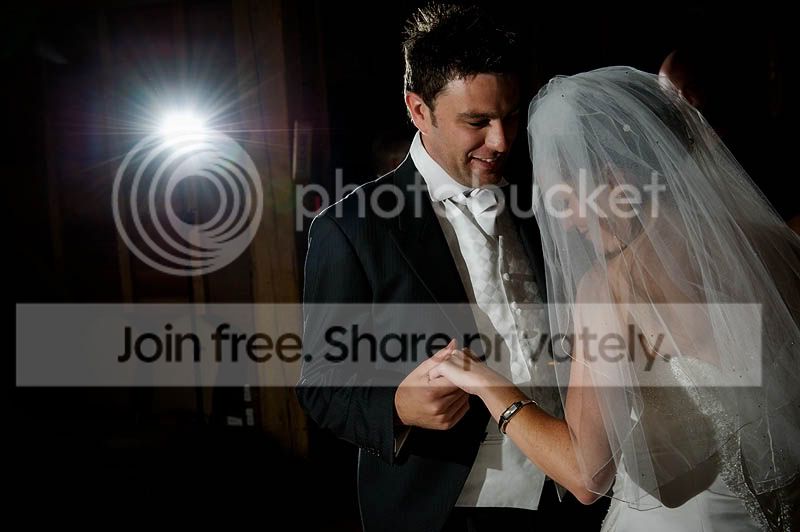
3. This shot is both lights on the same plane similar to the original you posted, when shooting the first dance always keep moving around with your camera at your eye or very close as you can never tell which way they will turn so you have to be ready to get the shot, luckily this one worked well:
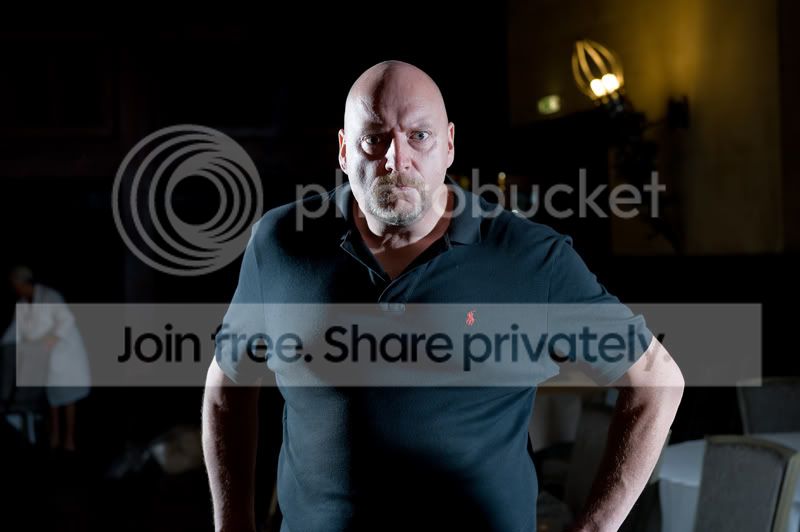
4. Obviously it does help if you have a glamourous assistant to help you when setting up....

I hope this helps Lee and if you have any questions just fire away!





 ); #4 is a higher shutter speed with flash used against the backlighting from the overhead lights to pretty much freeze the action