How do I work out focus distance on my point and press ?

BADGER.BRAD

Suspended / Banned
Messages
4,252
Edit My Images
Yes
Hello all,

I have a few point and press cameras with fixed focusing ( it says auto focus but their lying !!) With out taking loads of shots of something from near to far is there anyway of working out the focus range including depth of field ie:from what distance close to what distance far away the subject will be in focus from the cameras specs ? (sorry for the naff terminology !) From the first trial of the first camera it seems like it is set up for taking holiday photos of your mates/loved ones at a relatively close distance, I'm guessing they will all be setup this way so the question is more theoretical than it is anything else.

Thanks all.
 
Photograph a fence and find which plank or railing is in focus?
 
Wow that is an old camera. Only made for 2 years in 1985-1987 the Jenaflex AH1 if that is the one your posting about.. you could buy a range finder but better to put your money in a newer DSLR
 
Senility alert! (No, not you, Brad.)
 
Last edited:
I'm posting about a number of point and press camera I have from our childhood ( 1980/90's) + a 1930 Kodak Brownie for that matter, not the Jenaflex. I do have a number of Digi cameras point press/ bridge and an old DSLR but they just don't float my boat, I find I take shots I know will not work plus way too many and then scrap 90% of them and end up a little disappointed. No matter how much I try I cannot seem to make myself apply film logic to them ! Sphexx photographing a fence is a stroke of genius , why did I not think of that (please don't answer that ! ) I'm Just about to load a film into The Praktica Sport I have I'll give that a whirl !
 
From what I remember, most of these cameras had quite slow lenses giving considerable depth of field. Couple that with a lens preset to the hyperfocal distance by the manufacturer, and just about everything from around 2 - 3m to infinity should be within acceptable focus for the type of photography these cameras were designed for.
 
I'm posting about a number of point and press camera I have from our childhood ( 1980/90's) + a 1930 Kodak Brownie for that matter, not the Jenaflex. I do have a number of Digi cameras point press/ bridge and an old DSLR but they just don't float my boat, I find I take shots I know will not work plus way too many and then scrap 90% of them and end up a little disappointed. No matter how much I try I cannot seem to make myself apply film logic to them ! Sphexx photographing a fence is a stroke of genius , why did I not think of that (please don't answer that ! ) I'm Just about to load a film into The Praktica Sport I have I'll give that a whirl !

This is just an observation, but here’s my 2 pennorth.

I shot film for way more years than I’ve shot digital, even making a ‘living’ at it for a short while. And in a nutshell, I think your digital journey has concentrated on the negative aspects of the digital journey and ignored the positives.

The great advantage of digital is that it’s a fantastic learning tool, but that requires a little discipline (nowhere near as much as shooting successfully with film). My photography improves more in a year with digital than it did in 5 with film (I know, I must have been really crap when I started).

These film p&s cameras are the polar opposite of a photographers tool, designed to allow ‘anyone’ to capture a very poor image; surely photography is about building skills to use tools to create an image that couldn’t just be made by ‘anyone’. The sad fact is that most people’s phones are more sophisticated ‘cameras’ than these cameras of yesteryear
 
Speaking as a dedicated film user and lover of my zone focus XA2 and Trip 35, I with Phil on this.

Other than a one off bit of fun, or just to try it, I see little point in using the cameras you're talking about.
 
I think it depends on what you want and enjoy, whether you want to concentrate purely on getting the best possible result, or whether you enjoy the challenge of using old film cameras and getting the best results you can from them or, indeed, using them to create a certain 'look' or 'feel' without using digital image manipulation to 'forge' the effect. Personally, I enjoy the best of both worlds and use digital and film cameras.

To round things off, here's a 'very poor image' from a 1924 Kodak Box Brownie point and shoot camera that 'anyone' could have captured.

American Civil War by J White, on Flickr

I don't know why I didn't just use my phone instead. Mind you, would those people have been interested in helping me to produce a historic looking photo if I'd just been using a smart phone? To me, as a hobby, photography is more about enjoying the whole experience of taking and creating a photograph, rather than just producing the best looking image possible as easily as possible.
 
Last edited:
You hit the nail on the head for me Mr Badger trying to get the best from these cameras is the idea. The point and press cameras are just an experiment really just to see how well/badly they work and I'll most likely only run the one film through each one. My main interest is getting the best from my Russian 60's and 70's cameras that my dad was so fond of and the super modern compared to yours 1931 (I think) brownie no2 that I have. I take your point Phil about digital being a great learning tool having the ability to see you results instantly and having the ability to see your settings for each shot is great but I like the mechanical nature of the old cameras and total lack of automation. My ideal camera and I know this will never happen would be an old style manual mechanical camera with a digital sensor where the film would fit and cost less than £20. I do like the digi Bridge camera I have purely as I can walk around with it or carry it on my bike or motorbike being relatively small and the fact that I have the 40X zoom capability meaning I don't have to carry multiple lenses, as a general rule the photos are great but they leave me wondering is that because I did a good job or was it the cameras clever software. To round it off Mr Badger your image from the Brownie is great, what film were you using ? I tried Kodak colour film then found that the frame numbers did not align so contacted Ilford to see if their films number would line up and they sent me 5 or six films to try 125 ASA and 400 for free. Up to this point I've tried the 125 and am waiting to process it when I have enough films to process as a batch. I'm just thinking the 400 ASA may be a little fast.
 
Last edited:
I'm posting about a number of point and press camera I have from our childhood ( 1980/90's) + a 1930 Kodak Brownie for that matter, not the Jenaflex. I do have a number of Digi cameras point press/ bridge and an old DSLR but they just don't float my boat, I find I take shots I know will not work plus way too many and then scrap 90% of them and end up a little disappointed. No matter how much I try I cannot seem to make myself apply film logic to them ! Sphexx photographing a fence is a stroke of genius , why did I not think of that (please don't answer that ! ) I'm Just about to load a film into The Praktica Sport I have I'll give that a whirl !
Ha! Well the first camera I had was a Six-Twenty Folding Brownie bought new in about 1950 and I am pretty sure they hadn’t changed much from pre-war. There are some manuals linked from here:
http://www.brownie-camera.com/94.shtml
I am sure mine was f 6.3 but I can’t remember the focussing for sure but I don’t think it was fixed focus.
 
As it happens, I have been given a Kodak Brownie Cresta camera this last week and I have been having a good look at its technical capability. It has a simple meniscus lens (and needs the film to be curved in the camera to approach focus) and it "focuses" from 7 feet to infinity. That focus is not sharp at all, at any distance. The expectation from Kodak was that the prints made from the negatives would be contact prints at 6 cm by 6 cm. At that size, focus is not much of an issue.

To get an idea of what focus you can expect, do as Sphexx suggests and photograph a fence with regular uprights. It is unlikely any will be in focus but you will see which are near enough in focus for you.
 
As it happens, I have been given a Kodak Brownie Cresta camera this last week and I have been having a good look at its technical capability. It has a simple meniscus lens (and needs the film to be curved in the camera to approach focus)
See, a curved sensor, not old fashioned at all ;-)
 
Curved sensor, My collection of view finder 1960's and 70's cameras and various point and press cameras are all mirrorless ! This modern technology is wonderful what will they think of next ? I have heard rumors of filmless cameras !
 
Last edited:
I'm still a little confused with the ambiguity of the question TBH....

I do recall being show, what ISTR was described as the first 'Auto-Focus' compact when I chose my XA2 circa '81, a Minolta, I think, that used a rather curious clockwork mechanism on the film advance to wind through the focus range until the electric 'stops' the AF system had decided on were reached.. it was rather slow and noisy if memory hasn't completely given up.... that's one of the few, genuinely AF point&shoot compact cameras of the film era I recall; think Konica and Cannon did one later, but most film compacts were sold as 'focus free' rather than genuine Auto-focus....

Back to the XA2, more refined than most P&S compacts, it was 'zone focus' set on a slide to an icon of a mountain, a man or a face.. the AE electronics decided on the aperture, and I believe that it was a combined 'aperture/shutter', that opened up as far as the electronics told it, so impossible to say what aperture it ever 'set'. I think that my Konika is much the same though on that it does have an aperture priority semi manual mode, but on my model, the focus is still to icons not scale, so even though you may know the aperture, the actual focus range and DoF are a bit hit&miss guess work.

Others in the collection are more or less scientific. 'Pops' Retinette, is a scale focus camera with optional accessory range finder; lens is marked in feet, and has DoF brackets on the scale for different aperture settings, as common on most film SLR's.

So, its pretty much dependent on the camera, I think. & I'd suggest the rule of thumb, is if there's no feet/meter scale for focus, then its pretty much down to educated guess work what the focus distance setting is for any icon, if there is one, and what the DoF around that may be... with presumption that most 'focus free' are not gong to have a very big max aperture, and will likely tend towards hyper-focal if there's nothing else to twiddle.

I like the fence idea.... that could keep you intrigued for YEARS.. when you have taken test shots of the same wicket fence, with different cameras, and batched up films to develop, identifying which shots came from which camera, at what settings!!!! Might I suggest, you hang a chalk-board on the fence, as your focus target with the taking camera and settings chalked on it, to help in review?

Have to say, intriguing as the conundrum may be; personally my main gripe with range-finder or zone-focus cameras at wider apertures / shorter focus distances, hasn't been working out the DoF but combating parallax error.. which does make me wonder whether this really is an issue worth all 'that' much pondering or investigation TBH... it's not something I have ever had the urge to invest much time or effort of materials to investigate.... though the suggestion of the chalk board, was prompted by similar experiments investigating the effects of different filters on B&W.... if ONLY I had thought to take 'control' photo's of he same subjects in colour first Lol (think I did second time round TBH!) .. we are all entitled to our madness, I suppose!
 
The original question... I have no idea but the fence idea sounds good to me.

On the general point of simple fixed focus cameras, I love them :D
 
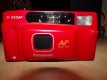
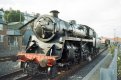
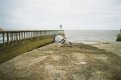
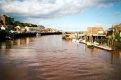
Here's the first camera in question, I have to admit that it was used when the subject matter was a bit naff and I didn't really want a photo, because I didn't expect much of it if that makes sense. My other cameras were used when there was something I really wanted to record. That said some of the images were o.k , if i bothered to make some effort I think it could be quite reasonable. it would be quite limiting with it's lack of exposure settings. The last photo shows it's limitations on landscape type shots. Please note the cameras anti gravity system (I just noticed it seems to be floating above the desk)

CAMERA.JPG
train2.jpg pidge.jpg
sarah2.jpg
whit.jpg

All the landscape shots turned out like this !
 
Last edited:
The online Manual I found for that camera, does say it 'may' have trouble focusing in some situations... like water! Which makes up large part of that last scene... it s a genuinely full-auto genuinely AF P&S camera, using IR sensors, which with large expanse of water, could be fooled by scatter reflections.. before that scene which has no obvious focal point to lock onto.... and I would suspect, pretty crude AF system, wast't overly comfortable with.. an would probably be peculiarly 'slow' by modern standards.
instruction Manual does suggest camera has a half-press focus lock, and recommends pre-focusing on distinct target before composition in tricky situations... for that last shot, maybe filling frame with those buildings to the left about 1/2 way into the scene, getting focus lock and then recomposing on the more empty bay would have pushed the focus further ahead...
On this one, could be just being familiar with the camera, and a little bit of user know-how to get the best from it...though very 80's techno, into 90's cost-cutting, I suspect that was predominantly a low-end hand-bag 'party' camera, that sold on being P&S 'simple' and delivering results 'better' than a 110 cartridge... most of the time... and tying to 'defeat' electronic 'would you like fries with that' automation, to make it do better, when out of its comfort-zone, could be as or more frustrating to a more clued up camera jockey, as handing a fully manual clockwork Zenit to a teen-ager!!
 
I must admit Mike,I did not research the camera at all I just put film in and ran with it but as you say I now know if I put a bit more effort in the results could be quite good.The next camera to try is a Praktica Regal I've put a roll of Kentmere 400 B&W in and will give it a bit more effort. The one I do like is the Cosmic 35m I have from the same collection, as kids I had the earlier 35 and my sisters and mom had the 35m so there is some memory there and the connection with my family, I do intend to find a 35 in the end. Something I don't like about the shots is the small depth of field, as a general rule I like to see the whole image taken including for and back ground. If nothing else I'm enjoying using them ! I sent the copy of the Manual into Butkus but never really looked at it !

Cheers

Brad
 
Last edited:
Quite a few of these p&s type cameras have a two-stage shutter release button, push it about half way down to get it to auto focus, then press the rest of the way to fire the shutter. There's often a green light and/or a bleep when the focus locks on to something. So if you've not done so already, perhaps try pressing the shutter button half way and see if gets the camera to focus? If fitted with this type of system it should be mentioned in the instruction manual for the camera, if you can find a copy.
 
Last edited:
Could be, that the Auto-Focus mechanism on that one, like the clock-work Konica system, 'cocks' to hyper-focal on film advance then 'retracts' to the focus stop set by electrckery, so if the electrickery hasn't 'latched' focus comes to the nearest focus end of its travel......
Also possible with a half-press 'focus lock', to 'release before fire'... a common user niggle on even modern electric-picture-makers, locking focus at half press, but releasing that inadvertently as you squeeze to fire, the electrckery going into 'spasm', trying to find a focus point and lock on, in the time it takes to squeeze off!

Cosmic could be 'fun'. From flakey memory, it was 'orignally' a half decent 35mm range-finder, with scale or on later, zone-focus, lens. Probably better made than other 'cheap' consumer compacts of that era, like the plastic Brownies and the like. It lived in the shaddow of the simlarly 'cheap' Zenit SLR's.

And I have a nagging inkling in the back of my mind, that rather like the Russan Ural motorcycle, they 'gave' the design to communist China at one point, and that the 'name' was maintained on some very 'flakey Chinese derivatves, with some late incarnations being almost all plastic, plastic lens 'instamatics' with littl relation to earlier examples.

Seems popular with the Lomo-Lads, that suggests that last, and possibly Chinese offerings were marketed by that particular franchise... I think I would want to do my research much more thoroughly on that one, but earlier examples with scale-focus lens, and manually set aperture and shutter, if you apply the F16-Sunny guide on the film-packet and a little common-cocum, can probably return some pretty astounding results in relation to their original retail price.... Far better than delivered by other wobbly plastic lens, light-leak prone 'lomo' cameras.... like, err... my Olympus XA2 :whistle:
 
The Cosmic 35M does produce some really good results I'm really impressed with it. It does suffer lens flare which can be cured by shielding it from the light with my hand. On the earlier Cosmic 35 I have seen a range finder attachment which fits in the hot shoe ( I've never seen one in the flesh so I'm not sure how it is used) I have only every used the 35m using the symbols on the lens or sunny 16 rule with good results. The 35m has the same symbols on the lens as the Cosmic/Smena Symbol. I have just purchase a 35 as I used one of these as a kid and I prefer the look of it plus it has the selfie timer should I be sad or daft enough to use it !
 
Last edited:
The only 'cold-shoe' accessory Range-Finder I have used belonged to Pop's Retinette, and he used to spend HOURS every Christmas peering through it, before having a 'wibble' and going and hunting out a tape-measure! Lol. Unfortunately it didn't make to to my collection with the camera....

Basic principle is same as built-in range-finders; one peep-hole has a second image ported to it from another via a semi-silvered mirror, so you get two over-lapping 'ghost' images in the peep-hole. You twiddle a dial that changes the angle of the mirror in the periscope thing, and bring the two images co-incident to each other. then read off the distance on the knob you twiddled, and set that on the lens. (on more refined 'coupled' range finder cameras, twiddling the range-finder range dial also adjusted lens focus)

Works by simple triangulation, but the short length of the known 'base' between the two range-finder lenses, in relation to the very long focal range, plus usually tiny size of the peep-holes, and contrast of subject,particularly in low light, can make them slightly less accurate; the resolution of the scale on setting dial more so... which is why I suspect 'Pops' used to get so frustrated and go hunt out his DIY tape-measure!

Using Pops scale focus Retinette, or other scale focus cameras, I have done reasonably well, judging focus distance by eye.... For shorter ranges, sort of, "How many times could I lie down between me and subject, then multiply by 6 foot, in my case! Or, are they more than arms length away? If so how many, and times by 3 foot. For longer ranges, I work on cars lengths or parking bays and multiply by 15 feet... Then make a second guesstimate of how close I reckon I may be..... and check the DoF and give myself an aperture to give me maybe 50% or more on my range guess for 'margin'.... can actually work quite well.

Before "Lomo" hijacked the arena, rather like 'Punk' appropriated 'New-Wave/Indie', it was notionally called 'Serendipity-Photography', and similar to New-Wave/Proto-Punk, the philosophy was about getting up and 'just' giving it a go, without being 'too' pretentious about it... (Pretty sure that David Bailey was actually an exponent of it in those days!) seeing what you got with a little guesswork and lucky-accident... unlike "Lomo" that hailed the imperfections as 'effect', slapped a brand-name on it and sold it as 'art'... bit like my eldest in the early naughties coming home in a designer 'skater' outfit, with distressed jeans, pre-grayed T-Shirt and 'trucker' chains, saying "Oy-yam, wot I where, Maaaaaan!" and singing Nirvana's "Come as you are"! oblivious of the irony!

Bailey, ISTR, even pointed out in TV interview, that it was 'daft' spending loads of money on a fancy camera, to then try and be skinny on film NOT taking photo's with it, suggesting 'buy a CHEAP camera, and burn as much film as you can afford, and get 'better' results from practice, not the cheque-book.... or curious notions of 'effect'!

One of the reasons, I used 'cheap' OM10's mostly through the 90's and even cheaper Croatian copy Agfa film, bought in bulk lengths, home loaded and home developed, usually push-processed to whatever film-speed I reckoned appropriate on the day... which some ways I regret....I did get lots of photo's and loads of practice that's for sure.... but I probably wold have done well to get a 'bit' more selective and strategic in a lot of circumstances.... but hey! I got photo's, and I probably wouldn't if I had been more concerned to conserve expensive film!

Lens flare on the Cosmic? Has any-one put a 'protection filter' on it? Could be internal reflections twixt that and a front element. From google mages, actual lens looks reasonably well recessed/shrouded in the lens body... Pop' Retinette has simlarly reasonably well shrouded front element, but he always used a hood when he added filters for B&W... may be worth a squint, but if you can shade with a hand when needed, maybe no biggie.

 
Back
Top