ndwgolf
Suspended / Banned
- Messages
- 4,692
- Name
- Neil Williams
- Edit My Images
- No
Portrait Photography in Small Spaces: Creativity Over Square Meters
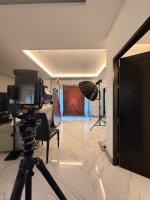
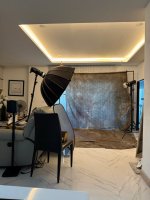
Working in a confined space can feel limiting at first, but in portrait photography it often does the opposite—it forces creativity. Some of my favorite images have been created in small rooms using just two or three lights, careful reflector placement, and a clear vision of the mood I want to achieve.Lighting a Subject in Tight Quarters
When space is limited, lighting becomes less about power and more about control. Using up to three lights allows for flexibility without overwhelming the scene:- A key light to shape the face and set the mood
- A fill or rim light to add separation or depth
- Occasionally a background or hair light to subtly lift the subject from the scene
The Importance of Reflectors
Reflectors are essential in small-space portrait work. They help fill shadows naturally without introducing another light source, keeping the image soft and believable. A simple white or silver reflector can open up shadow areas under the eyes, along the jawline, or across the body—especially important when working with dramatic lighting.Used well, reflectors don’t flatten the image; they balance it.
The Freedom of Shooting at Home
There’s something special about shooting in the privacy of your own living space. The atmosphere is calm, unrushed, and personal. When it’s just you and the model, trust builds quickly—and that trust opens the door to creativity.This is especially true when shooting boudoir or even full nude portraits. In a private, familiar environment, the focus shifts away from self-consciousness and toward expression. The images become more honest, more relaxed, and far more intimate in feeling—without needing to be explicit.
Leaving Room for Imagination
My personal style leans toward suggestion rather than exposure. I prefer to have everything technically covered, while leaving just enough unseen to invite the viewer’s imagination to do some of the work. Shadows, angles, fabric, and framing often say more than full reveal ever could.In the end, portrait photography—especially in small spaces—is not about the size of the room or the number of lights. It’s about intent, trust, and knowing how to use subtle tools to tell a quiet, confident story.
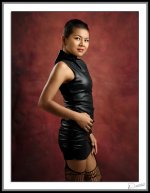
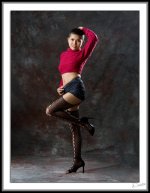
My setup today was shot with the Hasselblad X2D II with the XCD 135mm f2.8 and the XCD 90mm f2.5
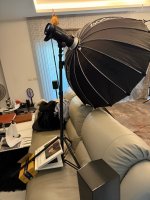
Lighting was 2 x Profoto B1 Heads one on a Softbox the second (rim light) was on a 7 inch reflector
Both were shot at F3.4 1/1000
Full set here ; https://www.neilandfon.com/new-blog-1/home-photoshoot-in-a-confined-space