Help with Delta 100 & Rodinal

Carl Hall

Suspended / Banned
Messages
3,817
Edit My Images
Yes
Shot my first roll of 35mm in quite a while earlier in the week, and I am really quite disappointed in the results. They all seem very grainy and are nowhere near as sharp as I had expected. I was using a Canon EOS 5 with EF 17-40L lens. The film was Delta 100 developed in Rodinal 1+50.

As far as I can tell, there could be three main areas where I've screwed this up:

  • At the taking stage:
    • Issue with the lens- This seems unlikely as I was using a modern EF 14-70 L lens, which I know to be very good as I've used it for a few years on my digi gear.
    • Issue with the camera- It's just a box between the lens and film, so providing the shutter speeds are accurate can it really cause an issue?
    • Exposure error- All were taken on aperture priority with centre weighted metering. Looking at the negs there is a nice range of tones. None of the frames appear to be nearly black or nearly clear so I guess the exposure is pretty good.
    • Camera settings- Typically shot fairly wide, mostly 17-24mm. I was shooting mainly between f/8 and f/16. I don't think its a DoF issue causing the blur as even f/8 at 24mm is a deep DoF.
  • At the developing stage: (I think this is where the problem lies)
    • Developer- I used Rodinal (think its actually Adanol, but it's to the Rodinal formula) 1+50 for 14 minutes, as per the MDC. I know this is high acutance developer which increases grain, but even so there's more grain that I'd expect from Delta 100! I've had the Rodinal for quite a while (a year maybe?) and it's gone very dark brown. From reading elsewhere it seems that this stuff lasts for years and goes almost black, but is still useable. Wonder if I need fresh developer?
    • Stop bath and fixer- No idea if this can have any affect, but I'll list it anyway. Ilfostop and some Ilford Rapid Fixer which is fairly old. There's a hint of yellow to it but I tested the film leader immediately before and it cleared in 35 seconds. My actual fix time was 5 mins.
    • Temperature- I use ambient temp water from the tap for the developer, as it's pretty warm at the moment. I don't check any temperatures at any point in the process because I figured it must be fairly warm in the house, and from what I've read B&W doesn't really need to be too temp critical
    • Agitation- Usually I use the "twisty stick" to agitate. One minute continuous and then ten seconds every minute thereafter. After each period of agitation I give the tank two small taps on the sink to dislodge any bubbles. This time was slightly different however, as for some reason I was concerned about using a small reel in a big tank, so I also gave the tank a little swish round before I tapped it each time. Could this extra agitation cause extra grain?
    • Washing- Washed in running tap water for 8-10 mins. After that I rinsed it finally in filtered water to prevent water spots.
    • Drying- After rinsing in filtered water I remove the spool which is still attached to the tube, and holding the top end of the tube I kind of flick my wrist to try and get as much water off as I can. Then I take the film off and hang it in the shower with a bulldog clip.
  • At the scanning stage:
    • Using a V550. Tried VueScan and EPSON Scan, both give me grainy images which are unsharp (I'd actually say they're a bit blurry). Could it just be a case of using a flatbed scanner for 35mm and expecting too much from it?

Think I might have gone a bit overboard with all the info... But I'm trying to find all the areas where I may have a problem. As far as I can tell, the most likely reasons are: expired developer, over agitation, poor temp control or perhaps it's just me expecting too much after shooting 120 B&W.

I'm going to shoot some more FP4 over the weekend (don't have any more Delta) and I'm going to try and straighten my developing technique out a bit more, taking a bit more time and paying more attention to details. Just wondering if anyone can see any reasons why the images (which have had no sharpening or grain reduction in PP) are so grainy and blurry.

Thanks!

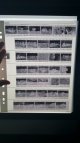
F083S003.jpg F083S006.jpg F083S008.jpg F083S012.jpg
 
First, I've never used Delta 100, nor have I used Rodinal with 35mm films. In case this gives you some sort of benchmark, this link will take you to some photos of Bath taken on 35mm (it would probably have been Pan F) in 1966, developed in Unitol and scanned with an Epson 3200. See how the grain looks.

I'd like to see the scans. I know that reticulation can give the appearance of increased grain. I don't know how resilient Delta 100 is to it. I do know that I've had one very bad case of reticulation in the 1960s using Ilford film, so it can happen. I've always been obsessive about time and temperature, and use a mercury thermometer certified to 1/4 degree (and have a second identical one to check it against). I don't allow more than a 1/2 degree F out. N.B. this is black and white, not colour I'm talking about. I also know that most are not so careful.

Other factors that can increase grain are extra exposure, extra development, apart from the developer choice.

From the write up, Adonal seems to be Rodinal as I know it. My bottles (I stocked up back in 2005) are old and still working. Well, the opened one is....
 
Last edited:
I've only ever had grainier than usual 35mm in Rodinal
Rodinal just works but its not great if you're fussy about grain, there are just too many other developers that will spare you the hassle and consistently produce smoother 35mm than Rodinal.
The 120 thing is definitely a factor, can't underestimate the difference between it and 35mm :)
 
Rodinal wouldn't have been my first choice for Delta in 35mm as it can get quite grainy, but it can be tamed a bit with stand or semi-stand development. It should do better with the older style FP4+, but you'll always get grain with it and that shows up worse on 35mm than larger formats.
 
Hmm seems like it's time to reconsider my choice of developer then! I've used it quite a lot with FP4 and Delta 100 in 120 but perhaps the smaller frames of 35mm are showing it up a little harsher. The reasons I chose Rodinal to start with were because it's pretty cheap, lasts forever and is in one small bottle. It's just easy and simple lol. I've used Ilfosol 3 in the past which was pretty good, but I think it doesn't have a shelf life that agrees with my shooting frequency. I've used D76 too but that went off before I could use it all, and storing 5 litre bottles was a bit of a pain! Have to have a look around and see what other options are about.

First, I've never used Delta 100, nor have I used Rodinal with 35mm films. In case this gives you some sort of benchmark, this link will take you to some photos of Bath taken on 35mm (it would probably have been Pan F) in 1966, developed in Unitol and scanned with an Epson 3200. See how the grain looks.

I'd like to see the scans. I know that reticulation can give the appearance of increased grain. I don't know how resilient Delta 100 is to it. I do know that I've had one very bad case of reticulation in the 1960s using Ilford film, so it can happen. I've always been obsessive about time and temperature, and use a mercury thermometer certified to 1/4 degree (and have a second identical one to check it against). I don't allow more than a 1/2 degree F out. N.B. this is black and white, not colour I'm talking about. I also know that most are not so careful.

Other factors that can increase grain are extra exposure, extra development, apart from the developer choice.

From the write up, Adonal seems to be Rodinal as I know it. My bottles (I stocked up back in 2005) are old and still working. Well, the opened one is....

Hmm I'm not sure I've heard of reticulation before. Is this something that could look like grain? Could it also be the cause of the apparently softness to the images? Based on your comment on temperatures I think I'm going to get some more Delta, some new developer and then pay closer attention to my temperatures. Hopefully I'll have silky smooth black and whites in no time :)

maybe some slight underexposure too?

They don't seem too bad. Some of them are perhaps a little underexposed but a lot of them are pretty good I think. I'll take a photo of them
 
They're mostly exposed for the sky rather than the shadows, aren't they?

The grain doesn't look too bad... but not at all the smoothness I had from my one film of Delta 100 so far, developed by Peak (in XTOL I think). Mind you, look at @RaglanSurf 's entry in the never-ending good morning challenge; I know it's Delta 400, but the grain is much much worse than yours (Rodinal also). I'll be shooting some Delta 400 soon, and will be processing it in Ilfosol 3, but that will take a while so probably not much use to you.
 
you can get smaller id11/d76 packages, 1 liter (bleh) and 3.8l for d76, think sharif photographic are cheapest
i was going to go for d76 3.8l next time, maybe 2 packets and leave 1 lot unmade
 
Hmm seems like it's time to reconsider my choice of developer then! I've used it quite a lot with FP4 and Delta 100 in 120 but perhaps the smaller frames of 35mm are showing it up a little harsher. The reasons I chose Rodinal to start with were because it's pretty cheap, lasts forever and is in one small bottle. It's just easy and simple lol. I've used Ilfosol 3 in the past which was pretty good, but I think it doesn't have a shelf life that agrees with my shooting frequency. I've used D76 too but that went off before I could use it all, and storing 5 litre bottles was a bit of a pain! Have to have a look around and see what other options are about.

That's the thing with Rodinal, shelf life is stupendous, couple that with it being a one shot and its other qualities like stand development, price and economy, nothing else comes close for convenience, but on 35mm it was always a bit coarse for me, I still use for the odd roll of 120.
This grain thing has changed the frequency that I shoot and soup because my developer of choice needs to be mixed in a 5l batch and only lasts 6 months in sealed no air bottles.
So instead of 3 rolls a week and then soup, its a marathon soup every 3 months.
The only way to continue your current cycle is to use one shot developers and be prepared to chuck it if it gets too old
 
HC -110

Just sayin.

Lasts for ever.

8mm makes 500mm for dilution H.

You do the maths.

:)
 
I always used to start and stop processing, so making up D76 and other developers always ended up with a lot going down the sink when it went off. I've got Rodinal that must be about 20 years old and as dark as tea, yet it just kept on going and was still working last time I tried it. That was on 5x4 sheet film where grain just isn't an issue, but I had good and bad results with Agfa APX400 in 35mm. Can't upload them from this computer, but I'll try from the laptop tomorrow.
 
Reticulation. This shows it in its full blooded form.

Reticulation.jpg
It's simply cracked gelatin, giving a crazy pazing pattern. You should be able to spot if it is this; but I suspect that it's mainly down to choice of developer. More agitation can increase the grain as well. Modern films are supposed to be more difficult to reticulate, but I've lacked the reason to investigate. To this day, I don't know what went wrong with this film from 1966/7.

On softness, the only thought that occurs to me (and this is a thought based on ignorance of Canon in general and digital specifically) is that some lenses apparently need to be calibrated to focus correctly with a given body. If you're using autofocus lenses on an autofocus body is this a possible problem area? I lost track of 35mm cameras after autofocus came in.
 
Last edited:
The photo shows (left to right) the headmaster, one of the other masters and the senior master of my old school.
 
In 1967 I was at a private boarding school. Some of the masters had, I'm certain of it, dark and mysterious pasts.
 
I've just looked through the scans of all the negatives from that film (it was 1967) and I've loaded another one up here. It's the full size, so if you want to examine it in detail you can. What was clear to me was that the reticulation, although always present, wasn't as noticeable in some of them. The new one is another teacher from my old school, but dressed for the annual staff play rather than teaching!
 
I always used to start and stop processing, so making up D76 and other developers always ended up with a lot going down the sink when it went off. I've got Rodinal that must be about 20 years old and as dark as tea, yet it just kept on going and was still working last time I tried it. That was on 5x4 sheet film where grain just isn't an issue, but I had good and bad results with Agfa APX400 in 35mm. Can't upload them from this computer, but I'll try from the laptop tomorrow.

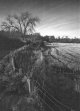
As above, these are 2 photos with the same batch of film and the same bottle of Rodinal for comparison. The landscape one was taken with a Leica M3 with Color Skopar, while the railway station one was taken on an Olympus mju 11 which cost all of £10! :rolleyes:

Apug 301.jpg

Apug 116.jpg
 
Thanks chaps! Going to get a bottle of HC-110 and see if that makes much of a difference :)

Interestingly, I shot a roll of Portra 400 through the EOS 5 today, and checked the light meter against the one on my phone (not exactly scientific, I know!) and it was reading about a stop and a half under. Going to try another roll of Delta but set it to +1.5EV for the whole roll and see if that reduces the problem a bit. Hopefully a bit more exposure and a better choice of developer might bring me some luck.

Thanks for all the help! :)
 
I've heard a lot of good things about the Delta films and HC110. So many in fact, that it's the combo that I've settled on for now in both 35mm and 120. If you need a compensating developer, without stand development which may add grain, try HC110 at normal dilutions with the second part of Barry Thornton's two bath. Details here: http://www.awh-imaging.co.uk/barrythornton/2bath2.htm
 
That's very interesting.

Am I reading it right? HC-110 for 1/2 to 2/3 normal time then his bath B for 3 mins.
 
Hi Simon - yes, that's correct. I haven't tried it, but intend to when I have a roll shot in contrasty conditions. Part B has good shelf life when mixed, but the powdered chemical is very cheap, so you could throw it after a couple of rolls.
 
Just ordered bottle of HC-110 and a few rolls of Delta 100, so I'll give them a try soon :D got a roll of Delta 3200 too to try out too
 
I intended to reply when I first saw this thread, but my daft working hours got in the way.
I've used Rodinal with delta 100 & 400 and the grain wasn't as noticeable, and it was certainly a bit smoother.
 
Back
Top