Help needed! Home studio project (small space)

Boniaski

Suspended / Banned
Messages
5
Edit My Images
Yes
I'm planning to build a home photostudio, unfortunately my available space is limited.

Studio purposes:
-Fashion shoots
-Portret shoots
-Product shoots
-Interviews (video)

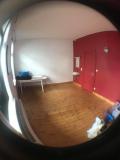
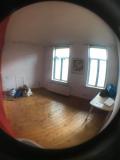
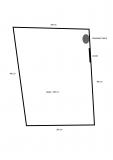
I will get window blinds to block the light coming from outside. I would like to install a rack of 3 backdrops (width of 3 meter) on the white wall next to the washing table (3m92).
To avoid a loss of space i would install 4 wall brackets from interfit to mount the lights on.

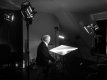
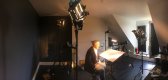
photo's of the space:


What would according to you be the best solution regarding layout, light- & camera setup?

Thanks!
 
That space is just about big enough for simple portraits, and there may also be enough space for very basic product photography, but there's nowhere near enough for either high end product or fashion photography. Video interviews won't be a problem though.

Fashion photography nearly always involves quite a lot of model movement, and usually a minimum of 3m behind the model, so at least 6m of length needed, quite a lot more height than you have and loads of space for large lighting modifiers, usually at a good distance to allow for the movement.

And photography is all about the lighting - putting lights in the more or less fixed positions dictated by wall mounts will produce terrible results.

In a nutshell, you either need to have a much larger space with a lot of lighting equipment, or you need to restrict yourself to subjects that can be photographed well in small spaces.
 
Thanks !Additional question: What specific gear for the lighting would you recommend ?
 
Thanks !Additional question: What specific gear for the lighting would you recommend ?
I really don't want to be negative, but if you need to ask the question you probably don't have the level of knowledge and experience needed to start this venture.
First things first - knowledge and understanding of light.
There are some useful tutorials here https://www.lencarta.com/studio-lighting-blog/
And here https://www.talkphotography.co.uk/tutorials/
And then there's YouTube. I put that last because, although there's some excellent material on there there's also a lot of rubbish and it can be hard for inexperienced people to tell the difference, and there are also a lot of videos that simply promote either equipment and / or online training courses, and again these are best avoided.

Knowledge is key, and knowledge trumps gear. What I mean by this is that the photographers who have a good grasp of the physics can usually find workarounds when they haven't got all of the equipment that they'd like, which is why you need to understand how light works before you make decisions about equipment.

Still on the subject of knowledge, I've written a book, Lighting Magic, which explains the principles as well as I can, and if you send me a PM with your email address I'll be happy to send you a free copy.

What you'll find, once you understand the basics, is that for all of your planned projects the best equipment choice by far is studio flash (although a hotshoe flash or two can provide very useful extra light for specific purposes)and you'll also find that flashes that have IGBT technology can be used for everything and are necessary for fashion photography that involves movement. You'll also need a range of different light stands, a boom arm, various good quality softboxes of different shapes, a beauty dish and loads of odds and sods.

Hope this helps a bit.
 
I would suggest a crawl-walk-run type of approach here...
A couple mains powered IGBT strobes in the 300-400WS range (Godox) and a reflector/honeycombs for one.
A couple smallish softboxes (~1m) with grids
1 light stand
1 boom arm stand (w/ wheels)
1 grey BG (or just a wall)

Some form of constant lighting for the video interviews... in that space I think I would get rid of the red wall and light the room rather than get dedicated lights/softboxes/etc. You'll also need some sound equipment (lavaliere mics, etc).

There's a lot of inexpensive DIY extras you can/will add; V-flats (reflectors), silks/diffusion panels (instead of larger/expensive softboxes), small plant stand type table or similar (for product work), etc, etc.
Eventually you'll end up with at least three lights (probably more), additional modifiers of different types and sizes (strip boxes, beauty dish, snoot...), different/additional BG's, etc, etc. But this will get you started with minimal expense and you can see where it goes from there.

The main problem I see is that each thing you listed is actually very different. Video interviews is the most basic in terms of lighting. Portraits is probably next, and doable with minimal kit as listed. Fashion is not just another version of portraiture, it is much more involved and often on location/outdoors. Probably the most difficult is advanced product photography... but if you're just talking basic e-commerce images you can put it back there with video interviews.
 
That room is about the same size as my small studio. As Garry says - you can do quite a lot in there, but it's amazing how often you need a lot of space, even for small objects. For example, I'm contemplating shooting some beer/wine bottles just for practice with some fairy lights out of focus in the background. Now I could do this at say 85mm f/1.8 and have nice balls of light, but then I also want a deep field of focus on the bottle - the only way to do that in one shot is to have a large difference in distance from camera-->bottle vs camera--> fairy lights, and I can't do that in my small space.

The only style of fashion shot I've managed in there was by having the model right up against the opposite wall - and made the shadow into a "feature" by using a single hard light. the shots were a trade for some modelling time for my own projects and I had given full disclosure on what would be possible beforehand - which she was more than happy with. You can't really advertise yourself as a fashion photographer with those restrictions although of course as long as you factor in rental of a bigger space when needed - all is good - and this is exactly what I do. Images are clickable.
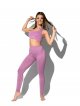
_OHL5895-Edit-Purpleport.jpg_OHL5863-Edit-Purpleport.jpg_OHL6210-Edit-Purpleport.jpg

The space looks like this (iPhone pano) IMG_4212.jpg
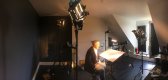
Agree with Garry 100% on the lighting fixtures - don't have any - I like that my space is a blank canvas at the start of any project. I'd also advise painting at least 2 of the walls a very dark and matt grey. I used Dulux Ice Storm II on 2 of my walls to create a "light sponge" to shoot into (well the recipe for Ice Storm II - Dulux don't make it any more but B&Q can mix these recipes - just make sure they're using a completely matt base). Definitely get rid of the red. The blinds are a good idea - and I used black-out rollerblinds on my windows. I had to construct retainers out of some 15mm copper pipe to hold it against the window frames though - they hang a good 25mm off the frame which lets in enough light to be a problem for longer exposures using dimmer light sources. I then used magnetic door closers to hold the blind to the frame at intervals all the way down (just use some white gaffer tape or masking tape to fix the metal plates to the frame)

Grids and flags will be your best friends too.

In general, get a good selection of sturdy stands, and put wheels on 2 or 3 of them - you have a hard floor already and wheeled stands are so much easier to handle. Get at least one boom stand, a floor (low level) stand and some lightweight stands for odd jobs such as holding flags, small lights etc. I couple of cross poles are useful too, as are reflector holder arms, and lightweight booms (things such as rolls of tracing paper, fairy lights etc. Other general grip such as superclamps, A clamps of various sizes etc are always useful, as are sandbags, and of course, a big roll of matt-black gaffer tape. A shooting table will be useful for product work - I used a piece of loft board on a baby plate that slots into a light stand, to make a wheeled, height-adjustable, and rotatable table - paint it matt black. Get two 30x120cm strip softboxes with grids, and a 120cm octa, a small white beauty dish with grid, and a bunch of white, grey and black foamcore boards about 1mx0,5m.

You have a bit more height than I do in my space - so I normally have people sit on a stool for portraits. some lighting setups may be a challenge:-
balance.JPG

But you could always aim a light at the ceiling. I did use this setup for some art nude btw - I just cast a model that would fit underneath it :P

I'd also second Garry's axiom - knowledge trumps gear. I always like to know the principles behind whatever it is I'm doing because any technique can be extrapolated, even if I may take a few short cuts to begin with. YouTube is a dangerous place without a guide - there are some videos which will damage your understanding rather than increase it - even if the photographers involved get good results (aperture controls flash, shutter controls ambient is a classic piece of nonsense I see all the time on YouTube). For how to work in small space though I can wholeheartedly recommend Gavin Hoey's channel on Adorama TV https://www.youtube.com/playlist?list=PL821B7D720DEA39FA


However, it's a bit of an ad-hoc way to learn - and if you want to start with the principles of lighting, read Garry's book - it's a comprehensive tour of the principles, how to put them into practice and some worked examples.

 

Attachments

  • APC_0454.JPG
    APC_0454.JPG
    52.7 KB · Views: 38
  • IMG_4212.jpg
    IMG_4212.jpg
    56.7 KB · Views: 35
I really don't want to be negative, but if you need to ask the question you probably don't have the level of knowledge and experience needed to start this venture.
First things first - knowledge and understanding of light.
There are some useful tutorials here https://www.lencarta.com/studio-lighting-blog/
And here https://www.talkphotography.co.uk/tutorials/
And then there's YouTube. I put that last because, although there's some excellent material on there there's also a lot of rubbish and it can be hard for inexperienced people to tell the difference, and there are also a lot of videos that simply promote either equipment and / or online training courses, and again these are best avoided.

Knowledge is key, and knowledge trumps gear. What I mean by this is that the photographers who have a good grasp of the physics can usually find workarounds when they haven't got all of the equipment that they'd like, which is why you need to understand how light works before you make decisions about equipment.

Still on the subject of knowledge, I've written a book, Lighting Magic, which explains the principles as well as I can, and if you send me a PM with your email address I'll be happy to send you a free copy.

What you'll find, once you understand the basics, is that for all of your planned projects the best equipment choice by far is studio flash (although a hotshoe flash or two can provide very useful extra light for specific purposes)and you'll also find that flashes that have IGBT technology can be used for everything and are necessary for fashion photography that involves movement. You'll also need a range of different light stands, a boom arm, various good quality softboxes of different shapes, a beauty dish and loads of odds and sods.

Hope this helps a bit.

Hadn’t realised you’d written a book!
Really pleased that your wealth of info on lighting will be shared amongst more folk.

Hope you’re keeping well Garry
 
Hadn’t realised you’d written a book!
Really pleased that your wealth of info on lighting will be shared amongst more folk.

Hope you’re keeping well Garry
It's good to hear from you again Shaheed, it's been a long time. I remember your delightful little girls but they must be pretty much grown up now.
I'm doing well thanks, retired but busy until the lockdown - my guess is that in your job you'll be working all the hours there are.
 
It's good to hear from you again Shaheed, it's been a long time. I remember your delightful little girls but they must be pretty much grown up now.
I'm doing well thanks, retired but busy until the lockdown - my guess is that in your job you'll be working all the hours there are.


13 and 11 now!! Definitely growing up, but a while to go with the girls yet!

Yes, very busy on ICU but we will see where we go from here.

It’s made me use the camera more on days off as I find it a fun and welcome distraction. Mainly taking pics of the dogs!

march silver.jpg
 
Back
Top