Health/Fitness tracker watches, rambling post warning!

footman

Suspended / Banned
Messages
4,914
Name
Laurence
Edit My Images
No
I'm looking for a watch that I can wear while sleeping, not during the day necessarily. I have had a diagnosis of paroxysmal atrial fibrillation which is basically
a heart arrhythmia. This follows a single episode about 5 years ago which the hospital have been unable to support with an ECG. I've had a few episodes over the last 5 years but they
are diagnosed as supra ventricular tachycardia which is different and not necessarily quite so dangerous . I know what causes these episodes, it's over indulgence in alcohol :D which I now carefully avoid.

My main point is that the GP insists I take an anti-coagulant blood medication to prevent stroke in the event of an attack based on the single episode 5 years ago and I really do not want to take this medication. Apart from the burden all such meds place on the body it stops me taking everyday meds like Ibuprofen which is the best med for my back pain! I've told the GP this and that I'm sensitive to my heart rate and can immediately detect this when it happens, not everyone can.

Her reply is that it can occur unnoticed during sleep which is quite logical and I have no answer for this! This is why I'm looking for a wearable for sleep monitoring, it doesn't have to be a fancy all singing and dancing watch, just one that will do the job during the night. I just want to say to my GP that I haven't had an episode for a year so I want to reject this medication!
All ideas gratefully received.
 
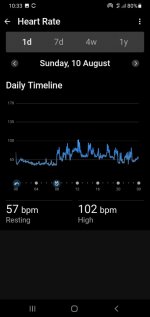
I use a Garmin watch all the time but you could wear it only at night. This is what you get for daily heart rate which could be more useful.
 

Attachments

  • Screenshot_20250817-103326_Garmin Connect.jpg
    Screenshot_20250817-103326_Garmin Connect.jpg
    38.7 KB · Views: 4
Depending on which flavour phone you have, you either want a Pixel 3 watch or an Apple 10. Both have FDA approved algorithms for detecting AFib. They also have some limited ECG functionality. Fitbit Sense 2 is cheaper than Pixel Watch and has a lot of the same features with a much longer battery life.

Most Smart watches (including these 2) say they can track overnight heartrate but actually they are fibbing. They don't monitor constantly but check now and again and interpolate. Whether that's good enough for your GP I'm not sure.

But.....can't your GP arrange a 24 hour HR test?

A chest strap is more accurate than a wrist monitor, but it might be uncomfortable to sleep with.
Although this is aimed at runners, it might give you an insight:
Whilst it's true that they are more accurate, I've worn them for extended periods in endurance races - very not comfortable....and may well not stay in place when sleeping. They rely on close skin contact and watches are more forgiving.
 
Depending on which flavour phone you have, you either want a Pixel 3 watch or an Apple 10. Both have FDA approved algorithms for detecting AFib. They also have some limited ECG functionality. Fitbit Sense 2 is cheaper than Pixel Watch and has a lot of the same features with a much longer battery life.

Most Smart watches (including these 2) say they can track overnight heartrate but actually they are fibbing. They don't monitor constantly but check now and again and interpolate. Whether that's good enough for your GP I'm not sure.

But.....can't your GP arrange a 24 hour HR test?


Whilst it's true that they are more accurate, I've worn them for extended periods in endurance races - very not comfortable....and may well not stay in place when sleeping. They rely on close skin contact and watches are more forgiving.
Thanks for the information. I've had several perfectly normal 24 hour Holter heart tests but that doesn't alter the fact that the guidelines indicate that a single aFib episode 5 years ago still puts me at risk.
 
I was diagnosed with supra ventricular tachycardia many years ago and left alone treatment wise until the episodes became troublesome more recently. My diagnosis was then changed to paroxysmal atrial fibrillation (in 2020) but I am still not on blood thinners (current age 62) and not keen to start to be honest.

Surprised they are offering them to you unless your CHA2DS2-VASc score warrants it, has this been explained to you??

I used a KARDIA mobile ECG device to record some of my arrhythmia episodes and sent the traces to the cardiac consultant. I too was having very infrequent episodes at that time which made wearing a hospital supplied monitor a bit pointless.

With the KARDIA mobile device you do of course need to be awake to use it, but my experience is I tend to wake up in the middle of the night once an episode has started.

HTH

David
 
I did my own CHA2DS2-VASC and it came out with a risk of something like 3.4% which is enough to indicate anticoagulant therapy.
I also have a Kardia device, the single lead version, on the advice of a cardiologist.

It's never given me a definite AFib result just "possible AFib" on a few occasions but this seemed to be after breakfast. I was definitely experiencing a few ectopic beats so I concluded that maybe coffee was responsible so I started drinking decaf and haven't had a single ectopic since then, probably about 6 months.
 
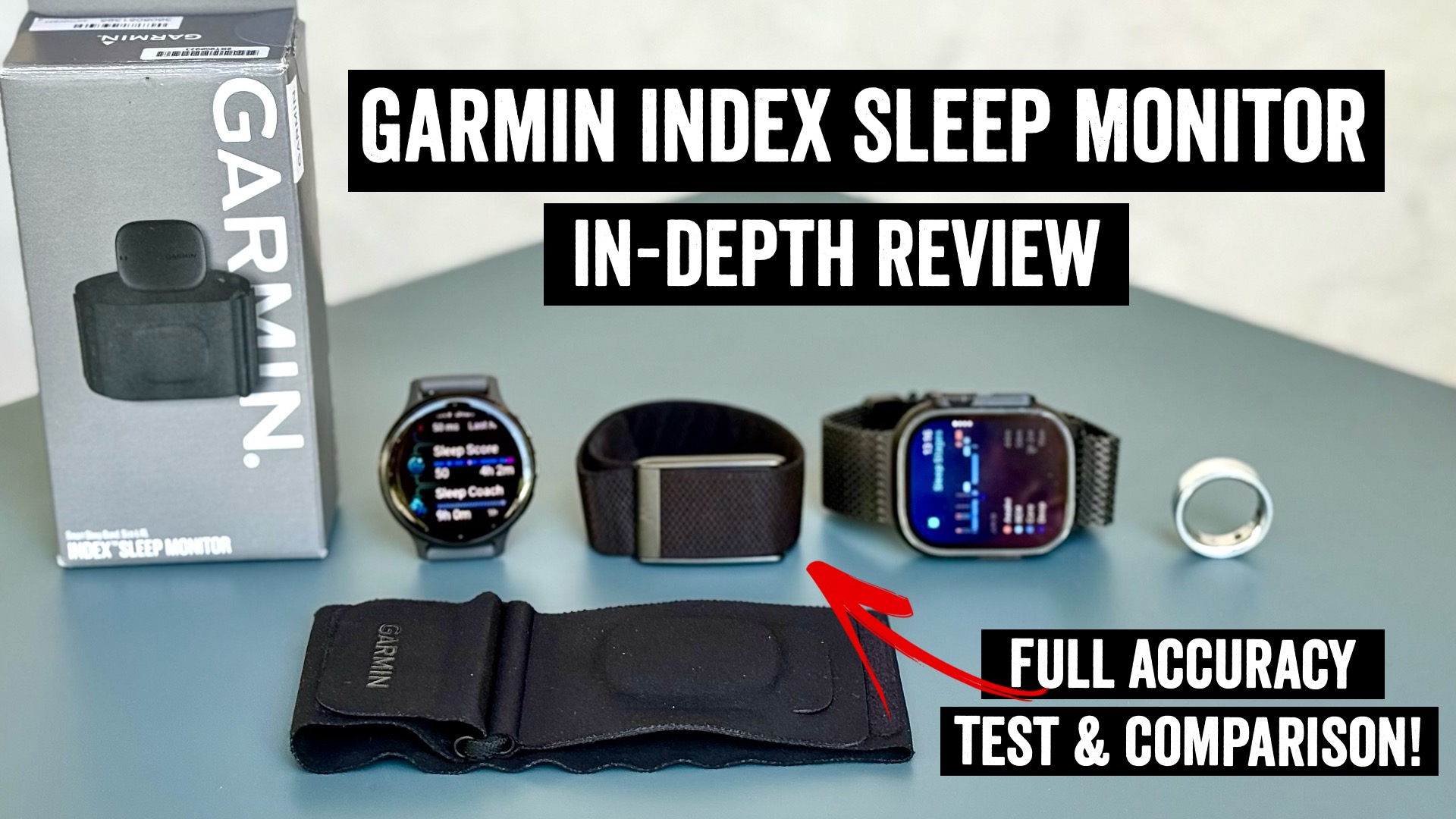
Garmin have recently released a new sleep tracker product which I was going to suggest until I saw the price was £150:


What would concern me is whether an optical heart rate monitoring device is good enough to pick up what you're potentially looking for. I've used both a Garmin watch and a chest strap, the watch is good for steady state monitoring but it struggles with quick changes in HR, when I've dual recorded on the bike the watch has missed spikes on hard sprints that the chest strap has managed to catch.

Another concern I'd have is that medical professionals have been sceptical of any HR data from my watch. I had a thyroid problem a few years ago and the watch clearly showed an unusual climb in my resting HR, it then correctly showed the drop in HR when I started on treatment until I reached the point the thyroid was underactive and again showed the HR recovering to normal. When I mentioned the HR data the GPs didn't really take any notice and the endocrinologist was clearly sceptical and pretty much disregarded any of the HR data from it.
 
Back
Top