

You are using an out of date browser. It may not display this or other websites correctly.
You should upgrade or use an alternative browser.
You should upgrade or use an alternative browser.
Grid Light
- Thread starter Barney
- Start date

OP

Barney
Suspended / Banned
- Messages
- 3,043
- Name
- Wayne
- Edit My Images
- No
If it works... could be a fire risk though...??
Do you think Gav? 1/200
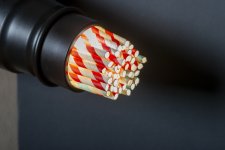
Mrs asked if I wanted the metal straws, I might make another and solder them all up.
Last edited:

sk66
Suspended / Banned
- Messages
- 9,557
- Name
- Steven
- Edit My Images
- Yes
I've always just wrapped foil around the end to make a smaller exit. For my Godox AD200 I added an adjustable iris to the factory snoot.
OP
Barney
Suspended / Banned
- Messages
- 3,043
- Name
- Wayne
- Edit My Images
- No
My original idea was to have them slide in and out of the snoot so that I could lengthen or shorten as required so that if a highlight was too much lengthen that bit, or a full half even, probably over complicating it.I've always just wrapped foil around the end to make a smaller exit. For my Godox AD200 I added an adjustable iris to the factory snoot.

Garry Edwards
Moderator
- Messages
- 13,475
- Name
- Garry Edwards
- Edit My Images
- No
You referenced this in one of your recent posts, and I referred you to the video in this tutorial https://www.talkphotography.co.uk/tutorials/food-photography-—-shooting-in-a-small-home-studio.167/, which mentions using straws to create a honeycomb.
You've made a good start, all credit for that, but you're missing important bits
Yes, making a honeycomb from staws is an excellent solution to a lot of problems, especially as it seems to be impossible to get really tight honeycombs that are really effective these days, but I think that your staws are far too short, try again, various lengths, and you'll probably find that both long and short ones are incredibly useful. I strongly advise that you get black ones, black both inside and out, which control the light far better.
Honeycombs do restrict the light intensity very well, but they do far more than that, you can use any type of ND material over the light if all that you need to do is to reduce the intensity.
And, of course, they do concentrate the light into a much smaller area, that's one of their 3 principal functions.
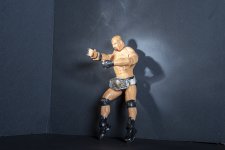
Now, you may be perfectly happy with the type of shadow you've created, and if so that's fine, but you can produce much harder shadows if you want to - you just need to move the light further away, which also has a dramatic effect on the inverse square law, and you can create even more drama by having a bit of distance between subject and background. But moving the light further away also increases the lit area, and that's one of the reasons why the straws need to be longer.
Take a look at this tutorial (but not on your work computer, NSFW) for various examples, https://www.talkphotography.co.uk/tutorials/nsfw-creating-and-controlling-shadows.165/ As it happens, I didn't use a honeycomb for any of these shots from memory, it's all about the ISL and honeycombs are just a tool, not the primary reason for the effects.
As it happens, your earlier post inspired me to do a short tutorial on making honeycombs from straws, not started yet, hope to be able to get it done in the next week or 2.
But the greater risk by far is heat damage to the light. If it's a modelling lamp on a flash then the flash head WILL overheat, so don't have the modelling lamp on for long. If it's a continuous light it will get even hotter.
You've made a good start, all credit for that, but you're missing important bits
Yes, making a honeycomb from staws is an excellent solution to a lot of problems, especially as it seems to be impossible to get really tight honeycombs that are really effective these days, but I think that your staws are far too short, try again, various lengths, and you'll probably find that both long and short ones are incredibly useful. I strongly advise that you get black ones, black both inside and out, which control the light far better.
Honeycombs do restrict the light intensity very well, but they do far more than that, you can use any type of ND material over the light if all that you need to do is to reduce the intensity.
And, of course, they do concentrate the light into a much smaller area, that's one of their 3 principal functions.
Now, you may be perfectly happy with the type of shadow you've created, and if so that's fine, but you can produce much harder shadows if you want to - you just need to move the light further away, which also has a dramatic effect on the inverse square law, and you can create even more drama by having a bit of distance between subject and background. But moving the light further away also increases the lit area, and that's one of the reasons why the straws need to be longer.
Take a look at this tutorial (but not on your work computer, NSFW) for various examples, https://www.talkphotography.co.uk/tutorials/nsfw-creating-and-controlling-shadows.165/ As it happens, I didn't use a honeycomb for any of these shots from memory, it's all about the ISL and honeycombs are just a tool, not the primary reason for the effects.
As it happens, your earlier post inspired me to do a short tutorial on making honeycombs from straws, not started yet, hope to be able to get it done in the next week or 2.
Potentially yes, but snoots are physically quite long, so although we need to be mindful of the risk, it's fairly minor.If it works
But the greater risk by far is heat damage to the light. If it's a modelling lamp on a flash then the flash head WILL overheat, so don't have the modelling lamp on for long. If it's a continuous light it will get even hotter.
OP
Barney
Suspended / Banned
- Messages
- 3,043
- Name
- Wayne
- Edit My Images
- No
That's Stone Cold Steve Austin.
Austin 316, and that's the bottom line, because Stone cold said so.
Met him many years ago.
My son would be so jealous of that!..
I had to watch it as he always had it on, MY faves were big show and the undertaker.
Who was that nutter with the sock on his hand, ha ha
OP
Barney
Suspended / Banned
- Messages
- 3,043
- Name
- Wayne
- Edit My Images
- No
That would be so tricky, I can imagine. I want to light certain parts of flowers etc without a huge floodlight everywhere. like Garry did with the prawns.Still lets not spoil the OPs thread, back to business.
I try to photograph fishing flies, and its a lot harder that you would think.
Trying to get focus and light all to work on tiny things is a challenge.
If you don't mind me asking whats your first name? I hate not addressing people by their name, it makes me feel like I am being rude.
OP
Barney
Suspended / Banned
- Messages
- 3,043
- Name
- Wayne
- Edit My Images
- No
You referenced this in one of your recent posts, and I referred you to the video in this tutorial https://www.talkphotography.co.uk/tutorials/food-photography-—-shooting-in-a-small-home-studio.167/, which mentions using straws to create a honeycomb.
You've made a good start, all credit for that, but you're missing important bits
Yes, making a honeycomb from staws is an excellent solution to a lot of problems, especially as it seems to be impossible to get really tight honeycombs that are really effective these days, but I think that your staws are far too short, try again, various lengths, and you'll probably find that both long and short ones are incredibly useful. I strongly advise that you get black ones, black both inside and out, which control the light far better.
Honeycombs do restrict the light intensity very well, but they do far more than that, you can use any type of ND material over the light if all that you need to do is to reduce the intensity.
And, of course, they do concentrate the light into a much smaller area, that's one of their 3 principal functions.
Now, you may be perfectly happy with the type of shadow you've created, and if so that's fine, but you can produce much harder shadows if you want to - you just need to move the light further away, which also has a dramatic effect on the inverse square law, and you can create even more drama by having a bit of distance between subject and background. But moving the light further away also increases the lit area, and that's one of the reasons why the straws need to be longer.
Take a look at this tutorial (but not on your work computer, NSFW) for various examples, https://www.talkphotography.co.uk/tutorials/nsfw-creating-and-controlling-shadows.165/ As it happens, I didn't use a honeycomb for any of these shots from memory, it's all about the ISL and honeycombs are just a tool, not the primary reason for the effects.
As it happens, your earlier post inspired me to do a short tutorial on making honeycombs from straws, not started yet, hope to be able to get it done in the next week or 2.
Potentially yes, but snoots are physically quite long, so although we need to be mindful of the risk, it's fairly minor.
But the greater risk by far is heat damage to the light. If it's a modelling lamp on a flash then the flash head WILL overheat, so don't have the modelling lamp on for long. If it's a continuous light it will get even hotter.
That is brilliant Garry, I will look forward to that tutorial. the effect you created with the gun girl reminds of the James Bond intro.
What encouraged me with the one I made was that because the straws don't come out perfectly parallel you get small isolated spots scattered on the outer edges which just demonstrates the potential, to me, I thought it could be put to good use in a proper set up.

Oldbones
Suspended / Banned
- Messages
- 422
- Edit My Images
- Yes
BryanThat would be so tricky, I can imagine. I want to light certain parts of flowers etc without a huge floodlight everywhere. like Garry did with the prawns.
If you don't mind me asking whats your first name? I hate not addressing people by their name, it makes me feel like I am being rude.
Garry Edwards
Moderator
- Messages
- 13,475
- Name
- Garry Edwards
- Edit My Images
- No
Focus, or rather dof, is always a challenge with tiny, 3-dimensional subjects, but I'm blown away by the fantastic results that people get when they shoot tiny bugs, I'm guessing that they all use focus stacking, but I don't know whether that's right.Still lets not spoil the OPs thread, back to business.
I try to photograph fishing flies, and its a lot harder that you would think.
Trying to get focus and light all to work on tiny things is a challenge.
On the lighting side, it's extremely easy if you only want soft lighting, because soft light is just about relative size and distance, so any light that's close to the subject is bound to be much bigger than the subject and therefore soft. If you want hard light (or a combination of the two) just do what Barney is doing, use a small, restricted light, such as a honeycomb, from further away.

swanseamale47
Suspended / Banned
- Messages
- 10,876
- Name
- wayne clarke
- Edit My Images
- Yes
You can get black straws, a mate uses the same set up.
You can also get a metal foil stuff (lead?) it's soft to bend but stays in shape, it was common years back, I used to use it to mask the background lights in my early studios.
You can also get a metal foil stuff (lead?) it's soft to bend but stays in shape, it was common years back, I used to use it to mask the background lights in my early studios.