Going back to college.

Jungli

Suspended / Banned
Messages
273
Name
Satz
Edit My Images
No
Anyone taken up evening classes?

I've signed myself up for a 10 week evening class... learning by trial and error is taking too long so I thought I'd jump in and attend the recreational classes at my local college. Somethings I understand, but having a source of information to access is my primary goal.

Anyone else considered this or even attended night classes?

Thoughts and comments appreciated,

Satz
 
I went to evening classes some years ago to learn basic photography and editing, I found it very useful unfortunately there are no photography related courses running locally anymore
 
I ran night classes for a few years. It'll depend entirely on the tutor. Hopefully they will be qualified teachers as well as photographers rather than just one or the other.

In my experience, people got out what they put in, so throw yourself into it, get involved in any assignments, and get as much feedback as you can - both from the tutor and fellow students. Remember that there are no stupid questions. As a learner, it's the tutors job to explain things in a way you understand, so if you don't understand it, that's on them. Stop them and ask - they will be happy to rephrase it until you get it. I once had to explain to someone why 1/4 second was faster than 1/2 second - they just didn't get fractions and I assumed everyone got them.

Don't get hung up on the technical stuff. Make notes that you understand, preferably in a notebook that you can keep for reference. It can be overwhelming - especially for a beginner, so having something you can refer back to is invaluable. If there's something you don't understand - ask!

Take your camera manual (or at least take it out of the box). Tutors can tell you what to change, but not how to change it for every model of camera. Having the manual will make it much easier if you have in-class assignments.

Above all - enjoy yourself, and enjoy meeting new people with the same interest as you. Good luck!
 
I was recently approached by a local college to run one over 10 weeks, one class per week at 2hours. I was open to it, and started to put together a plan of what it could look like - but I was struggling to mix the usual technical stuff that most people think they need and the stuff that people don't think they need but they do in order to make interesting photos in the time provided. So made my excuse and pulled out. If I had more time I am sure I could have worked through it.

I guess take a look at the course outline / objective and see how that matches up with our short or long term goals and what you expect from the course
 
Whether you’re a beginner or have some knowledge, shoot digital or film, our professional and experienced tutors will guide you with friendly, practical advice to help you develop your skills as a photographer.

  • Explore different photographic techniques and equipment, in the studio or on location.
  • Cover topics such as composition, genres, image manipulation and studio practice.
  • Access the latest resources, studio lighting and specialist equipment, including film editing for DSLR.
  • Have guidance on building a portfolio and participate in focussed workshops.
  • Take up the exciting opportunity to print and exhibit your work within the College.


Recreational Photography Term 1:

Term 1 covers fundamental techniques to improve your camera skills and post-production, both digitally and in the darkroom. You will create a portfolio of work and cover topics such as:

• Manual exposure and understanding the exposure triangle

• Focus and depth of field

• Night time and low light photography

• Portraiture

• Landscapes

• Macro

• Basic studio

• Adobe Photoshop and Lightroom


Recreational Photography Term 2:

Having mastered the basics of the camera, term 2 will develop your studio photography skills, covering techniques to improve your photography, studio lighting and digital post production skills. You will create a portfolio of work and cover topics such as:

• Lighting set ups and metering

• Portraiture

• Still life

• Product

• Adobe Photoshop and Lightroom

• Retouching


Recreational Photography Term 3:

Term 3 will cover more advanced techniques to improve your camera skills and post-production. You will create a portfolio of work and cover topics such as:

• Use of different metering modes such as spot, matrix and centre weighted

• The difference between jpeg and raw, and why to choose one over the other

• Shooting at high ISO

• Advanced composition

• Exposure compensation

• Bracketing

• Understanding histograms

• How to deal with different lighting conditions

• Use and impact of different lenses
 
Many years ago I took a basic digital photography course at my local photography club ... and then joined the club :)

I think I learned quite a bit from the course as it was run by experienced club members with weekly "homework" to practice the technique or theme of the week and a competition at the end.
 
Apologies for the dump of info... it's the syllabus for the 10 weeks.
 
No doubt you will get people telling you that you can learn everything on YouTube and that’s probably true. However, some people just find it easier to learn in a classroom setting where you can ask questions and speak to other people who are learning as well. I certainly got a lot out of nightschool classes, it was a good starting point and introduced me to areas of photography I wouldn’t otherwise have done, for example studio photography using lights etc. Did the classes teach me to ‘see’? No, that comes purely from experience but it helped get me going in the right direction.

I’m sure others will say join a camera club. Most camera clubs won’t teach you photography, but once you know the basics joining one is a useful way of improving, but they aren’t for everyone.
 
I took evening classes for a year about 6 years ago and learn much faster than I had before by watching youtube videos or reading books. There was a lot to do, in addition to the evening classes one weekend a month for workshops and then assignments to complete for each module too. If this suits your learning style and you have the time to put in on the homework, then go for it.
 
Mrs WW has done quite a few courses since coming to the UK. She did some free English classes and also some free Maths classes too not because she really needed to but because she thought it'd be good practice for her English. She's also done some payed for English and translation classes and is now a qualified Thai / English translator. She's currently doing an on line English class which includes receiving and sending audio clips and feedback from the tutor, she's also now attending Yoga classes.

There do seem to be a lot of free or cost very little courses out there.

The place she did the free English and Maths classes also did a class on computers for older people, which I thought was a nice idea. I have to say that she/we have had problems with both Redcar and Middlesbrough colleges which both seem to be a shambles.

I've done... Nothing :D
 
I did a C&G evening class about 30 years ago (nearer 35), it was a great experience.
 
I have been on a local course that was 10 weeks x 3 (beginner, intermediate, advanced) and found it very useful. We have now started a follow on session where we are exploring second curtain flash and things like that. Each 10 sessions was £100 (so £300 in total). For me, this has been great as I wouldn't have learned what I have without the classes.

I also just completed the IOP certificate in photography (passed with highly commended) which I found a useful top up.

I like to learn (if the subject is interesting) and I am considering the next step which could be something like this:


Open University and RPS accredited (so cant be too bad).

Just waiting for work to calm down as my camera hasn't seen much use in the last few weeks.
 
I did it, quite a while back now, I found some elements of it useful, but there was a lot of emphasis on film photography when I had already switched to a DSLR. However the course you posted above looks to avoid that. Is that the syllabus for 3x 10 week terms? As it seems a lot to cram in to 10 weeks.
 
I did a HNC over two years about 15years ago. Great fun, lots of Studio and darkroom practice.

But more importantly enjoyed the experience with like minded people with the same common interest.
 
I did it, quite a while back now, I found some elements of it useful, but there was a lot of emphasis on film photography when I had already switched to a DSLR. However the course you posted above looks to avoid that. Is that the syllabus for 3x 10 week terms? As it seems a lot to cram in to 10 weeks.
I think so, the course is 10 weeks, all I'm by the looks of it.

But I have been known to be wrong... frequently.
 
I did a C&G course in TV production many moons, but that's a different kettle of fish, compared to stills.

Learning within a classroom, theory and practical work is how I learn best.

Totally agree with you that learning from YouTube is doable but speed of learning is 5 fold faster for me personally in a tutored environment.
 
Last edited:
I think, if you think you'll learn more and quicker in a classroom, then go for it. People learn in different ways and at different speeds. There's no real right or wrong way, just a a way that's right for you.
 
I think, if you think you'll learn more and quicker in a classroom, then go for it. People learn in different ways and at different speeds. There's no real right or wrong way, just a a way that's right for you.
Agreed... how you learn is unfortunately the last lesson you learn... usually after you have finished studying and start work.
 
I went to an evening class on photography (with my wife) around 1979. The tutor was VERY interested in fungi, and every lesson somehow came back to mycology. So, it will depend. Every year for the last few years, I've looked through the local evening class brochures for local classes, and each time I've failed to find any classes that taught what I think is photography as opposed to how to handle a digital camera and use Photoshop.

I can appreciate that the course you've outlined covers a lot of genres of photography, but personally (and I'm speaking as an old fossil who's been using a camera for almost 70 years and is pretty set in their ways and inflexible) I'd prefer to be taught about the psychology of seeing, why some things look better than others and how to construct an image that works than how to use a camera. I freely admit that digital cameras are harder to use than the film cameras I prefer (although I do use a Sony a7r2 regularly) and so probably need more instruction than a basic film camera where everything can be covered in an hour. So more would be needed. It's just not where I'd put in the effort.

So that's my thoughts. I'm in favour in principle, but simply haven't found an evening class that would be worth it for me.
 
I'd prefer to be taught about the psychology of seeing, why some things look better than others and how to construct an image that works than how to use a camera.
Do you think learning about the skills artists who paint may give you the 'seeing'. Perspective, composition etc
 
Do you think learning about the skills artists who paint may give you the 'seeing'. Perspective, composition etc
A valid point, but I think that a better way is studying skilfully made photographs since all attributes of the medium may be present - including focus, which is a vital compositional tool along with the others that you mentioned.
 
Personally, I learned more about photography from Gombrich's "Story of art" and Zakia's "Perception and Imaging" than any other books. Yes, there is a lot of technical information that you need, but not all at once. You can make technically almost perfect photos 95% of the time with a modern camera set to auto everything. Making an artistic image, or one that gets a point across - that's where Gombrich et al come in.

There are others I'd add, particularly Rudolf Arnheim, but this isn't a reading list, more a statement of what I been helped by.
 
Whether you’re a beginner or have some knowledge, shoot digital or film, our professional and experienced tutors will guide you with friendly, practical advice to help you develop your skills as a photographer.

  • Explore different photographic techniques and equipment, in the studio or on location.
  • Cover topics such as composition, genres, image manipulation and studio practice.
  • Access the latest resources, studio lighting and specialist equipment, including film editing for DSLR.
  • Have guidance on building a portfolio and participate in focussed workshops.
  • Take up the exciting opportunity to print and exhibit your work within the College.


Recreational Photography Term 1:

Term 1 covers fundamental techniques to improve your camera skills and post-production, both digitally and in the darkroom. You will create a portfolio of work and cover topics such as:

• Manual exposure and understanding the exposure triangle

• Focus and depth of field

• Night time and low light photography

• Portraiture

• Landscapes

• Macro

• Basic studio

• Adobe Photoshop and Lightroom


Recreational Photography Term 2:

Having mastered the basics of the camera, term 2 will develop your studio photography skills, covering techniques to improve your photography, studio lighting and digital post production skills. You will create a portfolio of work and cover topics such as:

• Lighting set ups and metering

• Portraiture

• Still life

• Product

• Adobe Photoshop and Lightroom

• Retouching


Recreational Photography Term 3:

Term 3 will cover more advanced techniques to improve your camera skills and post-production. You will create a portfolio of work and cover topics such as:

• Use of different metering modes such as spot, matrix and centre weighted

• The difference between jpeg and raw, and why to choose one over the other

• Shooting at high ISO

• Advanced composition

• Exposure compensation

• Bracketing

• Understanding histograms

• How to deal with different lighting conditions

• Use and impact of different lenses


I understand that many people will say that college and formal education are unnecessary now, but I still believe they are. First of all, it is about getting all the necessary theoretical knowledge and practical skills. Secondly, it's about communicating, meeting new people, and sharing info and experience. What is more, usually you have disciplines which cover other spheres, so it gives you experience in many areas, which is good for the future. I'm already working on a dissertation, and I can see that all these years have given me so many. Yes, it's pretty hard, sometimes I have problems with some parts, but https://dissertationhelp.org.uk/ helped me with some parts of it. And I think that such tasks are great for formal education, and it's so needed.

These things are for sure very important, and each photographer needs to be expert
But do you think that it's a must to go to college, or can you learn it yourself?
 
Last edited:
Personally, I learned more about photography from Gombrich's "Story of art" and Zakia's "Perception and Imaging" than any other books.
I bought them both after you posted this.

tl;dr as they say on t'internets. :ROFLMAO:
 
I bought them both after you posted this.

tl;dr as they say on t'internets. :ROFLMAO:
Personally, I learned more about photography from Gombrich's "Story of art" and Zakia's "Perception and Imaging" than any other books. Yes, there is a lot of technical information that you need, but not all at once. You can make technically almost perfect photos 95% of the time with a modern camera set to auto everything. Making an artistic image, or one that gets a point across - that's where Gombrich et al come in.

There are others I'd add, particularly Rudolf Arnheim, but this isn't a reading list, more a statement of what I been helped by.
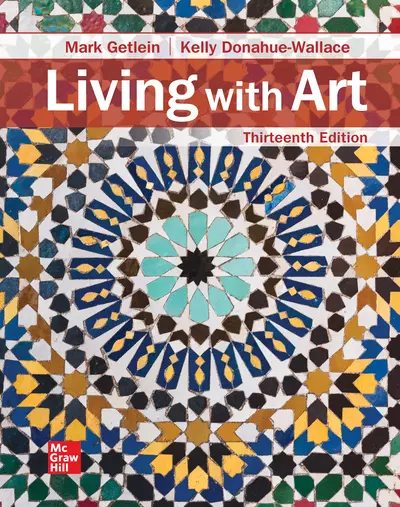
Are either of you familiar with Mark Getlein's "Living with Art" which i see is in it's 13th edition. I have the 12th edition. A very different book to Gombrich and Zakia but I felt it was a great overview of "art", for a photographer (or anyone else)

The web site for the book says:

"Art is part of our lives, from the monuments in our communities, to the fashions we wear and the media images we take in, to the exhibits on display in museums and galleries. It permeates our daily life. But why do we study art? How do we talk about art?


Living with Art helps students see art in everyday life by fostering a greater understanding and appreciation of art. Taking a step further, Getlein equips students with the tools necessary to analyze, digest, and maintain a life-long enthusiasm for art.."


Another option is the Smarthistory website


Lots to browse on that link, including a "text book" for structured learning


And if you, sadly, only want to learn about photography from an art historians perspective, you can search the site for just the photography entris (mainly photogrpahy, the search is a bit iffy) entries


Maybe we should have. reading list (in a dedicated thread)? I've read Gombrich and Zakia, but never heard of Rudolf Arnheim.

Actually, I realise the Gombrich I have is "Art and illusion" not the Story of Art. It was a set text for my wife's OU degree course modules.
 
Are either of you familiar with Mark Getlein's "Living with Art" which i see is in it's 13th edition.
Not me. It looks out of my price range anyway!
Maybe we should have. reading list (in a dedicated thread)?
That would be a nice addition (for the minority who are interested in such things). He said cynically. ;)
 
Not me. It looks out of my price range anyway!

That would be a nice addition (for the minority who are interested in such things). He said cynically. ;)
It is rather pricey !

I got my copy at Wordery, which as I remember was about half the Amazon price, but it's £59 for he 13th edn on Wordery (the same as Amazon). For some bizarre reason, the edition I have (12th), is £111 on Amazon. I wonder if I could swap my 12th edn for two copies of the 13th, and get us both a copy. Probably not.

I'll have a think about setting up a new thead (unless you beat me to it)
 
I'd prefer to be taught about the psychology of seeing, why some things look better than others and how to construct an image that works than how to use a camera.
I'd tend to agree. It's clear that many spend a fortune on camera stuff and haven't a clue (and maybe never will have) how to make a successful photograph. Learning how to see, to my mind should be a basic, otherwise you're just piddling about. Question what your motivation is: if it's retail therapy, that may be a fairly harmless pursuit (except that the production of equipment consumes planetary energy & resources), but in itself is pretty pointless without a worthwhile end product.

So learn to see, in photographic terms, by studying photographs in particular (and other art forms too - it won't hurt!). Then when you feel that you're getting into that groove and might in your own way, no matter how limited, be able to speak the visual language, start to do some reverse engineering and acquire some techniques.

How that might be done, by self-tutoring or a structured course, as has been said several times above, depends on what works best for you.

Photography is an art and a craft with many departments. We're prone to slipping into what suits us, & that's ok. But how do we know what suits us, without trying it first?
 
I'm not familiar with Mark Getlein either - I'll investigate when we get back home - we're in Stromness (Orkney) at the moment, so painfully tapping this reply on a tablet...
 
So learn to see, in photographic terms, by studying photographs in particular (and other art forms too - it won't hurt!).
I know that Ken Rockwell is reviled by many and don't look beyond his reviews but tucked away on his site he has, what I think, is one of the best bits of advice I've read on the interweb for photographers wanting to improve their pictures:
Painting and drawing classes will teach you how to see and synthesize starting with a blank sheet.

I much prefer to read about how photographers think about their photography than the technicalities of how they take their pictures. I got a copy of an old book by/about William Allard yesterday and in it he makes the point that a lot of people who have been on his workshops were looking for quick fixes. There ain't any. The only way to improve/move forward is to keep making work. Having something to 'say', or at least a point of view, helps too.
I'll have a think about setting up a new thead (unless you beat me to it)

I'm sure you're more organised than me, but I'll contribute if I can. :giggle:
 
I much prefer to read about how photographers think about their photography than the technicalities of how they take their pictures.
I think that is a lot of what I meant in another post when I said that I had now realised I was more interested in photographers than photographs. It isn't that I'm "not" interested in the photographs, it's just that photographers often have really interesting stories to tell which add a extra dimension to looking at their photographs..
 
I've noticed a tendency here to think of photography as an art form whereas it's a technique with many different uses, to achieve many different purposes,

A gross way of summing this up could be:

OBJECTIVE RECORDING <------------ photographer ------------> ARTISTIC RENDITION​

I think of myself as mixing both approaches in differing amounts, depending on what I'm looking at. If you are looking to choose a course, it may help to first try and assess which end of the spectrum you wish to be and how a particular course will meet your needs.
 
Last edited:
Theres courses and courses. Some are good, some are terrible, and some are great. It's all down to who is teaching the course.
 
These things are for sure very important, and each photographer needs to be expert
But do you think that it's a must to go to college, or can you learn it yourself?
You don't need to go to college to learn photography, but I would argue there are big advantages in seeking out structured learning. This could be online, but even with things like zoom, there is no substitute for classroom or face to face one to ones, for learning.

Tutors will (or should have) put a lot of effort into deciding what needs taught, and the depth of learning required. This will include things that are "essential" but difficult to learn (which are also often difficult to teach). It's all too easy, while learning on your own, to skip over the essentials if they are boring or difficult. Does this mean you won't be able to take good photographs without a college course, No. But, it's likely to affect your appreciation of photography, and reduce your ability to solve photographic problems.

From experience of online courses, and you tube videos, and as a retired University Lecturer, I feel that taught college courses have a much greater emphasis on helping students "learn how to learn" and help them critically consider multiple viewpoints before arriving at their own decisions. There seems a much greater risk of ending up with a relatively narrow range of skills and viewpoints with self leaning alone, than learning at college.

Having said that you need to choose your course and tutors carefully. Courses can vary a lot, and overall the best way to get an idea of what a course might be like is to look at the tutors (websites, LinkedIn etc) who are running it. You should also look at the expertise of the external lecturers to they bring in to teach specific topics.

Course curricula, can be very misleading, not deliberately misleading, but the same words can mean different things depending on context.. Many courses, as well as teaching basic photographic techniques will also have a distinctive flavour ie. personal expression, documentary, commercial, scientific, medical, wildlife etc Sometimes these specialisms are promoted, but at other times they are less obvious, because the college wants to attract as many students as possible Again, this is something to check, and it's one of the reasons to investigate the interests of the course tutors

If it's a big commitment (i.e a degree course), or even a small one, phone or email one of the tutors and ask about the course, but try and work out some specific initial questions on what you are hoping to achieve from taking the course. A good tutor will help you work out what you want from a course and help you decide whether the course would be suitable.

When I ran a rather niche Masters (not photography) I would often have potential students come in for a meeting to help work out whether my course would match their needs. For most, it wasn't suitable and we would end up discussing courses at other Universities that might suit them better..

Any college/University course is still just setting a baseline for a lifetime of self learning that will help you sort out the "good" self learning opportunities from the "not so good" ones.
 
I've noticed a tendency here to think of photography as an art form whereas it's a technique with many different uses, to achieve many different purposes,

A gross way of summing this up could be:

OBJECTIVE RECORDING <------------ photographer ------------> ARTISTIC RENDITION​

I think of myself as mixing both approaches in differing amounts, depending on what I'm looking at. If you are looking to choose a course, it may help to first try and assess which end of the spectrum you wish to be and how a particular course will meet your needs.
A recurring issue. Even in threads discussing what constitutes a "good" photograph is the context defined.

But I see photography more as a "medium" that can be applied, using a range of techniques, to multiple purposes.
 
From experience of online courses, and you tube videos, and as a retired University Lecturer, I feel that taught college courses have a much greater emphasis on helping students "learn how to learn" and help them critically consider multiple viewpoints before arriving at their own decisions.

That's pretty much what my time as an art student taught me. Plus the essential thing that most people don't realise: Making 'work' is all there is to both progressing and generating new ideas and avenues to pursue.

I see photography more as a "medium" that can be applied, using a range of techniques, to multiple purposes.

Very much so. Photography is a medium just like paint or clay.
 
That's pretty much what my time as an art student taught me. Plus the essential thing that most people don't realise: Making 'work' is all there is to both progressing and generating new ideas and avenues to pursue.
With a science background, I'm unfamiliar with this "making" work ethic, as part of my work ethic, but reading, or reading about , or seeing interviewed, photographers who come from an art college background this making work ethic seems to be a dominant aspect of their approach.

I think you can get a feel for this by reading the Interviews in Source (or watching them on Youtube). Often the work comes across as an essential part of their personal growth.
 
With a science background, I'm unfamiliar with this "making" work ethic, as part of my work ethic, but reading, or reading about , or seeing interviewed, photographers who come from an art college background this making work ethic seems to be a dominant aspect of their approach.

I think you can get a feel for this by reading the Interviews in Source (or watching them on Youtube). Often the work comes across as an essential part of their personal growth.
There are two benefits to this approach, which requires you to not be afraid to fail and make rubbish work. I think this is what many amateurs don't understand, that making crap is OK. f

Firstly when you have no 'inspiration' just start making something. Anything, no matter how dull or bad. Eventually something will click and you'll be on your way. Secondly you do what someone at another college called 'working through' a period of creative block. You keep your head down and keep on making work until you come out the other side.

For a photographer using digital this is easier than ever. Take photos of anything every day to both 'keep your eye in' and maybe get new ideas. There'll be a lot of crap. A lot of crap, but that doesn't matter. You don't have to show it to anyone!
 
Back
Top