Godox V860III auto zoom on EOS 1300d and Sigma 18-200mm f3.5-6.3 DC Lens

lukew

Suspended / Banned
Messages
51
Edit My Images
No
Hello,
I purchased a used Godox V860III back in April from WEX for my EOS 1300d, I discovered today that when in the E-TTL mode it should support auto zoom. I discovered this after reading another forum thread on this site about someone who was having issues with the auto zoom on a different flash, interested I googled if my flash supported this.
As explained on the Jessops website my flash should support auto zoom (https://www.jessops.com/p/godox/v860iii-speedlite-for-canon-210556)
Zoom range
The Godox V860III flash has a zoom range of between 20mm and 200mm. It can either be set to automatically zoom with your lens (if used on-camera), or it can be set manually, giving you maximum creative control of the beam angle.
However whenever I use my flash on E-TTL mode it never switches to auto zoom, as I mentioned in the title I am using an EOS 1300d with a Sigma 18-200mm lens (I also have a Cannon 50mm f1.8 lens that I can try if that would help). I think from my research my setup should support this, is there something I have got configured wrong or is there something wrong with my flash (in which case it is still in warranty with WEX).
 
Hello,
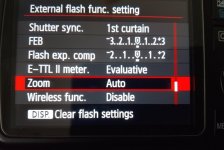
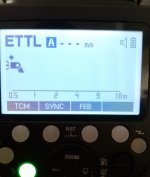
I was just looking at the flash settings and the camera settings, on the camera in the external flash function settings the zoom is set to auto, however if I zoom on my lens it doesn't change on the flash and I can't see or hear the flash zooming.
I also have updated the firmware of the flash, this has not helped. I did try it on my Cannon 50mm F1.8 and it also doesn't work on that.
Here are some images to demonstrate this (apologies about the bad photos, these where taken on my phone that has an awful camera, I was also trying to not have my reflection in the screen:
IMG_20251001_163903_HDR.jpg
IMG_20251001_163938_HDR.jpg
 
Last edited:
Do you have the head tilted up for bounce flash?
Like most flash users?
 
Do you have the head tilted up for bounce flash?
Like most flash users?
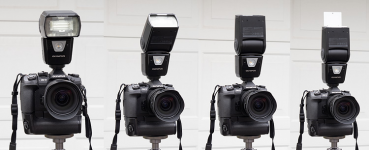
By that do you mean that the flash head is at anything other than a 90 degree angle to the flash body (image below, I am talking about the one on the left):
1759338948446.png
But yes I do use the flash at another angle, similar to the second camera to the left at about a 140 degree angle.
 
Last edited:
I had the same thing with the same flashgun. What it was that the pull out shade/diffuser was not pushed back far enough to click back.unless it is zoom won't work
 
I had the same thing with the same flashgun. What it was that the pull out shade/diffuser was not pushed back far enough to click back.unless it is zoom won't work
I have had that in the past, but in my case at the moment the manual zoom is working (which it doesn't if the reflector isn't pushed back all the way) but the auto zoom isn't working.
 
By that do you mean that the flash head is at anything other than a 90 degree angle to the flash body (image below, I am talking about the one on the left):
View attachment 464502
But yes I do use the flash at another angle, similar to the second camera to the left at about a 140 degree angle.
The auto zoom quite correctly only works with the flash pointed forwards.
It’s designed to match the coverage your lens needs.

Once the flash is bounced, you’ve broken that relationship, because the flash is travelling further, therefore the zoom angle would be wrong.
 
I’ll likely sound like a bit of an arse, but I’m gobsmacked most photographers don’t get this simple principle.

Mount your flash and put it on auto zoom, point the head straight ahead and you will see the zoom work.

But as soon as you point the flash up, the focal length will either disappear or set to 50mm depending on the make and model.

Point the flash straight ahead again, then pull the diffuser, the flash will zoom to its widest setting.

That’s all exactly what you’d expect it to do.

It doesn’t need to match your focal length when bouncing, and the ‘diffuser’ is a wide angle fresnel, NOT a diffuser.

And that’s the reason auto zoom is literally the most technology wasted on the most pointless feature for photographers. The vast majority of photographers never ever use a camera mounted flash unbounced.

I’ll post this again in a couple of years.
 
Last edited:
The vast majority of photographers never ever use a camera mounted flash unbounced.
I'm definitely an exception to this and appreciate the auto zoom :)
 
The auto zoom quite correctly only works with the flash pointed forwards.
It’s designed to match the coverage your lens needs.

Once the flash is bounced, you’ve broken that relationship, because the flash is travelling further, therefore the zoom angle would be wrong.
Thank you this has solved my issue.
 
I’ll likely sound like a bit of an arse, but I’m gobsmacked most photographers don’t get this simple principle.

Mount your flash and put it on auto zoom, point the head straight ahead and you will see the zoom work.

But as soon as you point the flash up, the focal length will either disappear or set to 50mm depending on the make and model.

Point the flash straight ahead again, then pull the diffuser, the flash will zoom to its widest setting.

That’s all exactly what you’d expect it to do.

It doesn’t need to match your focal length when bouncing, and the ‘diffuser’ is a wide angle fresnel, NOT a diffuser.

And that’s the reason auto zoom is literally the most technology wasted on the most pointless feature for photographers. The vast majority of photographers never ever use a camera mounted flash unbounced.

I’ll post this again in a couple of years.
Reading through this I do see that you don't need to adjust the zoom when using bounce flash. However what confused me was the fact that even in bounce flash it still said it was in auto zoom mode. This made me think it should have been auto zooming.
 
Reading through this I do see that you don't need to adjust the zoom when using bounce flash. However what confused me was the fact that even in bounce flash it still said it was in auto zoom mode. This made me think it should have been auto zooming.
Once you’re bouncing the flash or using it off camera, if you’ve got thinking time you can do some interesting things with the manual zoom settings.

Left to its own devices, a bounced flash is a fairly blunt tool, lighting a lot of the area around (behind) your subject. Zooming in to max gives you a small pool of light you need to be more precise with. Bounce flash is more than pointing the head up 60 degrees, it’s a whole technique to consider, my favourite was using the wall / ceiling join behind me, which is close to an on axis softbox, but also consider zooming in and bouncing off a wall.

For instance I used to use an arms length handheld flash at max zoom to create a spotlight effect during a wedding fist dance.

People who hate flashguns, don’t like the built in fresnel lens and ‘auto’ feel, but with a bit of consideration, and using the features rather than fighting them can really pay off.
 
Once you’re bouncing the flash or using it off camera, if you’ve got thinking time you can do some interesting things with the manual zoom settings.

Left to its own devices, a bounced flash is a fairly blunt tool, lighting a lot of the area around (behind) your subject. Zooming in to max gives you a small pool of light you need to be more precise with. Bounce flash is more than pointing the head up 60 degrees, it’s a whole technique to consider, my favourite was using the wall / ceiling join behind me, which is close to an on axis softbox, but also consider zooming in and bouncing off a wall.

For instance I used to use an arms length handheld flash at max zoom to create a spotlight effect during a wedding fist dance.

People who hate flashguns, don’t like the built in fresnel lens and ‘auto’ feel, but with a bit of consideration, and using the features rather than fighting them can really pay off.
Thank you for your response, I will have to give that ago adjusting the zoom. I use the flash for product photography so I have plenty of time to think about settings. Thank you for all your help, it was the fact it said it was on auto zoom when it couldn't use it because it was on bounce flash that confused me.
 
I think I've used the auto zoom once - zoomed to 300mm from the back of the hall, I took a picture of my then 6-year-old daughter in the school nativity, and the SB900 flash zoomed to match. (well 200mm which was it's max focal length).

Like @Phil V said - I mostly use it on camera in manual zoom to adjust the size of my virtual softbox, and off-camera to well, spot up the light just like an old-school Fresnel spotlight (except it's more convenient as I can zoom it from the flash controller at camera!).
 
I’ll likely sound like a bit of an arse, but I’m gobsmacked most photographers don’t get this simple principle.

Mount your flash and put it on auto zoom, point the head straight ahead and you will see the zoom work.

But as soon as you point the flash up, the focal length will either disappear or set to 50mm depending on the make and model.

Point the flash straight ahead again, then pull the diffuser, the flash will zoom to its widest setting.

That’s all exactly what you’d expect it to do.

It doesn’t need to match your focal length when bouncing, and the ‘diffuser’ is a wide angle fresnel, NOT a diffuser.

And that’s the reason auto zoom is literally the most technology wasted on the most pointless feature for photographers. The vast majority of photographers never ever use a camera mounted flash unbounced.

I’ll post this again in a couple of years.
It's the people using bounce flash outdoors that amaze me. I know Godox are good but bouncing off a cloud at 17.000 foot, nahh ;)
 
I've used the zoom head "spotlight" sort of effect a few times outdoors with couples against a sunset, to fill light them, without affecting the foreground (wide shot) Now I use a snoot more, a sort of ajustable velcro thing, you can vary the angle and it saves going in the flash menu. Not that I see much of the sun living in southWales where busses have lifeboat drill.........
 
Back
Top