

You are using an out of date browser. It may not display this or other websites correctly.
You should upgrade or use an alternative browser.
You should upgrade or use an alternative browser.
Glare on car bodywork
- Thread starter RL355
- Start date


Chris Primadona
Suspended / Banned
- Messages
- 961
- Name
- Chris
- Edit My Images
- Yes
I'm guessing thats down to the dynamic range limitations of digital cameras. If you shot raw you could probably get some results with the recovery and exposure sliders?
Other than avoiding bright, sunny days.. you could try using a polariser filter to deal with the worst of it.
Cheers for the reply...I read up on polarised filters and see if that helps

- Messages
- 8,852
- Name
- Tom
- Edit My Images
- Yes
I'm guessing thats down to the dynamic range limitations of digital cameras. If you shot raw you could probably get some results with the recovery and exposure sliders?
Not really its just glare. A polariser will cut out the reflective glare pretty much completely.
had a 30 sec play in lightroom. Hope you don't mind.
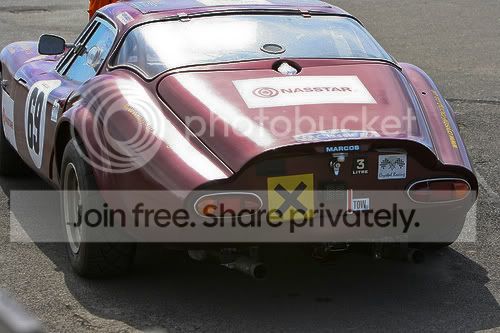
As Tom and others have said a CPL is the best root, but as you didnt have one, you may be able to recover some.
Wow what an improvement Cheers...wish I had your skills
 I am glad I havent deleted any glared images...as soon as Iam good enough with editing programs I will get back to them.
Last edited:

Davec223
Suspended / Banned
- Messages
- 3,110
- Name
- Dave
- Edit My Images
- Yes
Wow what an improvement Cheers...wish I had your skills
I have no skills, just a few sliders moved and it was done.

HoppyUK
Suspended / Banned
- Messages
- 23,200
- Name
- Richard
- Edit My Images
- No
A polariser is a great aid for motorsport. The angles (Brewster's Angle, 30-40 degrees to the surface) are usually just right to cut the glare from windscreens etc. Also shiny track surfaces, and that is also often about the right rotation for darkening a blue sky simultaneously 
They only work with reflections in one plane at a time, so in that shot you could kill them from the glass and boot, but those along the door/side would be unaffected.
One of the lighter toned variety of polariser is best, eg Hoya HD, as it only reduces the light by 1.2 stops instead of the more usual 1.7-1.9 stops. Helps keep shutter speeds up.
PS, polarisers show patterns in toughened glass. Not a problem with windscreens these days, but it's often used for side windows.
They only work with reflections in one plane at a time, so in that shot you could kill them from the glass and boot, but those along the door/side would be unaffected.
One of the lighter toned variety of polariser is best, eg Hoya HD, as it only reduces the light by 1.2 stops instead of the more usual 1.7-1.9 stops. Helps keep shutter speeds up.
PS, polarisers show patterns in toughened glass. Not a problem with windscreens these days, but it's often used for side windows.

Zukabak
Suspended / Banned
- Messages
- 250
- Name
- Chris
- Edit My Images
- Yes
PS, polarisers show patterns in toughened glass. Not a problem with windscreens these days, but it's often used for side windows.
This is a very good point.. my shades (polarised) make my rear windscreen look like a Belgian Waffle when I'm driving!

strumstrum
Suspended / Banned
- Messages
- 5,385
- Edit My Images
- No
polariser seems to be the no 1 choice.. but I was wondering (I cannot see any EXIF) did you shoot as wide and as fast as you could? could you have narrowed the aperture and still be within the required shutter speed? and would this have helped?
I am hoping someone more in the know will read this and reply, as I am genuinely wondering if it would have helped..
Ta
I am hoping someone more in the know will read this and reply, as I am genuinely wondering if it would have helped..
Ta

Nawty
Suspended / Banned
- Messages
- 6,473
- Name
- Ned
- Edit My Images
- Yes
and would this have helped?
Nope, assuming the exposure was the same (although in this case 2/3 -ve comp wouldn't have gone amiss).
As said, a polariser is what you need.

james_death
Suspended / Banned
- Messages
- 1,778
- Name
- James
- Edit My Images
- Yes
A polariser will serve you well, especially on cars and glass.
Everyone should have one and cheap as so many manufacturers.
Everyone should have one and cheap as so many manufacturers.

hairboy
Suspended / Banned
- Messages
- 370
- Name
- Keigo
- Edit My Images
- No
Contrary to popular views around here, polariser actually doesn't polarise off metallic surface. What you see is simply underexposure rather than polarise effect. you can achieve the same thing by underexposing it on camera, or what Davec223 did in Raw processing. It works a treat on glass, so you can view the interior better, so still worth using it for that. Just remember to expose for the bodywork.
HoppyUK
Suspended / Banned
- Messages
- 23,200
- Name
- Richard
- Edit My Images
- No
Contrary to popular views around here, polariser actually doesn't polarise off metallic surface. What you see is simply underexposure rather than polarise effect. you can achieve the same thing by underexposing it on camera, or what Davec223 did in Raw processing. It works a treat on glass, so you can view the interior better, so still worth using it for that. Just remember to expose for the bodywork.
Well, no really. You're right that polarisers don't work on reflections from bare metal (chrome etc) but they work fine on painted metal surfaces.
Last edited:

DazJW
Suspended / Banned
- Messages
- 782
- Edit My Images
- No
You could also expose for the bright area instead of the dark area and either use something like the "Fill light" slider in Adobe Camera Raw to brighten the dark areas or use a flash to fill the dark areas.
If it was underexposure it'd be uniform across the frame not confined to the area you've set the polariser to effect.What you see is simply underexposure rather than polarise effect.
Very helpful thread for me as I'd been wondering the same!
Being a total newbie I'll await the flaming but the initial photo looks a tad overexposed to me, well overexposed for my liking anyway. I'd have shot darker for a more 'moody' picture of that beast.
Being a total newbie I'll await the flaming but the initial photo looks a tad overexposed to me, well overexposed for my liking anyway. I'd have shot darker for a more 'moody' picture of that beast.

Garry Edwards
Moderator
- Messages
- 13,475
- Name
- Garry Edwards
- Edit My Images
- No
As almost everyone else has said, polarisers are the right tool for the job - or at least, they are the right quick fix.
The best tool is in fact much better but much less easy to use, it's a scrim. A scrim is a large piece of black material with thousands of tiny holes in it. Pro car photographers have them suspended in place, the scrim diffuses the sunlight without destroying it and creates the effect of diffused sunlight. The advantage is that the angle doesn't matter, and that it works equally well on all surfaces, all of the time.
The best tool is in fact much better but much less easy to use, it's a scrim. A scrim is a large piece of black material with thousands of tiny holes in it. Pro car photographers have them suspended in place, the scrim diffuses the sunlight without destroying it and creates the effect of diffused sunlight. The advantage is that the angle doesn't matter, and that it works equally well on all surfaces, all of the time.