Bloody hell will you lot listen to yourselves?
Well done, you have given someone who was keen to learn gig photography a complete confidence knock by making no attempt whatsover to help (This is aimed at a few individuals not all).
Andrew, my advice is do the shoot. Make sure they are under no illusions as to the level of you ability and make no promises on the output - but still do the shoot. If the need guaranteed results then suggest they get someone else
but still try to do the shoot as well. I suspect, however, they would be happy with a few shots that are better than the typical noisy, blurry efforts you normally get some small gigs.
Now, gig photography is hard work at the best of times. If it is a small indoor event it will be even harder because the lighting will likely be terrible and you may find yourself too close for the 50mm. So you have to get creative with the shots.
I'm not a pro, I do gigs for mates sometimes and get them better results than they have had previously. I started probably for the same reasons you are now. Settings wise, you want to minimise motion blur, so ideally 1/125 as a target - although for some shots you can drop as low as 1/30th although as a first shoot, not recommended unless you have to. In small dark venues I tend to start off in manual mode, 1/125 F2 ISO1600 and take it from there - I stay in manual mode too, the lighting is usually fairly consistent at smaller gigs. Consistently poor.
Small dark venue example. Lit by 4 LED stage lights. Breaks loads of guidelines when it comes to gig photography, but the band loved it.
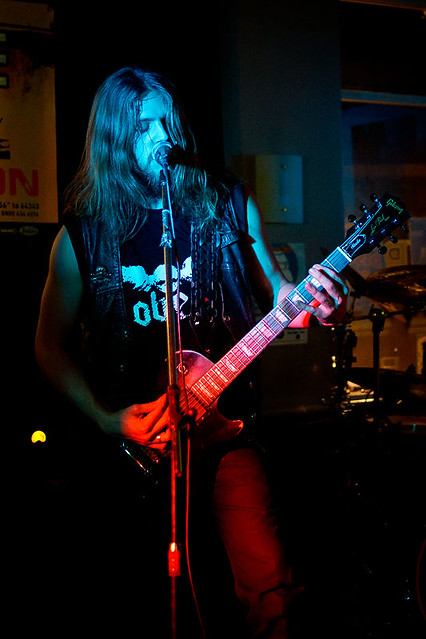 IMG_6258
 by
Richard Lindley, on Flickr
Another one. I clipped the guitar, the mic obscures his mouth, but again, the band love it.
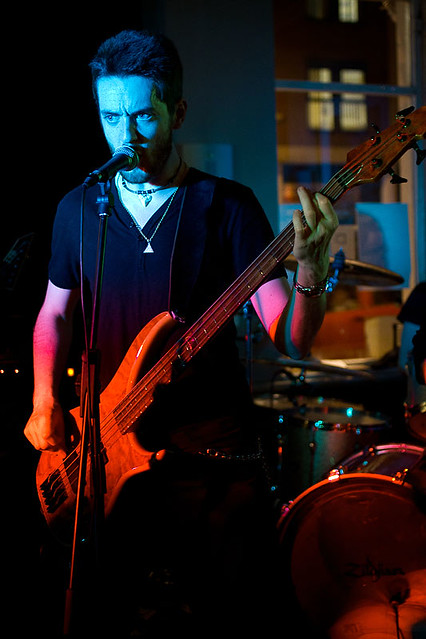 IMG_6243
 by
Richard Lindley, on Flickr