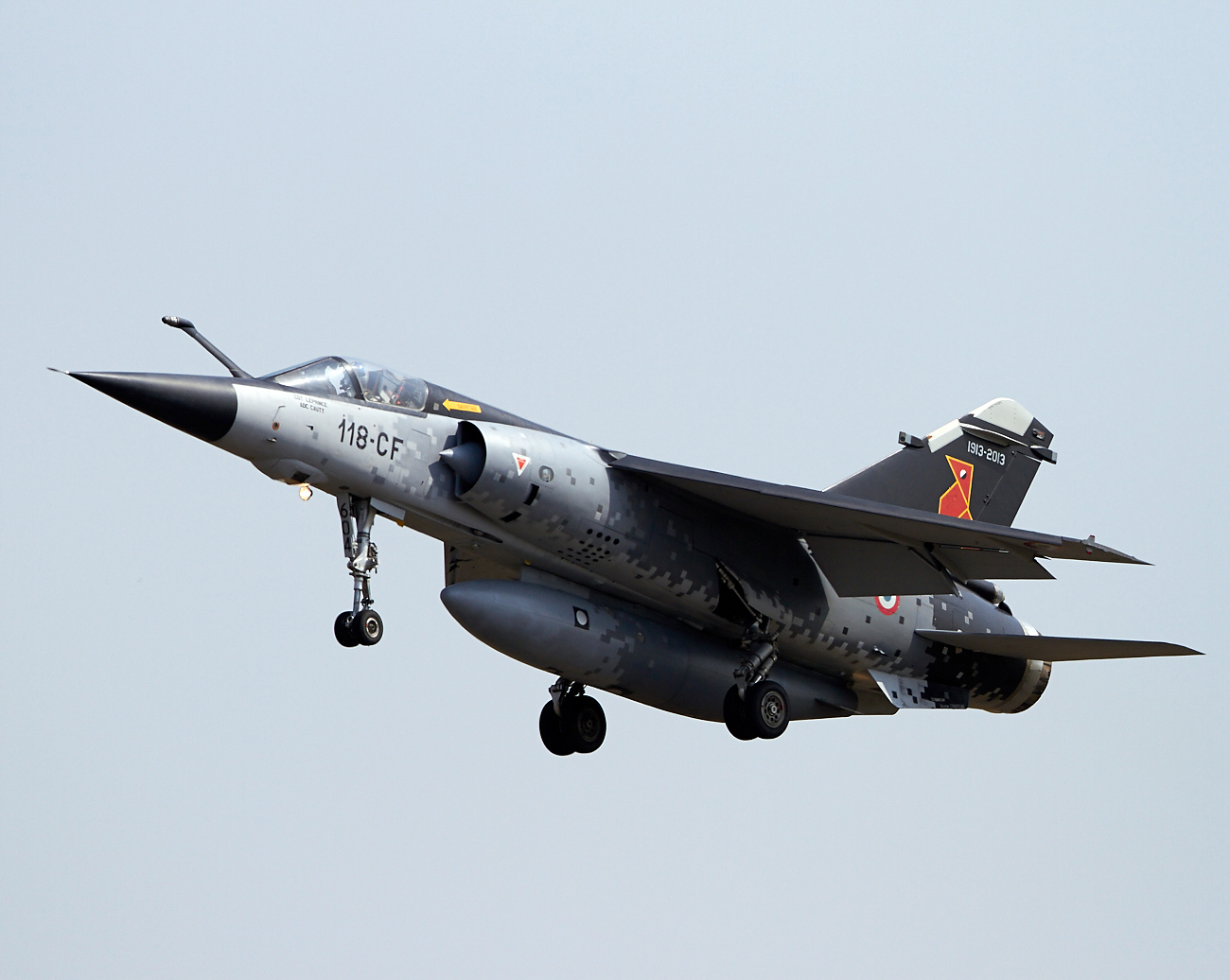
Getting to many gray skys in airshow shots

brewers_fan

Suspended / Banned
Messages
62
Edit My Images
Yes
Not sure what I'm doing wrong here but seem to keep getting gray skys in airshow shots a lot of the time - the sky was blue on the day but this shot shows up the problem well - something is going wrong and I would like to know what.
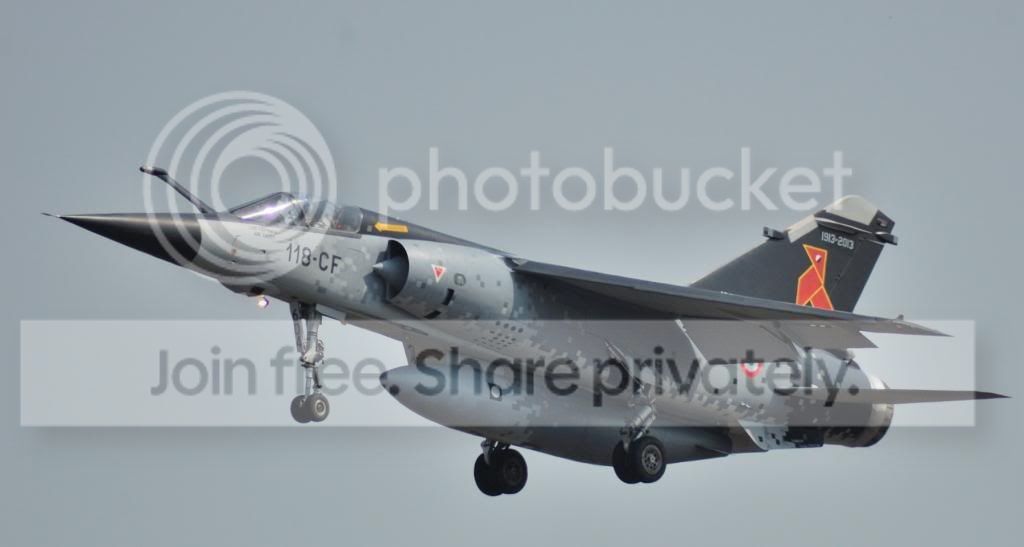
 
My first thoughts were White Balance?
Quick and dirty adjustment on the jpg. If you have it in raw, you'll be able to do it much cleaner and controlled.:


Of course, adjusting in PP isn't the answer, just a solution after the fact :) I'd guess that the camera was in AWB and faced with a predominantly blue image, it's tried to adjust for that. Not sure what you should set your WB to, maybe cloudy?

ps: Maybe a tad underexposed, too, which won't have helped the colours.
 
Last edited:
I think it's WB too.

I imported it as raw and clicked on the white bit of the RAF raoundel and got this...

 
If that's an RAF roundel the white balance is a mile off.. and it must be bring your own plane to work day..


Edit: It's a French Dassault Mirage F1CR, and all the shots I can find of it show a grey digital camouflage scheme rather than something obviously blue
 
Last edited:
If that's an RAF roundel the white balance is a mile off.. and it must be bring your own plane to work day..

There's alays at least one and isn't the internet wonderful for finding them :lol:
 
The loss of two stops is a major setback at most British airshows.

Not to mention the uneven skies you can get from the different degrees of polarisation.
 
Not to mention the uneven skies you can get from the different degrees of polarisation.

But that's only an issue with wide or ultra wide lenses. It wouldn't affect aircraft photos taken with a telephoto lens.
 
The loss of two stops is a major setback at most British airshows.

Why? Polarizers may restrict light but isn't that what a selectable ISO range/aperture is for? Or am I missing something? Admittedly I'm no expert at shooting fast moving aircraft!

Not to mention the uneven skies you can get from the different degrees of polarisation.

With a zoom? Are you sure about that?
 
Last edited:
Why? Polarizers may restrict light but isn't that what a selectable ISO range/aperture is for? Or am I missing something? Admittedly I'm no expert at shooting fast moving aircraft!

The loss of two stops, if there is no obvious upside, is not a good idea if it forces the ISO to a higher level with more noise. Can be a problem is you're already pushed for shutter speed by using a longer lens.

With a zoom? Are you sure about that?

The 'alleged' problem with polarisers is that with a wide-angle lens (that takes in a large expanse of sky) the polarised zone can appear as a darker patch rather than a nice even tone across the image. I say alleged, because this only happens when the sun is low and to one side, and may not be a problem even then. Suck it and see, but I usually find the polarised effect is better.

This patchy issue doesn't occur with longer focal length lenses as they only take in a narrow angle of view.
 
My problem with a polarizer for this kind of stuff is that a CPL needs to be set for a certain angle which means a certain lens position. With a wider subject area you will get variable levels of benefit from the CPL, but you will *always* be paying the ISO/SS price.
If you're only working a relatively small zone, and you have good light, it may be well worth using.
 
The loss of two stops, if there is no obvious upside, is not a good idea if it forces the ISO to a higher level with more noise. Can be a problem is you're already pushed for shutter speed by using a longer lens.

Aye, but if you're shooting in relatively bright conditions anyway upping the ISO a little and/or opening up the aperture a little to compensate wouldn't incur any problems regarding noise?

This patchy issue doesn't occur with longer focal length lenses as they only take in a narrow angle of view.

Aye. The question was a rhetorical one :)

.
If you're only working a relatively small zone, and you have good light, it may be well worth using.

+1
 
Last edited:
Why? Polarizers may restrict light but isn't that what a selectable ISO range/aperture is for? Or am I missing something? Admittedly I'm no expert at shooting fast moving aircraft!

If you are shooting prop aircraft at say 1/160 - 1/320 and it is a bright sunny day then you might get away with it, but if you are shooting jets at high speed you are going to be forced to use a higher ISO and/or larger aperture and so lose IQ. There may also be AF implications.

Suffice to say most serious aeroplane photographers do not use them.
 
If you are shooting prop aircraft at say 1/160 - 1/320 and it is a bright sunny day then you might get away with it, but if you are shooting jets at high speed you are going to be forced to use a higher ISO and/or larger aperture and so lose IQ. There may also be AF implications.

Suffice to say most serious aeroplane photographers do not use them.

Ah right, I see. I was thinking that if you were at ISO 400 and f/4 - f/5.6 (on FF) you wouldn't lose any IQ? As I said though, it's unfamiliar territory with me.
 
Last edited:
You almost always "loose IQ." There's only one optimum aperture/ISO setting for a lens/body combination. You often can't or don't want to use those optimum settings, but that results in a loss of maximum IQ. When/if the penalties are too much (or are desirable) is up to you and variable by camera/lens. Everything in photography is a balancing act.

I'll happily shoot ISO 800 on my D800, and 16-3200 on my D4 in low light...and even higher in bright light. And you can shoot at wider apertures from further away and actually have an increase in DOF...
 
I do a little bit of aviation photography, and to be fair, a polarizing filter isn't much use most of the time.
Partly because I almost never take the camera off 100iso, and don't want to loose the stops of aperture. More to the point though, blue skies and air shows don't often coincide, so it's a pointless expense.
Anyway, at that point, landing on 27 at Fairford, its just the way it is. A quick bit of colour balance adjustment sorts it out.

Edited to say:

I thought I had something similar, and here it is.
Corrected with auto tone in photoshop

9986348154_7aa1930007_o.jpg
 
Last edited:
Back
Top