First couple of hours with the Panasonic GX80 - First impressions.

Crotal Bell

Suspended / Banned
Messages
3,470
Name
Keith
Edit My Images
Yes
Been using the FZ82 super zoom bridge camera until now, so here goes......


The overall quality jump from the FZ82 is obvious.

1. EVF is stunning !
2. Shutter is whisper quiet.
3. Flippy screen (the advantages are yet to be explored)
4. Dials and buttons are plentiful and crisp.
5. Heavy ! (How the heck do you pros lug big cameras around all day when you do weddings !)
6. Manual zoom far better, no waiting for a super zoom to roll out to the length you want.
7. Found it a bit small and fiddly, but soon forgot that when started taking shots, funny how quickly your hands adapt.

8. Photos ...... hmm...well so far not impressed. Yes the added ISO levels are helpful, but results are no better (so far) than the FZ82. The 1200mm zoom with the fZ82 gets me so close, and in good light it can be really sharp. Cropping shots from further away achieves nothing with the 100mm - 300mmon the GX80 that the FZ82 can't do, ad that's the big problem. Lenses lenses lenses, money money money. If I want to take closer photos I'll need another £100 minimum for a shorter lens. Money money money.........

It's early days, and far too soon to make conclusions, but right now the FZ82 is laughing at me from the shelf, It can do nice close ups, super distant 4K video, great images at various distances, all for £300. If you have the cash for all the gear then the advantages of better cameras are obvious, but if you don't, then the advantages of a bridge camera are obvious.

But these are initial thoughts, and the quality of the G80 is obvious, but to unlock the potential will be expensive, maybe too expensive for me?

I will spend the weekend walking and shooting with the GX80. I want to change my mind, I want to love this camera, but can I afford to love it? Maybe a cheap Nikon D3300 with modest shot count would have made more sense, with a general purpose lens? With the the FZ82 for the long reach stuff.

I enjoy my photography with the FZ82, and I have very limited funds, maybe I have delved to deep and need to make for the shallow end? Time will tell

Anyway, the weekend beckons. Here's the first shots with the GX80 after work today in the garden, just getting a feel for it, and I realise I need to expand and get out there to really find out what I can do with this camera. But right now, I do think it's a quality camera ....if you can afford what you need to use it properly?....early days and all that.


Cropped a bit, I like the stronger bokeh on the GX80

Breezy Finch.jpg

This one I liked. The added ISO meant i just needed to crop and sharpen a bit.
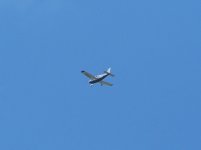
Forum Aircraft.jpg

This one would have been terrible with the FZ82, it's a dark shaded corner. Shutter priority to the DOF is rubbish, my bad.

Forum shot.jpg
This ones ok but the added zoom on the FZ82 means I can do better with that, and no more lenses needed.
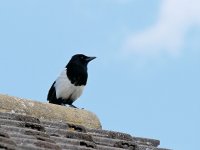
GX80 Mag.jpg
This one was a quick chance snap but I like like it. Birds heading home for the evening.
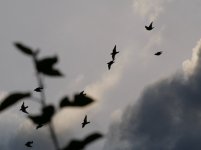
Night night.jpg
 
Is you camera a G80 or a GX80? The main differences are that the G80 is weather sealed and has a faster card interface and a better (if slightly lower resolution) viewfinder, other differences are minimal, but physically they are quite different.
And what lens did you get with it? It looks like it was a 100-300, but I may be getting confused with the G80 and GX80
You photos look fine, if that it you first few, the future looks good :)

Panasonic Lumix compacts and bridge cameras are superb. I use a TZ60 or a TZ70 to carry with me when I only take a long lens, or for other places where a large camera is inappropriate or a temptation for some one to liberate it, and they give excellent results.
However in many cases the quality difference is very obvious , which you will probably notice as you explore the new one.

If you do go for a shorter lens, the 12-60 (The G80 came with one when it came with a lens) is very good, especially when compared to the 12-42, which is in itself good.
I really can't see much difference between the Leica and Panasonic 12-60, I would not pay the extra for the Leica version of the two again.

If you think the Panasonic is heavy, try a Canon equivalent :) (I'm sure that applies to other makes, but I don't have others to compare)
 
My first thoughts are the same as Steve’s above , but also are you just shooting j.pegs or RAW to get the best out of these cameras you do need RAW and a decent PP method . My first mirrorless camera was a g80 with a 12-60 lens and a 100-300 a super combo , although I now prefer olympus the g80 was a super camera
 
Hi Keith

I have both the GX80 and the G80 - not sure which you have, but I also have the 100-300 lens, so I think I have the same set-up as you now have, whichever camera you have. It's interesting that you mention weight because looking at a quick comparison site your FZ82 is heavier than the GX80 - although I assume you mean with the lens.

Any camera and lens will take some getting used to, I've been taking some very similar shots to you, using the 100-300 and, on my G80 I find it focusses very quickly. I can't comment on the quality compared to your FZ, but I'm sure you'll find as you get used to the camera and lens that you'll notice the difference.

Cost-wise, I agree. This can be an expensive hobby, but there's (hopefully) no rush. Almost all my kit has been bought used, and I wait for good deals, and over time I've slowly built up to the 100-300 (which I've only just recently obtained - second hand, of course).

Derek
 
I had a G80, very good camera and got some nice photos with it, as ever needs a half decent lens to get good results
Posters above seem to rate the 12-60 and i've read its a good bit of kit, not a bad place to start.
Just using the 100-300 will not be ideal, something much shorter would be more useful in everyday scenarios.
The lens I hear many good reports about is the 14-140, think there is one for sale in the classifieds.
 
Last edited:
I had a G80, very good camera and got some nice photos with it, as ever needs a half decent lens to get good results
Posters above seem to rate the 12-60 and i've read its a good bit of kit, not a bad place to start.
Just using the 100-300 will not be ideal, something much shorter would be more useful in everyday scenarios.
The lens I hear many good reports about is the 14-140, think there is one for sale in the classifieds.
The new 14-140 is excellent, and much smaller that the older one, seems hardly any bigger or heavier than the 12-60 in use.
But they are quite pricey, a point that the OP has raised.

I keep a new 14-140 on my G9 all the time, and the old 14-140 on a G5. The new one is Power OIS, and the older on Mega.
The 12-60 lives on the G80 to make use of the dual OIS.

The 100-300 is a good lens, but I have discovered it does not seem to like a UV or skylight filter on the front, once I took it off, sharpness and contrast improved a lot. (I tried several different makes)
 
The new 14-140 is excellent, and much smaller that the older one, seems hardly any bigger or heavier than the 12-60 in use.
But they are quite pricey, a point that the OP has raised.

I keep a new 14-140 on my G9 all the time, and the old 14-140 on a G5. The new one is Power OIS, and the older on Mega.
The 12-60 lives on the G80 to make use of the dual OIS.

The 100-300 is a good lens, but I have discovered it does not seem to like a UV or skylight filter on the front, once I took it off, sharpness and contrast improved a lot. (I tried several different makes)

The 14-140 mk i and ii look the same size to me and both have Power OIS.
Cost is very subjective, for a good quality all round lens the mk i in the classifieds looks good value at 250 quid.

I didn't start suggesting anything like the 12-100 that I use on my G9 and took the OP comments into account.
 
The 14-140 mk i and ii look the same size to me and both have Power OIS.
Cost is very subjective, for a good quality all round lens the mk i in the classifieds looks good value at 250 quid.

I didn't start suggesting anything like the 12-100 that I use on my G9 and took the OP comments into account.
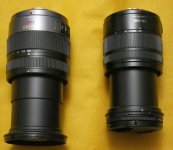
Old one 474g, new one 286g
Old definitely Mega OIS


P1020562.jpg

P1020563.jpg
 
There are two versions of the right hand lens, mk i and mk ii, latter is weather resistant
Look up H-FS14140 and H-FSA14140, so I stand by my comment that 250 quid is a decent price
I wasn't disputing or disagreeing anything, just pointing out there is a an older Mega OIS version, that is different in size, weight and OIS to the newer version/s, and I certainly did not disagree on the price :)
 
I wasn't disputing or disagreeing anything, just pointing out there is a an older Mega OIS version, that is different in size, weight and OIS to the newer version/s, and I certainly did not disagree on the price :)
So many versions, Panasonic certainly make it hard with all their different codes.
The newer Mk i also comes in two different styles, one has HD in red like the 12-35 2.8 lenses
Its always hard to talk about cost, one person's cheap is another's expensive.

Think we both agree that the OP needs something other than a 100-300
Your 12-60 suggestion sounds good, often wondered if the PL 2.8-4 version was worth the extra, got my doubts.
 
Yes, certainly agree that something is needed to go with the 100-300, and cost permitting, I would agree with you the 14-140 with Power IOS, and second choice the 12-60 Panasonic.

The 14-140 focuses down to about 5" at 14mm and about 14" at 140, and the OP mentioned wanting to get close, and it would leave no gaps along with the 100-300, so I agree, ideal.


"often wondered if the PL 2.8-4 version was worth the extra, got my doubts."

For one stop I don't think so, as that is the only difference to me. I sometimes think either one is better than the other, but that is probably down to the way I used it at the time, for me it is not worth it, but to someone who has to have the best it may be, if they can tell the difference :)
 
8. Photos ...... hmm...well so far not impressed. Yes the added ISO levels are helpful, but results are no better (so far) than the FZ82. The 1200mm zoom with the fZ82 gets me so close, and in good light it can be really sharp. Cropping shots from further away achieves nothing with the 100mm - 300mmon the GX80 that the FZ82 can't do, ad that's the big problem. Lenses lenses lenses, money money money. If I want to take closer photos I'll need another £100 minimum for a shorter lens. Money money money.........

It's early days, and far too soon to make conclusions, but right now the FZ82 is laughing at me from the shelf, It can do nice close ups, super distant 4K video, great images at various distances, all for £300. If you have the cash for all the gear then the advantages of better cameras are obvious, but if you don't, then the advantages of a bridge camera are obvious.

But these are initial thoughts, and the quality of the G80 is obvious, but to unlock the potential will be expensive, maybe too expensive for me?

I will spend the weekend walking and shooting with the GX80. I want to change my mind, I want to love this camera, but can I afford to love it? Maybe a cheap Nikon D3300 with modest shot count would have made more sense, with a general purpose lens? With the the FZ82 for the long reach stuff.

I enjoy my photography with the FZ82, and I have very limited funds, maybe I have delved to deep and need to make for the shallow end? Time will tell

Anyway, the weekend beckons. Here's the first shots with the GX80 after work today in the garden, just getting a feel for it, and I realise I need to expand and get out there to really find out what I can do with this camera. But right now, I do think it's a quality camera ....if you can afford what you need to use it properly?....early days and all that.

I think the G80 should be a step up from the bridge camera for image quality but unfortunately you've hit a limitation of going up in sensor size and that's that long lenses are needed and they quickly get big, heavy and expensive. Getting closer can help and some of he stunning wildlife picture we see have been taken at surprisingly close distances but sometimes getting closer just isn't a possibility and you're left with taking the picture from were you can with your longest lens and cropping.

It's interesting that you mention a DSLR and a general purpose lens as there's nothing to stop you getting a general purpose lens for your G80, except money of course :D but you'll obviously lose that longer lens reach.
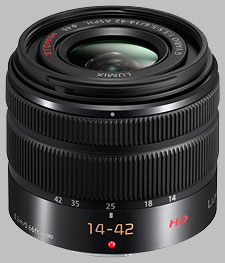
I have a 14-42mm f3.5-5.6 lens and I think it's just about perfect if you can live with the aperture range. There seem to be loads of these with very similar names but the one I have is the teeny tiny one. It's the size of a prime lens...


The 12-60mm lenses seem popular and another possibility which I also have is the 12-35mm f2.8 which is very good and it's throughout the range. You should be able to find all these used.

All I can suggest you do is try and take any passion or gear acquisition syndrome out of your thought process, take a little time to think and make the best decision for you.
 
GX80 user here, and having both the 12-60 & 100-300 (amongst others).

A couple of suggestions:

With a lens like the 100-300, it's tempting to wind it out to 300 and shoot far off birds or whatever. But it's really nice glass and great for larger, nearer subjects at say 200-250. Loving the compression Chimneys . Gravestones

Likewise, the 12-60 kit lens is fab at 12mm. That's a wide angle, it's sharp, with fast and really close focusing.
 
Is you camera a G80 or a GX80? The main differences are that the G80 is weather sealed and has a faster card interface and a better (if slightly lower resolution) viewfinder, other differences are minimal, but physically they are quite different.
And what lens did you get with it? It looks like it was a 100-300, but I may be getting confused with the G80 and GX80
You photos look fine, if that it you first few, the future looks good :)

Panasonic Lumix compacts and bridge cameras are superb. I use a TZ60 or a TZ70 to carry with me when I only take a long lens, or for other places where a large camera is inappropriate or a temptation for some one to liberate it, and they give excellent results.
However in many cases the quality difference is very obvious , which you will probably notice as you explore the new one.

If you do go for a shorter lens, the 12-60 (The G80 came with one when it came with a lens) is very good, especially when compared to the 12-42, which is in itself good.
I really can't see much difference between the Leica and Panasonic 12-60, I would not pay the extra for the Leica version of the two again.

If you think the Panasonic is heavy, try a Canon equivalent :) (I'm sure that applies to other makes, but I don't have others to compare)
It's the G80 Steve, I like the DSLR styled body so stuck to what I know, I'm just getting used to the smaller frame.
Yes I was thinking 12-60 would compliment the 100 - 300 I purchased, good to know you rate it.
The camera was from Wex Birmingham, used but mint, and it is mint too. £335. The box and contents came literally like a new camera off the shelf.
The Lens condition is "good" from Harrisons in Sheffield, but the lady said the OIS would work with the IBIS, apparently she got that wrong.
There's a couple of circular blobs on the sky in one I took but can't see it in all the others, so hopefully not from inside either of the kit.
 
Hi Keith

I have both the GX80 and the G80 - not sure which you have, but I also have the 100-300 lens, so I think I have the same set-up as you now have, whichever camera you have. It's interesting that you mention weight because looking at a quick comparison site your FZ82 is heavier than the GX80 - although I assume you mean with the lens.

Any camera and lens will take some getting used to, I've been taking some very similar shots to you, using the 100-300 and, on my G80 I find it focusses very quickly. I can't comment on the quality compared to your FZ, but I'm sure you'll find as you get used to the camera and lens that you'll notice the difference.

Cost-wise, I agree. This can be an expensive hobby, but there's (hopefully) no rush. Almost all my kit has been bought used, and I wait for good deals, and over time I've slowly built up to the 100-300 (which I've only just recently obtained - second hand, of course).

Derek
Thanks Derek, it's the G80 and 100-300. I like the hand hold of DSLR style bodies.
 
It's the G80 Steve, I like the DSLR styled body so stuck to what I know, I'm just getting used to the smaller frame.
Yes I was thinking 12-60 would compliment the 100 - 300 I purchased, good to know you rate it.
The camera was from Wex Birmingham, used but mint, and it is mint too. £335. The box and contents came literally like a new camera off the shelf.
The Lens condition is "good" from Harrisons in Sheffield, but the lady said the OIS would work with the IBIS, apparently she got that wrong.
There's a couple of circular blobs on the sky in one I took but can't see it in all the others, so hopefully not from inside either of the kit.

Circular blobs will likely be sensor dust which is more visible at smaller apertures.
 
Last edited:
I had a G80, very good camera and got some nice photos with it, as ever needs a half decent lens to get good results
Posters above seem to rate the 12-60 and i've read its a good bit of kit, not a bad place to start.
Just using the 100-300 will not be ideal, something much shorter would be more useful in everyday scenarios.
The lens I hear many good reports about is the 14-140, think there is one for sale in the classifieds.
Thanks Rich
 
It's the G80 Steve, I like the DSLR styled body so stuck to what I know, I'm just getting used to the smaller frame.
Yes I was thinking 12-60 would compliment the 100 - 300 I purchased, good to know you rate it.
The camera was from Wex Birmingham, used but mint, and it is mint too. £335. The box and contents came literally like a new camera off the shelf.
The Lens condition is "good" from Harrisons in Sheffield, but the lady said the OIS would work with the IBIS, apparently she got that wrong.
There's a couple of circular blobs on the sky in one I took but can't see it in all the others, so hopefully not from inside either of the kit.
That was a good price, well done.
The 100-300 is still a good lens to have, it is very comfortable to use, the 100-400 is much heavier, and things fly out of the frame more quickly :)
I usually take the 100-300 when just walking to new places.
The blobs could well be on the sensor. Stop the lens down to the minimum aperture, manual focus as close as possible, then take a few shots of the sky
 
So many versions, Panasonic certainly make it hard with all their different codes.
The newer Mk i also comes in two different styles, one has HD in red like the 12-35 2.8 lenses
Its always hard to talk about cost, one person's cheap is another's expensive.

Think we both agree that the OP needs something other than a 100-300
Your 12-60 suggestion sounds good, often wondered if the PL 2.8-4 version was worth the extra, got my doubts.
Yes I realised that if I kept the kit, a shorter range lens would need to be added, 12-60 would be my choice right now for a good alternative for general use, and affordable for me, but primarily I love getting close to animals and started with the 100-300, the one that I thought would answer my main question - can I afford to step up from the bridge camera and will I see a big enough leap to justify it. @Sangoma this is in reply to you too :)

When I'm walking my smartphone is constantly out of my pocket, I've always loved capturing moments and even resurrected my old canon SLR the other week, need to send that roll of film off ! Watching birds landing on the feeders at home, I wanted to capture them close up, I looked at costs and went for the bridge camera, and it has given me some fantastic shots and made me very happy, and shots of the moon have been very pleasing to me. I'll attach a couple of examples below.

I can see and feel the quality of the G80, it's lovely, but it needs to elevate my overall results to justify the hole in my pocket. Otherwise it's back to doing this with the FZ82.

Starling 4 (2).jpg
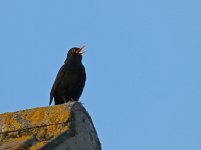
Blackbird 4.jpg
P1000187 (3).JPG
 
There's a couple of circular blobs on the sky in one I took but can't see it in all the others, so hopefully not from inside either of the kit.

It's possible that there's sensor contamination only showing up at smaller apertures but it's also possible they're out of focus birds or insects.

You can test for sensor contamination quite easily as follows...

Set the camera to the smallest aperture possible, f16 or something like that, select manual focus and focus on infinity, set the ISO to 200, point the camera at a white door and hold it quite close to the door, a foot or so, check that your shutter speed is into seconds rather than fractions of a second, 2 or more seconds will be ok. Now press the shutter button and whilst the shutter is open move the camera about. This should enable you to take an out of focus picture of the white door whilst not capturing any detail on it and should show up any sensor contamination. If there's a blizzard of spots you may want to clean the sensor or think about returning it and requesting a clean.

Another thing you could do is take a series of test picture from smallest aperture to largest and see at what point the contamination disappears. If it only shows up at small apertures it might not matter too much but as you've just got the camera it's worth checking to see if it's a problem going forward or if you want to contact the seller for help.
 
Last edited:
The 14-140 mk i and ii look the same size to me and both have Power OIS.
Cost is very subjective, for a good quality all round lens the mk i in the classifieds looks good value at 250 quid.

I didn't start suggesting anything like the 12-100 that I use on my G9 and took the OP comments into account.
It occurred to me that like me, the OP can not see the classifieds yet :)
 
@tijuana taxi @Sangoma @woof woof @d00d

Had a better day today, went to my favourite churchyard and although I didn't do any wildlife I did manage some nice shots on the big lens. Most would have been easier with a 12-60 but couple were better because I was forced to stand way back. I'll give you the info, what I was trying to do, and what I think compared to the FZ82. Would love your thoughts.

This is a favourite stone of mine. I do love the stronger bokeh on the G80 and overall I think the picture "pops" more and is a bit sharper. I love the cobweb down the left side.
F4 ISO 800 SS 1/400
It looks a tad better on my laptop I think, maybe the file transfer size.
Angel G80 1.jpg
This one works well for me too. I think the GX80 images are a bit more striking. I turned the camera, for the portrait angle, I don't do that enough.
F4 ISO 800 SS 1/250
Angel G80 2.jpg
I like this one, however, F11 seems neither here or there. I think the pathway would be better if it was sharper or bokeh but F11 seems neither one thing or the other, but I still think it's a nice composition. I could not get back far enough for the base of the stone with the 100-300
F11 ISO 200 SS 1/15
Celtic stone.jpg
I love this one. I tried to frame the centre of the image between the two higher bushes and I think it worked really well. The stones have nice foreground colour but I think the framing sends the eye down into the valley and up to the little tree on the horizon. This is the only image where I have used editing, a testament to the better ISO and quality of the G80. It was very bright and the clouds were blown out so I adjusted Shadows/Highlights/Contrast which gave more definition on the clouds and took the brightness down overall. Maybe it needed less ISO or a bit of minus exposure compensation? I'm pleased with the end result though.
Should I have pushed Aperture to F22 ?
F14 ISO 200 SS 1/250
Cemetary.jpg
 
Last edited:
Are these amongst the best picture you've posted here Keith? Maybe. Or maybe it's just a matter of these appealing to me more :D

For me f14-22 on Micro Four Thirds are extreme apertures. Growing up with "full frame" I still think in those terms and f22 on FF would be f44 which is rather a lot. I tend to stick to what I'd be using on FF which would be wide open to f8 with occasional use of smaller apertures such as f11-f16 as a deliberate choice. With Micro Four Thirds that would be wide open to f5.6 with occasional use of smaller apertures to f8 and very rarely smaller. But that's just me.

When you use small apertures you risk diffraction which could maybe lead to image softening and lack of contrast but I suppose these can be mitigated to an extent in processing and may not be obvious in a whole picture. With longer lenses or when close to the subject the dof can look very thin though so I can understand you getting into smaller apertures.

Good pictures though Keith and I'd image you're very happy with them :D
 
Are these amongst the best picture you've posted here Keith? Maybe. Or maybe it's just a matter of these appealing to me more :D

For me f14-22 on Micro Four Thirds are extreme apertures. Growing up with "full frame" I still think in those terms and f22 on FF would be f44 which is rather a lot. I tend to stick to what I'd be using on FF which would be wide open to f8 with occasional use of smaller apertures such as f11-f16 as a deliberate choice. With Micro Four Thirds that would be wide open to f5.6 with occasional use of smaller apertures to f8 and very rarely smaller. But that's just me.

When you use small apertures you risk diffraction which could maybe lead to image softening and lack of contrast but I suppose these can be mitigated to an extent in processing and may not be obvious in a whole picture. With longer lenses or when close to the subject the dof can look very thin though so I can understand you getting into smaller apertures.

Good pictures though Keith and I'd image you're very happy with them :D
I never knew that. I assumed that the higher the F stop number, the better DOF and clarity near and far you would achieve.
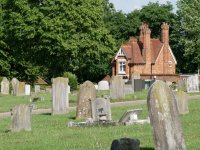
If I may trouble you a little further, I was really pleased with the DOF on this one (I focused on the trees) I assumed it was the higher F range on the G80 that gave such detail on the leaves and still good detail in the foreground. F14 (PS all todays images were in Aperture Priority but i manually moved the ISO and dumped a few I got wrong.)
Cemetary cottage.jpg
 
I never knew that. I assumed that the higher the F stop number, the better DOF and clarity near and far you would achieve.
If I may trouble you a little further, I was really pleased with the DOF on this one (I focused on the trees) I assumed it was the higher F range on the G80 that gave such detail on the leaves and still good detail in the foreground. F14 (PS all todays images were in Aperture Priority but i manually moved the ISO and dumped a few I got wrong.)

Yup. The higher the f number the deeper the dof but also angle of view comes into it. It might be interesting to google some depth of field tables. I'd post a link but I haven't looked at them for a long time :D

There are different ways of getting depth of field. The Merklinger method is pretty easy to remember and work out and is as follows (as far as I remember.) Firstly you think what sized object you want clearly defined, so lets imagine we want an object 5mm in size clearly defined. The formula for your aperture is size of object / focal length, so for a 100mm lens it's 5mm /100 =f20. So for MFT (x2 crop) that's f10, that's with focus at infinity. It seems to work ok for me with 24 to 50mm lenses.

Another approach could be to just focus on your main point of interest and get good sharpness on it and aim for decent depth but not necessarily back to front depth at only "acceptable" sharpness.

The downside to big f numbers is possible lower shutter speeds and/or higher ISO's and diffraction.
 
Last edited:
Yup. The higher the f number the deeper the dof but also angle of view comes into it. It might be interesting to google some depth of field tables. I'd post a link but I haven't looked at them for a long time :D

There are different ways of getting depth of field. The Merklinger method is pretty easy to remember and work out and is as follows (as far as I remember.) Firstly you think what sized object you want clearly defined, so lets imagine we want an object 5mm in size clearly defined. The formula for your aperture is size of object / focal length, so for a 100mm lens it's 5mm /100 =f20. So for MFT (x2 crop) that's f10, that's with focus at infinity. It seems to work ok for me with 24 to 50mm lenses.

Another approach could be to just focus on your main point of interest and get good sharpness on it and aim for decent depth but not necessarily back to front depth at only "acceptable" sharpness.

The downside to big f numbers is possible lower shutter speeds and/or higher ISO's and diffraction.
Ah that explains why the shutter speeds dropped so much on the high apertures.

Incidentally, the blobs are there, but it only deems on low shutter speeds. You can see them top right, three blobs in this image.
Blob.jpg
 
Seeing sensor contamination shouldn't be anything to do with shutter speed, it should be to do with small apertures.

As you stop the lens down from wide open, for example wide open might be f3.5 and so you stop down to 5.6, f8, f10 and so on what you are doing is making the aperture progressively smaller. At wide apertures the light effectively swirls around the contamination (which is an obstruction) and it's either not visible at all or fuzzy. As you stop down the light can no longer swirl around the obstruction and the obstruction becomes more clearly defined. So, at wide apertures the contamination is there but you can't see it or it's fuzzy and at smaller aperture it becomes more visible and more clearly defined.

I think your sensor needs cleaning. These cameras do have a built in automatic cleaning function and you'll see it somewhere in the menu. It's possible that a camera self clean might shift these, I don't know, but it is the first thing I'd try. If that doesn't shift it a blast with a rocket blower might and if not a wet clean may be required. But you've just got the camera so maybe the supplier might clean it for you?
 
Seeing sensor contamination shouldn't be anything to do with shutter speed, it should be to do with small apertures.

As you stop the lens down from wide open, for example wide open might be f3.5 and so you stop down to 5.6, f8, f10 and so on what you are doing is making the aperture progressively smaller. At wide apertures the light effectively swirls around the contamination (which is an obstruction) and it's either not visible at all or fuzzy. As you stop down the light can no longer swirl around the obstruction and the obstruction becomes more clearly defined. So, at wide apertures the contamination is there but you can't see it or it's fuzzy and at smaller aperture it becomes more visible and more clearly defined.

I think your sensor needs cleaning. These cameras do have a built in automatic cleaning function and you'll see it somewhere in the menu. It's possible that a camera self clean might shift these, I don't know, but it is the first thing I'd try. If that doesn't shift it a blast with a rocket blower might and if not a wet clean may be required. But you've just got the camera so maybe the supplier might clean it for you?
Thanks Alan, that's a massive help buddy.
 
Nothing wrong with those, personally I would only compare with another camera if I had taken the same photo at the same time (+- half a minute or so in case a cloud moves)

The 100-300 is sharpest at f8 at 200-300 and f5.6 at 100, and it is good up to f11, above that it is still better than many lenses, but it does drop of as you would expect.

The best compromise is f6.3

It was mentioned that it is best to use the lens at medium lengths. Although it is true that its best performance it at around 200mm, it is still extremely good at 300.

Another way to look at it is if you have a part of the shot you want to crop fairly severely, you will end up with a better image taken at 300mm than you would if you had taken it at 250mm and cropped the same part of the image.

It is very popular for birding and wildlife for good reason, performance weight and size.

The G80 with the 100-300 is around 1100g, and the G9 with the 100-400 is around 1680g. That extra weight makes a big difference, both in use and carrying.

Those marks look like sensor, but they are so minor you won't see them most of the time, personally I would try and blow them off, or brush them with a dust free lens brush, and if they don't move, leave them, unless they are going to normally be visible.
I use a pinhole lens to check for dust and marks, and yours is very clean compared to most, and people haven't ever noticed it :)

If you do try and clean it, don't be alarmed if you notice the sensor rattles around, it is floating, and does move around when the power is off. (it is not actually the sensor that the dust is usually on, but the IR filter (hot filter) in front of the sensor.)
 
Last edited:
Looks like you are getting to grip with the change from your other camera Keith.
It isn't an easy transition, but photos like no 2 and 3 show you are getting there
I did have the 100-300 lens, can't compare directly because mine was the mk ii.
My preferred aperture for best quality was 5.6, rarely go above that and think of f8 as a maximum with m4/3.

You always see a loss in quality posting on here, in fact any hosting site will make changes.
Personally with No 4 I would have concentrated on the foreground rather than the whole scene
F22 has definitely caused diffraction to set in whereby nothing is very sharp.

That looks very much like sensor dust, try giving it a go with a rocket blower, but its not bad at all.
Reckon you should try it with something like a 12-60 before deciding whether to keep it or not.
The camera is capable of excellent photos and sounds to me you are enjoying seeing that improvement.

Dug out one of my photos taken with the G80 to show how it can cope with less than favourable conditions.
This is where you will notice the improvement over a bridge or phone camera
Taken handheld at f2.8, iso1600 and 1/8, I have printed this at A3 with good results.

P1020973-RW2_DxO_HQ 1.jpg
 
Last edited:
Just another quick word on sensor cleaning.

With some cameras, probably those without in body image stabilisation, you just turn the camera off and clean the sensor. However, with cameras with in body IS the sensor may wobble about if the camera is turned off so they may have a "clean sensor" mode in which the sensor is stabilised whilst you clean it. It'll be worth looking through the manual / menu to see if the camera has this mode before attempting a wet or other contact cleaning method.
 
Just another quick word on sensor cleaning.

With some cameras, probably those without in body image stabilisation, you just turn the camera off and clean the sensor. However, with cameras with in body IS the sensor may wobble about if the camera is turned off so they may have a "clean sensor" mode in which the sensor is stabilised whilst you clean it. It'll be worth looking through the manual / menu to see if the camera has this mode before attempting a wet or other contact cleaning method.

It doesn't have a sensor cleaning setting, did mine with the camera switched off.
Lots of discussion as to whether you should do it with power on or off.
The movement when you clean it is very minimal and only how it would naturally move when carried.

Clincher for me was watching the Olympus technicians at the Photo Show.
They used to offer a free sensor clean and they were doing it with the power off
Have to assume they know what they're doing and Olympus bodies don't have a cleaning setting either.
 
It doesn't have a sensor cleaning setting, did mine with the camera switched off.
Lots of discussion as to whether you should do it with power on or off.
The movement when you clean it is very minimal and only how it would naturally move when carried.

Clincher for me was watching the Olympus technicians at the Photo Show.
They used to offer a free sensor clean and they were doing it with the power off
Have to assume they know what they're doing and Olympus bodies don't have a cleaning setting either.

Oh dear. A bit of an oversight there from Panny maybe.

I have cleaned my GX80 and GX9 sensors but as they seem pretty immune to sensor contamination it was a long time ago and I just can't remember. I'm sure I remember cleaning something with a stabilised sensor though.
 
I would have thought there was no need for a cleaning setting, there is no mirror to move out of the way :)

I clean mine with the power off, as you say the sensor will move when you carry it, as my comment about it rattling around.

I'm reluctant to blow too much, and certainly would not use canned air, as you would likely blow the dust further in or into the shutter mechanics.
 
I never knew that. I assumed that the higher the F stop number, the better DOF and clarity near and far you would achieve.
If I may trouble you a little further, I was really pleased with the DOF on this one (I focused on the trees) I assumed it was the higher F range on the G80 that gave such detail on the leaves and still good detail in the foreground. F14 (PS all todays images were in Aperture Priority but i manually moved the ISO and dumped a few I got wrong.)
View attachment 356849

You're definitely getting there, I think. Personally I would use a point roughly a third of the way into your composition, and with a small enough aperture you ought to get enough depth of field to get everything in focus.
 
It doesn't have a sensor cleaning setting, did mine with the camera switched off.
Lots of discussion as to whether you should do it with power on or off.
The movement when you clean it is very minimal and only how it would naturally move when carried.

Clincher for me was watching the Olympus technicians at the Photo Show.
They used to offer a free sensor clean and they were doing it with the power off
Have to assume they know what they're doing and Olympus bodies don't have a cleaning setting either.
My G9 has a sensor cleaning setting, and my Olympii had the option for it to clean automatically on powewr-up
 
Last edited:
My G9 has a sensor cleaning setting, and my Olympii had the option for it to clean automatically on powewr-up
Yes, so does mine, in fact so do my G3s, but they activate the US dust reducer filter (ultra sonic shaker), they don't do anything to assist physically cleaning the sensor.
On Canon and I assume others, it holds the mirror up so that you can get to the sensor to clean it, they also in addition have a dust reducer that tries to "shake" the dust off

The G80 has the same, and as it was stated it does not have a sensor cleaning setting, I assumed that was not what was being spoken about.

For the OP, the setting is on page 5 of the setup menu
 
Last edited:
Back
Top