Hello all - this is my first post on the forum, thanks for having me! Hopefully this is the righ place to post my question.
I'm a film photography beginner and I'm trying my hand at processing film at home. I processed a number of films over the past year or so and I have worked out most of the issues. However, in a test I did over the weekend I'm strugging to get consistent results and I don't understand why.
Here is the scenario:
- Chemicals are Ilford ID-11, Ilford Ilfostop and Ilford Rapid Fixer, all freshly mixed.
- Film is Ilford HP5+ 35mm
- Camera is a Minolta Dynax 800si
- All shots are metered with a Minolta IV light meter
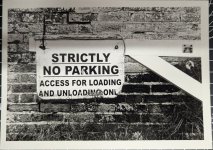
I shot one roll of HP5+ on Saturday, developed it the same day for 13 minutes at 20 degrees in fresh ID-11 stock diluted to 1:1. I inverted continuously for the first 30 seconds, then four inversions every minute thereafter. Then stopped for 30 seconds and fixed for 5 minutes. Washed the film, left it to dry and examined the results. Nice and sharp, relatively low grain, good exposures - I was happy
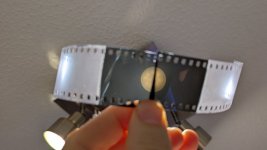
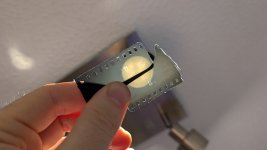
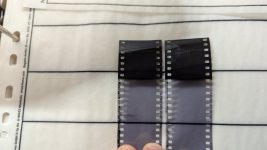
Then I shot another roll of HP5+ the next day. Again, I developed it the same day for 13 minutes at 20 degrees in fresh ID-11 stock diluted to 1:1. I inverted continuously for the first 30 seconds, then four inversions every minute thereafter. Then stopped for 30 seconds and fixed for 5 minutes. Washed the film, left it to dry and examined the results - this film is noticably darker. I'm sure it will still produce acceptable prints but I don't understand where the difference comes from - I'm sure I did everything exactly the same. Now I'm confused
I don't believe it's an issue with the exposures, because the film leader and the edge markings of the second film are darker too. If there was a problem with the light meter or the camera, it would only be the frames that are darker. There are no signs of light leaks or any other issues.
I use the same thermometer to measure all temperatures and I use a sous vide to make sure all chemicals are warmed up to exactly 20 degrees. The processing is done at room temperature in the kitchen, so I don't believe the temperatures fluctuate whilst in the tank.
There are a few things that are different between the first and second film, but I can't imagine why they would cause a result that's this noticable.
- The first film had an expiry date of 01/2016, the second film had an expiry of 10/2017. Both films have been stored in the same place during my ownership, but I can't comment on how they were stored before I bought them. That's an unknown. EDIT: The expiry dates are 01/2026 and 10/2027 - apologies
- As soon as I shot the second film I took it out of the camera and put in the tank for processing straight away, the photos had been taken outside (it was around 5 degrees) and I load my film onto the reels in the garage - so the film itself was possibly cold(er) than the first film, which was at room temperature when I started processing. Although if that made any difference, it surely would have made the second film thinner than the first - where the results are the opposite.
I don't understand the inconsistency - can anyone shed any light?
Much appreciated - thanks in advance!
I'm a film photography beginner and I'm trying my hand at processing film at home. I processed a number of films over the past year or so and I have worked out most of the issues. However, in a test I did over the weekend I'm strugging to get consistent results and I don't understand why.
Here is the scenario:
- Chemicals are Ilford ID-11, Ilford Ilfostop and Ilford Rapid Fixer, all freshly mixed.
- Film is Ilford HP5+ 35mm
- Camera is a Minolta Dynax 800si
- All shots are metered with a Minolta IV light meter
I shot one roll of HP5+ on Saturday, developed it the same day for 13 minutes at 20 degrees in fresh ID-11 stock diluted to 1:1. I inverted continuously for the first 30 seconds, then four inversions every minute thereafter. Then stopped for 30 seconds and fixed for 5 minutes. Washed the film, left it to dry and examined the results. Nice and sharp, relatively low grain, good exposures - I was happy
Then I shot another roll of HP5+ the next day. Again, I developed it the same day for 13 minutes at 20 degrees in fresh ID-11 stock diluted to 1:1. I inverted continuously for the first 30 seconds, then four inversions every minute thereafter. Then stopped for 30 seconds and fixed for 5 minutes. Washed the film, left it to dry and examined the results - this film is noticably darker. I'm sure it will still produce acceptable prints but I don't understand where the difference comes from - I'm sure I did everything exactly the same. Now I'm confused
I don't believe it's an issue with the exposures, because the film leader and the edge markings of the second film are darker too. If there was a problem with the light meter or the camera, it would only be the frames that are darker. There are no signs of light leaks or any other issues.
I use the same thermometer to measure all temperatures and I use a sous vide to make sure all chemicals are warmed up to exactly 20 degrees. The processing is done at room temperature in the kitchen, so I don't believe the temperatures fluctuate whilst in the tank.
There are a few things that are different between the first and second film, but I can't imagine why they would cause a result that's this noticable.
- The first film had an expiry date of 01/2016, the second film had an expiry of 10/2017. Both films have been stored in the same place during my ownership, but I can't comment on how they were stored before I bought them. That's an unknown. EDIT: The expiry dates are 01/2026 and 10/2027 - apologies
- As soon as I shot the second film I took it out of the camera and put in the tank for processing straight away, the photos had been taken outside (it was around 5 degrees) and I load my film onto the reels in the garage - so the film itself was possibly cold(er) than the first film, which was at room temperature when I started processing. Although if that made any difference, it surely would have made the second film thinner than the first - where the results are the opposite.
I don't understand the inconsistency - can anyone shed any light?
Much appreciated - thanks in advance!
Last edited: