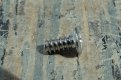
Equipment for Small Parts/Macro Photography

panthro

Suspended / Banned
Messages
131
Name
Mr B
Edit My Images
Yes
Hi everyone, I was hoping for some equipment advice. The stores department at my company need to take pictures of very intricate and small parts (machined to a very high standard) so when any defects come in from suppliers, we can document it and email suppliers with the pictures of the defective goods.

I wanted to buy the right camera and equipment for the job, without busting the bank. Would a entry level SLR and macro lens plus light box and tripod be the right way to go? Any recommendations would be greatly appreciated! I use Nikon equipment myself but am open to any brand providing it's the right set up :)
 
Sounds like a job for a macro lens and ring-flash. Ring-flash is probably best for showing detail and certainly easiest - you could do it hand-held.
 
Last edited:
Many cameras will do the job. If you are the one taking the shots a Nikon would seem right for you and probably a 60mm macro lens.
Good diffused light and a steady camera is about right so what you suggest would be good.
How small are the parts?

This was with a compact camera handheld

5 p up close by Alf Branch, on Flickr
 
Last edited:
Thanks, they're for mechanical wrist watches, so the components range from 1mm in diameter (screws) to 40-45mm (cases, dials etc).
 
probably a 60mm macro lens.

For sure, Nikon is a right choice.

I would suggest a longer focal length… something in the
area of 105+ mm so you could back up and not block your
own light set up!

For the screws. the same 105+ mm and extension tubes.
 
Last edited:
I am assuming these are just going to be 'record' shots.... even so that is quite a tall order for any equipment, the watch dials and cases won't be too much of a problem apart from lighting, however the smaller you go the more difficult your problems. using a 'macro' lens with a magnification of 1:1 your 1mm diameter screw is still going to be 1mm diameter on the sensor. I am going to suggest a lens set-up that is a bit different, but I think it would answer a lot of your needs;

Get yourself a reasonable tele zoom, maybe 50ish to 200mm or a 70 to 300, to that I would add a Raynox DC250 close up lens, this set-up will allow you to use the zoom to control the magnification, you will still be pushing things somewhat for the smaller items without more specialised optics.

A decent tripod goes without saying.

As for lighting as stated a ring flash would possibly be the easiest but may not provide decent lighting for your metallic objects so perhaps some good quality LED lights and decent diffusion (unlike tubes etc. (in theory) there is no penalty in light reaching the sensor when using a Raynox C/U lens....
 
Brand doesn't matter in the slightest, but since you use Nikon already yes, a Nikon macro would be a good choice. Look out for a used Sigma 105mm macro, Nikon mount, or Nikon's original 60mm 2.8D [one of the sharpest lenses they ever made]

A cheap flash unit [Yongnuo, Godox] , stand and soft box would serve you a lot better than a tripod. If you do feel you need a tripod, spare the cash on it, you don't need a high end carbon fibre one, just get a cheap, preferably used one. It is only to hold the camera steady, something not necessary with flash photography unless you need all frames identical [you can straighten, crop and match them up in post without the use of a tripod]

As Phil suggests, you can save money by using standard lenses with macro attachments. The Raynox 250 he mentions is great, you can get them new for about £70 and it will attach to the front of most lenses [I use one on a 100-300 lens and magnification is insane] - When I shot Nikon I used one on the 85mm 1.8G and it gave very nice results, of course this is only the better option if you have a suitable lens already, otherwise just get a dedicated macro lens.
 
I prefer a small sensor camera for high level macro. I normally use a Nikon1 (v2) with the FT1 adaptor and the Sigma 150/2.8 macro lens. The small sensor gives me a 2.7x crop factor so I can get either 2.7:1 effective magnification (FOV) or I can back off at 1:1 effective and have much greater DOF.

You could get a Nikon1 and FT1 for pretty cheap used (~ £350-400), and you can use a shorter/cheaper FL macro lens (or diopter)... I just prefer the longer macro lens for greater working distance to allow easier/more effective lighting and for live subjects (insects).
 
Last edited:
The small sensor gives me a 2.7x crop factor so I can get either 2.7:1 effective magnification (FOV)
The magnification on the sensor is still the same, but a smaller sensor is a possibility, I prefer to refer to it as an apparent increase in magnification as you need to 'enlarge' the smaller sensor image to the same dimensions as the larger sensor to see that increase in mag. Coupling a 70 - 300 zoom with a Raynox C/U lens with the body Steven mentions would be worth looking at...
 
I prefer a small sensor camera for high level macro. I normally use a Nikon1 (v2) with the FT1 adaptor and the Sigma 150/2.8 macro lens. The small sensor gives me a 2.7x crop factor so I can get either 2.7:1 effective magnification....
That's a spurious argument. The lens is still delivering 1:1 magnification, you're just cropping the image compared to using a camera with a larger sensor. There might be benefits to using a smaller sensor for macro work, but this isn't one of them.
 
Not the cheapest , canon mp-e 65 and twin flash light will get you very close! A good tripod would be essential , but I'd struggle to advise on a body.
 
That's a spurious argument. The lens is still delivering 1:1 magnification, you're just cropping the image compared to using a camera with a larger sensor. There might be benefits to using a smaller sensor for macro work, but this isn't one of them.
I was trying to find a polite way to say similar... There is no such thing as 'effective magnification' it is an absolute. it is the magnification on the sensor, if a lens is at 1:1 and you are photographing an object 10mm in length it will be 10mm on the sensor regardless of sensor size. that all goes out of the window when you start cropping and resizing unless you are imaging to a specific magnification. When you match the framing of a smaller sensor to a larger sensor there is no effective magnification you are simply reducing the magnification on the sensor to maybe half life size, it is that which will influence the slight increase in Depth of Field as you will be further away from your subject (given the use of the same lens)

Having a read of the OP again, at a guess more than one person will be using this setup?

So it needs to be easy to use and capable of repeatable results and that these results are for a record to show that a part is faulty.

Lighting... I would look at reasonable LED lights, a continuos source will be easier to view to frame and focus, you will not need large units, I have a couple of small Manfrotto LEDs that measure roughly 3inch x1.5inch and put out a good amount of light... with some extra diffusion material they work very well, for very small objects I wouldn't even think of using those light box/tent affairs.

Tripod is a definite.

Camera body.. yes an entry level DSLR will be fine, they all have live view etc you do not need super fast focus or any other bells and whistles.

Lens, I stick with my suggestion of a 70 - 300 zoom coupled with a Raynox DC250 close up lens... vary the mag with the zoom ring, no swapping or messing about plus the magnification can be good.

A 105mm macro will probably be more trouble than it is worth, even coupled with 68mm of tubes in an attempt to increase the magnification you will struggle to reach a x2 magnification, tubes work better on a shorter focal length (Nikon 105's can reach just about x2 with 68mm but only because their focal length shortens as you focus closer).

Caveats... the main one is that when shooting at these magnifications Depth of Field is going to be wafer thin, and you have to balance it with the effects of diffraction... some camera bodies are able to do what is called focus stacking to increase the amount of the image that is in focus, an expensive option is the Nikon D850 but I believe some offerings from Olympus and Panasonic also have this facility at a more reasonable price (these are not DSLR cameras but compact system cameras so my lens suggestion would still stand but your zoom would not need to be as long).

HTH
 
Last edited:
That's a spurious argument. The lens is still delivering 1:1 magnification, you're just cropping the image compared to using a camera with a larger sensor. There might be benefits to using a smaller sensor for macro work, but this isn't one of them.

I wouldn't say that's a spurious argument, though it needs to be qualified. It's the same principle as using a crop sensor DSLR and a long telephoto for wildlife, where there is the well accepted benefit of greater 'reach'. It's a popular method. You could argue that cropping is something of an illusion in this respect, but it certainly allows you to put more pixels over the subject and in practise there are often considerable operational upsides. Using a Nikon v2 camera with 14mp and 2.7x crop factor, is the same as using a full-frame camera with 102mp (x crop factor squared) There is also the built-in depth of field increase which could be vital when shooting tiny objects down to 1mm wide, eg f/4 on full-frame delivers DoF equivalent to around f/11 (x crop factor). A full technical comparison would include various other factors but at the end of the day Steven's suggestion might well be the best overall compromise.

TBH though, we need to know more about the OP's actual requirements (sample pics?) that need to cover camera, lens and lighting. It's the lighting which will reveal the detail, and that's always difficult when the lens literally gets in the way at the extremely close distances. Shooting objects as small as 1mm is a specialist skill way beyond normal macro of butterflies and beetles. Reading between the lines, I'm guessing that something like a copying stand* with bright LED lights might be the way forward. And I can't say that using a consumer tele-zoom with a Raynox adapter is the way to deliver best image quality. At the very least, field flatness could be an issue, though it may be good enough and ease of use could swing it.

The range of magnifications required is very substantial. The difference between a watch 40mm wide and a screw 1mm, is similar to the difference between a cow and a sparrow - with different solutions necessary, possibly including two lenses.

*copying stand with geared column, something like this random example on Amazon, though there are lots of others at a wide range of prices. I'd go for free-standing lights for maximum positioning options https://www.amazon.co.uk/Rocwing-Co...coding=UTF8&psc=1&refRID=QQ3BPW5ETQ1N83B7AP0S
 
Last edited:
Thought I'd try using a similarly sized screw as the OP might need to shoot but can only find one a bit bigger - 1.62mm diameter and 3.86mm long. Shot it with a Fuji X-30 in Super Macro mode (only means close focus but illustrates the point.)

First one is the whole frame, second is cropped. Lighting was just (bright) sunlight. Camera hand held (the tripod's in the cupboard and I'm trying to be quick and simple!)

screwfull.jpg screwcrop.jpg

For simplicity, I'd go down this route.
 
That's a spurious argument. The lens is still delivering 1:1 magnification, you're just cropping the image compared to using a camera with a larger sensor. There might be benefits to using a smaller sensor for macro work, but this isn't one of them.
I was trying to find a polite way to say similar... There is no such thing as 'effective magnification' it is an absolute. it is the magnification on the sensor, if a lens is at 1:1 and you are photographing an object 10mm in length it will be 10mm on the sensor regardless of sensor size.

I said "effective magnification (FOV)." Of course I realize that it is just "cropping," but there aren't any DSLRs that allow you to retain 14MP with a 2.7x crop. The DOF gain with the same composition is the benefit, and IMO it is significant. Especially with high magnification Macro where DOF and getting enough light are both problematic.

At one point I compared focus stacking with a D800 to a single image with the V1... the V1 result was at least as good with a lot less effort. Some of that could easily be my skill/knowledge of using advanced stacking software, but even with skill/knowledge complex stacks can be problematic.

Edit: there is the issue that diffraction becomes problematic much earlier with the smaller pixels/sensor, but I find DOF to be more significant.
 
Last edited:
I said "effective magnification (FOV)."
Again there is no such thing it is simply the crop factor... I am not saying there are no advantages in using a smaller sensor, there are, but only if you consider it as a crop and that you are able to put more pixels on the subject, or by being able to use a lower magnification to achieve the same framing as the larger sensor... it is only when you resize for purpose that any idea of magnification goes out of the window. A lot of my work involves supplying files to a fixed/certain magnification and mostly using specialised optics.

For the OP, reading the original post a simple one-size-fits all approach is probably the best way to go, the final quality may not be as good as can be obtained but is that important when the images are for a record to show any faults. To get a decent magnification of a 1mm diameter object takes more specialised equipment and time to learn the skills at that magnification, I could do it, but I have 35 years experience of working with high macro imagery for detailed scientific publication....
 
<snip>

Edit: there is the issue that diffraction becomes problematic much earlier with the smaller pixels/sensor, but I find DOF to be more significant.

Now that is a spurious argument ;) Pixel/diffraction is a just a theory. If you put more/smaller pixels over the subject, you always get higher sharpness regardless. It might not be much, but it's there. Normal optical diffraction is a problem though, always is with macro when maximum DoF is required at high f/numbers and the best solution is a suck-it-and-see compromise. Focus stacking is the only way around getting both maximum sharpness and DoF with macro.

Edit: you need to get Imatest Steven ;) :D
 
Last edited:
Again there is no such thing it is simply the crop factor... I am not saying there are no advantages in using a smaller sensor, there are, but only if you consider it as a crop and that you are able to put more pixels on the subject, or by being able to use a lower magnification to achieve the same framing as the larger sensor... it is only when you resize for purpose that any idea of magnification goes out of the window. A lot of my work involves supplying files to a fixed/certain magnification and mostly using specialised optics.

For the OP, reading the original post a simple one-size-fits all approach is probably the best way to go, the final quality may not be as good as can be obtained but is that important when the images are for a record to show any faults. To get a decent magnification of a 1mm diameter object takes more specialised equipment and time to learn the skills at that magnification, I could do it, but I have 35 years experience of working with high macro imagery for detailed scientific publication....

Agree with this. There are some cheap and easy options that may well do the job to a good enough standard. We don't know, and quite likely the OP won't either until it's actually been tried. Low cost and low risk :thumbs:
 
In which case a small digital microscope would fit the bill!
 
but only if you consider it as a crop and that you are able to put more pixels on the subject, or by being able to use a lower magnification to achieve the same framing as the larger sensor.
Ok, ignore the "effective magnification" and leave it as FOV (filed of view) then... that was the point anyway.
Focus stacking is the only way around getting both maximum sharpness and DoF with macro.
And that introduces it's own issues... maybe less with fixed/static subjects (parts), but is it really worth it most of the time, or in this case?
While I wouldn't agree w/ pixel level diffraction being "just a theory," it doesn't change the results in the final print... even with the 1" sensor I'll push the aperture to f/16 if needed. While I wouldn't say these are the best possible, these are the kinds of results I can get easily.

Details of a pocket watch at f/16


_DSC1319.jpg
by Steven Kersting, on Flickr

An orb weaver spider at f/10


Spider
by Steven Kersting, on Flickr
 
Last edited:
20-odd years back, this was what I did for a living... my advice... start the other end....

Same as for any photo, purpose is to be looked at; so who is going to look? Why are they going to look? What are they going to be interested in?

For incoming-goods-Inspection, the traditional process was that parts would be delivered by supplier on a Certificate of Conformity, and presumed 'good'... their job not to send in duff product, so, treat it as good until proved other-wise... that's where I started to go to work....

What sampling schemes are you using in Goods-In?

If done properly, only certain items should even be screened/sampled. Those on the probation list, either from a new supplier, or a new product from an existing supplier, or those bounced back onto the probation list, if previous batches from that supplier have, in production, proved defective.

Of what's on the sample plan... the actual sampling method, should be planned to suit the product... the sample sizes from batch likewise, depending on the product and batch size... standard sampling plans exist for this.

Oh-Kay... now we get to defects..... could be found on Incoming-Goods-Inspection... if its on the screening list, and defect is something that can be found by planned 'test'..... or more likely, its found down the line, when an operator tries putting something together, and bits don't fit....

NOW... we have a 'Quality Problem'.... err... no Quality Department do NOT have a problem... they didn't design this expletive, they didn't buy this expletive, they didn't make this expletive.... so order a general recall of teflon epelettes, and lets look at THE problem.... easy to start shouting at suppliers, and its the first recall of shirky-shoulder managers.... B-U-T... you go back to basics, and in my experience, most supplier problems actually aren't... they have delivered exactly what purchasing asked them too.... so its a purchasing problem? Again, they just shuffle papers and buy what's on the List-of-Parts.... so, what does the LOP say, and is that actually calling up the part that production 'need'?

Curious phenomena, but working in avionics, where product life tended to be decades, little errors like the wrong part number being on the LOP could be there for years, and only come to light when some-one went on Holiday, and a 'temp' strikes a problem, that person has for twenty years been 'fixing' on the fly... so the LOP's never actually got changed... they have just taken a screw from a different bin on a different work-station, or something!!!!!

So... THE problem, gets investigated... and with luck and diligence, you get to the root-cause..... as far as whether the part IS actually defective.... NOT take note, who's to blame, or even who should fix it....

NOW... why do you need a photo? Who's going to look at it? What will they be interested in?

If you DO have a defective item, do you NEED a photo? If you are buying in screws.... lets say, that you have found one that has a warped thread..... If buying in bulk, there is probably an AQL or acceptable-quality-Level, and there is an expectancy that so many parts per million WILL be defective.... it should be in the contract what that AQL is, A-N-D in the Quality-Plan, for YOUR product, what to do 'on the line' if an operator encounters a duff screw!..

Chuck it in bin, and get another out the pot, probably!... if there isn't another in the pot.... some-one probably in purchasing hasn't ordered enough screws to account for duffers... this is NOT the suppliers problem... why would they be interested in a photo of a slew-screw? They probably have thousands of slew screws, and could take as many photo's of them as they wished!!!

Get the rep in..... to look at your photo of a slew-screw, and they will probably be as interested in it, as I am right now in the other half's soaking seeds for the garden to grow green-things.... ie not a jot! They will want to know whether you want another screw... and IF you expect that for free... or are going to pay for it.....

THAT really is the bottom line in these cases..... who pays! But... odds is for something as immaterial as a slew-screw, rep wont even come visit, they'll stick half a dozen in a jiffy bag, pop them in the post and say, "There, SHUT UP"

Back to top... Why do you want a photo? Who's going to look at it, what will they be interested in?

A Photo will ONLY become even slightly relevant, if there is argument, that a component IS actually defective.... A-N-D its something you can actually SEE in a photo....

Cases and screws... very much in my field of expertise.... and you MAY actually be lucky that the 'defect' is something you can 'see' in the photo... b-u-t, not guaranteed.... you get a watch-case come in, and it has been machined slightly 'skew', the aperture for the workings may only be out by a few microns, but that stops them fitting.... take a photo of that case, it will 'look' perfect..... you can stick little red sticky arrows to point at where things foul.... B-U-T still doesn't actually 'show' the defect..... you compare to drawing...... photo still does little or nowt for you..... and the 'proof' to show the supplier, that part be duff, is in that comparison..... so your photo needs to show the defect...

Its NOT a product shot supposed to look good in the brochure, which offered examples may... it should look BAD and no one really cares HOW bad.... as long as it does the job.... SHOW THE DEFECT... which is the nub, and where you can get lost in the 'intent' of the photo......trying to get a 'good' photo NOT a 'good' component....

NOW, you can lay the part on a scale drawing; you can include in shot a steel rule or similar to start offering the comparison you need to show the defect, BUT, we go back around the loop.... it's the defect that matters, NOT the artifact...

A-N-D.... from the top....you shouldn't be doing much if any Goods-In-Inspection, and all but parts-per-million aught to be coming in to plan, and not be in any dispute, IF the sampling plans have been set properly... A-N-D when it comes to the argument, IF there is one... isn't a photo, but two chaps sat at a desk, trying to put two duff parts together.... like the operator did... probably with the operator stood over thier shoulder saying "Yeah, I told you they didn't fit!" B-U-T..... this should NOT be a 'Routine Event'!

As such, dealt with on a case by case basis, where after investigation there MAY be a dispute, and it MAY be one the bean counters consider IS worth arguing over..... that is where you get to.... folk round a table playing with real parts... and photo's are irrelevant...... to get to that point, they my get some attention, after, they may look pretty and break up the wall of test in the defect report, B-U-T, they are first probably not needed, almost certainly not all that useful, and this is the most pertinent part... IF you need to 'tool-up' to take photo's of ALL these defective bits coming in from your suppliers.... some-one needs the sack!

You just should NOT be getting that many duff bits from the supplier! Why are you using that supplier IF they send that much sh!t through your door?!? Who's telling them to send it? Who's telling them that sh!t is what they should be ordering, etc etc etc.. this should in NO WAY, come down to the chaps on the loading dock... and a camera is in no way part of the solution!

It is, estensibly basic housekeeping and good quality practice, to AVOID having to have this argument, NOT to try win it after the event.......

NOW... great if the company will spend a few thosand on a toy for you to play with, they dont really need.... in which case spec what YOU would like to play with.... it matters little.... and as its not-your-job, make sure you get permission to take it home to play with... sorry 'Learn how to use'....

BUT..... as far as dealing with suppliers..... IF you are high enough up the food chain that you are the chap shouting at them.... then, don't bother.... IF the supplier is sending you this much crud, this often... CHANGE SUPPLIER!!! If you are NOT that far up the food-chain, to be making those board-room decisions.... Ask for a pay rise! This ent your job! Tell them to get in a pro who to take their photo's to have their arguments.... which will probably put the kybosh on the whole idea, when they either get a quote for taking that many photos that regularly, or when they get some beautiful product shots back, that don't actually illustrate 'THE PROBLEM'.. at which point 'some-one' aught to realize that what they are asking of you is well above your pay-grade, and probably utterly unnecessary... but they probably wont.... and blame YOU for not helping.... which is probably a lot less hassle than getting dragged into the middle of their argument, and blamed by both sides, that the photo's you took don't show a problem the supplier made, and that you have wasted thousands of the company money on cameras that haven't actually paid for themselves, getting the supplier to pay for the allegedly duff product........

Practically... in the era when digital cameras were rare and expensive..... doing this for a living, there was a digital compact in some-ones desk draw; pictures were pretty poor, and at the front line, used pretty much to 'just' get some-one's attention, or break up text in a report... they did NOT carry an argument... even when they were showing damn great areas of obvious rust, on what aught to have been an 'external enclosure'.. and it STILL came down to getting suits in the shed, pointing and squinting and arguing, and pointing to actual artifacts with pencils!

So.. back-to-top.. there's a lot in here, that is racing down the road to an assumed soloution, NOT actually looking for THE problem...... whether you need a light-box, or ring flash, whether you need a Macro lens or extension tubes, IS, IMO probably a very very non question...

Question is WHY are you getting duff product in to stores? And WHY are you getting so much, that some-one thinks they need a camera to document it all, and what in heck do they expect to do with that documentation they make with the camera?

Start at the top, its basic fundamental, quality-control, 101... you do NOT need a camera... you need a quality plan, and possibly a new supplier!

Add On Ed:- GEC/Marconi school of management, lesson one: If its beneath your pay-grade, DELEGATE, if its above your pay-grade, ESCALATE... and remember, NOTHING is YOUR pay-grade... lol!

 
Last edited:
Back
Top