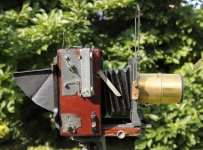
Does it make sense to repair historical cameras yourself?

Messages
68
Edit My Images
No
Actually, you have to ask yourself another question first: Why should I repair my historical camera at all?

Well, I'm not primarily a collector, I also want to use my old cameras. That's the only way I can understand the essence of a camera. So I have to at least repair them, but it would be better to restore them as well. What do you think?
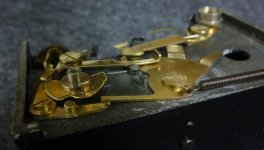
Mamiya super 16 mechanical microcosm.jpg

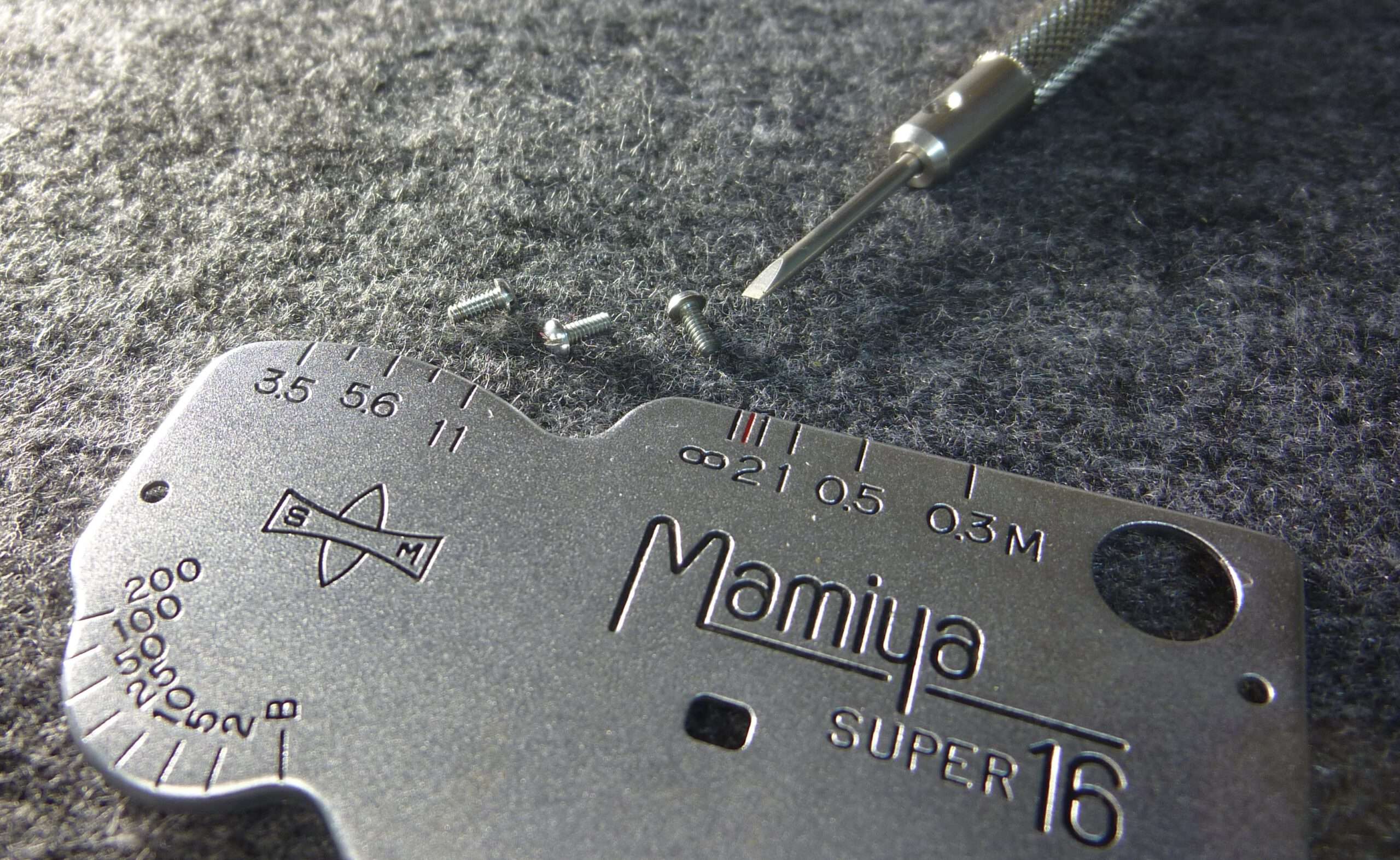
One example is my Mamiya Super 16, which I enjoyed restoring over several weeks. In the end, it's deeply satisfying to have brought it back to life. If you would like to see pictures and videos of my project, you can find them here:
 
There is a lot to be said for that old adage. If a job is worth doing, it's worth doing well. I think you should absolutely restore them. If you have the tools and an interest I think it is probably very rewarding.
 
For use, yes and possibly for posterity if it's an important device.
 
As Neville said, yes. You clearly have the skill and enthusiasm to do so, though I think it depends a bit on the camera in question. I have a Contax iia which is perfect except for the vertical alignment in the rangefinder. I believe very few people have the skill and knowledge to tackle a repair like that. I'd happily pay for that to be done though as I prefer the Contax to my old Leica's. But that's another story.
 
Ive bought a couple of lf lenses cheap cos of broken shutters. Usually its just a dodgy speed or stuck on one setting internally. I hope to break them down clean and lube and see how far I get
 
Since you have all the necessary tools and knowledge for that, I think it would be a very interesting experience. People have been working on repairing old items for ages, why not cameras!
 
Plus which you will never beat the click of the shutter and winding on. :cool:
 
A very definite yes. I guess I started in the mid to late 1970s, but mainly sorting out equipment I'd bought for work, an LF camera, and two 5x4 enlargers, Then almost nothing until 2007. I had moved to Turkey at the end of 2006, got married and decided to my house, here in the UK.

On a trip home I started having a clear out, this camera sat on a mantle piece, an ex-girlfriend had given it to me in the mid 90s. I stuck it in the dustbin,


LFcamera0_sm.jpg

I was staying at my mother's house, and on leaving my own house I had second thoughts and fished it out of the dustbin.

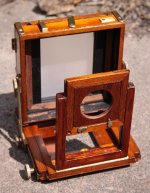
So that evening I stripped the camera completely, polished the brass, the following day I had a carpenter make the missing fronts, bought some French polish, made some material for the bellows . . . . . . . Oh and I made a new focus screen.

cam05sm.jpg

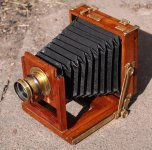
Then I made new bellows.

cam08sm 1.jpg

This was after 2 or 3 days :D

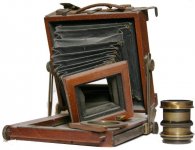
A friend made me the brass plate and thumbscrew for the front rise/fall, not shown. Later I made a leather hand. The camera is a Quarter plate Houghton Victo

That was the start, since then I've restored many wood and brass cameras, various sizes to 12"x10". I've also rebuilt or serviced a few Speed Graphics, LF SLRs, about 100 Thornton Pickard roller blind shutters, stripped and rebuilt/recovered MPP Micro Technical cameras, made well over 1,000 ground glass focus screens, Plus odd items, horizontal enlargers, tripods, safelights, etc.

Even basket case cameras have been restored. In general, it takes me two or three days to restore a wood & brass camera, that's a full strip down, strip & polish the brass work & lacquer, clean and repair the wood parts, French polish, or Danish oil, the re-assemble. In terms of hours its maybe 4 or 5, it's the time finishes need to dry.

Ian
 
Last edited:
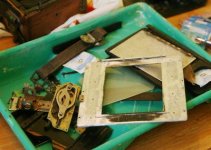
A basket case example, back maybe 2008 I bought 2 5x4 Speed Graphics from the US, sold as enough parts to rebuild one good camera, cheap around $60-$89.

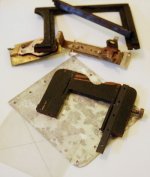
When they arrived, what a mess, sure two cameras one was a pre-Anniversary Speed Graphic, the other a Pacemaker missing its shutter, no common parts at all

sp_g_bits.JPG sp_g_bits2.jpg

sp_g_body.jpg

This was the pre-Anniversary Speed Graphic, it had been modified to become a wide angle camera from new, First I cleaned up all the parts, re-glued the ground glass holder frame. The aluminium plate of the spring back had slight corrosion, and the plate used to convert the camera had more severe corrosion, I removed the corrosion and chemically treated the two parts, before priming and filling in pitted areas. Finally painting Matt black,

I then removed the fittings, and what was left of the covering material on the body. Then any cracks were repaired, and the wooden casing sanded down. I decided to French polish the body rather than re-cover it. Some of the fittings were repainted, then I began reassembled the camera.

My main problem was the Focal plane shutter, I had no idea how to set it up and adjust it, so a lot of trial and error, until finally, I'd realised how to do it. The bellows were in poor condition, but I managed to make them light tight.

sp002-sm.jpg
sp003-sm.jpg

This is the camera now, I bought a job lot of Speed Graphic parts from Paris a few years later, there were some new bellows in the box, and eventually I fitted them to this camera.

The modifications had been to shorten the focus bed, cut away part on the top of the casing, this allows a 90mm (approx) lens to be used with rise, the rangefinder works and is set for a wide angle lens, and 3 spirit levels were added. The folding track bed had been shortened and fixed to the body.

Despite the focus track being shorter there's enough bellows extension to use a 210mm lens for head and shoulders portraits. The shutter works well, I've used the camera hand held with this 8" Petzval lens.

petzval09sm.jpg
With the old bellows.

Restoring this camera was a very interesting learning curve, about two weeks after I'd finished it I came across a PDF of "Restoring Classic And Collectible Cameras" by Thomas Tomosy.

So yes it does make sense to restore historical camera yourself.

Ian
 
Back
Top