Beginner Did I buy the wrong camera?

A&N

Suspended / Banned
Messages
13
Edit My Images
No
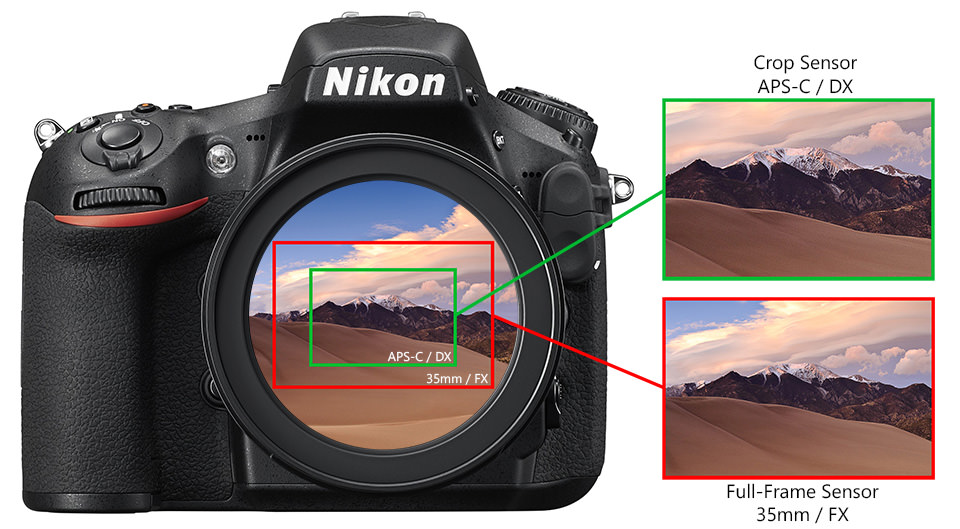
I had been using a Canon bridge camera for a few years and enjoyed taking it everywhere. I used it a lot. I had been looking to upgrade for a while and last year I bought a camera from the Canon rebel series. From all the research I had done prior and opinions I've gotten, the general consensus was that the body doesn't matter as much as the lens. However, I've been reading lately a lot of the crop sensor vs full frame debate (I am aware mirrorless are now popular top but I can't afford those) and I am wondering if I made mistake buying this camera over a full frame? Does camera body really make a difference vs lens?

I'm doing mostly portrait photography, usually of my own kids and family's kids but would like to eventually branch out and do more portraits on the side (not looking to do this full time or anything, but I enjoy it and would like to do more). I used the kit lens for some time to learn and then I bought the 50mm 1.8. That lens has been amazing and I love it. I use it all the time. I wasn't aware this was a FF lens until recently. I don't have the budget to buy another camera, so how can I get the best out of this camera?


What other lenses do you suggest for portraits with this type of camera?

What can I do with my kit lens? Is it possible to sell or trade it in?
 
It will be part of your learning trajectory, to use what you've bought to its fullest extent and then upgrade when the camera starts holding you back. The problem most of us have is GAS (Gear Acquisition Syndrome), often not listening to advice like I gave in my first sentence. If you had gone full frame, you might have more bells and whistles but also more things to get frustrated about.
 
A few years ago, it made more of a difference than it does today. FF bodies used to be significantly better at handling high ISO values than smaller sensors and while this is still true, the smaller sensor bodies are much better than they used to be (3200+ ISO is now useable on many).

Your kit lens probably isn't worth much so I'd keep it for when 50mm isn't wide enough.

85mm used to be a "go to" focal length for portraits (on 35mm film) and that equates nicely to your 50mm on a Canon crop sensor body (which I'm sure you know has a 1.6x crop factor).
 
It will be part of your learning trajectory, to use what you've bought to its fullest extent and then upgrade when the camera starts holding you back. The problem most of us have is GAS (Gear Acquisition Syndrome), often not listening to advice like I gave in my first sentence. If you had gone full frame, you might have more bells and whistles but also more things to get frustrated about.
Thank you, this is great advice and Ive heard this a lot. I guess my concern over choosing the crop over FF was if there is a difference in over image quality, or if a good quality lens would make up for that. Or does any of that even matter at all? On the other hand, I know more goes into a photo than that of course, such as lighting and composition. So maybe I'm overthinking.
 
A few years ago, it made more of a difference than it does today. FF bodies used to be significantly better at handling high ISO values than smaller sensors and while this is still true, the smaller sensor bodies are much better than they used to be (3200+ ISO is now useable on many).

Your kit lens probably isn't worth much so I'd keep it for when 50mm isn't wide enough.

85mm used to be a "go to" focal length for portraits (on 35mm film) and that equates nicely to your 50mm on a Canon crop sensor body (which I'm sure you know has a 1.6x crop factor).
Thank you! I shoot with a higher ISO but not quite at 3200. I usually sit at 1600 with the 50mm and my photos have been turning out nice (I think). How high can I comfortably go before it gets too noisy? I have a rebel T100, which was released in 2018.

I'll hold onto my kit lens then and Ill look into the 85mm. What about this lens is special?
 
Last edited:
To be honest, I would have preferred a 650D :)

Are you shooting RAW or JPEG?

It would probably be wise to keep the ISO below 800 if you can.

You can get lenses at very reasonable prices, but it is worth sticking to IS lenses as the camera does not have IBIS.

The 18-135 is quite reasonable in performance and price, and the older 28-135 FF IS lens is even more reasonably priced and very nice, though a bit heavy.
 
Honestly so much gets written about this online and it really doesn't matter anywhere near as much as you'd think. I've been shooting with digital cameras since 2008 and I've never shot an FF body yet. I don't think I've missed out. As long as you're aware of things like crop factor (your 50mm lens has the same view as an 80mm lens on an FF body) and the effect it will have on your images then honestly don't worry about it.

Have you ever looked at a good photo and thought "I wonder what the sensor size is of the camera that took that photo?" Of course you haven't. You could say FF is inferior to Medium Format as the sensor is so small, but nobody does. Outside of other photographers literally nobody knows or cares about sensor size.

You actually get a choice of more lenses using an APS-C Canon body. All the EF full frame lenses fit, but you can also use all of the EF-S lenses that are specifically built for the APS-C bodies.

Are you happy with the images you're taking? As long as the answer is yes then don't worry about sensor size. Buying an FF body isn't going to magically turn you into a great. photographer. I changed systems from Canon to Fuji last year, which is a system completely built around an APS-C sensor. Fuji don't make an FF camera, it's either APS-C or MF.

This article might be worth reading to get an understanding of crop factor:

 
Last edited:
Thank you! I shoot with a higher ISO but not quite at 3200. I usually sit at 1600 with the 50mm and my photos have been turning out nice (I think). How high can I comfortably go before it gets too noisy? I have a rebel T100, which was released in 2018.

I'll hold onto my kit lens then and Ill look into the 85mm. What about this lens is special?
I understood the comment to mean that your 50mm lens, is the equivalent of the classic 85mm lens when used on your DSLR. At least that would also have been my advice. The 50mm lens is a good lens - 85mm on a cropped sensor DSLR is probably a bit too long for anything more than head and shoulder portraits.

With a kit lens and a 50mm lens I would suggest adding a longer focal length lens, the 55-200 is a good/cheap option - which would help when subjects are further away. However, my main advice is that if you do not know what is holding you back with your current kit, your best bet is to hold off and consider what you need. For example, with your 50mm lens, do you find yourself having to step back to fit everything in the frame? Or is your subject always tiny in the frame?
 
How high can I comfortably go before it gets too noisy?


As high as you can before YOU think the results are too noisy!!! Sorry to be as vague as that but it does (to some extent) depend on how fussy you are about it. My own view is that a properly exposed shot at high ISO with a bit of noise visible is better than a) no shot at all or b) a poorly exposed shot rescued in PP.

As said above, wait until you know (or are pretty sure!) you want/need before buying more kit.
 
  • Like
Reactions: zx9
I don't think you really need to buy anything. And if you do, I'd go for a wider prime like a 24mm or 28mm f/1.8 or something.... I had the 28mm USM way back in my Canon 5D2 days with a 50/1.4 and the 135L - obviously that was all on full frame. Was a lens I was happy with!

Those will give you a full frame equivalent of about 38-45mm and 80mm (with your current 50) which is a nice pairing imo

With regard to ISO, simply shoot at different settings and see what you are happy with. Obviously boosting exposure in editing isn't going to help things so ensure you've got a good exposure to begin with too.
 
Last edited:
My first DSLR was the 450D, less specs than your T100. People are more impressed by the photos than by what camera you use unless they are gear nerds. In fact I would go as far as to say that having limitations should make you concentrate on technique and skill as opposed to just letting technology and slapping a filter on your image in IG dictate your final image.
 
Most people start out with a crop sensor camera as they are a lot cheaper than a full frame sensor camera.
If you are enjoying your 50mm prime lens, you could consider ones either side of 50mm - eg a 35mm or a 85mm.
 
To back up what Mintchocs said above...

I wish I could get over the 'wonder if I have the right gear' attitude that I, and many, many others, have these days and get down to taking some real photographs. I look at images taken by the likes of Henri Cartier Bresson, Ansel Adams, and latterly, David Bailey, et al. in film times and wish I could have a fraction of the talent that these people portrayed. They didn't have all-singing, all-dancing auto this or that. They probably just had simple manual focus, manual setting cameras and took their time over things. They had an eye for a photograph and I would give anything to have that 'photographic eye'. Yes, modern cameras make life easier and can let a photographer take pictures that these old guys could probably only dream about but it's a scatter gun effect in some ways, take enough pictures and one of them is bound to come out pretty good.

OP, I don't think you've bought the wrong camera, the good thing is that you bought a camera, any camera. Get out there with whatever you've got and try to keep up the skills of the photographers of old.
 
Last edited by a moderator:
To be honest, I would have preferred a 650D :)

Are you shooting RAW or JPEG?

It would probably be wise to keep the ISO below 800 if you can.

You can get lenses at very reasonable prices, but it is worth sticking to IS lenses as the camera does not have IBIS.

The 18-135 is quite reasonable in performance and price, and the older 28-135 FF IS lens is even more reasonably priced and very nice, though a bit heavy.
I shoot in RAW. Thank you for the recommendations! I will look into these.
 
Honestly so much gets written about this online and it really doesn't matter anywhere near as much as you'd think. I've been shooting with digital cameras since 2008 and I've never shot an FF body yet. I don't think I've missed out. As long as you're aware of things like crop factor (your 50mm lens has the same view as an 80mm lens on an FF body) and the effect it will have on your images then honestly don't worry about it.

Have you ever looked at a good photo and thought "I wonder what the sensor size is of the camera that took that photo?" Of course you haven't. You could say FF is inferior to Medium Format as the sensor is so small, but nobody does. Outside of other photographers literally nobody knows or cares about sensor size.

You actually get a choice of more lenses using an APS-C Canon body. All the EF full frame lenses fit, but you can also use all of the EF-S lenses that are specifically built for the APS-C bodies.

Are you happy with the images you're taking? As long as the answer is yes then don't worry about sensor size. Buying an FF body isn't going to magically turn you into a great. photographer. I changed systems from Canon to Fuji last year, which is a system completely built around an APS-C sensor. Fuji don't make an FF camera, it's either APS-C or MF.

This article might be worth reading to get an understanding of crop factor:

Thank you! All great points and thank you for sharing that article. Very informative!
 
I don't think you really need to buy anything. And if you do, I'd go for a wider prime like a 24mm or 28mm f/1.8 or something.... I had the 28mm USM way back in my Canon 5D2 days with a 50/1.4 and the 135L - obviously that was all on full frame. Was a lens I was happy with!

Those will give you a full frame equivalent of about 38-45mm and 80mm (with your current 50) which is a nice pairing imo

With regard to ISO, simply shoot at different settings and see what you are happy with. Obviously boosting exposure in editing isn't going to help things so ensure you've got a good exposure to begin with too.
Thank you for the suggestions!
 
My first DSLR was the 450D, less specs than your T100. People are more impressed by the photos than by what camera you use unless they are gear nerds. In fact I would go as far as to say that having limitations should make you concentrate on technique and skill as opposed to just letting technology and slapping a filter on your image in IG dictate your final image.
Thank you. I guess one of my concerns that I wasn't completely aware of (or failed to pay attention to) when I bought it was the megapixels. Again, I assumed as long as I had a good lens the camera didn't matter. I do worry about image quality suffering in that regard. What kind of things did you shoot with that camera and how did the images turn out?
 
To back up what Mintchocs said above...

I wish I could get over the 'wonder if I have the right gear' attitude that I, and many, many others, have these days and get down to taking some real photographs. I look at images taken by the likes of Henri Cartier Bresson, Ansel Adams, and latterly, David Bailey, et al. in film times and wish I could have a fraction of the talent that these people portrayed. They didn't have all-singing, all-dancing auto this or that. They probably just had simple manual focus, manual setting cameras and took their time over things. They had an eye for a photograph and I would give anything to have that 'photographic eye'. Yes, modern cameras make life easier and can let a photographer take pictures that these old guys could probably only dream about but it's a scatter gun effect in some ways, take enough pictures and one of them is bound to come out pretty good.

OP, I don't think you've bought the wrong camera, the good thing is that you bought a camera, any camera. Get out there with whatever you've got and try to keep up the skills of the photographers of old.
Very well said. Thank you for this perspective. People back then could capture beautiful photos without all of the tech we have today. Photography is an art and at the end of the day, the photographer is the creator of the image.
 
The camera industry has to sell us ever greater cameras in order to keep making a profit.

I’ve shot professionally on and off my whole adult life, and the only camera I ever bought to improve ‘image quality’ was a medium format back in the 80’s.

IQ is something that can be measured, so we can make fancy charts about resolution and dynamic range.

But no ‘non photographer’ ever looked at an image and had an immediate reaction of ‘if only you’d used a 50 m pix camera rather than a 20 mpix one, the shadow behind that tree wouldn’t contain quite so much chroma noise’.

There’s reasons to buy the latest cameras (burst speeds, AF tracking, IQ) but your decisions should be based on what you think will improve the images you’re making, not what some article on the internet says about your camera.
 
Not to really answer your question but watch this
View: https://youtu.be/LALtLUjSeJs


The legendary DonMcCullin being introduced to the wonder of digital autofocus cameras after years of film and manual focus

Enjoy

D
 
Thank you! I shoot with a higher ISO but not quite at 3200. I usually sit at 1600 with the 50mm and my photos have been turning out nice (I think). How high can I comfortably go before it gets too noisy? I have a rebel T100, which was released in 2018.

I'll hold onto my kit lens then and Ill look into the 85mm. What about this lens is special?
On the subject of noise, as has already been mentioned that is very much a personal choice thing, but there are a couple of things that are worth mentioning.

When deciding if an image is 'too noisy', do so at the size the final image will be presented in - if an image is only goign to go on FB / Instagram, etc, at say 1200 on the long edge, then that's the size you want to look at it when deciding if the noise is acceptable to you - images will always look worse from a noise perspective when you zoom in to 100%.

Secondly, if you have an image you like, but you're unsure if it's too noisy or not, consider a B&W conversion - B&W is more 'forgiving' of noise, and this can give you an image you are happy with.
 
  • Like
Reactions: Nod
To back up what Mintchocs said above...

I wish I could get over the 'wonder if I have the right gear' attitude that I, and many, many others, have these days and get down to taking some real photographs. I look at images taken by the likes of Henri Cartier Bresson, Ansel Adams, and latterly, David Bailey, et al. in film times and wish I could have a fraction of the talent that these people portrayed. They didn't have all-singing, all-dancing auto this or that. They probably just had simple manual focus, manual setting cameras and took their time over things. They had an eye for a photograph and I would give anything to have that 'photographic eye'. Yes, modern cameras make life easier and can let a photographer take pictures that these old guys could probably only dream about but it's a scatter gun effect in some ways, take enough pictures and one of them is bound to come out pretty good.

OP, I don't think you've bought the wrong camera, the good thing is that you bought a camera, any camera. Get out there with whatever you've got and try to keep up the skills of the photographers of old.
I always say this. I do a lot of motorsport photography, and you'll see all sorts online about AF performance, such and such a camera isn't suitable for fast action, poor burst rates blah blah blah. Almost every iconic sports image from the 20th Century was taken with a film camera, probably with a manual focus lens where the burst speed was entirely determined by how fast the photographer could push the film advance lever.

You could go out and drop £30k on the absolute top spec cameras and lenses, and you'd still take poor images with them if you have no eye for composition and lighting. And don't worry about image noise. The only people who'd ever notice are other photographers, and even some of them don't care. If you need high ISO to get the shot then so be it.
 
Last edited:
Hi all,

Thank you all again for the great advice, suggestions, and encouragement. I do want to have at least one more good lens, even though I enjoy the 50mm and like the results it produces. This is the list from the suggestions here I have gathered:

18-135mm
28-135 FF IS (older
55-200
24mm or 28mm f/1.8
35mm

Should I get one in Canon brand or is there another compatible brand that would be better for one of these? (Ex. I know some Sigma lenses are Canon compatible but I don't know much more than that).

Also, I'm trying to find a good balance between ISO setting and shutter speed settings. I've decided to turn down the ISO to a max of 400 but now not sure what shutter speed I should have to match that, especially when photographing children who move around a lot and unpredictably. I have my focus set to AI-Focus as I understand that is the best for this context. When I'm inside, I use diffused window lighting but I do have a light I want to try out. Outside obviously will be the natural lighting. But, for example, I want to take some indoor photos of my 7 month old with window lighting.
 
Last edited:
Also, I'm trying to find a good balance between ISO setting and shutter speed settings. I've decided to turn down the ISO to a max of 400 but now not sure what shutter speed I should have to match that, especially when photographing children who move around a lot and unpredictably. I have my focus set to AI-Focus as I understand that is the best for this context. When I'm inside, I use diffused window lighting but I do have a light I want to try out. Outside obviously will be the natural lighting.

There are no hard and fast rules that limit you to a specific shutter speed relating to ISO. The whole exposure triangle thing is flexible. That's the point. But really the meter in your camera will tell you what shutter speed, or aperture, you need for any given situation. We can't really tell you. Just use the tools you have and figure it out.
 
I think you need to decide whether you want wider than your 50mm or longer than your 50mm you currently love using.

Personally, I would go wider. But everyone is different in how and what they like to shoot.

And you aren't going to get your shutter speed to match your ISO because every place and room you are in are going to have different levels of lighting.
 
There are plenty of online exposure simulators where you can see how the three settings relate to each other.

Shutter speed, aperture and iso. Lowering iso will require longer shutter speeds for the same exposure, so you have to look for movement blur - either camera shake or the subject moving slightly.

Understanding exposure is an important lesson.
 
Hi all,

Thank you all again for the great advice, suggestions, and encouragement. I do want to have at least one more good lens, even though I enjoy the 50mm and like the results it produces. This is the list from the suggestions here I have gathered:

18-135mm
28-135 FF IS (older
55-200
24mm or 28mm f/1.8
35mm

Should I get one in Canon brand or is there another compatible brand that would be better for one of these? (Ex. I know some Sigma lenses are Canon compatible but I don't know much more than that).

Also, I'm trying to find a good balance between ISO setting and shutter speed settings. I've decided to turn down the ISO to a max of 400 but now not sure what shutter speed I should have to match that, especially when photographing children who move around a lot and unpredictably. I have my focus set to AI-Focus as I understand that is the best for this context. When I'm inside, I use diffused window lighting but I do have a light I want to try out. Outside obviously will be the natural lighting. But, for example, I want to take some indoor photos of my 7 month old with window lighting.
For portraiture I wouldn’t pick any of those lenses. First choice reasonably priced lens would be the 85mm 1.8.

When we shot weddings on crop, we really could have had done with 2 of them. Probably my most used lens.

And as above - AI focus is a kludge; designed only for beginners who are scared they’ll not be able to swap modes effectively.

My focus strategy is to use back button focus and AI servo all the time. This means I can keep the focus button pressed to focus continually. Or I can just focus on a static subject then let go of the focus button and keep shooting without fear the camera will refocus. It’s simple and effective.

As for exposure; remember your choices are only within the parameters allowed by the light level you’re working with.

In low light you can’t simply choose to shoot low iso fast shutter and small apertures for loads of DoF.

Likewise midday in the summer, you’ll not be able to get a long shutter speed for milky water (you’ll need an ND filter to reduce the light)

I’ve never considered there’d be a maximum iso I’d go to; it’s whatever is required to get the shot. And when the available light dies (or is unsuitable) then it’s time to add some more light. Getting the image is the point - not trying to hit some made up maximum iso.

It’s weird but here’s some common misconceptions.

Newbies agonise over believing they need to shoot Manual, pros use semi auto or even P mode wherever it’ll make life easier.

Amateurs agonise over ‘noise’, no customer has ever commented about it.
 
Last edited:
My focus strategy is to use back button focus and AI servo all the time. This means I can keep the focus button pressed to focus continually. Or I can just focus on a static subject then let go of the focus button and keep shooting without fear the camera will refocus. It’s simple and effective.

Something everyone should at least learn, even if they decide not to use it. It was a real eye-opener when I learned about it years ago and I've never looked back.
 
I've just switched back to BBF since picking up an A7Riii. I used to shoot like that with my Canon 5D2 but since going A7 in 2015 I haven't bothered.

I just think the Riii with it's focus modes & eye AF etc is more suited to shooting that way.

Which I guess proves again, there's not always a right & a wrong. It's more a what suits!
 
I took some photos of my 7-month-old niece yesterday - I was using a cropped sensor camera with a 23mm lens, so a wider field of view than your 50mm lens. I don't actually know what ISO and shutter speed I used - I used aperture priority (f2.8) with auto ISO and shutter speed and the Fuji equivalent of AI Servo focus. However, light and capturing the moment are more important.

I would suggest trying your kit lens at different focal lengths and seeing which ones work well for you.
 
Also, I'm trying to find a good balance between ISO setting and shutter speed settings. I've decided to turn down the ISO to a max of 400 but now not sure what shutter speed I should have to match that, especially when photographing children who move around a lot and unpredictably. I have my focus set to AI-Focus as I understand that is the best for this context. When I'm inside, I use diffused window lighting but I do have a light I want to try out. Outside obviously will be the natural lighting. But, for example, I want to take some indoor photos of my 7 month old with window lighting.
For children running around, or anything moving really, shutter speed is your most important consideration. There's no point having a perfectly exposed, noise free shot if the subject is blurred because your shutter speed is too low. As has been said above, the only people who worry about noise are other photographers. Non-photography people probably don't notice as they're not looking for it.

Back button focus is well worth learning. It's something that took me many years to get on board with but it gives you the best of both worlds. Set your camera to AI Servo mode and set up back button focus and you can have both continual and single AF in one button. You can also pre-focus if required which is handy in some situations.

The best thing of all is practice practice practice. It's not like the film days where shooting loads of images cost money, you can shoot as much as you like now. Get to know your camera, what works and what doesn't.
 
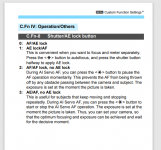
I could be wrong but the T100 / 4000D does not have a back button focus button unless it allows remapping which I doubt on a low end camera that Canon would have this.
 
I could be wrong but the T100 / 4000D does not have a back button focus button unless it allows remapping which I doubt on a low end camera that Canon would have this.
I never had a Canon DSLR that didnt and according to the Manual this camera allows the * button to be used for focussing.
1679316937887.png
 
Thank you. I have changed the setting to servo mode and will learn how to use back button focus. I haven't tried it yet but taking a quick look at the instructions above, I do have the * button to be able to do so. So I will take a closer look into that.
 
I took some photos of my 7-month-old niece yesterday - I was using a cropped sensor camera with a 23mm lens, so a wider field of view than your 50mm lens. I don't actually know what ISO and shutter speed I used - I used aperture priority (f2.8) with auto ISO and shutter speed and the Fuji equivalent of AI Servo focus. However, light and capturing the moment are more important.

I would suggest trying your kit lens at different focal lengths and seeing which ones work well for you.
What was the 23mm lens you used and how did the photos turn out?
 
Back
Top