Depth in photos

PatrioticRebel

Suspended / Banned
Messages
51
Name
Amanda
Edit My Images
No
I’m starting to see how important depth is to a good photo. Are there any circumstances, other than maybe using one’s image as a stock photo, where you can get away with not so much depth?
 
Perhaps, you could explain what you mean by "depth"? Do you mean depth of field or do you mean the presence of secondary subjects at different distances, to give an impression of inclusiveness? There could also be the lack of depth, to focus the user's attention on the main subject. Are you asking about portraits or about scenes?

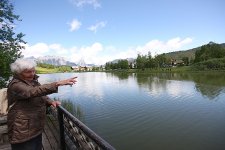
Inclusive depth...
Woman pointing at the Wildsee near Seefeld Austria 40D 7842.JPG

Exclusive depth...
Young woman smiling at Swindon Mela CAN_4279.jpg

Compressed depth...
Hawker Hunter trainer at Yorkshire Air Museum G9 P1012325.jpg

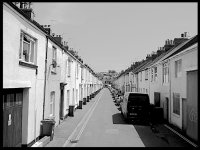
Extended depth...
New Street Exmouth SL300 DSCF3751.JPG
 
Last edited:
Depth of field. Sorry…I should have been more specific.
 
Right. Beginner here. I don’t know a lot of these things.
I appreciate that you don’t know, that’s why it’s v important that people don’t give you incorrect information :)
 
I’m starting to see how important depth is to a good photo. Are there any circumstances, other than maybe using one’s image as a stock photo, where you can get away with not so much depth?
Back to your original question, it’s all about your subject.

But basically as a picture maker, you should be aware of the many visual tricks that help you to communicate your vision*. For many landscape shooters this will involve having most of the image in focus. But for other types of image selective focus (shallow depth of field) is a suitable technique to bring attention to a subject.

* these are sometimes referred to as the rules of composition, it’s important that you fully understand them and particularly that you don’t react to ‘rules’ in a negative way. Sincerely every idiot I’ve ever seen post an image stating ‘breaks all the rules but looks great’ has posted an image that everyone else can see the rules that the image adheres to. If you’re aware of the rules, it’ll help, but if you try to slavishly follow them, you’ll get stuck.
 
Right. Beginner here. I don’t know a lot of these things.
Apologies. My brain was in error mode, so I've edited my post to remove the "Depth of Focus" mistake.
 
Following other peoples' rules is likely to lead to frustration.

The more pictures you take, the more you'll work out your own "rules" for making the images you want.
 
(A shallow) depth of field is great for isolating a subject. However a large depth of field can be really good for illustrating... well.. depth... in an image.

In short, both have their place. However for newcomers, a shallow depth of field is sometimes initially out of reach due to beginner equipment and lack of understanding, making it appear to be something that "looks really cool". However as mentioned above, it can be overdone by (for example) using a shallow depth of field on every image just because it's possible rather than because it's important/necessary/part of the photographers vision.

See the picture first, then consider the tools you have available. If the ability to introduce a shallow depth of field is there for you, the next thing to think about is whether it benefits the image.
 
I’m starting to see how important depth is to a good photo. Are there any circumstances, other than maybe using one’s image as a stock photo, where you can get away with not so much depth?


As long as you don't need to make a living out of this just go for whatever looks good to you.
 
As long as you don't need to make a living out of this just go for whatever looks good to you.
Nah. I’m just looking to up my game a bit, that’s all.
 
Nah. I’m just looking to up my game a bit, that’s all.

Something to read and think about...


I suppose one use for limited depth could be that you just like the look. Other reasons could be to make something in the background less visible or less distracting or less identifiable.
 
Last edited:
Following other peoples' rules is likely to lead to frustration.

The more pictures you take, the more you'll work out your own "rules" for making the images you want.
In what area of life does this actually make sense?

If I want to get better at cooking, playing sport, writing, playing a musical instrument (the list is endless).

Would the best way be to:
A, study the masters read and practice? Or
B, ignore everyone else and just ignorantly hope that with just practice, skill will arrive by osmosis?

It’s like the whole of human learning is doing it wrong, we should rip up all that’s gone before and just hope we can do it all better next time :sneaky:
 
As long as you don't need to make a living out of this just go for whatever looks good to you.
This is good advice.

It is always worth remembering that the arts are about personal reactions to things.
 
If I want to get better at cooking, playing sport, writing, playing a musical instrument (the list is endless).
Cooking. You can learn some things from others/books but if it’s for yourself then what you like is the only way to go. And what ingredients are to hand will determine what you can produce.

If you are considering professional photographers cooks then I agree that generally you have to follow the rules/recipes of others but there are notable exceptions to that.
 
Cooking. You can learn some things from others/books but if it’s for yourself then what you like is the only way to go. And what ingredients are to hand will determine what you can produce.

If you are considering professional photographers cooks then I agree that generally you have to follow the rules/recipes of others but there are notable exceptions to that.
It's not about following others, it's about learning techniques. The old adage, learn by mistakes is clearly amplified if we allow ourselves to learn by others experiences too. Learning anything in a vacuum is quite obviously the hardest way to learn.
 
Back
Top