Deep Night sky - How do I venture into what looks like witchcraft?

foolycooly

Suspended / Banned
Messages
248
Name
Simon
Edit My Images
Yes
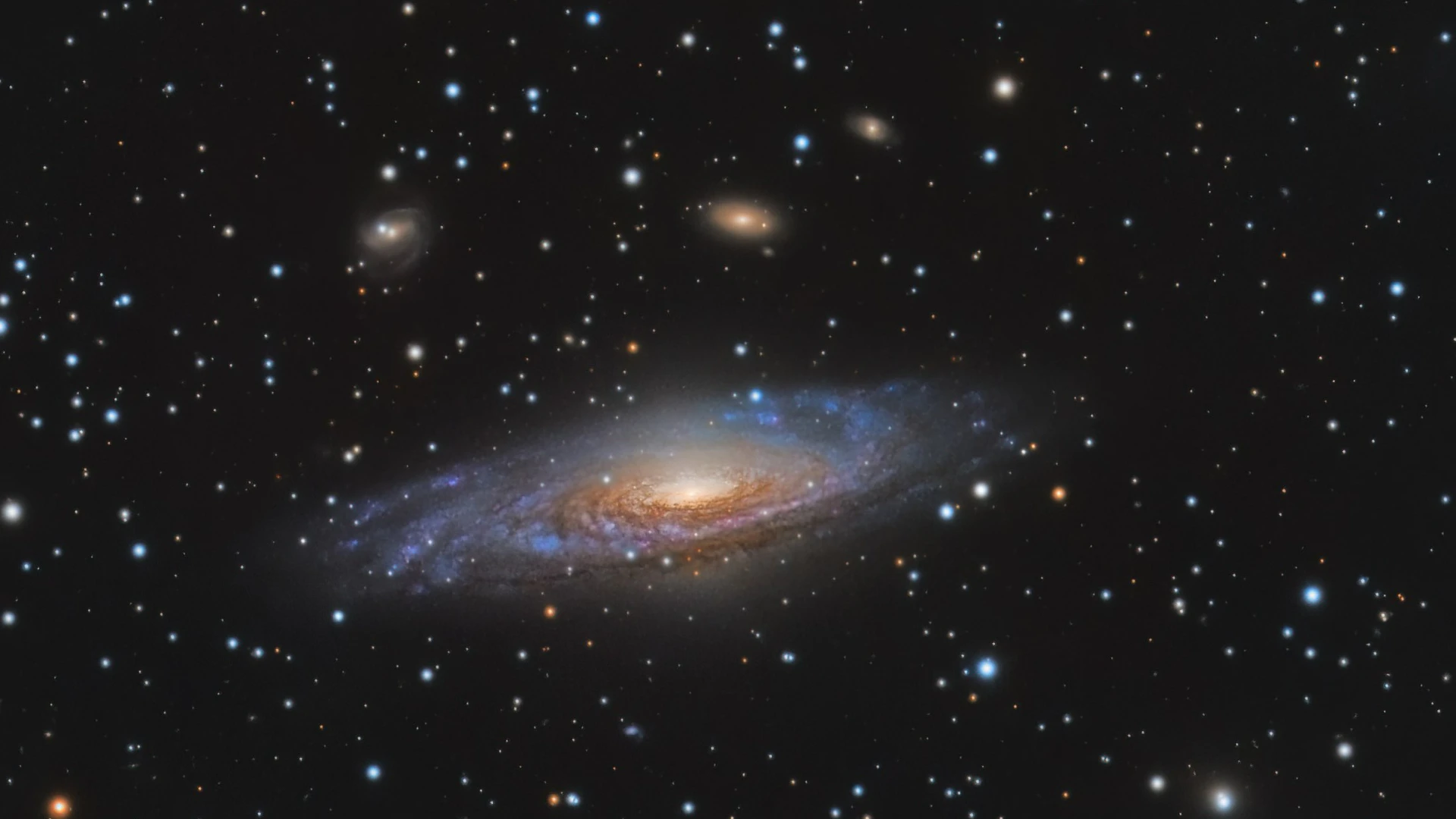
One of the types of photography I love seeing, and want to try is Deep Sky & Night photography.

Does anyone have any recommendations for books / courses / random reddit threads that discuss how a complete novice can get started in this area, or is there super thread on here that would would be a good pointer as well?

I live in an area where I can get reasonably dark skies - not true dark as is recommended, so an idea of how bad a bit of light pollution is going to impact at the outset would also be helpful...
 
Have a look through the night and space picture sharing area and look for swag72's threads (probably a year or 2 ago now). The forum's search for her posts will help. While you're there, have a rootle around for other shots that are what you'd like to achieve and ask the poster how the shot was achieved (but be aware that some people may have moved on!)
 
One of the types of photography I love seeing, and want to try is Deep Sky & Night photography.

Does anyone have any recommendations for books / courses / random reddit threads that discuss how a complete novice can get started in this area, or is there super thread on here that would would be a good pointer as well?

I live in an area where I can get reasonably dark skies - not true dark as is recommended, so an idea of how bad a bit of light pollution is going to impact at the outset would also be helpful...

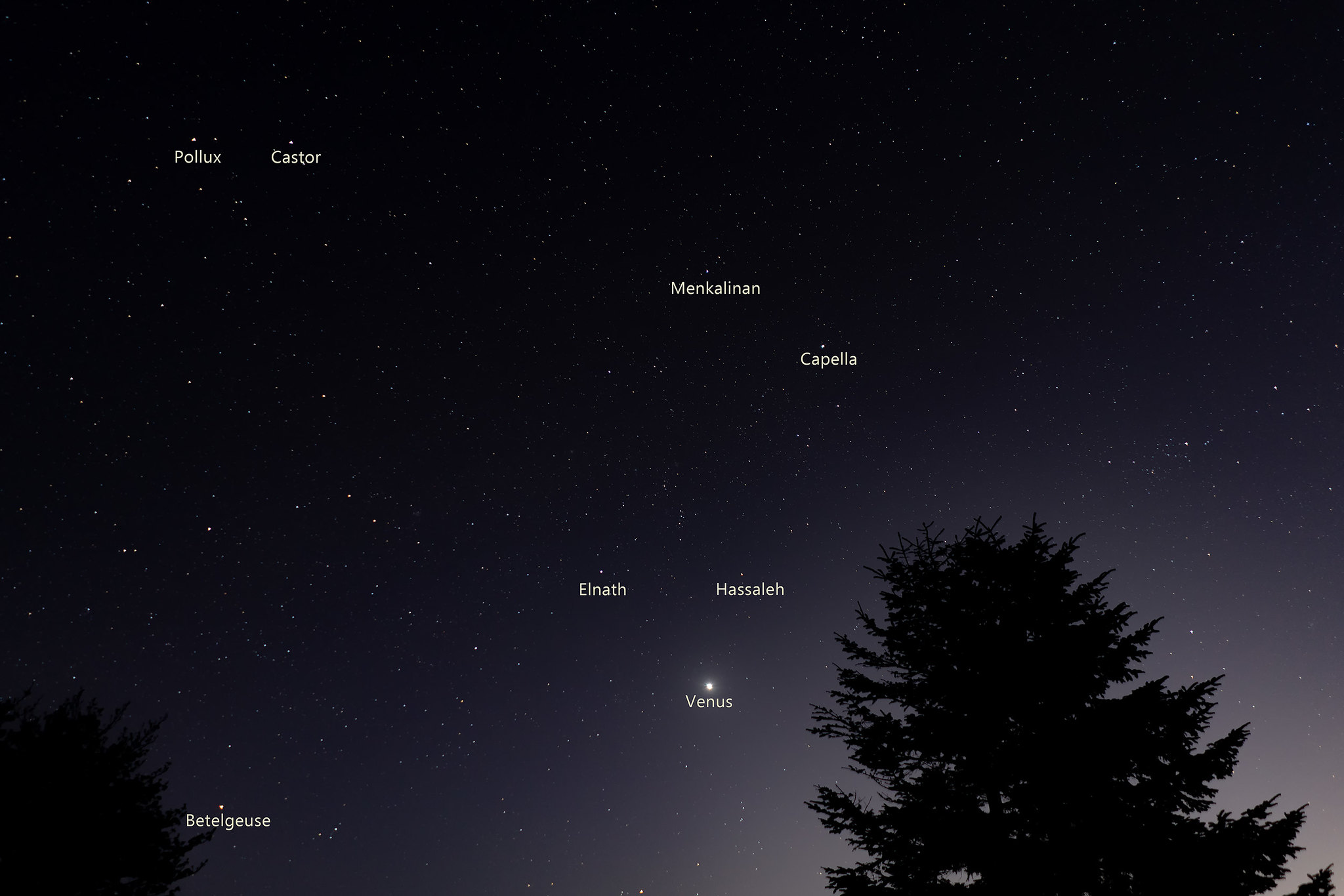
Taking shots of the stars and Milky Way with your usual camera is straightforward. Just Google 'Photographing the Milky Way' and you will find lots of info.

For Deep Sky Objects, Nod's advice about checking swag72's threads on here is good. Plenty of info there and also on her website.

Dave

BTW The gear for some DSO shots needs VERY deep pockets.
 
  • Like
Reactions: Nod
Well, where to begin? I am no expert but have been down this road, hope this helps.

You say you want to take pictures and not simply observe, so IMHO most courses are not worth it, and the best place to learn is YouTube.

Do a search on "getting started in astrophotography" and watch the videos.

I started with the easiest stuff like the Moon and wide-field shots of the stars in the night sky. You can do this using your mobile phone or most cameras.
This is when you benefit by using the first essential for astrophotography a tripod of some sort.
All I can say here is don't skimp or you will regret it later.

The next step into deep-sky photography starts with targeting the brighter deep-sky objects like the Andromeda Galaxy or Orion Nebula.

To do this you ideally need some kind of tracking mount to carry your camera and enable longer exposures. Longer focal lenses for your camera or your first telescope

Once again YouTube will help.

I won't go any further as beyond this your wallet starts to suffer.

The light pollution where you live makes a big difference. Have a look here and zoom in to your location to see what to expect.

Light Pollution Map


Good luck let us know how you get on.
 
Start simple, otherwise you will give up very quickly. The Moon is easy if you have the right lens. Don't discount the Sun - astronomy you can do in the daytime. The new solar cycle is starting to ramp up and a long lens and a home made mylar/cereal packet filter gives good results (just be careful).
Getting into longer exposures you will need some sort of tracking mount, but the basic ones are simple to use. Just make sure whatever you choose has the payload capacity for what you're putting on it.
You can capture the larger DSOs very nicely with a long lens and a tracking mount, though you will need to be able to stack multiple exposures.
Be wary of looking at stuff done by the likes of Sarah Wager (Swag72). It's very impressive but take a look at her location, the kit she uses, the work that goes into it and the cost of it all. If you want to go for it big time it's something to aspire to, but could be very offputting for a beginner.
Baby steps. People who leap straight in usually end up with a stack of expensive kit gathering dust or on an auction site.
You don't need a perfect dark sky site, certainly not to get going. Obviously it helps, but you can work with less than perfect with care. You're more likely to want to go out in your garden than drag your kit 30 miles away. Save that till the bug bites.
 
I think the general night sky, Milky Way, constellation landscape type images is the thing to start with in all honesty instead of diving straight into computerised mounts and special lenses/scopes etc You can get started much easier and much cheaper too.

A Bortle 4 area is dark enough for night skies.

Personally, I prefer that to deep space anyway for several reasons.
 
For checking how bad light pollution is just take a shot at 30s & moderate fast aperture & ISO
The example below is one I've tried at a rural spot near me(ISO 800 for 30s & I think f/2.8).
meteor by Mike Kanssen, on Flickr
Skies looked pretty dark to me but the camera picked up quite a bit.
 
I live in an area where I can get reasonably dark skies - not true dark as is recommended, so an idea of how bad a bit of light pollution is going to impact at the outset would also be helpful...
The other thing to consider is the weather where you are. I am in the north west and when you take into account the moon and cloud we seriously get a handful of usable nights in a year. So before you spend a lot on gear I would monitor the skies where you are for 6 months or so and see how many times you could have got a moonless clear view of the night sky
 
One of the types of photography I love seeing, and want to try is Deep Sky & Night photography.

Does anyone have any recommendations for books / courses / random reddit threads that discuss how a complete novice can get started in this area, or is there super thread on here that would would be a good pointer as well?

I live in an area where I can get reasonably dark skies - not true dark as is recommended, so an idea of how bad a bit of light pollution is going to impact at the outset would also be helpful...

Have a look at this guy Simon, funny and informative, always looking to do things the cheapest way possible.

 
Very nice! Would that be Corfe Castle in the foreground?
Yes! I took a trip out there last night after the gym - moon was just rising, so it wasn't overly bright - I've installed a DSD app on my phone which tells me there is some decent darkness tonight, so I might give it another go
Nice start ;)

Thanks very much :) - I'm going to print this one....
 
Yes! I took a trip out there last night after the gym - moon was just rising, so it wasn't overly bright - I've installed a DSD app on my phone which tells me there is some decent darkness tonight, so I might give it another go


Thanks very much :) - I'm going to print this one....

I use Ventusky and Clear Outdoors and Stellarium but often it's worth just looking outside and going out! We did last night, moon was nice and low giving some nice foreground lighting but not really affecting Orion too much.
 
So I actually went out last night and managed to get one I'm happy with for now.

Thanks for the advice to start - I'll build up to some of the DSO stuff over time :)

IMG_1237.jpg by Simon Stocks, on Flickr
Great start. Looking at the DSLR you have it will serve you well for Deep Sky Objects once mounted on a tracking mount or perhaps a tracker that can take the weight.
 
Have a look at this video from the Astrobackyard YouTube channel.

Trevor covers the whole range of astro photography in an easy going manner, lots of stuff there for beginners if you look for it.

HTH

PS - astrophotography like photography isn't always cheap ...
 
Last edited:
That is a very dangerous channel. I now have a need to get an observatory in my garden....
That's a relatively minor expense compared to clearing the obstructions to your view of the skies from said observatory.
The trees in my garden aren't too much of a problem, but the neighbours houses are not going to be cheap!
 
The neighbours would be relatively cheap - it's the rest of the city and the other sources of light pollution that would cost!
 
That is a very dangerous channel. I now have a need to get an observatory in my garden....


Fortunately, I'm very aware that I lack the patience for deep space photography - both the taking and even more, the processing. That means that I'm not really tempted to start spending money on the kit required!
 
For some reason I just remembered this
 
Fortunately, I'm very aware that I lack the patience for deep space photography - both the taking and even more, the processing. That means that I'm not really tempted to start spending money on the kit required!

As nice as deep space images are, I have no interest also. To set everything up and then leave it doing its thing for hours does not appeal whatsoever. Even without the hours and days of processing.....

Landscape night sky's are what float my boat!
 
Just wonderful and hard to believe really so I have a question...

David, were you kidnapped by aliens and did you shoot these out of their flying saucers window?

Glad to see you got home safe.

:D
 
Yeah sorry about that.

Check out the Samyang 135mm f/2 lens for astro, I dare you ;)
I'll check that out, thanks!

I've also got in the bag;

Canon L 70-200 f2.8
Canon 50mm f1.4
Tamron 24-70 f2.8
Sigma 105 DG HSM f2.8

Not sure if any of those would be any good - the 24 is really nice for Landscape, but I've read I might want to go a bit wider if I want to do massive starscapes?
 
You don't have to get a much sky in the shot as possible ;)

I like shooting blended shots at 35mm or I'll go 20mm which after some cropping and again blending is probably nearer 24mm anyway.

50mm is nice for sky only constellation shots such as Orion.
 
I only started early last year and already have 3 telescopes, 3 mounts, an astro modified Sony and a Samyang 135mm.
I'm slowly getting into remote control astrophotography but the learning curve is steeper than I expected.

It's certainly addictive and fairly expensive but at my level not a patch on what I've spent on photography gear over the years.

It needn't be too expensive, I had reasonable views of the Orion nebula tonight with a telescope that cost me £60 last week.
 
How quick is an MSM to set up? Can it be used atop a "normal" tripod (Manfrotto 190/155)?
 
How quick is an MSM to set up? Can it be used atop a "normal" tripod (Manfrotto 190/155)?

Minutes...... Literally ;)

I have an arca swiss plate on the MSM permanently. I set the tripod up reasonably level, attach the MSM and roughly point it to the Polaris, attach the laser with a single thumb screw, screw second ballhead onto the MSM, laser align, attach camera to the top ballhead, check alignment, compose..... (y) Oh, plug in remote intervalometer, attach dew heater for the lens if using any of those.

I can go from taking my bag off to taking some test shots in 10 minutes, easily.
 
Ta for that, Lee. I'm thinking of using an old TLR for some shots like your Orion one on fillum. IIRC it has a "standard" length lens so similar results should be possible. It's shutter might be a little unreliable at faster speeds but I reckon B or T should be useable!
 
Ta for that, Lee. I'm thinking of using an old TLR for some shots like your Orion one on fillum. IIRC it has a "standard" length lens so similar results should be possible. It's shutter might be a little unreliable at faster speeds but I reckon B or T should be useable!

My settings for that Orion one was 200 speed film, f/2.8 & 4 minutes(ish) - I double the calculated time to account for reciprocity failure.

That was the firs time I've tried anything like that though tracked. I normally use the film camera for star trails which seem to be improving with practice.
 
I'll probably start with trails - no need for the MSM!!! We've got a spot about 1/4 mile away with a fairly light pollution free North view. Just need a not too cold but clear night when I'm not too knackered... Need all 3!!!
 
I suppose I could do the cold bit but the other 2 are fairly vital!
 
Back
Top