Cutting Down On Weight Of Equipment

IanD

Suspended / Banned
Messages
1,601
Edit My Images
Yes
Morning all,
I'm am seriously thinking about selling all my Canon camera gear, and replacing, to cut down on the amount of weight that I'm carry when out for a day's photography.

I know I can be a bit more selective on what I take depending on what genre of photography I am looking at on any day, but even then, as I get older, it's a struggle.

I have been looking at Micro Four Thirds but not fully convinced on a camera that has 20mp. I know they have better processors and have come a very long way, but I still need convincing.

So, I have a Canon R5, and 16-35, 24-70, 70-200, 100, 100-500, all RF lens, lighter than EF, but even taking a few can make it hard work.

Are there any full frame set ups with Canon image quality, that weigh a lot less and maybe have not so bulky lenses?

I appreciate this will end up turning into quite a debate, but I appreciate everyone's advice here.

Thanks in advance
 
The R5 + 24-70 + 100-500 should cover quite a lot of subjects without taking your complete kit.

I shot on Olympus before jumping ship to Sony.
The Olympus kit was far lighter and IQ was really good.
I certainly wouldn't diss m4/3 and I'm sure many m4/3 shooters on here would highly recommend it
 
One of the best pro portrait togs I know has been an Oly ambassador for donkey's years

He LOVES their IQ and the fact they are relatively tiny

As for 20mp - unless you print regularly at A0 or above its not an issue

He did a test with his Oly and a 40+ mp FX a few years ago too, where he took the same shot, comparable focal lengths etc. and had them printed by a UK pro lab to A0 size; then he asked another lab technician to decide which was which camera, something he failed to do

Having FX and a zillion pixels is great for massive prints or if you regularly need very high ISO, otherwise, its just not needed - wanted YES - needed - NO

If I was to switch right now though, I'd go for Fuji. While the cameras aren't that much smaller than FX ones their lenses are much smaller & lighter

I was invited to a Fuji day a few years ago when the XT-4 came out, and I'd have jumped ship then if it hadn't been a huge cost/loss on my Nikon gear; now the XT-5 is here its all the more tempting :)
 
Last edited:
Morning all,
I'm am seriously thinking about selling all my Canon camera gear, and replacing, to cut down on the amount of weight that I'm carry when out for a day's photography.

I know I can be a bit more selective on what I take depending on what genre of photography I am looking at on any day, but even then, as I get older, it's a struggle.

I have been looking at Micro Four Thirds but not fully convinced on a camera that has 20mp. I know they have better processors and have come a very long way, but I still need convincing.

So, I have a Canon R5, and 16-35, 24-70, 70-200, 100, 100-500, all RF lens, lighter than EF, but even taking a few can make it hard work.

Are there any full frame set ups with Canon image quality, that weigh a lot less and maybe have not so bulky lenses?

I appreciate this will end up turning into quite a debate, but I appreciate everyone's advice here.

Thanks in advance
I've mentioned this several times before but back in the DSLR days I ran the Olympus system alongside my FF DSLR for the times I didn't want to lug the weight of the FF gear around. In many situations it was very hard to tell the difference between the two in terms of image quality, however there are times when it can't match FF. Low light is one such area, another area is if you're a fan of shallow DOF, and in extremely high dynamic range scenes. Some say they can see extra depth in FF over m4/3 images but I must admit it's rare that I saw this (except for the extra 'pop' you get with FF due to the more shallow DOF)

The reason I no longer shoot m4/3 is because with the Sony mirrorless system I now have the weight advantage of the Olympus was very little for a large number of the lenses I use and so there seemed very little point keeping it, especially as I love shallow DOF and have f.12 and f1.4 lenses. One area where m4/3 still offers a significant weight advatage is in the longer tele lenses. One of the main reasons that I chose Sony over Canon and Nikon was that for the lenses I use there is a significant weight advantage, for example the Sony 50mm f1.2 weighs 778g vs 950g for the Canon and 1090g for the Nikon

I do sometimes flirt with the idea of getting another m4/3 camera to use with long tele lenses but I think for me I wouldn't get enough use to justify the cost.

It might be worth watching this video, especially from around 8:55

View: https://www.youtube.com/watch?v=OGn3yPl59ZM&t=538s
 
One of the best pro portrait togs I know has been an Oly ambassador for donkey's years

He LOVES their IQ and the fact they are relatively tiny

As for 20mp - unless you print regularly at A0 or above its not an issue

He did a test with his Oly and a 40+ mp FX a few years ago too, where he took the same shot, comparable focal lengths etc. and had them printed by a UK pro lab to A0 size; then he asked another lab technician to decide which was which camera, something he failed to do

Having FX and a zillion pixels is great for massive prints or if you regularly need very high ISO, otherwise, its just not needed - wanted YES - needed - NO

If I was to switch right now though, I'd for Fuji. While the cameras aren't that much smaller than FX ones their lenses are much smaller & lighter

I was invited to a Fuji day a few years ago when the XT-4 came out, and I'd have jumped ship then if it hadn't been a huge cost/loss on my Nikon gear; not the XT-5 is here its all the more tempting :)
Fuji is a compelling system however if you're a lover of shallow DOF of field they might not cut it. For example, their 50mm equivalent lens is the 33mm f1.4 which give an effective 50mm f2, likewise their widest 35mm equivalent is 'only' f1.4 which again is going to give an f2 FF equivalent.

Of course, if this doesn't matter to you then then weight saving can be significant (y)
 
The trick is to stop worrying about the photos you can't take, and most of all stop aiming for the very best image quality. Most people don't know great IQ when they see it anyway, because most people look at the pictures as a whole.

Get a mid-range zoom (24-105/120 or so) or a superzoom (28-300ish) and go take photos. Leave all the other crap at home, go out, and have fun.
 
Fuji is a compelling system however if you're a lover of shallow DOF of field they might not cut it. For example, their 50mm equivalent lens is the 33mm f1.4 which give an effective 50mm f2, likewise their widest 35mm equivalent is 'only' f1.4 which again is going to give an f2 FF equivalent.

Of course, if this doesn't matter to you then then weight saving can be significant (y)
I've shot with an f1.4 on FX and didn't like the number of missing focus with closer shots/portraits - its funky to have only an iris sharp (if you can hit it!) but its a bit too weird for me

My FAVE lens and aperture now is my 50mm which I shoot mostly at f2, hence Fuji would be fine :)
 
Last edited:
It looks like you mostly use zooms, so shallow depth of field and 3D pop aren't a normal part of your picture taking. On that basis M43 would probably be fine and a painless transition unless you need high ISO or big dynamic range as mentioned already by Toby.

The alternative might be to swap zooms for primes and then stitch images when you want a wider angle of view. I find my most used lens is now a 50 f1.2, and I just do hand held panos when I want more in the picture. It won't help with long lenses, but will for other use.
 
Last edited:
Get a mid-range zoom (24-105/120 or so) or a superzoom (28-300ish) and go take photos. Leave all the other crap at home, go out, and have fun.
This makes a lot of sense. Your R5 with the 24-240 is only 300g heavier than an OM1 with a 12-100 F4.

I came the other way, from m43 to Nikon FF and they both have their merits but you need to take a good hard look as the benefits may not materialise depending on your use case.
 
I've shot with an f1.4 on FX and didn't like the number of missing focus with closer shots/portraits - its funky to have only an iris sharp (if you can hit it!) but its a bit too weird for me

My FAVE lens and aperture now is my 50mm which I shoot mostly at f2, hence Fuji would be fine :)
This is a misconception many have about shooting at wide apertures. Sure if you’re shooting a very tight head and tops of shoulder shot you might only get one eye in focus, but 3/4 shots you’re getting much more in focus and one of the main reasons I like wide apertures is full body shots as you get complete subject separation from the background yet the whole subject is sharp and in focus. Of course, there’s more than just shooting portraits.

We all have a favourite way of shooting and I’m in no way saying mine is the best, or desired by many, but I just thought I’d debunk the ‘myth’ that all wide aperture shots have wafer thin DOF :p
 
Two years ago, I replaced my Canon 5D mkIV with a Sony A6600. I did not sell my Canon kit and keep it for studio work. The performance of the Sony in terms of image quality is almost as good as my Canon. The canon will do a little better in very low light situations but the dynamic range of the Sony is almost as good. The auto focussing was excellent on the Canon but is at least as good on the Sony. Given that with my longest lens on my Sony 70-350mm, the overall weight is 1/3 of that for the equivalent on my Canon.

Dave
 
The trick is to stop worrying about the photos you can't take, and most of all stop aiming for the very best image quality. Most people don't know great IQ when they see it anyway, because most people look at the pictures as a whole.
I'll second that.

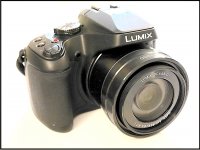
I'm just as happy to use this...

Panasonic FZ82 camera GX7 P1140753.JPG

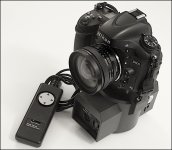
...as this...

Electric pan and tilt with Nikon D600 TZ70 P1030539.JPG

...whichever will get me the picture I'm after.

As an American photographer, whose name I forget, was quoted as saying: "it's the picture, stupid".
 
This is a misconception many have about shooting at wide apertures. Sure if you’re shooting a very tight head and tops of shoulder shot you might only get one eye in focus, but 3/4 shots you’re getting much more in focus and one of the main reasons I like wide apertures is full body shots as you get complete subject separation from the background yet the whole subject is sharp and in focus. Of course, there’s more than just shooting portraits.

We all have a favourite way of shooting and I’m in no way saying mine is the best, or desired by many, but I just thought I’d debunk the ‘myth’ that all wide aperture shots have wafer thin DOF :p

(Agree - and for everyone else's benefit)

DoF Calcultors can help here... https://www.cambridgeincolour.com/tutorials/dof-calculator.htm

50mm on FX at 1m gives DoF of 3cm at f1.2 and still only 5cm at f2

At 4m it rises to 49cm at f1.2 and yet only 82cm at f2, so defo fine for a full length shot and good separation at either aperture :)

My contention is that few people would notice the difference between an f1.2/f1.4 and f2 with pretty much any subject more than a few metres away. For my Nikon, the f1.8 50mm is 1/4 the price of the f1.2 version for no obvious benefit

At the other extreme - I shot the same landscape scene at 24mm, with the subject 40m away, and at both f2.8 and f11, it was only when I posted them together anyone noticed a difference in the immediate foreground being softer at f2.8; the far distance looked the same lol
 
The trick is to stop worrying about the photos you can't take, and most of all stop aiming for the very best image quality. Most people don't know great IQ when they see it anyway, because most people look at the pictures as a whole.
I see this said a lot and whilst part of me agrees part of me very much doesn’t. I only take pictures for me so it doesn’t matter when I’m taking pictures whether other people know great IQ or not, I do and if the image quality is poor a lot of the time I’ll just instantly dismiss it and look no further.

Of course there are exceptions to this such as family photos or a cute dog photo, but as I say a lot of the time I’ll pass over a photo if the quality isn’t there. Now of course not every photo I take has the “very best” quality, but it has to be at a certain level otherwise it gets binned. Also, there’s no harm (imo) in striving for the best, after all this is what moves us forward (y)
 
Last edited:
I see this said a lot and whilst part of me agrees part of me very much doesn’t. I only take pictures for me so it doesn’t matter when I’m taking pictures whether other people know great IQ or not, I do and if the image quality is poor a lot of the time I’ll just instantly dismiss it and look no further.

Of course there are exceptions to this such as family photos or a cute dog photo, but as I say a lot of the time I’ll pass over a photo if the quality isn’t there. Now of course not every photo I take has the “very best” quality, but it has to be at a certain level otherwise it gets binned. Also, there’s no harm (imo) in striving for the best, after all this is what moves us forward (y)

Totes agree :)

Are we twins?
 
I only take pictures for me so it doesn’t matter when I’m taking pictures whether other people know great IQ or not, I do and if the image quality is poor a lot of the time I’ll just instantly dismiss it and look no further.

While I also take pictures with others in mind, I can't stand behind a s***ty image and feel happy - it doesn't matter whether they notice because I notice.
 
I see this said a lot and whilst part of me agrees part of me very much doesn’t. I only take pictures for me so it doesn’t matter when I’m taking pictures whether other people know great IQ or not, I do and if the image quality is poor a lot of the time I’ll just instantly dismiss it and look no further.

Of course there are exceptions to this such as family photos or a cute dog photo, but as I say a lot of the time I’ll pass over a photo if the quality isn’t there. Now of course not every photo I take has the “very best” quality, but it has to be at a certain level otherwise it gets binned. Also, there’s no harm (imo) in striving for the best, after all this is what moves us forward (y)
You have a website link in your signature. That suggests to me that you want people to see your photos, so they aren't only for you. ;)

I agree that trying for the best IQ is part of the process of progression, but it doesn't make mediocre pictures any better. I have two photos taken seconds apart. In one the subject is sharp, in the other slightly soft. The soft photo is the better picture (the one I prefer people to see) because of the animated the gesture of the subject.

I guess the camera shop manager was right when she said I'm not a 'normal photographer'! :D

Perfection is boring...
View: https://www.youtube.com/watch?v=67wqja0O0yA


Anyway, none of this helps people cut down on the weight they carry when taking photos!
 
There are four types of photographer, in my opinion...
  1. Those who make technically perfect pictures because otherwise, they won't get paid.
  2. Those who make technically perfect pictures because they get immense pleasure from doing so.
  3. Those who don't bother with technical quality because they want to capture that image, now!
  4. Those who don't know they're not producing technically perfect pictures and are just enjoying the experience of recording the moment and showing the pictures to their friends and family.
To me, all four approaches are entirely valid.
 
Perfection is boring...

It could be semantics, but simply having the right bits in sharp focus, as you note, doesn't make for a perfect photo. But there's no benchmark for what IS a perfect photo, therefore one has to make pictures that we find pleasing and not dis-satisfying or downright unpleasant.

It's not about the technical side, but if you're going to take boring pictures, they might at least be technically OK so they have one redeeming feature. This is relevant to the OP, because we're talking changing kit, and exploring the importance or otherwise of certain types of equipment and the kinds of photography they might be used for. Possibly providing a place to consider direction, style and practice. The kit doesn't take the picture, but using the wrong kit might mean one will seldom feel happy with the pictures it produces.

Since you invoked music I'll requote one of my favourite phrases: Dave Gilmour can say more with one note than Yngwe Malmsteen with 10,000, but at least they're both talking.
 
There are four types of photographer, in my opinion...
  1. Those who make technically perfect pictures because otherwise, they won't get paid.
  2. Those who make technically perfect pictures because they get immense pleasure from doing so.
  3. Those who don't bother with technical quality because they want to capture that image, now!
  4. Those who don't know they're not producing technically perfect pictures and are just enjoying the experience of recording the moment and showing the pictures to their friends and family.
To me, all four approaches are entirely valid.
5. Those who would like to make technically perfect pictures but don't have the knowledge / time / money - but enjoy trying with those shortfalls anyway.
 
Although I've never shot with Fuji, I always think I'm missing out on something.
I'm not into shallow DOF so that doesn't bother me in the slightest.
I'd love to try Fuji just to put the demons to rest :D
Fuji UK do free 48 hour test drives, so it is really easy to try their latest kit.

FWIW I downsized from Canon fuel frame and L lenses to Fuji in 2018 with saving weight being the main goal, but my Fuji kit has expanded now. I have ended up getting an X100V for when size/weight really needs to be at a minimum, but even my full kit is smaller/lighter.
 
It could be semantics, but simply having the right bits in sharp focus, as you note, doesn't make for a perfect photo. But there's no benchmark for what IS a perfect photo, therefore one has to make pictures that we find pleasing and not dis-satisfying or downright unpleasant.

It's not about the technical side, but if you're going to take boring pictures, they might at least be technically OK so they have one redeeming feature. This is relevant to the OP, because we're talking changing kit, and exploring the importance or otherwise of certain types of equipment and the kinds of photography they might be used for. Possibly providing a place to consider direction, style and practice. The kit doesn't take the picture, but using the wrong kit might mean one will seldom feel happy with the pictures it produces.

Since you invoked music I'll requote one of my favourite phrases: Dave Gilmour can say more with one note than Yngwe Malmsteen with 10,000, but at least they're both talking.
I think the point about perfection is precisely that there is no benchmark when it comes to music or photography (aka creativity). So people who imagine there is seek it in the technicalities - often at the expense of 'the conversation'.
 
You have a website link in your signature. That suggests to me that you want people to see your photos, so they aren't only for you. ;)

I agree that trying for the best IQ is part of the process of progression, but it doesn't make mediocre pictures any better. I have two photos taken seconds apart. In one the subject is sharp, in the other slightly soft. The soft photo is the better picture (the one I prefer people to see) because of the animated the gesture of the subject.
TBH the photos on the website are just because I built a website out of curiosity and then didn’t know what to do with it so I just ended up sticking my photos on it. I don’t promote it (other than my signature) and if no-one ever visits it’s no problem.

Now of course I do show my ‘work’ on here and on flickr because I enjoy it and I like to share, but it’s not to get credit or other’s approval. All this being said, if other people do like my photos and like to pass on positive comments that’s a real boost and I very much appreciate it, but that is not the reason why I take photos (y)
I think the point about perfection is precisely that there is no benchmark when it comes to music or photography (aka creativity). So people who imagine there is seek it in the technicalities - often at the expense of 'the conversation'.
You’re right there is no perfection, but it doesn’t stop people striving towards it. You mention about the not seeking it in the technicalities but I think the technicalities come into play in both examples. I dabble in music production and whilst of course the main things that we hear are the melody, hook, bassline etc, however if the mixing and mastering is poor so it’s all distorted or the bass is drowning out the hook and making everything sound muddy it’s not going to be very nice to listen to no matter how good the melody might be, so yes you need to seek it in the technicalities as well.

Which brings me nicely back to photography, someone can take a nice landscape but if the image quality is poor then it will take away from the photo, sometimes to the point that you just pass it by. This is also true of the processing, someone can take a lovely photo with great IQ and then make it look like a pile of poo with garish processing ;)
 
I changed from Canon to Panasonic M43 just over 3 years ago, and really wished I had long before that.
I have two G9s and quite a few others. They all use the same lenses, and all except the 45-200, they are all very sharp (and the 45-200 is not terrible)

With 3 lenses, 7-14, 14-140 and 100-400 you can cover 14-800 FFeq

A GX9 with a 14-140 gives you almost the same features as a G9, for a combined weight of 710g, and with spare batteries fits into a small SLR bag.

The G9 with the 100-400 can be used easily at 1/15s hand held (dual stabilisation)

A G9 with low shutter count can be found for under £400 now

(I haven't mentioned the G9ii as unless you really need the improvements, it is not worth 4X the price of a G9)

As far as image quality goes, I prefer the Panasonic to the Canon, and although the Canon seems to give better results in low light, in "no light" ie no street lamps and can barely make out anything by eye, the Panasonic is better.


M43 has a lot going for it overall, not just weight
 
  • Like
Reactions: CSB
...however if the mixing and mastering is poor so it’s all distorted or the bass is drowning out the hook and making everything sound muddy it’s not going to be very nice to listen to no matter how good the melody might be, so yes you need to seek it in the technicalities as well.
Things don't have to be 'perfect', only 'good enough'. That's always been my (low) aim. :LOL:

This sums up my main motivation when taking photos:

"I don't like work - no man does - but I like what is in the work - the chance to find yourself. Your own reality - for yourself, not for others - what no other man can ever know. They can only see the mere show, and never can tell what it really means."
Joseph Conrad - Heart of Darkness
 
Which brings me nicely back to photography, someone can take a nice landscape but if the image quality is poor then it will take away from the photo...
All art is personal. it either pleases or fails to please a particular individual.

That being the case, it will depend on each viewer, whether or not they consider a particular picture to have good image quality or otherwise. It seems to be the case that many people consider Turner's "The Fighting Temeraire" and Raphael's "The School of Athens" to be equally superb images yet the first, if a photograph, might well be dismissed as fuzzy and technically poor.

Raphael's picture is "sharp" and "detailed" while Turner's image carries "fuzzy" to new depths, yet both give pleasure. So may a landscape, where "the image quality is poor" give some viewers as much pleasure as if it was sharp as a tack.
 
Things don't have to be 'perfect', only 'good enough'. That's always been my (low) aim. :LOL:

But this is also a part of the point. Image quality is an issue when that's the main thing you notice about the photo rather than the content of the picture itself.
 
But this is also a part of the point. Image quality is an issue when that's the main thing you notice about the photo rather than the content of the picture itself.
Which brings us back to the central question, "who are you seeking to please?"

Until we define our audience and understand that audience's requirements, we are simply responding to our own prejudices. There's nothing wrong with that but being insular limits who we can communicate with.
 
Morning all,
I'm am seriously thinking about selling all my Canon camera gear, and replacing, to cut down on the amount of weight that I'm carry when out for a day's photography.

I know I can be a bit more selective on what I take depending on what genre of photography I am looking at on any day, but even then, as I get older, it's a struggle.

I have been looking at Micro Four Thirds but not fully convinced on a camera that has 20mp. I know they have better processors and have come a very long way, but I still need convincing.

So, I have a Canon R5, and 16-35, 24-70, 70-200, 100, 100-500, all RF lens, lighter than EF, but even taking a few can make it hard work.

Are there any full frame set ups with Canon image quality, that weigh a lot less and maybe have not so bulky lenses?

I appreciate this will end up turning into quite a debate, but I appreciate everyone's advice here.

Thanks in advance
I recently had a similar dilemma. Nearly went for Fuji, as you can get a nice light kit ... until you get to the longer telephoto lenses.
So, I've stayed with a micro 4/3 system, with
  • Pansonic G90 (some might prefer a G9 or G9 Mk2, or the OM Systems bodies)
  • Panasonic Leica 12-60mm f/2.8-4
  • Panasonic Leica 50-200mm f/2.8-4
  • 1.4x teleconverter (very rare and expensive, but it completes the system, for me)
Compared to your Canon kit, this goes a bit longer but not as wide (there are some nice light ultra wide primes around for this system, though). It's much smaller and lighter, and 20MP is plenty for just about anything IMHO. If you want a fast prime, there are many available, some of which are small, light and cheap - and almost universally excellent.
Yes, it will lag slightly behind full frame in terms of noise and dynamic range, but I've yet to encounter a situation where it actually matters.

What has impressed me is the quality of almost all the lenses for this system. I just compared some test shots with the 50-200 + TC to my old Canon kit with my favourite lenses (including the best Canon lens I'd used, the 300mm f/4 L). Hard to compare, with different sensors and lighting, but I feel the Panasonic system is much better for sharpness, contrast and detail.
 
What has impressed me is the quality of almost all the lenses for this system. I just compared some test shots with the 50-200 + TC to my old Canon kit with my favourite lenses (including the best Canon lens I'd used, the 300mm f/4 L). Hard to compare, with different sensors and lighting, but I feel the Panasonic system is much better for sharpness, contrast and detail.
Echos my feelings exactly
 
Which brings us back to the central question, "who are you seeking to please?"

Firstly me. If my image is blurry, focussed in the wrong place or starts developing halos as I process it then that's a problem.

Second, the people I'm going to show my pictures. If it would be reasonable for a typical TP reader to look at a picture I posted here and see the flaws before the content then, for me, that would be an obvious failure. I won't know what *everyone* will see, but I can take a guess at what's typically acceptable and what's not, especially at the small size we view here.

It's not all about the gear - the seal pictures I posted were taken using a Sony 'beercan' that I bought used in 1988. The waterfall picture I posted in a thread where someone was asking how to get silky water shots was taken using a Sony A58 and Sigma 18-250 (which really is a low quality optic*). *snip* On second thoughts, that comment's not necessary.

*I have a 24" canvas of an image I shot in France using that lens. The picture kind of works because it's all about the middle of the image and it's busy at the sides, but even from 10 feet away I can see the blurring at the edges, and it does spoil the picture for me somewhat. If the picture had been taken with a better optic then I would enjoy the image more when I see it every day in my office.
 
Last edited:
Can I recommend the panasonic G9ii. get it with the kit 12-60mm (24-120mm in FF terms) elmarit lens and the 100-300mm lens and your set for anything
I had exactly the same weight problem with my Nikon cameras and lenses. I was loathed to part with my Nikon gear but so glad I did, best move ever made.
First thing I noticed was how steady I could hold the camera ,even with the 100-300mm (200-600mm in FF terms) the dual optical stablisation in the camera and lens is unbelievable, I would go as far as saying forget using a tripod as there is no need for one.. as for the menu there is far too much in it to put on here but for example it can be programmed for tracking animals (or parts of) -human- car- motorcycle-train or even airplanes. firmware update sincethis video below

video link worth watching

View: https://www.youtube.com/watch?v=s4pVSA1QOuc&t=338s
 
Last edited:
All art is personal. it either pleases or fails to please a particular individual.

That being the case, it will depend on each viewer, whether or not they consider a particular picture to have good image quality or otherwise. It seems to be the case that many people consider Turner's "The Fighting Temeraire" and Raphael's "The School of Athens" to be equally superb images yet the first, if a photograph, might well be dismissed as fuzzy and technically poor.

Raphael's picture is "sharp" and "detailed" while Turner's image carries "fuzzy" to new depths, yet both give pleasure. So may a landscape, where "the image quality is poor" give some viewers as much pleasure as if it was sharp as a tack.
Of course it's all down to the individual, however detail does not necessarily equal image quality, and especially in the paintings you have mentioned.
What has impressed me is the quality of almost all the lenses for this system.
I was always impressed by the quality of the Olympus Pro lenses, both in terms of build and image quality, they were pretty flawless imo. I haven't used any lenses that feel as good quality and have great zoom and focus ring feel. Don't get me wrong, the Sony GM lenses are superb but I prefer the metal finish of the Olympus lenses. YMMV.
 
...however detail does not necessarily equal image quality, and especially in the paintings you have mentioned.
I never made any such claim.

I pointed out, rather, that "image quality" is irrelevant to the popularity of an image.
 
Last edited:
I never made any such claim.

I pointed out, rather, that "image quality" is irrelevant to the popularity of an image.
Ok, well either your post doesn't read that way, or I misinterpreted it ;)

However, you mention that image quality is irrelevant to the popularity of the image and I would disagree. A deliberately fuzzy painting does not mean it's of poor image quality. On the other side I would hazard a guess that if you had two portraits of the same person in the same pose, one having great detail in the eyes and hair etc, with good contrast and great depth, and another that is noisy, poor contrast, lack of detail in the iris, hair etc, and a very flat image I would imagine 99.9% of people would prefer the first example.

I would therefore say image quality isn't irrelevant to the popularity of an image, however it isn't the sole deciding factor as to whether a person likes an image or not (y)
 
....I would imagine 99.9% of people would prefer the first example.
I think someone tried that out years ago, with two pictures of someone well known within a university and found that the results were ambivalent. I think it was sometime in the mid 1960s and I read about it in one of the Photography magazines at the time.

It might be interesting to rerun the experiment in our modern environment.
 
I would therefore say image quality isn't irrelevant to the popularity of an image, however it isn't the sole deciding factor as to whether a person likes an image or not (y)
I think someone tried that out years ago, with two pictures of someone well known within a university and found that the results were ambivalent. I think it was sometime in the mid 1960s and I read about it in one of the Photography magazines at the time.

It might be interesting to rerun the experiment in our modern environment.
I think social media is running the experiment. Take a look at the photos that get the most likes from the non-photographic public. I see it with the photos I post on X and FB, as well as with the photos of others. Subject matter wins over technical and artistic merit every time. It's why 99% of people are happy with phone cameras, even poor quality ones.
 
I think social media is running the experiment. Take a look at the photos that get the most likes from the non-photographic public. I see it with the photos I post on X and FB, as well as with the photos of others. Subject matter wins over technical and artistic merit every time. It's why 99% of people are happy with phone cameras, even poor quality ones.
This it true, however I think you missed my point. My point was that if subject matter is the same then the one with better image quality will get more likes than the one with poor image quality. So whilst subject matter will win over IQ, it is wrong to say that IQ is not important.

I hear it all the time from phone users that show you photos, they will say something like "obviously the image quality won't be as good as those take with a 'proper' camera". Likewise when I show my photos to people the majority of the time their first comment is "you must have a really good camera". So whilst they might not care as much as an enthusiast they are aware of image quality, and I would guess that if you gave phone users the choice to have image quality the same as a FF camera, or medium format camera they would definitely choose it. Of course the reason that they don't is that they can't afford it and/or it's not as convenient as taking photos witih their phone.

So yes, whilst I agree that for most people the subject matter is by far and away the most important aspect, to say that most don't notice image quality or aren't concerned with image quality isn't true (y)
 
Back
Top