Considering a film camera

Messages
121
Name
Bob
Edit My Images
No
Attended a talk on AI in photography last night and it made me realise how with digital even simple edits can now result in the use of AI.

I’m not anti AI but I think id like to have a film camera! I have a OM 3 and lenses which I will continue to use, but was thinking perhaps just a full frame and a prime lens. I wondered what people might recommend as I’m assuming most will be used now!
 
If you want to stick with Olympus, the OM1 and OM2 film cameras are both simple, fun to use and have great lenses.

For something a bit different, there are still plenty of relatively affordable medium format cameras available with incredible image quality.
 
Hi Bob - what’s your budget for the camera and lens, and what sort of photography do you enjoy?
Probably few hundred for the right thing, I don’t really have a sort, bit of a generalist! Maybe street/portraiture would be most practical for me, potentially black and white but maybe colour too!

I have had an EOS 5 a long time ago but maybe is a bit big so something smaller!
 
If you want to stick with Olympus, the OM1 and OM2 film cameras are both simple, fun to use and have great lenses.

For something a bit different, there are still plenty of relatively affordable medium format cameras available with incredible image quality.
Medium format sounds interesting I’ve never experimented with that, is it relatively affordable?
 
Medium format sounds interesting I’ve never experimented with that, is it relatively affordable?

No :ROFLMAO: Well, not as much as 35mm - for me, it's roughly 3 times the cost of 35mm but obviously that can vary depending on the film stock and shots per roll.

Maybe think of things such as manual only vs aperture priority, built in light meter, is it electronic or mechanical..... I think if you want a 35mm film body and 28mm or 50mm prime lens, then most common camera systems will do the job - that's SLR talk. You could go for a more compact rangefinder too.
 
Probably few hundred for the right thing, I don’t really have a sort, bit of a generalist! Maybe street/portraiture would be most practical for me, potentially black and white but maybe colour too!

I have had an EOS 5 a long time ago but maybe is a bit big so something smaller!
Might be worth deciding if you want an autofocus camera rather than a manual focus one? The Olympus OM1 and OM2 are fine cameras and reasonably small, but manual focus only. Medium format cameras are nearly all manual focus.
 
I tend to look at Harrison camera in Sheffield quite a bit as their used stock comes with a decent warranty.


This mighr be quite interesting as it's small and also takes AA batteries not weird ones.

 
No :ROFLMAO: Well, not as much as 35mm - for me, it's roughly 3 times the cost of 35mm but obviously that can vary depending on the film stock and shots per roll.

Maybe think of things such as manual only vs aperture priority, built in light meter, is it electronic or mechanical..... I think if you want a 35mm film body and 28mm or 50mm prime lens, then most common camera systems will do the job - that's SLR talk. You could go for a more compact rangefinder too.
Thanks I’ve just googled some prices, not in my budget!
 
I tend to look at Harrison camera in Sheffield quite a bit as their used stock comes with a decent warranty.


This mighr be quite interesting as it's small and also takes AA batteries not weird ones.

Thanks I’ve used Harrison before so will check them out
 
@srichards bad influence!

I decided to bite the bullet and get the OM2N and a OM Zuiko 28mm 2.8 lens, with a roll of HP5 and XP2 super…

Looking forward to giving it a try, feels nice to try the original predecessor of my OM3, I considered the OM1N but while I’m happy shooting manual, I’m not used to shooting film. I might add the OM1 in the future if I get in with it.. any recommendations for processing labs?!?
 
@srichards bad influence!

I decided to bite the bullet and get the OM2N and a OM Zuiko 28mm 2.8 lens, with a roll of HP5 and XP2 super…

Looking forward to giving it a try, feels nice to try the original predecessor of my OM3, I considered the OM1N but while I’m happy shooting manual, I’m not used to shooting film. I might add the OM1 in the future if I get in with it.. any recommendations for processing labs?!?

That’s a great choice of camera. They feel really lovely to handle and the viewfinders are the nicest of the 35mm SLRs I’ve used.

Having just stepped out of my little darkroom/utility/boiler room/boot room after a very happy couple of hours of printing, I’d have to say the best processing lab for your B&W film is your kitchen sink :) For colour film, I’ve always had great service from Ag Photolab.
 
Attended a talk on AI in photography last night and it made me realise how with digital even simple edits can now result in the use of AI.

I’m not anti AI but I think id like to have a film camera! I have a OM 3 and lenses which I will continue to use, but was thinking perhaps just a full frame and a prime lens. I wondered what people might recommend as I’m assuming most will be used now!

Have you thought of posting a few photo's then we can see what you like to image? You could be completely missing the perfect camera for you.

I think thats a bird camera you got
 
Last edited:
Have you thought of posting a few photo's then we can see what you like to image? You could be completely missing the perfect camera for you.

I think thats a bird camera you got
I think the OM3 can be used for bird photography, but pretty capable in all areas as I have a range of lenses for it. It’s a great camera!
 
... any recommendations for processing labs?!?
You've picked one traditional silver black and white and one C41 (colour neg) black and white. Assuming you want scans at this early stage, I'd suggest Filmdev, who do both, and whose scans are comparatively "cheap" (many of the traditional labs like AG become very expensive when scans are added).
 
You've picked one traditional silver black and white and one C41 (colour neg) black and white. Assuming you want scans at this early stage, I'd suggest Filmdev, who do both, and whose scans are comparatively "cheap" (many of the traditional labs like AG become very expensive when scans are added).

But only JPEG's.
 
But only JPEG's.
I believe you can get uncompressed 8-bit TIFFs from the Fuji Frontier and 16 bit from the Noritsu scanner, currently for an extra 50p per roll.
 
Mainly a moan o_O...........ATM using my Ilford FP4 up for night photography and was amazed how useless well known cameras are when using manual or auto on the camera, also if using manual there is no light switch to see the exposure. Anyway if you can trust the cameras on auto e.g. then forget cameras like Minolta X-700 or XD-11, Pentax ME super as they only go down to 4 secs and many more I could mention.
Anyway cheap cameras for night photography........... Praktica BC1 (goes down to 40secs on auto), or using manual the Ricoh kr-10 super and you can set the speed dial down to 15secs.
For me, out of 25 cameras, the winner is the Canon A1 or T90 or even Nikon F4 (the exposure reading is annoying compared to Canon) and for runner up, on auto, OM2.
moan over :canon:
 
Hello,

If you haven't used film before or for a very long time then I would respectfully suggest the best film camera is a free one. Ask friends, family and colleges and someone will have a camera they no longer use. Give it a go, see what you like, what you would like to change etc. If it's Medium format would you like a smaller 35mm. If its 35mm does it take longer than you would like to "use a roll of film". Can you cope with or without AF etc.

If you are going to spend money don't be swept up in hype. A mju II is great but I saw one at £349 the other day! I just bought a working Canon Sureshot Supreme for £13. A Canon EOS 600/650/620 is a great camera and so cheap (actually a Nikon F3 while about £300 does represent good value). A Bronica SQ-A or SQ-B would be very practical, I like to call them the thinking man's Hasselblad!


I looked at the Alfie Boxx camera at TPS, very fun if you really want to go back to basics.
 
Mainly a moan o_O...........ATM using my Ilford FP4 up for night photography and was amazed how useless well known cameras are when using manual or auto on the camera, also if using manual there is no light switch to see the exposure. Anyway if you can trust the cameras on auto e.g. then forget cameras like Minolta X-700 or XD-11, Pentax ME super as they only go down to 4 secs and many more I could mention.
Anyway cheap cameras for night photography........... Praktica BC1 (goes down to 40secs on auto), or using manual the Ricoh kr-10 super and you can set the speed dial down to 15secs.
For me, out of 25 cameras, the winner is the Canon A1 or T90 or even Nikon F4 (the exposure reading is annoying compared to Canon) and for runner up, on auto, OM2.
moan over :canon:

I’ve not used mine for night photography, but I’ve heard Nikon FEs are a good option due to having a very sensitive meter. Put them on auto and they will meter in very low light and keep the shutter open as long as required. The Pentax LX are even better because they keep metering the scene AFTER the exposure starts, and correct for changing light…though considering the LX’s price and slightly dodgy electronics, I reckon the FE is an all round better bet.
 
I’ve not used mine for night photography, but I’ve heard Nikon FEs are a good option due to having a very sensitive meter. Put them on auto and they will meter in very low light and keep the shutter open as long as required. The Pentax LX are even better because they keep metering the scene AFTER the exposure starts, and correct for changing light…though considering the LX’s price and slightly dodgy electronics, I reckon the FE is an all round better bet.
erm looking up Nikon Fe and it only goes down to 8 secs. ????....Using 125 iso film and f5.6 or f8 for depth of field and for a shot of a lit church......... the Canon A1 was showing at least 16 secs in the viewfinder, I then switched to the other camera I was using (an old Praktica LTL3) and counted one elephant, two elephants etc on setting "b" from the Canon reading:rolleyes: ........the OM2 can go down to 120 secs? on auto but I couldn't find a way of lighting up the viewfinder so not much use for a reading, same for many other cameras.
I suppose some are thinking "get a good exposure meter that can read in low light" but if you can pick up a Canon A1 cheap you can have the camera plus exposure meter combined.
 
erm looking up Nikon Fe and it only goes down to 8 secs. ????....Using 125 iso film and f5.6 or f8 for depth of field and for a shot of a lit church......... the Canon A1 was showing at least 16 secs in the viewfinder, I then switched to the other camera I was using (an old Praktica LTL3) and counted one elephant, two elephants etc on setting "b" from the Canon reading:rolleyes: ........the OM2 can go down to 120 secs? on auto but I couldn't find a way of lighting up the viewfinder so not much use for a reading, same for many other cameras.
I suppose some are thinking "get a good exposure meter that can read in low light" but if you can pick up a Canon A1 cheap you can have the camera plus exposure meter combined.
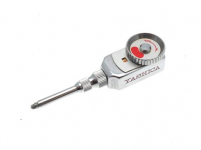
Instead of counting elephants I could have used my Yashica self timer:-
1773991582282.png
 
I’ve not used mine for night photography, but I’ve heard Nikon FEs are a good option due to having a very sensitive meter. Put them on auto and they will meter in very low light and keep the shutter open as long as required. The Pentax LX are even better because they keep metering the scene AFTER the exposure starts, and correct for changing light…though considering the LX’s price and slightly dodgy electronics, I reckon the FE is an all round better bet.
I've used my LX mostly when doing night time photography, on auto with 1 or 2 stops EC where appropriate for the whole reciprocity failure thing. ISTR I've mostly got the stage of "Oh dear, this can't POSSIBLY be working properly!" and terminating the exposure early, wihtout any particularly noticeable effects on the results! But that would usually be around 3-0-40 seconds. (I kept reminding myself that being 1 stop out in black and white was usually OK, and 1 stop for night time exposures is a LOT of seconds.)
 
I've used my LX mostly when doing night time photography
Stacks of daylight shots posted but not many at night, it's a good time of the year for night shots as it gets dark about 7 and the trees have no leaves to obscure a view e.g. a church. Anyway after about 15 years lets hope I don't cock up developing B/w film again and my night shots look good and are worth posting.
 
erm looking up Nikon Fe and it only goes down to 8 secs. ????

Eight seconds is the maximum shutter speed when you set it manually, but the FE will open the shutter for however long it takes to make a good exposure when in aperture priority mode.
 
I've used my LX mostly when doing night time photography, on auto with 1 or 2 stops EC where appropriate for the whole reciprocity failure thing. ISTR I've mostly got the stage of "Oh dear, this can't POSSIBLY be working properly!" and terminating the exposure early, wihtout any particularly noticeable effects on the results! But that would usually be around 3-0-40 seconds. (I kept reminding myself that being 1 stop out in black and white was usually OK, and 1 stop for night time exposures is a LOT of seconds.)

If you want your night photos to look like they were taken at night (I.e. with a lot of shadows, and not much mid-grey) and the exposure isn’t too long (say 30 seconds), you can forget about reciprocity failure altogether because it acts to reduce exposure, potentially giving you a ‘correct’ looking night time image.
 
Back
Top