Changing the film speed to help nail the correct exposure.

Mozziephotography

Suspended / Banned
Messages
1,850
Name
Stephen
Edit My Images
Yes
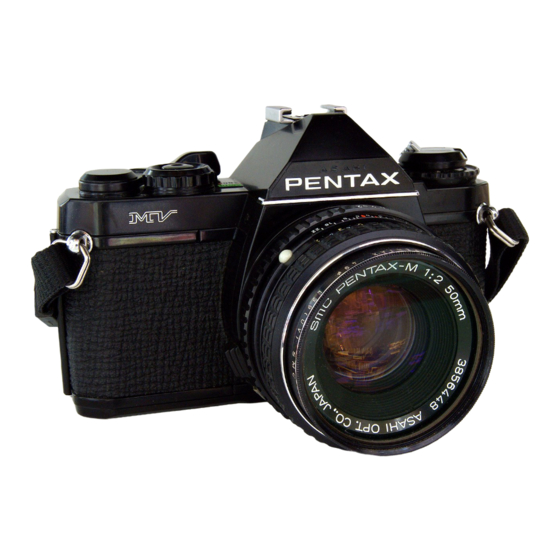
I have a Pentax MV film camera in superb condition ... but with it being an aperture priority camera, I have no way of setting the shutter speed. The exposure meter appears to be working fine and the green and red internal lights are okay. I was taking a few shots with it today and wondered what would happen in certain situations where I want to expose the film in a specific way. My brain and my lack of communication skills aren't helping in the slightest. I'm finding it hard to explain what I want to MYSELF, never mind anyone else. If the scene is lit evenly, the metering should be fine. What happens in situations when there is a great deal of contrast and I don't won't the highlights to blow or I want the shadows to stay as shadows? I know I could use a light meter app on my phone but I'd rather learn how to change the film speed dial to help with the correct exposure. Sorry that I'm a bit thick but ... it's just the way my brain works.
 
If you do that then you'll need to push or pull the development.

You have no manual control so it's basically a point and shoot body for beginners really.

You'd be better off with an ME Super if you want manual control.
 
It seems that you do have manual control over the ASA setting, so you can get the auto everything exposure to give more exposure ( reduce the ASA to one half for an extra stop) or less (double the ASA for one stop less). For more than one stop, adjust by a factor of 4for 2 stops etc. ASA is arithmetic, so adjust accordingly.
 
If you do that then you'll need to push or pull the development.

You have no manual control so it's basically a point and shoot body for beginners really.

You'd be better off with an ME Super if you want manual control.
I can't control the development as I don't develop my own.
 
What Terry said is right, of course - there is no way to control the shutter speed directly.

I think what you’re trying to achieve is exposure compensation. However, there is no direct compensation control. What you need to do is to fool the metering system by changing the film speed. For instance, if you have 100 ISO film loaded but want to underexpose by 1stop, you dial the film speed control to 200 ISO etc.

Sorry, Stephen beat me to it
 
Last edited:
Needless to say that you can only do this for the whole film, you can tell the lab that you have pushed it or pulled it and if they are a good lab they will take that into account.
 
Needless to say that you can only do this for the whole film, you can tell the lab that you have pushed it or pulled it and if they are a good lab they will take that into account.

No, think that's missed the OP's intention, which is to emulate an Exposure Compensation dial on a camera that does not have one (similar to the trick for getting the correct exposure when using modern 1.5V batteries in a camera designed for 1.35V mercury cells).

There is no need to compensate during development, because the deviation from the metered EV is deliberate. The film is not being pushed or pulled (as a single strip of film) but under- or over-exposed on a frame-by-frame basis.

Frame 1 might be +2 stops, while frame 2, is -1.5, and so on.
 
No, think that's missed the OP's intention, which is to emulate an Exposure Compensation dial on a camera that does not have one (similar to the trick for getting the correct exposure when using modern 1.5V batteries in a camera designed for 1.35V mercury cells).

There is no need to compensate during development, because the deviation from the metered EV is deliberate. The film is not being pushed or pulled (as a single strip of film) but under- or over-exposed on a frame-by-frame basis.

Frame 1 might be +2 stops, while frame 2, is -1.5, and so on.

:plus1:
Exactly that
 
I think under those circumstances I would let the camera meter for the highlights and then try and pull the shadows back on the scans. It may, or may not work, depending on the situation.
 
If the scene is lit evenly, the metering should be fine. What happens in situations when there is a great deal of contrast and I don't won't the highlights to blow
In that case you would set the film speed higher indicating that it is more sensitive than it is; and it will compensate by increasing the shutter speed, reducing the exposure, and save the highlights. And the opposite is also true (exposing shadows).
 
Last edited:
I think under those circumstances I would let the camera meter for the highlights and then try and pull the shadows back on the scans. It may, or may not work, depending on the situation.
The camera has a fixed center weighted pattern; you can't really isolate for highlights/shadows. It also does not offer full manual exposure or exposure lock.
 
When I shot a roll of Colorplus in Dubrovnik last year using my Olympus Trip 35, I changed the asa setting between 200 and 100 depending if I was in bright light or shadows to give me more versatility. The film was developed normally and everything was ok.

Many negative films have a reasonable exposure latitude, so overexposing by a stop or two by changing the asa setting won't cause huge issues in most cases (although I would avoid underexposure).
 

According to the manual above the Pentax MV seems to have an exposure compensation dial?
As I read that page, the mechanism they suggest looks awfully like changing the ASA setting, and also to be fraught with risk (lifting the rewind lever is required, just don't lift it too far or the back springs open- paraphrased). Also, the camera description on PentaxForums specifically says no exposure compensation: "However, it’s also criticized for its lack of manual control, no exposure compensation dial, and limited feedback in the viewfinder. Some photographers work around these limitations by adjusting the ISO dial for exposure tweaks or using external meters."
 
The old Pentax ME I learnt on was also AV only, but it's ASA dial had a dual role, lifting the ring the ASA value could be adjusted, without lifting it the dial worked as Exposure compensation (and was limited to +/- 2 stops)
It sounds as if the MV is just the same.
 
Film nearly finished in this camera, it will be interesting to see how the images turn out. It's a "neat" little camera that will hopefully produced some great results.
 
Back
Top