Canon EOS 1100D exposure issues

doffcocker

Suspended / Banned
Messages
6
Name
Daniel Miller
Edit My Images
Yes
Hi all,

My DSLR is approaching seven years old and I was perfectly happy with it until today when test shooting indoors in manual mode I realised that the images were unusually underexposed.

In terms of the room conditions, I would have expected to produce a perfectly clean visible image at 1/200, F10, ISO400 but instead this only gave a near pitch black shot of the room and only by bumping the ISO up to 1600 and aperture to F4.5 was I able to get it to an acceptable level of brightness.

It's clear that something has changed, except when shooting outside in broad daylight I wasn't having the same problem in terms of having to deviate the settings from the ranges I'd normally want to be using in that given light.

Thanks in advance for any advice anyone can offer.
 
Hi and welcome to TP

Can I ask, have you previously used those same settings and achieved a correctly exposed image indoors in the same lighting conditions??? If not, do please say why you would expect a well exposed image indoors with those settings?

Why do I ask? Well I very much doubt that you did get a " perfectly clean visible image at 1/200, F10, ISO400 ".....the human eye is great at adjusting to make what looks like a poorly lit room look 'fine' but the same scene to a camera is another matter.

With your settings something has got to give as in > you have too high a shutter speed > too low an ISO > a way too small an aperture.
 
Last edited:
Hi,

Sorry I don't have much expertise in terms of the numbers and science behind manual shooting and I know my eyes and mind are very capable of exaggerating these things, I just wanted to know if that weren't the issue here, what could it potentially be?

I have had excellent use out of the camera over the years and haven't exactly treated it with as much care as I should in that time, and just mindful that I could have potentially done damage at various points, whether through clumsy cleaning, or even just general sensor damage of some kind.
 
Tell us about the lighting at the time and place in question. And how did you meter and set the exposure?
 
Daniel

An understanding of why your (first attempt?) of indoor photography (without artificial/flash lighting) is like all photography.....about exposure!

Can I suggest you read up about "The Exposure Triangle" of which this linked site is one example of a guide.

.

I hope that helps :)

Photography and camera skills is a journey, so perhaps tell us a bit about your experience to date and what other kit e.g. lenses you have in your kit.

And as such about your knowledge of camera usage e.g. had you previously only used it in Auto mode......or which mode(s) have you used and mastered?
 
Thanks a lot for getting back to me all.

The exposure triangle is something I only loosely understand based on my 5 or 6 years experimenting in Manual mode and it's just something I enjoy doing but never got round to thoroughly understanding the science and maths behind it all. I bought this camera 7 years ago from Argos as a complete novice, never invested any further in terms of additional lenses etc. even though I use it on a very regular basis mainly for outdoor scenery.

So obviously I'm not qualified to say there's something wrong or even different about the camera itself, I just have a nasty feeling based on my minimal experience that some of the combined settings I have experimented with today, that it is making it harder than usual to allow light into my pictures.

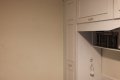
But in any case, I took this shot just now. This is an average terraced house size bedroom, sun just set and curtains closed, one 630 lumen bulb. (sorry it's a tip).
I set the ISO to 1600, aperture to F5 and the exposure settled on zero when the shutter speed was at 1/15.
I'm not saying that's a combination I would typically go for necessarily given the lighting, I guess it's just a starting point to ascertaining if something may or may not be wrong.

Again, I really appreciate everyone kindly getting in touch.
 

Attachments

  • IMG_2190.JPG
    IMG_2190.JPG
    50.4 KB · Views: 16
I hope that you can see that you have proven to yourself that you need to get the exposure right to achieve a more properly exposed image.....as you have managed in the attached image.

Think about it?

In the underexposed image that you spoke in your OP taken @ 1/200, F10, ISO400 compared to the attached image @ 1/15, f5, ISO 1600

Hence, to quote myself " With your settings something has got to give as in > you have too high a shutter speed > too low an ISO > a way too small an aperture. " You have indeed dropped the shutter & increased the ISO & opened the aperture wider.

Before intentionally under or over expose you need to understand what a properly exposed image looks like..................you don't mention what software you are using but if it can display the Histogram that will likely be of help to you!
 
Hence, to quote myself " With your settings something has got to give as in > you have too high a shutter speed > too low an ISO > a way too small an aperture. " You have indeed dropped the shutter & increased the ISO & opened the aperture wider.

Thanks.

In terms of the picture posted though, would you not expect a brighter image with those settings?

And for argument sake, could we suppose that I have on occasion achieved the exact same level of brightness from the same shot of the same room with the same level of lighting, but with a slightly greater shutter speed, and slightly smaller aperture. Are there other factors that could cause that?
 
In-built camera light meters are pretty good at giving the correct exposure (although not perfect). If you were to put your camera on a tripod, set it to auto and take a shot, it would give a pretty good exposure. If you then set the camera to manual, dial in the same settings as you had in auto, you will get the same exposed image (all things being equal). If you then change any of those settings e.g. shutter speed by ⅓, ½, 1 stop you'll get an over or under exposed image, depending on which direction you adjusted.
 
In terms of the picture posted though, would you not expect a brighter image with those settings?
No, I wouldn't expect anything, I would trust my exposure meter.
with the same level of lighting, but with a slightly greater shutter speed, and slightly smaller aperture.
As long as you're clear about your meanings - by 'greater' shutter speed do you mean a higher numerical speed (eg 1/1000), which = a shorter exposure, or a lesser numerical speed (eg 1/30), which = a longer exposure? And does your 'smaller aperture' mean exactly that, physically within the lens, or one denoted by a smaller f-stop number which equates to a larger aperture?

Not trying to befuddle you, just to get some clarity. Indeed the exposure triangle is something worthwhile grasping. It's basically extremely simple. But grasping the concept goes along with being clear about the terminology / meaning of shutterspeed, aperture & ISO.
 
1/200, f10 and ISO 400 indoors is very possibly going to result in an underexposure even if well lit. It did for me when I tried those settings a few minutes ago in a well lit by natural light room.

In short, I'd be surprised if there's something drastically wrong with the gear, I think keeping an eye on the meter and the settings is what's needed.

Good luck getting to grips with this but one of the beauties of digital is that you can experiment and learn quickly. Good luck with it, I'm sure you'll get there.
 
As long as you're clear about your meanings - by 'greater' shutter speed do you mean a higher numerical speed (eg 1/1000), which = a shorter exposure, or a lesser numerical speed (eg 1/30), which = a longer exposure? And does your 'smaller aperture' mean exactly that, physically within the lens, or one denoted by a smaller f-stop number which equates to a larger aperture?

I mean greater as in faster e.g. 1/50 as opposed to 1/15 maybe, and F7 as opposed to F5 perhaps.

I have referenced a lot of rough figures in this thread generally, I just get a strong feeling after a day's worth of experimenting that something was just very different about the results I was getting, even if not necessarily surprising to others,

And wondered what other factors if any could contribute to that if I weren't my imagination.
 
Good luck getting to grips with this but one of the beauties of digital is that you can experiment and learn quickly. Good luck with it, I'm sure you'll get there.

Cheers.

I guess another reason I'm sort of anxious about this is that as I say, it is a 7 year old camera that I have treated pretty poorly over the years.
I have ignored basic advice on sensor cleaning, the do's, the definitely don't do's, and quite recently took shots involving direct sunlight which I've since read can cause major damage in certain circumstances.

I have felt tempted to start again anyway with a new, better camera that I'd take better care of and commit to properly studying and understanding in full such as this one:


I wondered how much more potential it had than my current one in terms of picture quality. If it did, I'd be very keen even if my current isn't crocked in any way.
 
Have you tried taking the same shot in fully automatic and looking at the resultant settings vs the ones you entered manually?
 
Last edited:
Cheers.

I guess another reason I'm sort of anxious about this is that as I say, it is a 7 year old camera that I have treated pretty poorly over the years.
I have ignored basic advice on sensor cleaning, the do's, the definitely don't do's, and quite recently took shots involving direct sunlight which I've since read can cause major damage in certain circumstances.

I have felt tempted to start again anyway with a new, better camera that I'd take better care of and commit to properly studying and understanding in full such as this one:


I wondered how much more potential it had than my current one in terms of picture quality. If it did, I'd be very keen even if my current isn't crocked in any way.

I don't know if that camera will be a significant step forward or not but maybe it is worth sticking with what you have and trying to get the best out of it. Sometimes when I think a new thing will help me I Google my way to pictures other people are getting with the same kit I have now and usually that convinces me that the limiting factor is me :D and then there's processing to consider.

It's years now since I had a Canon DSLR but back then weaknesses included a lack of dynamic range and noise when boosting the shadows, I don't know if that's still the case. Really though, in your place I'd learn with the kit I had and if wanting to move on to something newer I'd honestly go mirrorless, if you haven't got too much invested in Canon DSLR lenses.
 
with the same level of lighting, but with a slightly greater shutter speed, and slightly smaller aperture.
I mean greater as in faster e.g. 1/50 as opposed to 1/15 maybe, and F7 as opposed to F5 perhaps.
So you're talking about a lesser exposure on both counts! Normally, if one goes up the other has to go down to compensate, in the same lighting at a given ISO.

This video is a good exposition - about 5 mins in he hits the exposure triangle & its components ...

But spending money won't increase your understanding.
 
Last edited:
Why not see what the camera thinks are the correct settings.

Set your camera to Av mode, set your ISO to 400 and Aperture to F10, make sure your EV is zero'd and see what shutter speed the camera gives you.

Also put the camera in Tv mode, set your ISO to 400, Shutter speed to 1/200, make sure your EV is zero'd and see what aperture the camera gives you.

I have no idea how dark or bright your room was but F10 at 1/200 seems way out.
 
Thanks.

In terms of the picture posted though, would you not expect a brighter image with those settings?
No

And for argument sake, could we suppose that I have on occasion achieved the exact same level of brightness from the same shot of the same room with the same level of lighting, but with a slightly greater shutter speed, and slightly smaller aperture. Are there other factors that could cause that?
Your question is confusing as your use of terminology isn’t great.
But you came for advice and a bunch of experienced photographers have all told you the same thing. And instead of taking on board the advice you asked for, you’ve decided to double down on your own incorrect assumptions.
 
1/200, f10 and ISO 400 indoors is very possibly going to result in an underexposure even if well lit. It did for me when I tried those settings a few minutes ago in a well lit by natural light room.

In short, I'd be surprised if there's something drastically wrong with the gear, I think keeping an eye on the meter and the settings is what's needed.

Good luck getting to grips with this but one of the beauties of digital is that you can experiment and learn quickly. Good luck with it, I'm sure you'll get there.

I would not have even bothered trying those settings, they are the extreme opposites of what is needed.

PS

Why f/10 for indoors?
 
Can I make a suggestion as you seem to be a bit confused over the effects of varying the exposure parameters.
Set your camera on a tripod find a subject ( anything will do -a sauce bottle) set an aperture say f5.6 and an ISO say 200, then take a series of photos from the slowest shutter speed to the highest.
That will show the effects of SS on exposure.
Then get another sauce bottle, put it a foot behind the first one and six inches to the side.
From you first exercise pick a SS that gives you a good exposure. Then take a series of photos from you widest aperture ( f3.5?) to the smallest (f22?)
This will show you the effects of aperture on exposure and also depth of field.
Finally repeat the experiments above but this time fix to SS and Aperture and vary the ISO.
Quite why you seem to be fixated with using manual mode I don't know , its fine when the light is constant but a PITA when the light varies.
BTW like Jon says why f10 indoors, what was the logic behind your choice?

Another thing these experiments will demonstrate is that there are more ways than one of achieving an acceptable exposure, thats when other effects that you want to achieve DoF, Stop/Blur motion come into the equation.
 
Last edited:
Cheers.

I guess another reason I'm sort of anxious about this is that as I say, it is a 7 year old camera that I have treated pretty poorly over the years.
I have ignored basic advice on sensor cleaning, the do's, the definitely don't do's, and quite recently took shots involving direct sunlight which I've since read can cause major damage in certain circumstances.

I have felt tempted to start again anyway with a new, better camera that I'd take better care of and commit to properly studying and understanding in full such as this one:


I wondered how much more potential it had than my current one in terms of picture quality. If it did, I'd be very keen even if my current isn't crocked in any way.
Let’s pretend for a second that a new camera would help (spoiler alert - it won’t)
That camera isn’t an upgrade in any meaningful way to your current one.

They’re both ‘entry level’* and other than the new sensor, they’re nigh on identical. An upgrade would be an xxD model (more buttons, less menu), or possibly something like a second hand 750d for similar money to the Argos camera, same sensor but better in every meaningful way. Or even an M5 as the future is definitely mirrorless.

But firstly, you need to stop shooting in Manual until you understand when and why it’s the best option. Learn how your meter works, and concentrate on controlling the important bits (taking pictures - not fiddling with settings).

*entry level cameras aren’t aimed at newbies because they’re ‘easier to use’, they’re designed purely to provide an upgrade path to a camera that’s easier to use to get better results. They’re a marketing lever more than a useful product. That said, they’re perfectly capable of taking great images, just a bit more fiddly than a proper camera.
 
When I first started taking images I had my camera set to Manual as I thought all the Pro photographers only used Manual, they Don't. Then Phil above gave me some advice on why to use Aperture mode, and for me it just gives me more control of trying to use my camera as sometimes I might have to use the EC and on Manual I don't think it can be used in camera. Now I love using AP mode. You have got some great advice to take in and try. If the 1100D is still working you don't need an upgrade so just practice and practice more till you really start to learn it all.
My mate is a Pro photographer and he says he's still learning years later.
 
Photography is all about light, and regardless of the subject an exposure is a blend of three variables, aperture, shutter speed and sensor sensitivity.

Indoors at f/10, 1/200s and ISO 400 I'm not surprised the resulting picture was dark, or 'under-exposed;. If you let the camera choose the settings on full automatic mode, or in an semi-automatic mode, it will adjust the settings to achieve what it things is a 'correct' exposure. If you adjust one setting up or down, you normally have to adjust one of both of the other settings in the opposite way to maintain 'correct' exposure.

Each has its own consequences - shutter speed is easiest to understand - the slower the shutter speed, the more blur you will get, possibly due to subject movement, but also due to camera movement if you are handholding. Image stabilising helps with the latter to some extent, but that won't correct a moving object.

Aperture - a wide aperture (a small f/ number) will give you a narrow band of focus, which some people use creatively, to blow either the background or foreground elements out of focus. A narrow aperture (a larger f/ number) will give you more of the shot in focus, but its small opening means the amount of light let in is smaller, so you need a longer shutter speed to allow the same amount of light into the camera.

Sensativity or ISO - higher iso gives a grainy or noisy image which many people dislike, so I always like to use the lowest ISO I have to to get the shot. Lower ISO shots are generally cleaner. I always think about shutter speed and aperture as the two primary controls and then adjust the ISO sensativity to the range that allows me to get the shot I want.

There is no shame in using the semi-automated modes, shutter priorty or aperture priortity where you have control over two settings (shutter and ISO in the case of shutter priorty), aperture and ISO in the case of aperture priorty.

A Canon 1100d may be a comparatively modest camera, but its still very capable and in the right hands will produce stunning results. Just look on Flickr and search Canon 1100D and the smart search should bring up photos taken by such a camera (or photos of a Canon 1100D).
 
Last edited:
Back
Top