Can I have some clarity on sharpness please?

snerkler

Suspended / Banned
Messages
26,078
Name
Toby
Edit My Images
No
Sorry, this is something that’s been discussed many times before but you read so much that it all becomes blurry and I’d like some clarity.

The question, generally speaking why do FF sensors produce sharper images than APS-C and m4/3 etc?

When I first started reading about this I learnt that FF images have to be enlarged less to fit on a given screen size, however I have since been informed by a member on here that it doesn’t work like this with digital as one pixel on the sensor equal one pixel on the screen and therefore you’re not enlarging anymore, which is correct?

I understand that photosites on a 24mp FF sensor are physically bigger than the photosites on a 24mp APS-C sensor and therefore will capture more light leading to less noise, more resolution etc, but then why does a 60mp FF sensor produce sharper images than a 24mp APS-C sensor? Now my first thoughts are that obviously there’s nearly 3x the mp so can produce more detail, however most people view on 2mp - 8mp (4k) screens so the extra resolution is wasted, or at least it is as far as how my brain works :thinking: Can someone clarify this please and also explain how 61mp files can produce more detail/sharper images than a 24mp one when only viewed on something capable of resolving 8mp of detail? (Without viewing 1:1 of course)

Lastly, when resolving detail from a lens is it purely the pixel density that puts the demands on lenses, or is there more to it?

If responses can be in layman’s terms as much as possible I’d appreciate it :LOL:


EDIT: I appreciate there's more to photography other than sharpness, and I appreciate sharpness is affected far more by other factors such as light, technique and lenses, however I'm just wanting to understand the relationship between sensor size and sharpness for curiosity's sake (y)
 
Last edited:
I've always assumed that if the picture shows what I want it to show, sharpness and all the other bugbears become irrelevant.
 
I think part of it is possibly because an image from a larger sensor doesn't need to be magnified as much as an image from a smaller sensor. The more the magnification, the more chance of blurriness creeping in.

This lesser amount of magnification can I think help lenses too as they don't need to resolve quite as much as they do when used with smaller sensors, again because of the reduced magnification with the larger format image.

But I could well be wrong.
 
Are you sure it's not better len sharpness rather than sensor? You also tend to get better out of focus backgrounds with FF which have the effect of making an image look sharper. I'll be honest, I have both and with cracking lens I dont see much difference. Can you post some crops so we can see what your seeing?
 
I use FF and M43 and I don’t really see a difference. I did think that larger pixels meant a sensor was less susceptible to camera shake, but the Oly image stabilisation is witchcraft in action.
 
If you had a perfectly straight black line on a white paper (of course that could not happen because of the fibres in the paper, but if it did) and you took a photo of it, perfect sharpness would result in one row of pixels being white, and the next row black. (assuming you had it totally square to the sensor)

What can prevent that?
If you measure the width of a row of pixels, the lens has to be able to resolve the line to within that measurement. Most good lenses can't resolve the image well enough to keep the edge of the line within one row of pixels on a high resolution sensor. The actual MP of the sensor will depend on the size of the sensor, a larger sensor would have the rows further apart for the same MP.

Sensor design may cause the line to spread over more rows of pixels, such as the addition of an AA filter, or electronic "interference" on the sensor.

Camera movement, or even the slight movement of the IS system in operation may cause spread.

How it is processed (in or out of camera) and viewed may cause spread.


The main physical limiting factor is really the lens, and if you look at good lens reviews, you will see the "resolving power" measured


I think the main limitation in actual use, using most good cameras, is the person pushing the button :) and how the camera matches their style of use


Unfortunately trying to put it in simple terms often results in inaccuracies, especially in terms of word usage and technical accuracy, so is best read alongside a proper technical description, where it may help to clarify a concept.
 
I've always assumed that if the picture shows what I want it to show, sharpness and all the other bugbears become irrelevant.
I agree, and in terms of my photos there’s many other things I look for other than critical sharpness, but my question isn’t regarding my photos it’s just a curiosity thing as I like to understand things (y)
 
Are you sure it's not better len sharpness rather than sensor? You also tend to get better out of focus backgrounds with FF which have the effect of making an image look sharper. I'll be honest, I have both and with cracking lens I dont see much difference. Can you post some crops so we can see what your seeing?
Of course the lens makes a huge difference, I’m just wanting to understand it from a technical aspect out of curiosity, it’s always been recognised that larger sensors will yield sharper images, all things considered equal (y)
 
Thanks, I'll give it a read (y)
Used copies available on Amazon

I have a couple of the other books by Jeff Schewe, The Digital Negative and The Digital Print
Both quite technical, but also give helpful information along with an insight into the software development
 
Last edited:
I use FF and M43 and I don’t really see a difference. I did think that larger pixels meant a sensor was less susceptible to camera shake, but the Oly image stabilisation is witchcraft in action.

I too use FF and MFT and I do see differences which are to me pretty obvious in some situations. One of the main things for me is dynamic range where there is a clear advantage for FF in some situations but of course if the scene isn't pushing the DR capabilities of the kit you wont see this. Another situation in which there's a clear advantage for FF is when I'm using the same lens on both systems, here the FF picture is sharper which I expect is due to the additional magnification the smaller format picture needs.
 
I too use FF and MFT and I do see differences which are to me pretty obvious in some situations. One of the main things for me is dynamic range where there is a clear advantage for FF in some situations but of course if the scene isn't pushing the DR capabilities of the kit you wont see this. Another situation in which there's a clear advantage for FF is when I'm using the same lens on both systems, here the FF picture is sharper which I expect is due to the additional magnification the smaller format picture needs.
It's this magnification that I've told is not true as one pixel on the sensor represents one pixel on the screen and so you don't enlarge/magnify in the same way anymore, however I'm still trying to clarify whether this is true or not (y)
 
It's this magnification that I've told is not true as one pixel on the sensor represents one pixel on the screen and so you don't enlarge/magnify in the same way anymore, however I'm still trying to clarify whether this is true or not (y)

If you're lucky enough to have more than one format you can investigate more easily. I may be wrong but for me magnification seems to be at least in part the answer.
 
If you're lucky enough to have more than one format you can investigate more easily. I may be wrong but for me magnification seems to be at least in part the answer.
I ran FF alongside m4/3 for a long time, on the whole I would say that the FF images were noticeably sharper but there were times when it was hard to differentiate between the two, unless viewing at 1:1 where it became obvious again. However, none of this was done using the same lens on each camera, but 'equivalent' lenses.

I like you always thought that the image from smaller sensors had to be enlarged more to fit on a given screen but as I say I was told this was wrong, however this is the first time I'd heard this yet been advised multiple times before that enlargement comes into play :help:
 
I've never actually heard it said that FF is sharper than crop but I guess noise could be a factor. The smaller photosite (pixel) size on a crop sensor means that less photons hit each photosite so produce less electrical potential that means the signal has to be amplified more which introduces more noise.
 
It's this magnification that I've told is not true as one pixel on the sensor represents one pixel on the screen and so you don't enlarge/magnify in the same way anymore, however I'm still trying to clarify whether this is true or not (y)
That’s only ‘true’ if you’re comparing 2 images at 100% on screen (which isn’t a common use-case).
It’s not true for resized images or printed images (more common use - cases).

Ergo; whilst pixel for pixel ‘resolution’ is ‘the same’, it’s not how life works. Because in life the pixel density of a sensor, the number and quality of pixels and the quality of the lens all make a difference.
 
If you had a perfectly straight black line on a white paper (of course that could not happen because of the fibres in the paper, but if it did) and you took a photo of it, perfect sharpness would result in one row of pixels being white, and the next row black. (assuming you had it totally square to the sensor)

Any single chip colour sensor is not spatially accurate (the Bayer/X-trans filter forces the camera to run software (conversion) which results in an interpolated image)

To have a spatially accurate image you must either use a monochrome sensor or a 3 chip colour camera.

To get the most perfect black/white transistion, you would need a monchrome camera looking at a backlit edge, ideally where the illumination is of a short wavelength. The optics woud have to be of very good quality and you would want top be at an aperture so as not to cause defraction.

Ergo; whilst pixel for pixel ‘resolution’ is ‘the same’, it’s not how life works. Because in life the pixel density of a sensor, the number and quality of pixels and the quality of the lens all make a difference.

As this suggests there are lots of factors at play here, in addition the quality of the sensor microlenses plays a big part as does any physical spacing between them. There are lots of physical limitations that we don't first think about, the inter photosite gap on the silicon, the inter microlens gap, the line pair ratio of the optics.
 
Last edited:
It all seemed so simple to me.. then I read this thread ...

I can use an inferior lens on a top end camera and it wont be as sharp as i want

I can use a top end lens on an old camera and get a pin sharp image

therefore I would have answered its the lens


that may be a "all dogs have 4 legs .... so my cat must be a dog" approach :)
 
It all seemed so simple to me.. then I read this thread ...

I can use an inferior lens on a top end camera and it wont be as sharp as i want

I can use a top end lens on an old camera and get a pin sharp image

therefore I would have answered its the lens


that may be a "all dogs have 4 legs .... so my cat must be a dog" approach :)

Yes but what do get if you use your top end lens on M43 and then on FF ??? There are lots of elements that contribute to 'sharpness'
 
Photography is like most hobbies. We start out overjoyed we can do it in the first place. Then we strive to get better and finally we dive deep into the science of it and it seem's to become something else. Chasing perfection is a never ending chore. For instance, are your digital images all that much better than your film images were? It's certainly easier to finish after the shot but probably your good film stuff is or was as good as your digital is now! Of course the digital stuff is a lot easier to edit!
 
Last edited:
I've used full frame cameras professionally for years and the sharpest images I get are from my crop Fuji that i use as a family cam . So I don't agree that full frame is sharper than crop BUT I feel full frame can give the impression that the shot is sharper because there maybe more bokeh in the shot which gives the impression that that sharp part of the image is unbelievably sharp in contrast to the bokeh (if that makes sense)
 
I always thought it was down to diffraction limitation.
 
I always thought it was down to diffraction limitation.
That can come into play for sure, but from my experience diffraction on m4/3 doesn't come in to play until f8 and above, maybe when scrutinising it is there at wider apertures :thinking:
 
Having read many Optical Limit reviews - lenses across all brands and formats have comparable MTF scores and my best guess is if you are seeing a difference id put it simply on more money is put into the more profitable system.

The ff/m43 differences you've seen I would guess also is a subjective test and some confirmation bias has creeped in or its the case the ff lenses you have are simpler sharper than your m43 or equally a higher mp sensor will look sharper simply as the resolution is higher
 
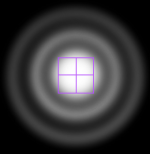
It's all about the airy disk.
 
@snerkler I asked chatgpt and this was the answer which looks pretty good:

Photos from cameras with larger sensors are generally considered sharper than those from cameras with smaller sensors due to several factors:
  1. Pixel Size: Larger sensors have more physical space available for individual pixels, allowing each pixel to be larger. Larger pixels can capture more light and have a higher signal-to-noise ratio, resulting in less noise and better image quality. This improves the sharpness and overall image detail.
  2. Light Gathering Capability: Larger sensors can gather more light due to their increased surface area. This allows for better performance in low-light conditions, reducing the need for high ISO settings that can introduce noise and affect image sharpness.
  3. Depth of Field: Larger sensors have a shallower depth of field compared to smaller sensors when using the same focal length and aperture. This means that the area in focus appears sharper, while the background and foreground are more blurred. This perceived sharpness can enhance the overall image quality.
  4. Lens Performance: Larger sensors often require lenses with larger physical elements and higher optical quality. High-quality lenses designed for larger sensors can provide better resolving power, reduced distortion, and improved sharpness across the frame.
It's important to note that sensor size is just one factor affecting image sharpness, and other factors such as lens quality, camera settings, and post-processing also play a role. However, the larger sensor size generally provides advantages in capturing more light, reducing noise, and delivering better overall image sharpness.
 
Lens Performance: Larger sensors often require lenses with larger physical elements and higher optical quality. High-quality lenses designed for larger sensors can provide better resolving power, reduced distortion, and improved sharpness across the frame.
In the 1960s and 70s there was a lot of discussion about format size and lens resolution in the magazines.

The general concensus was that the smaller the format, the higher the resolution possible from the lens. One American magazine published figures suggesting that a 50mm Summicron had twice the resolution of a 80mm Planar. Of course, this didn't matter at the time because a 6x6 negative required a lot less enlargement than a 35mm negative. It would be interesting to know where the website got its information.
 
That can come into play for sure, but from my experience diffraction on m4/3 doesn't come in to play until f8 and above, maybe when scrutinising it is there at wider apertures :thinking:

As MFT is a smaller format I'd expect diffraction to be visible sooner than with a larger format.

For example lets imagine that with a 50mm lens on a FF camera we can see diffraction at f10 (and with some higher mp count cameras we'll see it much sooner than f10.) That gives an aperture size of 5mm. With MFT we'll use a 25mm lens at f5 we'll also have an aperture of 5mm.
 
Pixels smaller than the airy disk add no detail.
So, the bigger the pixels the more detail.

1687512158728.png
 
Pixels smaller than the airy disk add no detail.
So, the bigger the pixels the more detail.
I believe that's what some people call a non sequitur. :thinking:
 
Back
Top