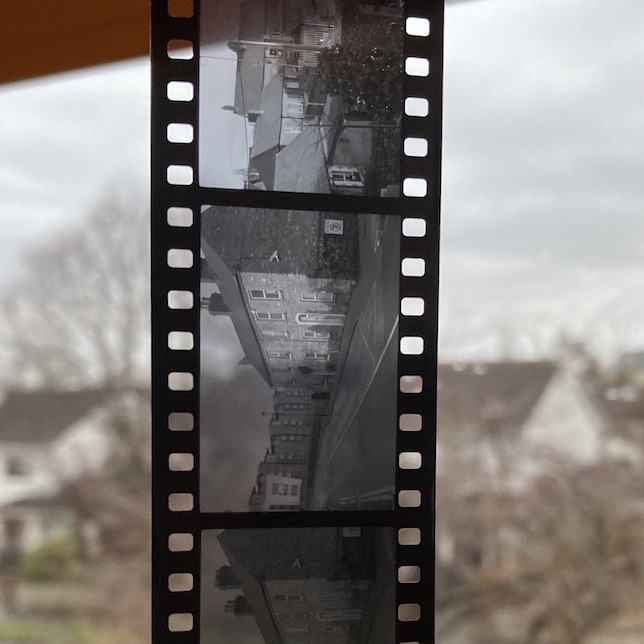
Black and white reversal film

ChrisR

I'm a well known grump...
Suspended / Banned
Messages
11,730
Name
Chris
Edit My Images
Yes
I accidentally on purpose picked up a roll of Adox Scala 50 in Edinburgh last visit, along with 2 rolls of ADOX HR-50, allegedly the same film in different packaging. However, I was quite upset to find that none of the labs that I knew of would do it. @Kevin Allan of this parish had a roll done by SilverPanLab, who are now part of Analogue Wonderland, but their website says the service is not available. I even asked them if they'd do it if I could rustle up a group submission of 8 rolls (the usual kit size), but no. Someone on Mastodon suggested Nik and Trik, but while they might sell you a kit they're no longer offering the service and not interested.

Then another Mastodonian mentioned Poly Film Labs, who apparently do still offer the service (with caveats, see their FAQ). I've dropped them a couple of queries as of late Friday, no response yet, but I'm hopeful. I might even run one roll of Scala and on of HR-50 in two different cameras, the same composition for at least a few frames.

Someone said "...it does seem a bit pointless - I'm not sure what you really gain when there's no intent to project the slide (and, of course, you lose the ability to print from that neg unless you use direct positive paper)." (I don't think they really meant to be that downbeat...) In response, Ralph Brandi (US) said "It is indeed pointless, except that the experience of looking at the slides is magical. I don’t do it often, because it’s a royal pain in the [...] (takes about three times as long as just negative development), but man, the results are sweet."

So, anyone else sitting on some Scala 50 in their film fridge and wondering what to do with it? I'm very happy to be the pioneer, stalking horse, whatever, with this lab...
 
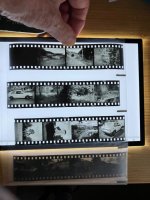
Black and white reversal processing is surprisingly simple. Long ago, I processed several films that way and the results were quite pleasing.

This page gives a good overview...


...and another useful page...

 
I do indeed have some Scala 50 in the freezer, but only because at the time I bought it I couldn't find HR50, and it is exactly the same film inside the canister. I will be developing it as negatives.

I'm not quite in the "pointless" camp, but am in the "not really a compelling reason to do it" camp, with regard to processing as positives.
 
On further reflection, quite a lot of my photographic activities do not have a compelling reason....
Same here, these days. Doesn't stop me doing it, though! ;)
 
Then another Mastodonian mentioned Poly Film Labs, who apparently do still offer the service (with caveats, see their FAQ). I've dropped them a couple of queries as of late Friday, no response yet, but I'm hopeful. I might even run one roll of Scala and on of HR-50 in two different cameras, the same composition for at least a few frames.
Eventually PFL got back to me. They say yes, they are still active, though rather snowed under. Apparently their turnround time might be... a month! Not surprised really, they probably need to batch up a bit, given what sounds like a truly toxic process. Despite that, I will load my Scala into the LX, and a roll of HR-50 into the MX, and go from there (will probably dev the HR-50 myself, but we'll see).

I asked for exposure advice, based on some slightly cryptic comments in their FAQ. This was the reply:

"Exposure just needs to be bang on with scene contrast ideally within 10 stops.

"Crushing shadows or blowing highlights is artistic choice - we choose to expose for highlights generally but it's all scene dependent.

"You just need to be really intentional in your exposure based on your scene as there is very little wiggle room in post for Reversal stocks as the contrast is baked in - just like E6 yes!"
 
I still have some TMX slides we reversal processed in collage (mid 1980's) after college I did from time to time use Agfa DiaDirect which was processed by Agfa . Some of the TMX slides were recently scanned and are on Flickr, I have to say that they do have a certain look.

Regarding the actual reversal process, sorry I can't remember exactly how we did it.
 
I haven't checked, but in theory it should go

1. Develop film - this gives metallic silver where the light struck.

2. Stop development

3. Bleach out metallic silver, leaving the unexposed silver halide.

4. Reversal exposure (chemically or by light)

5. Develop, then stop, fix, wash.
 
I haven't checked, but in theory it should go

1. Develop film - this gives metallic silver where the light struck.

2. Stop development

3. Bleach out metallic silver, leaving the unexposed silver halide.

4. Reversal exposure (chemically or by light)

5. Develop, then stop, fix, wash.
I have not looked either , I don't remember the first stop thinking it was just wash in water and I thought the bleach was after the reversal exposure but I can remember taking the film off the stainless steel spiral for the reversal exposure and exposing under water before re spooling. I expect re spooling a wet film is easier with a stainless steel reel than it is with a Paterson plastic reel though lubricating the ball bearings with water may make it easy.

It was a long time ago.
 
I suspect it doesn't really matter about the bleach and reversal exposure steps, but as light does produce an image without developing (just takes a long time) it seemed safer to me to have the steps that way round.

I used photofloods for reversal exposure when processing Ferraniacolour slides waving around the film on transparent Paterson spirals (with trepidation about any splashes). Edit - this was in 1968.
 
Hey @ChrisR , where in Edinburgh did you buy the Adox films if you don’t mind me asking?
 
Camerabase (they fixed a filter holder that I'd cross-threaded onto my lens, for nowt, so it was payback). They had a bunch, paid £8.99 each though; I think I've seen them somewhere online for £5.99 recently. I still have the Scala box here, expiry 7/2025. Ah yes, the second HR-50 box is also accessible, expires 8/2025. They had a lot of other film as well, but not fridge-stored.

(The other place I've bought film in Edinburgh is Stills, but their selection is more conservative.)
 
... I will load my Scala into the LX, and a roll of HR-50 into the MX, and go from there (will probably dev the HR-50 myself, but we'll see).
I finished the HR-50 a few days ago and the Scala today. For the second half of the Scala I put the LX into Aperture Priority mode, so it could use its "meter off the film" magic.

I will send the Scala of to Polyfilm Labs for reversal processing. I thought about sending the HR-50 as well, but I do like to develop my own... and save money (though it would be only £6.49 for dev-only, given I'll already be paying the postage!).

The plan is to develop the HR-50 in HC-110, given that's all I've got. Now MDC only has a time for 1+63 (dilution H) for HC-110 (9 minutes). I did hear rumours that some film came out rather thin on that timing (I note that @Kevin Allan Has used HC-110 1+63 with Adox HR-50, and I wonder what his timing was?). However, if I'm to use 6 ml of syrup, my tank is too small to use 1+63.

MDC also has a time of 4 minutes for 1+31 (dilution B) IlfoTec HC. Four minutes reduced by 15% for the Rondinax) is way too short for me. So I'd be giving 1+47 (dilution E) a try. If both those times above are reasonable, then I'd split the difference, suggesting a time of around 6:30 for dilution E. If either of them are a bit short, then maybe 7 minutes might be a better bet. I did have a bit of a search, and found someone on Filmdev (the recipe comparison site, not our respected dev/scan company!) suggesting 8 minutes or longer... I don't think I'll be going that far!

Any comment on your times(and negatives), Kevin?
 
I finished the HR-50 a few days ago and the Scala today. For the second half of the Scala I put the LX into Aperture Priority mode, so it could use its "meter off the film" magic.


The plan is to develop the HR-50 in HC-110, given that's all I've got. Now MDC only has a time for 1+63 (dilution H) for HC-110 (9 minutes). I did hear rumours that some film came out rather thin on that timing (I note that @Kevin Allan Has used HC-110 1+63 with Adox HR-50, and I wonder what his timing was?). However, if I'm to use 6 ml of syrup, my tank is too small to use 1+63.

MDC also has a time of 4 minutes for 1+31 (dilution B) IlfoTec HC. Four minutes reduced by 15% for the Rondinax) is way too short for me. So I'd be giving 1+47 (dilution E) a try. If both those

Any comment on your times(and negatives), Kevin?
I use 9 minutes with hc110 dil h, as per the MDC. I use a Jobo reel which takes 485 ml with7.5 ml of developer. This takes two 35mm reels - if I don't have 2 films ready I will use one empty spool.


My negs look just the same as they did when I used the Adox-recommended HRDEV developer.

I suspect that Dilution B would give too much contrast. It will be interesting to see your results with Dilution E.
 
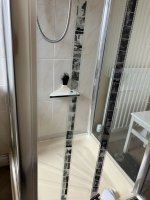
As noted elsewhere I've sent off my Scala 50 from the LX with a Pentax A 35/2 lens, to PolyFilmLab for reversal processing. In parallel I used a roll of Adox HR-50 in my MX with a Pentax M 35/2 lens, and devved it in HC-110 dilution E (1+47) for 6 minutes 30 (nominal, actually around 5:30 in the Rondinax 35U). There isn't a MDC time for dilution E as noted above, so this was a guesstimate. Some frames looked adequately dense, and some very thin, when hanging in the shower cabinet...

IMG_0157.jpeg

(FP4 on the right, HR-50 on the left).

I've now scanned the HR-50, and so far I'm rather disappointed. A few frames look lovely, but in quite a few the shadow areas are hopeless, full of noise. I think maybe the second roll needs another minute or so (based on my understanding that the highlights develop first and the shadows later). I didn't do anything differently from my normal practice, or indeed from the Scala roll, so my expectations of that have been suitably lowered! I've got a feeling that HR-50 prefers a low brightness range (there's a word for it, but senior moment here...).
 
I wonder whether your perception that the Adox HR50 frames are thin, is due to the transparent base - FP4 has more density even in the unexposed areas therefore the exposed areas will be denser than the HR50, all other things being equal.
That's a very good point!
 
As noted elsewhere I've sent off my Scala 50 from the LX with a Pentax A 35/2 lens, to PolyFilmLab for reversal processing. In parallel I used a roll of Adox HR-50 in my MX with a Pentax M 35/2 lens, and devved it in HC-110 dilution E (1+47) for 6 minutes 30 (nominal, actually around 5:30 in the Rondinax 35U). There isn't a MDC time for dilution E as noted above, so this was a guesstimate. Some frames looked adequately dense, and some very thin, when hanging in the shower cabinet...

View attachment 458756

(FP4 on the right, HR-50 on the left).

I've now scanned the HR-50, and so far I'm rather disappointed. A few frames look lovely, but in quite a few the shadow areas are hopeless, full of noise. I think maybe the second roll needs another minute or so (based on my understanding that the highlights develop first and the shadows later). I didn't do anything differently from my normal practice, or indeed from the Scala roll, so my expectations of that have been suitably lowered! I've got a feeling that HR-50 prefers a low brightness range (there's a word for it, but senior moment here...).
That's a good price for reversal processing. I've always fancied a go with b&w reversal but home developing and having to re-expose or use a strong acid has put me off.

I know you can reversal process some standard films so I assume FP4 but are there any others?

Likewise you've used HR-50 but what are the other specific reversal films? I know of Foma R100 and it's cheap enough but no idea what it's like - anyone have experience?
 
That's a good price for reversal processing.
I've looked on the Polyfilms Lab web site the price that Chris gives is for b&w negative processing ( which is in line with Chris's words)

Reversal processing is £10.49 dev only, not including postage either way.
 
Last edited:
As far as I know, given that all black and white films other than the chromogenic ones are processed in the same chemicals, all can be reversed. What does distinguish one film from another is the base tint. Some films are on a clear base and therefore more suitable as slides. Off the top of my head, I think Agfa APX100 falls into this category.
 
Last edited:
Some of the Rollei films are also clear base. I presume that a tinted base (eg FP4) is less of an issue if you're not going to project slides, but I'd also guess it reduces the dynamic range...
 
I finished the HR-50 a few days ago and the Scala today. For the second half of the Scala I put the LX into Aperture Priority mode, so it could use its "meter off the film" magic.

I will send the Scala of to Polyfilm Labs for reversal processing.
I got the films back from PolyFilmLabs Thursday: one Scala 50 reversal processed, and one C41 dev-only (rather than pay another postage to send it somewhere else, and Filmdev was closed). PFL send an email when they despatch, but not on arrival, which is a bit annoying (outbound post is one of the risky areas of lab processing).

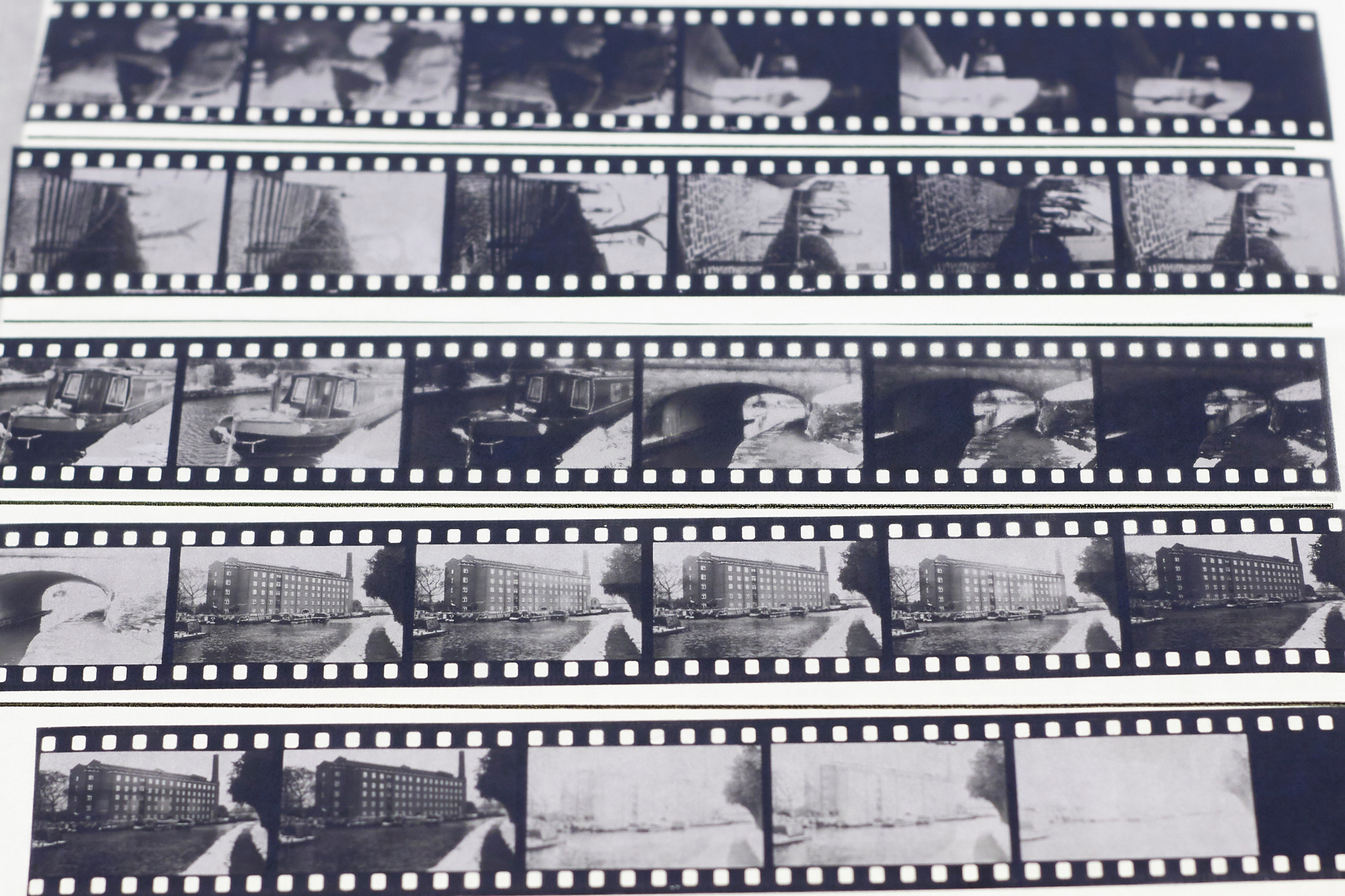
One annoying thing I didn't realise is that they've cut the film into 4s. Maybe if you ask they'll do 6s (at least one of the well known labs used to charge a bit extra for 6s [EDIT: maybe Filmdev?]). Luckily I've got a pack of sleeves for 4s, from my retro-scan days.

But you're not interested in that, you'd really like to see what black and white slide film looks like...

IMG_0200 Scala.jpeg

I hope to scan them this weekend, but I'm not expecting the scanned images to look as interesting as above. Maybe I should try scanning with the film edges (I'd have to use the V500 for that).

A half frame film photoed as diptychs or triptychs would be... awesome!
 
Well I've scanned them, but I forgot about the Vuescan setting default for Light IR dust removal for slide material, completely inappropriate for any black and white silver-based film. So I'm starting again. First run through had a LOT of out-of-gamut areas. This isn't going well!
 
Back
Top