
Bad behaviour that may affect street photographers

AndrewFlannigan

Suspended / Banned
Messages
11,977
Edit My Images
No
A report on the BBC website that I think we should all consider...
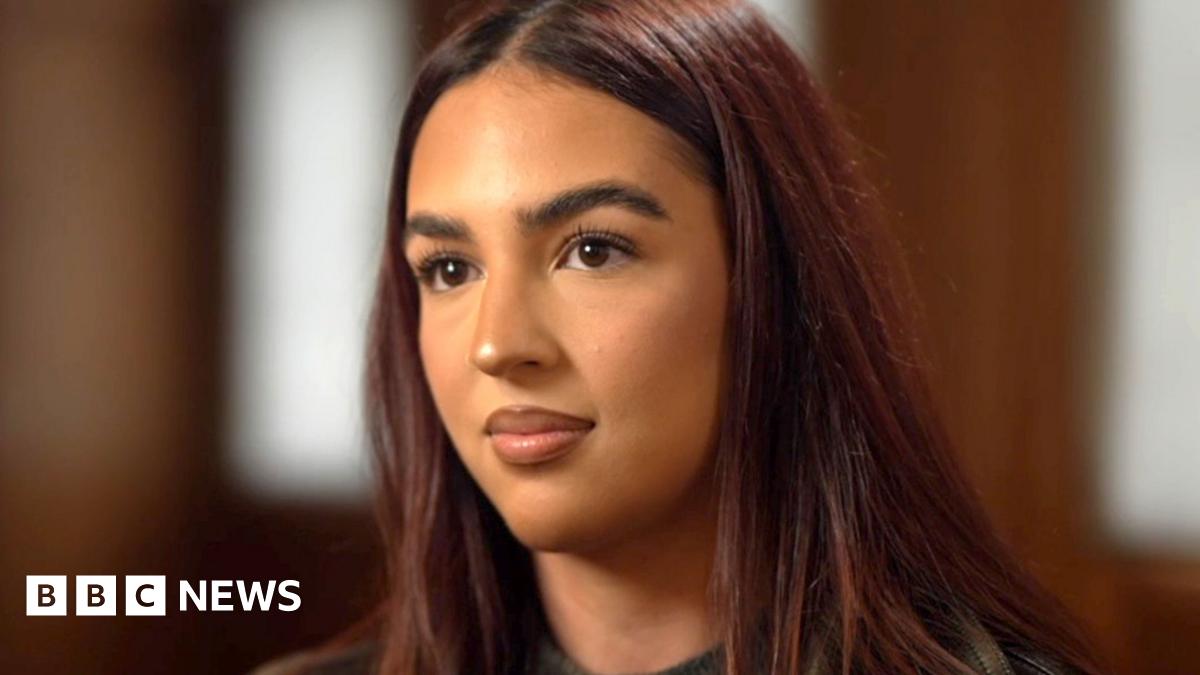

Does anyone else think this might create a problem of guilt by (extremely loose) association?

This type of conduct is definitely concerning and I can see the potential for some over-zealous individuals or groups tarring everyone with the same brush.
Since the whole issue of Musk's Grok undressing service came to public notice I have feared that its affect on street photography could be terminal, some countries already ban it or make it difficult (though some just don't enforce).
I guess on the positive side, the fact that genuine street photographers are fairly up-front when photographing people in general (including women), they are less likely to be seen as being voyeuristic - i.e. largish camera on full view, not disguised as sunglasses.
Of course everyone is too scared to target the real villains, the tech companies that allow this and other anti-social and illegal material to proliferate on their platforms.

Following some street photographers on youtube I see that in some lands they have to incorporate people as part of an urban landscape, where individual recognition is limited.
Only time will tell, but with my Fuji X-Pro3's and short primes I have no way back to wildlife photography. :LOL:
 
Of course everyone is too scared to target the real villains, the tech companies that allow this and other anti-social and illegal material to proliferate on their platforms.
I fully agree. They are, as you say, the real villains.
 
I would see this as being like a milder version of up skirting, not necessarily sexual, but an unwelcome exposure of another.
 
I guess on the positive side, the fact that genuine street photographers are fairly up-front when photographing people in general (including women), they are less likely to be seen as being voyeuristic


Sadly multiple posts on this website would indicate otherwise, with numerous people stating that they photograph clandestinely.

Andrew is one of them.
 
Sadly multiple posts on this website would indicate otherwise, with numerous people stating that they photograph clandestinely.

Andrew is one of them.
Taking pictures "clandestinely", so as not to disturb the subject is exactly what most wildlife photographers do, in order to obtain natural images.

Taking pictures from close quarters and then using them to harass the subject, is rather closer to pushing a camera into a stranger's face and setting off a flashgun, but that, of course, is only my opinion.
 
Sadly multiple posts on this website would indicate otherwise, with numerous people stating that they photograph clandestinely.

Andrew is one of them.

I would see a difference between photographing someone without their knowledge as a passer-by in a public place compared to deliberately interacting with someone to set up a situation while filming them clandestinely. In one situation they are acting normally, in the other they are being induced to behave for the camera without awareness of its use.
 
I would see a difference between photographing someone without their knowledge as a passer-by in a public place compared to deliberately interacting with someone to set up a situation while filming them clandestinely. In one situation they are acting normally, in the other they are being induced to behave for the camera without awareness of its use.


Any law that is introduced will not differentiate.
 
Taking pictures "clandestinely", so as not to disturb the subject is exactly what most wildlife photographers do, in order to obtain natural images.

Taking pictures from close quarters and then using them to harass the subject, is rather closer to pushing a camera into a stranger's face and setting off a flashgun, but that, of course, is only my opinion.


I'm not a fan of either Bruce Gilden's or Dougie Wallace's style. But at least the subjects are aware that they have been photographed and have the opportunity to object should they wish.

Trying to hide that you are taking photos when on the street is fairly similar to what the 'smart' glasses are doing.

However the main thing is that the intent is important.

Wildlife photograph is utterly irrelevant here.
 
Last edited:
However the main thing is that the intent is important.

Wildlife photograph y is utterly irrelevant here.
We are each entitled to our opinion.
 
Intent is of course at the very heart of the matter here.
It is said that Joel Meyerowitz coined the phrase 'bruising the scene', in that the street photographer can, by his actions, change the scene from 'normal' to 'staged'.
For example it may be that on realising the photographer is taking a photo the subject smiles/poses/changes action or intent/whatever and the intended image is lost or 'bruised'.
It is one thing to be discreet and take a photo of a scene of interest, not wishing to have the scene altered, and quite another to be acting as a voyeur with the intent of misusing the image, whether by short or long lens, flash or not.

In one situation they are acting normally, in the other they are being induced to behave for the camera without awareness of its use.
This 100%
 
Does anyone else think this might create a problem of guilt by (extremely loose) association?

I think this is a stronger and more relevant example. I few years ago this news story broke in the local newspaper and other local websites: https://www.swindonadvertiser.co.uk...-pervert-breaks-sexual-harm-prevention-order/ and amazinginly his instgram is still live.. https://www.instagram.com/prabhat_the_one/

I think this example is 'closer to home' in terms of street photography, the photos are in the style of what I'd call bad street photography (but most street photography is bad) and similar style of pictures are posted all the time on various platforms by people who claim to be street photographers. So, in a way, I can't differentiate between street photography and what this guy was doing.

This pictures might have been made covertly from a distance, but they might not have been. You can easily hide in plain sight with a mobile phone.

If you look at the guys Instagram, one of the only ways I can differentiate the pictures with other street photography is in terms of his image captions.. I had a quick look and there's one photo of a minor on a train with the caption 'afternoon flirt' and another photo of a girl in the shopping centre with the caption 'are you checking me out', there are countless others.

imo for a well intentioned street photographers, a considered approach to publishing, captioning and context is key.
 
Trying to hide that you are taking photos when on the street is fairly similar to what the 'smart' glasses are doing.

Not even close.

One is a photo. The other is a deliberate, intentional video - possibly where someone can be coaxed into saying something to be used against themselves, etc....
 
It is one thing to be discreet and take a photo of a scene of interest, not wishing to have the scene altered, and quite another to be acting as a voyeur with the intent of misusing the image, whether by short or long lens, flash or not.
I think you sum up the situation well.

For a long time, British law has defaulted to the principle of "In publico, facies tua publica est"" (in public your face is public). However, that coexists with the right not to be harassed or impeded in the street. In my opinion, taking pictures from a distance has the advantage of recording what is happening, without interfering with it. For the purpose of clarity, if someone comes up to me and records my likeness without permission from six feet I will be annoyed, if they record me from 60 feet away without my knowledge and I later find out that this has happened, I would have no opinion other than whether I liked the resulting image or not.
 
that coexists with the right not to be harassed
It is however essential to understand the legal definition of harassment - it is very unlikely to be proved by an isolated photo, no matter how closely taken or whether or not a flash was used. It could well be ascribed to photographing from a distance.
 
It is however essential to understand the legal definition of harassment - it is very unlikely to be proved by an isolated photo, no matter how closely taken or whether or not a flash was used.
You are correct. I used the term loosely.
It could well be ascribed to photographing from a distance.
Again, you are correct. Taking pictures from a distance, multiple times, could clearly be considered as evidence of possible harassment.

My point, however, is that there is nothing wrong with recording someone in public, whether from close quarters or a distance, provided it is not done in a manner that causes alarm or distress. Given that proviso, neither technique is superior to the other but the results will be very different.
 
And yet CCTV and facial recognition cameras now capture images covertly virtually from the moment we step out of the door until we return and we accept it as inevitable and inarguable and there have been cases of these cameras being used in a very invasive fashion and yet we accept it because its the state doing it - which doesn't make it any less sinister in my opinion, quite the contrary. Personally I would absolutely hammer anyone who crosses the line but street photography is a grey area and what's acceptable to one passer-by isn't to another and there is the problem.
 
street photography is a grey area
It isn't, street photography is a perfectly lawful activity ... its personal conduct that is the problem, and that is the case with so many activities in life.
 
Trying to hide that you are taking photos when on the street is fairly similar to what the 'smart' glasses are doing.

However the main thing is that the intent is important.
Agree with this and I never agree with him.

Just personal opinion but photographing strangers and hiding that you are photographing them is weird and borders on being voyeuristic.

I remember commenting on a post on here a long time ago when it seemed apparent that a member seemed to have an unsavory preference for photographing young females secretly and then calling it “street photography”.

A few years ago a friend of mine caught someone photographing his daughter secretly as they were walking through Belfast city centre. He had an altercation with the guy who claimed “street photography”. The police arrived soon after. All of the photos on the guys camera were of young women or girls aged between 15-20. The police later raided his house and found all sorts of stuff including “up skirt” type videos etc he had being taking in the lifts and escalators in local shopping centers.

I would have no issue with “street photography” being banned.
 
Last edited:
  • Like
Reactions: Nod
Just personal opinion but photographing strangers and hiding that you are photographing them is weird and borders on being voyeuristic.

I remember commenting on a post on here a long time ago when it seemed apparent that a member seemed to have an unsavory preference for photographing young females secretly and then calling it “street photography”.

A few ago a friend of mine caught someone photographing his daughter secretly as they were walking through Belfast city centre. He had an altercation with the guy who claimed “street photography”. The police arrived soon after. All of the photos on the guys camera were of young women or girls aged between 15-20. The police later raided his house and found all sorts of stuff including “up skirt” type videos etc he had being taking in the lifts and escalators in local shopping centers.
I guess that you also think every photographer within 500 yards of a child is a paedophile?
 
Agree with this and I never agree with him.

Just personal opinion but photographing strangers and hiding that you are photographing them is weird and borders on being voyeuristic.

I remember commenting on a post on here a long time ago when it seemed apparent that a member seemed to have an unsavory preference for photographing young females secretly and then calling it “street photography”.

A few years ago a friend of mine caught someone photographing his daughter secretly as they were walking through Belfast city centre. He had an altercation with the guy who claimed “street photography”. The police arrived soon after. All of the photos on the guys camera were of young women or girls aged between 15-20. The police later raided his house and found all sorts of stuff including “up skirt” type videos etc he had being taking in the lifts and escalators in local shopping centers.

I would have no issue with “street photography” being banned.

That's a bit like a wedding photographer taking a secret and unnecessary amount of images of the bride and bridesmaids breasts so banning wedding photography.

It's the person, not the subject.
 
It's the person, not the subject.
I agree.

Then again, this also applies to the critics of street photography and how it is practiced. The criticism has a tendency to reveal much more about the critic than about what is being criticised, myself included.
 
It isn't, street photography is a perfectly lawful activity ... its personal conduct that is the problem, and that is the case with so many activities in life.
I refer to the wholly inconsistent reaction of the people being photographed. While the activity itself is perfectly lawful the reaction of the subject may not be. I was on a shoot at a block of council flats and was accused - quite forcefully - of either being "the Feds" or from the press.
 
I was on a shoot at a block of council flats and was accused - quite forcefully - of either being "the Feds" or from the press.
Doesn't sound like street photography, more like documentary photography in a known 'problem' area, but of course I could be totally wrong. :)
 
Doesn't sound like street photography, more like documentary photography in a known 'problem' area, but of course I could be totally wrong. :)
Well you wouldn't want to be mistaken for the police that's for sure.
 
That's a bit like a wedding photographer taking a secret and unnecessary amount of images of the bride and bridesmaids breasts so banning wedding photography.

It's the person, not the subject.
That isn’t even remotely similar gave me a giggle though. :D
 
I have read about women being severely traumatized by deepfakes and so on. I thought about it, and I could not relate. I would rather not have someone put up weird AI porn videos with my face on them, but I can't say I would care.

I guess if people thought they were real, it would be different.
 
Of course it is. It's both people with cameras using them in a perverted and unsavoury way. So that situation is exactly the same.
No one is a guy targeting strangers in the street and being a voyeur.

The other is someone who is supposed to be there and supposed to taking photos being a creep.
 
They'd all be using their cameras in a perverted and unsavoury way though wouldn't they?

Voyeur, pervert, creep, etc doesn't matter what term you use. They are still taking photos that they shouldn't.
The difference is that a “street photographer” is a voyeur, the subjects do not know they are being photographed or that there is a camera around.

With a “pervy wedding photographer” the subjects know that their is a photographer there, and they know that there is cameras there.

In all honesty a “pervy wedding photographer” does not need to hide doing anything if they were so inclined. You would be surprised at how free of inhibitions brides and bridesmaids are especially during getting ready on the morning of a wedding. It can actually be a bit embarrassing at times for the photographer. Grooms sometimes are nearly as bad.

We are often asked to photograph things that some might find inappropriate.
 
Last edited:
Like the groom shagging the chief bridesmaid?
Not quite.

Recently we had a bride ask us to photograph her naked breast feeding her baby.

Once we were asked to photograph the couple naked together.

Can you take some sexy photos of me in my wedding lingerie as a surprise for the new hubby? Had this quite a few times.

There has been loads of stuff over the years. It’s a good thing really as shows that they trust us.

Even though we shot some glamour and boudoir before weddings when we first started doing weddings it shocked us a bit how uninhibited some people are.
 
Back
Top
