Backgrounds

WillNicholls

Suspended / Banned
Messages
2,004
Name
Will
Edit My Images
No
So maybe it is just me, but as of late I've noticed that completely blank backgrounds in a wildlife image is coming into fashion.
This is down to workshop sessions which try to "perfect" every inch for the client.

However, I really think that a completely plain background almost ruins an image.
They look fake, and last time I checked most birds and mammals living in forest environments don't tend to spend their time sat in front of meshes designed to even out the backdrop.

What is the general consensus on this? I prefer to see some of the environment in an image's background, even out of focus.
I understand how sometimes it can be distracting or obtrusive in an image depending on where said OOF object is positioned. But I think it can really add to an image.
 
Mixed feelings Will, some images with a plain OOF coloured background can look really nice but then again so can a clean possibly OOF natural background, if that makes sense - what doesn't always look great is when there is a mixed clean and OOF background as it can look really messy when there is a 'fuzzy' branch/twig or worse for example.
 
I'm not sure if it seems fashionable for completely blank backgrounds or it's the fact that workshops or hide hire just results in similar images being produced by every participant. Hides/workshops seem to be designed to get these images and in some ways it's what participants are after, the images they have seen taken at these events. Kind of a 'sit here, point there and you will get this' type of situation. I think some workshops are trying to perfect an animal portrait and trying to replicate a studio for wildlife images in the wild rather than trying to produce environmental images.

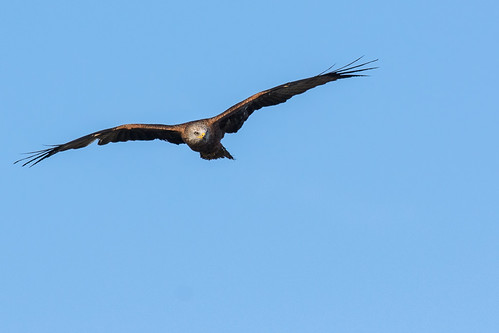
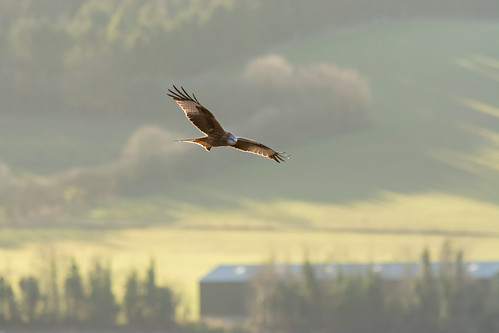
I think there is room for both environmental backgrounds and blank OOF backgrounds. One of my recent projects has been Red Kites and I've been looking for something different from a blue sky image, some examples below.

A blue sky image:


Red Kite
by Rob'81, on Flickr

Showing some environment:


Red Kite
by Rob'81, on Flickr

I think showing the red kite in its environment looks better here as there is more context compared to the blue sky image.

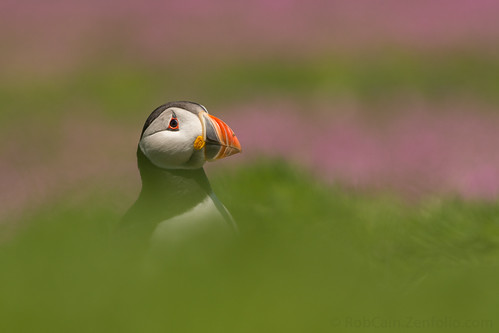
One of my favourite images I took last year was to me a mixture of the clean OOF backgrounds that you are talking about but also an environment background to me too. The puffin image below was what I was planning to get but the background colours reminds me of the colours of the wild flower meadows in full bloom. Many have said the DoF looks wrong in this image, this was because I hid the ground around the puffin with out of focus foreground to give the blank OOF look.


Puffin
by Rob'81, on Flickr

Personally I think it's about both types of images for a portfolio to tell an animals story. A portfolio would not look right if it was just environmental images or only portrait images. They both have their place.
 
Last edited:
  • Like
Reactions: BBR
Mixed feelings Will, some images with a plain OOF coloured background can look really nice but then again so can a clean possibly OOF natural background, if that makes sense - what doesn't always look great is when there is a mixed clean and OOF background as it can look really messy when there is a 'fuzzy' branch/twig or worse for example.

Exactly. I agree. Some situations completely plain looks ok, but I suppose I'm thinking of specific cases.

I'm not sure if it seems fashionable for completely blank backgrounds or it's the fact that workshops or hide hire just results in similar images being produced by every participant. Hides/workshops seem to be designed to get these images and in some ways it's what participants are after, the images they have seen taken at these events. Kind of a 'sit here, point there and you will get this' type of situation. I think some workshops are trying to perfect an animal portrait and trying to replicate a studio for wildlife images in the wild rather than trying to produce environmental images.

I think there is room for both environmental backgrounds and blank OOF backgrounds. One of my recent projects has been Red Kites and I've been looking for something different from a blue sky image, some examples below.

A blue sky image:


Red Kite
by Rob'81, on Flickr

Showing some environment:


Red Kite
by Rob'81, on Flickr

I think showing the red kite in its environment looks better here as there is more context compared to the blue sky image.

One of my favourite images I took last year was to me a mixture of the clean OOF backgrounds that you are talking about but also an environment background to me too. The puffin image below was what I was planning to get but the background colours reminds me of the colours of the wild flower meadows in full bloom. Many have said the DoF looks wrong in this image, this was because I hid the ground around the puffin with out of focus foreground to give the blank OOF look.


Puffin
by Rob'81, on Flickr

Personally I think it's about both types of images for a portfolio to tell an animals story. A portfolio would not look right if it was just environmental images or only portrait images. They both have their place.

Totally agree, blue sky different. I mean when someone "fakes" a background.
Your puffin, I like the background - that's the kind of OOF background I like. Natural, not one solid colour.

Will, can you provide some examples that you think the completely blank background ruins the image?

I'd rather not slag of specific photos without the photographer present!
 
Will, can you provide some examples that you think the completely blank background ruins the image?

I did some Googling and found some examples that I hope will be near-anonymous.

Here's an image - LINK - that has the type of background I think Will refers to. Now, I wouldn't say that the near-blank background 'ruins' the image but I would agree that it does tend to make the image look a little 'fake'.

This image - LINK - has the sort of background I aim for, there's no distraction from the subject but it does look as if it were shot in front of some real foliage rather than a green-screen.

But I really like coloured backgrouunds, like Rob's Puffin. I'm going to be setting up perches near my feeders to get the lilacs nicely blurred at f2.8 300mm this summer.
 
I had this very conversation the other day with a friend of mine. She takes a lot of macro images insects etc. We both attend a local camera club and in most of the competitions marks are lost or criticism is made of shots where the insect is in what I call a natural background. Even with the background nicely blurred, images with a blank background ie no definition are always preferred.
 
I have to admit, out of the set from Rob, I do prefer the shot with environment in. However, I think both types of background can produce some great results.
 
I did some Googling and found some examples that I hope will be near-anonymous.

Here's an image - LINK - that has the type of background I think Will refers to. Now, I wouldn't say that the near-blank background 'ruins' the image but I would agree that it does tend to make the image look a little 'fake'.

This image - LINK - has the sort of background I aim for, there's no distraction from the subject but it does look as if it were shot in front of some real foliage rather than a green-screen.

But I really like coloured backgrouunds, like Rob's Puffin. I'm going to be setting up perches near my feeders to get the lilacs nicely blurred at f2.8 300mm this summer.

Thanks Frank, on both images I would prefer the bird sharpness and pose on the second image however I prefer to have the first image background.
 
I had this very conversation the other day with a friend of mine. She takes a lot of macro images insects etc. We both attend a local camera club and in most of the competitions marks are lost or criticism is made of shots where the insect is in what I call a natural background. Even with the background nicely blurred, images with a blank background ie no definition are always preferred.

I find that extraordinary, and frankly ludicrous. (Just looked it up to make sure it was appropriate: ludicrous adjective. so foolish, unreasonable, or out of place as to be amusing. synonyms absurd, ridiculous, farcical, laughable, risible, preposterous, foolish, idiotic, stupid, inane, silly, asinine, nonsensical. Yes, that'll do nicely.)

I suppose one should just put it down to a difference of taste, shrug one's shoulders and move on, but there seems more to it than that. It seems to promote a visual value system in which natural environments are denigrated (unless they happen to look, from a particular angle, blank), and which presumably implies that natural backgrounds (unless blank) cannot enhance the visual appeal of an image. And presumably it also encourages people to replace realistic non-blank backgrounds with false blank, ones (either that, or to capture, or at least to submit for competitions, very few macro images, as most of them do have some sort of not completely blank background). If the "only blank backgrounds are good" ethos is at all widespread I would find that not only extraordinary and ludicrous, but a bit depressing too.

Why do I care? Because most of my photography is close-ups, of invertebrates and flowers, and for me the background is an integral and important part of an image's appeal, and in my experience a non-blank background can most decidedly be a harmonious addition to an image. The idea of encouraging photographers that closeups are only valid/worthwhile/worthy of consideration if they have a blank background is ..... (yea, right, I said it already. :) )
 
So maybe it is just me, but as of late I've noticed that completely blank backgrounds in a wildlife image is coming into fashion.
This is down to workshop sessions which try to "perfect" every inch for the client.

However, I really think that a completely plain background almost ruins an image.
They look fake, and last time I checked most birds and mammals living in forest environments don't tend to spend their time sat in front of meshes designed to even out the backdrop.

What is the general consensus on this? I prefer to see some of the environment in an image's background, even out of focus.
I understand how sometimes it can be distracting or obtrusive in an image depending on where said OOF object is positioned. But I think it can really add to an image.

I wasn't going to respond here because "wildlife" seems often to comprise mammals, birds, reptiles and amphibians, but not invertebrates. However, I got drawn in somewhat! (see previous post :), so I may as well risk going off-topic now).

I photograph invertebrates and small flowers/buds/berries etc mainly, and I do get perfectly natural blank backgrounds from time to time. Most of the time they aren't blank. I find blank backgrounds perfectly acceptable, but for my taste they don't enhance an image much. They are often just "there", in a rather neutral, non-distracting sort of a way, rather than positively "adding value", as I think can some backgrounds which have features of colour, shape and/or light. The added value can be of either or both of two sorts: the background can provide a harmonious visual complement to the subject, enhancing the overall visual appeal of the image; the background can provide information/context about the natural environment the subject lives in. For my taste, these can both increase the appeal of an image.
 
There is room for both, as a wildlife enthusiast i like to see the enviroment as part of an image. I find Robs second Red Kite image far more appealing than the first, and i can find completly blank backgrounds a bit clinical / sterile.
 
So maybe it is just me, but as of late I've noticed that completely blank backgrounds in a wildlife image is coming into fashion.
This is down to workshop sessions which try to "perfect" every inch for the client.

....Yes, I have also wondered if it was just a fashion. But don't worry because fashions change.

It's a bit more alarming if photographic workshop sessions are so rigid. It results, indeed it already is resulting, in formulaic images which all look the same even if pristine.

However, I really think that a completely plain background almost ruins an image.
They look fake, and last time I checked most birds and mammals living in forest environments don't tend to spend their time sat in front of meshes designed to even out the backdrop.

....If completely noiseless (I prefer the term grainy) and if also flat and featureless they then look like studio backdrop roll papers and in my opinion not appropriate for wildlife. "Fake" is a good choice of word to describe them and especially when you add a grossly over sharpened and too obviously post processed subject. The results can look like photos of stuffed animals in a studio!

What is the general consensus on this? I prefer to see some of the environment in an image's background, even out of focus.
I understand how sometimes it can be distracting or obtrusive in an image depending on where said OOF object is positioned. But I think it can really add to an image.
....I am most definitely of the school of thought which much prefers at the very least a hint of an animal's environment, unless of course it's a very tight crop of only the animal.

However, a good picture is a good picture no matter which rules it meets or doesn't meet. A photograph should ideally evoke an image and atmosphere rather than solely be a technical masterpiece.

You may be amused by this discussion.... http://www.talkphotography.co.uk/threads/ukiyo-e-blackbird.526337/

Backgrounds is a relevant subject to discuss (y)
 
Last edited:
So maybe it is just me, but as of late I've noticed that completely blank backgrounds in a wildlife image is coming into fashion.
This is down to workshop sessions which try to "perfect" every inch for the client.

However, I really think that a completely plain background almost ruins an image.
They look fake, and last time I checked most birds and mammals living in forest environments don't tend to spend their time sat in front of meshes designed to even out the backdrop.

What is the general consensus on this? I prefer to see some of the environment in an image's background, even out of focus.
I understand how sometimes it can be distracting or obtrusive in an image depending on where said OOF object is positioned. But I think it can really add to an image.
I was interested in having a read of this thread. IMHO, the obvious answer is both diffused and environmental backgrounds have their place in a portfoliio, and are very much shot dependant.

However, my real interest is why you have chosen to pose the question. Having looked at your portfolio images, the clear majority of your shots have a diffused blank backgrounds, and I believe I am right in saying you run workshops yourself (please correct me if I'm wrong).

My personal preference is some background interest, and this is not meant to be a slight on your work - it is of a high standard (particularly the wide angle environmental shots ! ).
 
Well, one good thing about this fad for flat, monochrome backgrounds. It makes it much easier to cut'n'paste a bird into a boring background to make it a better picture.
 
I was interested in having a read of this thread. IMHO, the obvious answer is both diffused and environmental backgrounds have their place in a portfoliio, and are very much shot dependant.

However, my real interest is why you have chosen to pose the question. Having looked at your portfolio images, the clear majority of your shots have a diffused blank backgrounds, and I believe I am right in saying you run workshops yourself (please correct me if I'm wrong).

My personal preference is some background interest, and this is not meant to be a slight on your work - it is of a high standard (particularly the wide angle environmental shots ! ).

Hi,

Yes I do run workshops.

I think because I haven't shown examples, that the backgrounds I'm talking about aren't understood.
The backgrounds you see in my portfolio, some people can comment are distracting because they aren't a solid colour. That's what I mean by "fake" backgrounds.

Diffused looks lovely, but one plain colour can look unnatural.
 
I think both have their place. I like the solid colour background in some situations for example where a background could have been messy or leading the eye from the subject to much. A nice environmental shot has its place and will never be outdated. I often these days shoot with a 600 and 1.4tc, sometimes on a crop body, if the main subject is close then the image often ends with the solid colour background--do I like tem less--hell no.An example of this is where a bid sits on a post with a field in the background-everything is blurred to a solid colour by the big lens unless I had to really up the f stop which would then effect the shutter speed/iso.Its nice to see a bird/animal in its natural habitat and to photograph it as such but I for 1 have binned thousands of images where I find the background to distracting due to it being filled with twigs, branches etc etc. So see me as you wish however I will for te foreseeable future keep taking the images as I find them and then decide what`s good and what`s not
 
Back
Top