There is a fair amount of speculation, over the power and accuracy of the English longbow. Here is a re-enactment, using exact replicas of a longbow and a steel breastplate - which one is going to prevail?
View: https://www.youtube.com/watch?v=DBxdTkddHaE

and the site receives a small commission
You are using an out of date browser. It may not display this or other websites correctly.
You should upgrade or use an alternative browser.
You should upgrade or use an alternative browser.
Agincourt 1415, English longbow v French armour
- Thread starter andya700
- Start date


AndrewFlannigan
Suspended / Banned
- Messages
- 11,977
- Edit My Images
- No
Indeed. The primary English tactic was to create a bottleneck for the French and the "stopper" was the barrier of staves driven into the ground at the English front. It was a classic example of using an enemy's apparent strength against him by picking the battlefield to benefit the weaker army.It's all interesting but a bit of a red herring. The English archers weren't trying to penetrate the French armour.

Garry Edwards
Moderator
- Messages
- 13,475
- Name
- Garry Edwards
- Edit My Images
- No
Fascinating!
But of course it was (I think) only the richest and most senior officers who had armour. I remember reading that the effective range of an English or Welsh longbow was about 200 yards (i.e. the immensely strong and skilled archers could expect to hit an enemy at that range.
But of course it was (I think) only the richest and most senior officers who had armour. I remember reading that the effective range of an English or Welsh longbow was about 200 yards (i.e. the immensely strong and skilled archers could expect to hit an enemy at that range.
The very first arrow shows exactly what they were designed to do, penetrate chain mail.
I actually winced when I saw that one hit home.

Box Brownie
Suspended / Banned
- Messages
- 17,645
- Edit My Images
- No
I was taught archery at secondary school...(late 60's to early 70's)....we also competed against other schools.Fascinating!
But of course it was (I think) only the richest and most senior officers who had armour. I remember reading that the effective range of an English or Welsh longbow was about 200 yards (i.e. the immensely strong and skilled archers could expect to hit an enemy at that range.
As far as I recall, we were told that the "pull" of Agincourt era long bows was 100lb and that such a "pull weight" yielded both long range and penetrating power. The choice of (iron) arrowhead was crucial to the intended target i.e. a hunting arrow was broad and barbed but a battle arrow of greatest use was Bodkin tipped (a narrow and bullet like shape) and was, as mentioned in another post, designed to penetrate chainmail.... though opportunistically might penetrate some armour.
PS the max pull bow we used at school was between 50 to 60lb.

- Messages
- 14,819
- Name
- Richard
- Edit My Images
- No
I’m not very up on this but …
Very interesting. I’m disappointed they didn’t try the 200lb draw just for a few though I suspect the result would have been the same.
No mention of shooting the horses? They don't seem to have been heavily armoured.
Those Mary Rose archers were very ‘deformed’ in the shoulders, the archer here looked fairly normal.
Very interesting. I’m disappointed they didn’t try the 200lb draw just for a few though I suspect the result would have been the same.
No mention of shooting the horses? They don't seem to have been heavily armoured.
Those Mary Rose archers were very ‘deformed’ in the shoulders, the archer here looked fairly normal.

- Messages
- 43,206
- Name
- Alan
- Edit My Images
- No
I read that in those day the archers would look almost deformed due to the muscles they developed from practicing so much.
I've read that too.
PS.
I once tried on a piece of armour something like the one in the vid (it was allowed) and found it tight and I'm not big, I wonder if many knights/people were smaller in those days?
I’m not very up on this but …
Very interesting. I’m disappointed they didn’t try the 200lb draw just for a few though I suspect the result would have been the same.
No mention of shooting the horses? They don't seem to have been heavily armoured.
Those Mary Rose archers were very ‘deformed’ in the shoulders, the archer here looked fairly normal.
I've read that too.
PS.
I once tried on a piece of armour something like the one in the vid (it was allowed) and found it tight and I'm not big, I wonder if many knights/people were smaller in those days?
Last edited:
- Messages
- 14,819
- Name
- Richard
- Edit My Images
- No
The ‘English’ soldiery were puny compared to the French during the Napoleonic wars I believe.I read that in those day the archers would look almost deformed due to the muscles they developed from practicing so much.
I've read that too.
PS.
I once tried on a piece of armour something like the one in the vid (it was allowed) and found it tight and I'm not big, I wonder if many knights/people were smaller in those days?
Garry Edwards
Moderator
- Messages
- 13,475
- Name
- Garry Edwards
- Edit My Images
- No
It's my understanding that the archers were the snipers of their day - real professionals who took great pride in their skills, acquired only after at least 10 years of constant daily practice, which developed their muscles grotesquely. They made their own bows, so almost certainly would make them as powerful as they could handle. The arrows were supplied and were packed in barrels, carried on carts, so were fairly standard. Certainly, the bodkin heads had the greatest penetration potential, the broad heads were almost impossible to remove, and were seen as a deadlier weapon because the wound would almost certainly become infected, but from what I've read that didn't make much difference, because almost all penetrating wounds would carry bacteria from clothing into the wound, so most wounds would end up fatal over time.I was taught archery at secondary school...(late 60's to early 70's)....we also competed against other schools.
As far as I recall, we were told that the "pull" of Agincourt era long bows was 100lb and that such a "pull weight" yielded both long range and penetrating power. The choice of (iron) arrowhead was crucial to the intended target i.e. a hunting arrow was broad and barbed but a battle arrow of greatest use was Bodkin tipped (a narrow and bullet like shape) and was, as mentioned in another post, designed to penetrate chainmail.... though opportunistically might penetrate some armour.
PS the max pull bow we used at school was between 50 to 60lb.
The arrows were probably over-weight, the thinking at the time being that heavier arrows hit harder, and so they do - if you double the weight of a projectile then it hits twice as hard - but modern understanding of physics tells us that if you go the other way, reduce the weight and double the speed, it hits 4x as hard.
From what I've read, even the much smaller and lighter bows of Native American Indians (designed for use whilst riding cantering horses) were proved to penetrate the invading Spaniard's armour at 100 paces
AndrewFlannigan
Suspended / Banned
- Messages
- 11,977
- Edit My Images
- No
Many books refer to the archers aiming at the horses, a wounded horse being a serious hazard on a battlefield. However, a major part of a medieval soldier's pay was the booty and a trained horse with its saddle and harness was worth a considerable amount - think in terms of capturing a fully loaded main battle tank today.No mention of shooting the horses? They don't seem to have been heavily armoured.

boyfalldown
Suspended / Banned
- Messages
- 17,486
- Name
- Hugh
- Edit My Images
- No
I thought it interesting that an arrow from 25 yds hit wit less energy than a modern .22 Long Rifle round. I'd have thought it would have had much more energy
AndrewFlannigan
Suspended / Banned
- Messages
- 11,977
- Edit My Images
- No
Some were but the majority were like trained riflemen - competent but not experts.It's my understanding that the archers were the snipers of their day.
At Agincourt, Henry deployed 1,500 men at arms and 7,000 bowmen against 10,000 men at arms and something like 5,000 mixed bowmen, crossbowmen and shield bearers. There were probably another 10,000 support troops on the French side in the form of armed servants (AKA varlets) who may or may not have been combatants.

- Messages
- 17,208
- Name
- Hugh
- Edit My Images
- Yes
There's a video on YT from the Modern History Channel which shows bodkin headed arrows penetrating armour at least a short way. I guess it depends on the armour.
View: https://youtu.be/YzYFjQE2vD0
Box Brownie
Suspended / Banned
- Messages
- 17,645
- Edit My Images
- No
Re: infection ~ also very much the case with musket ball wounds......unless the barber surgeon dug out fabric carried into the wound as well as the ball, I surmise sepsis was inevitable!It's my understanding that the archers were the snipers of their day - real professionals who took great pride in their skills, acquired only after at least 10 years of constant daily practice, which developed their muscles grotesquely. They made their own bows, so almost certainly would make them as powerful as they could handle. The arrows were supplied and were packed in barrels, carried on carts, so were fairly standard. Certainly, the bodkin heads had the greatest penetration potential, the broad heads were almost impossible to remove, and were seen as a deadlier weapon because the wound would almost certainly become infected, but from what I've read that didn't make much difference, because almost all penetrating wounds would carry bacteria from clothing into the wound, so most wounds would end up fatal over time.
The arrows were probably over-weight, the thinking at the time being that heavier arrows hit harder, and so they do - if you double the weight of a projectile then it hits twice as hard - but modern understanding of physics tells us that if you go the other way, reduce the weight and double the speed, it hits 4x as hard.
From what I've read, even the much smaller and lighter bows of Native American Indians (designed for use whilst riding cantering horses) were proved to penetrate the invading Spaniard's armour at 100 paces
Power to weight ratio, perhaps???I thought it interesting that an arrow from 25 yds hit wit less energy than a modern .22 Long Rifle round. I'd have thought it would have had much more energy
As for .22? The one thing I recall seeing printed on the (20 round?) boxes was a warning of "lethal at 1000yards".
At a tangent ~ The range I shot at for about 18 months in the mid 70's had Martini Henry and Anschutz(spelling?) rifles......I am left eye dominant and used my left shoulder = Martini Henry was more comfortable to operate.
Brilliant video, particularly the comparison of damage done to the ceramic armour plate by the different calibres.There's a video on YT from the Modern History Channel which shows bodkin headed arrows penetrating armour at least a short way. I guess it depends on the armour.
View: https://youtu.be/YzYFjQE2vD0
boyfalldown
Suspended / Banned
- Messages
- 17,486
- Name
- Hugh
- Edit My Images
- No
Power to weight ratio, perhaps???
As for .22? The one thing I recall seeing printed on the (20 round?) boxes was a warning of "lethal at 1000yards".
They still read something very similar. It surprised me, really, I had assumed (I know what that does) an arrow would carry much more energy.
Interesting
Garry Edwards
Moderator
- Messages
- 13,475
- Name
- Garry Edwards
- Edit My Images
- No
That's interesting, but I can't help wondering whether you've misremembered and that you actually shot Martini action (very common on .22 rifles) rather than Martini-Henry.At a tangent ~ The range I shot at for about 18 months in the mid 70's had Martini Henry and Anschutz(spelling?) rifles......I am left eye dominant and used my left shoulder = Martini Henry was more comfortable to operate.
AFAIK (but I may be wrong) the actual Martini-Henry rifles were only available with their 480 grain projectiles, .755/455 calibre, which would wreck any indoor range very quickly . . .
This is the action, mine dates from Rorkes Drift. From memory, that action was also used on some of the old Greener brand shotguns
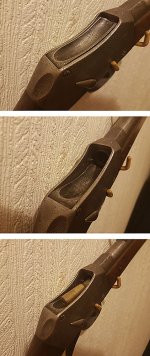
- Messages
- 14,819
- Name
- Richard
- Edit My Images
- No
In the first video the flying spinners from the arrow were interesting — they may have done a lot of damage in a similar way splinters from cannon balls did in wooden ships. Shrapnel of its day!They still read something very similar. It surprised me, really, I had assumed (I know what that does) an arrow would carry much more energy.
Interesting
- Messages
- 14,819
- Name
- Richard
- Edit My Images
- No
It was.that action was also used on some of the old Greener brand shotguns
That's interesting, but I can't help wondering whether you've misremembered and that you actually shot Martini action (very common on .22 rifles) rather than Martini-Henry.
AFAIK (but I may be wrong) the actual Martini-Henry rifles were only available with their 480 grain projectiles, .755/455 calibre, which would wreck any indoor range very quickly . . .
This is the action, mine dates from Rorkes Drift. From memory, that action was also used on some of the old Greener brand shotguns
View attachment 338336
Wasn't the Martini-Henry chambered in .577/450? IIRC it had a coiled sheet brass case with an iron base, and was vulnerable to physical damage.

Garry Edwards
Moderator
- Messages
- 13,475
- Name
- Garry Edwards
- Edit My Images
- No
You're right about the calibre, I'm wrong.Wasn't the Martini-Henry chambered in .577/450? IIRC it had a coiled sheet brass case with an iron base, and was vulnerable to physical damage.
As for the case, they started life as a wrapped brass foil case, cheap and easy to make because back then it was considered to be OK for widows and orphans to make them at home by gaslight . . .
But, pushed too enthusiastically into the breach (which was likely to happen when people were shooting at you) they often got stuck. And when pulling the underlever to eject them, the rim often broke off. In either event, the rifle was unusable until the soldier had unscrewed his ramrod and cleared the obstruction from the sharp end, which took time. Because of this, the army changed to standard brass cases, which then made the rifle pretty good (for its time). But, like the medieval arrows that we seem to have wandered away from, the projectiles were massively heavy, dropped like a stone and the recoil dislocated and broke shoulders.
Surely if you were hit in the chest, even with armor, a force like that is likely to knock you off your feet, or possibly off of your horse.
There are arguments suggesting that the impact could, potentially, cause sufficient blunt force trauma to kill or inflict serious injuries. I'm not taking sides here. There are a lot of variables and the jury is still out on this.
- Messages
- 14,819
- Name
- Richard
- Edit My Images
- No
There are arguments suggesting that the impact could, potentially, cause sufficient blunt force trauma to kill or inflict serious injuries. I'm not taking sides here. There are a lot of variables and the jury is still out on this.
Sorry! That was meant in reply to Steve’s earlier post about horses!
Last edited:
There are arguments suggesting that the impact could, potentially, cause sufficient blunt force trauma to kill or inflict serious injuries. I'm not taking sides here. There are a lot of variables and the jury is still out on this.
Yes, "Hydrostatic shock". It is basically the same concept of boxers and footballers suffering brain damage from blows to the head or heading a football regularly. When you look at the damage caused to ceramic armer plates from high velcity rounds, the deformation of the plates would have a direct effect on the internal organs. I know Fackler, the ex US army colonel tried to say it cannot happen, but many other people have carried out studies which say the opposite.

Hydrostatic shock - Wikipedia
AndrewFlannigan
Suspended / Banned
- Messages
- 11,977
- Edit My Images
- No
According to various commentators, armour has another purpose, which is to boost morale. Breast plates were worn, long after the introduction of the rifle rendered them irrelevant, for that very reason.but many other people have carried out studies which say the opposite.
- Messages
- 43,206
- Name
- Alan
- Edit My Images
- No
I read that in the olden days of "Wait 'til you see the whites of their eyes" it was because the canvas coats soldiers wore at the time were enough to protect from muskets of the day until at close range.
AndrewFlannigan
Suspended / Banned
- Messages
- 11,977
- Edit My Images
- No
A television programme on the "Yesterday" channel suggested another reason, which was the smoothbore musket's inaccuracy.I read that in the olden days of "Wait 'til you see the whites of their eyes" it was because the canvas coats soldiers wore at the time were enough to protect from muskets of the day until at close range.
The programme demonstrated how the average soldier was hard put to hit a man at 25 yards and at 50 yards, any hits were not targets! The introduction of the rifle gradually changed that.
- Messages
- 14,819
- Name
- Richard
- Edit My Images
- No
Though at Agincourt, the site originally under discussion, the relevant soldiery/knights were on foot.
Or suddenly for some people on the receiving endThe introduction of the rifle gradually changed that.

- Messages
- 43,206
- Name
- Alan
- Edit My Images
- No
A television programme on the "Yesterday" channel suggested another reason, which was the smoothbore musket's inaccuracy.
The programme demonstrated how the average soldier was hard put to hit a man at 25 yards and at 50 yards, any hits were not targets! The introduction of the rifle gradually changed that.
One story I liked from the American civil war was about a gun (musket?) found on a battlefield which had been loaded something like 12 times and not fired. They said that lines of opposing solders could be within yards of each other and yet relatively few people fell when volleys were fired with some soldiers deliberately firing high so as not to kill anyone or not firing at all. The solder who had the multiply loaded gun possibly stood with his mates faking it by repeatedly loading his gun and raising it but not firing. I thought about the strength of character it took to do that. If indeed that is what happened I think an individual like that deserves admiration. I wonder what happened to him. As the gun was found on the battlefield I suppose it's likely he was killed or wounded.

Tori_T
Admin
- Messages
- 6,888
- Edit My Images
- Yes
It's also really easy to get a misfire due to poor priming of the pan, or a blocked touch hole on a musket, and with all the thick white smoke from black powder volley fire, you can't see that your weapon didn't discharge, so the soldier (who is a bit preoccupied with the possibility of imminent death) just carries on going through the load/aim/fire drill while stacking up rounds in the barrel.
If they've done that a few times, and actually do prime the pan correctly, the gun explodes.
If they've done that a few times, and actually do prime the pan correctly, the gun explodes.
- Messages
- 43,206
- Name
- Alan
- Edit My Images
- No
I suppose that's possible but even a half trained soldier in the middle of a battle might just notice that his gun isn't firing. The documentary I watched seemed to be saying that this, continuous loading and not firing or deliberately firing high, was relatively common.
Garry Edwards
Moderator
- Messages
- 13,475
- Name
- Garry Edwards
- Edit My Images
- No
Something like 20 seconds between shots- not long for badly trained men with very limited experience- and they would have to go through the motions of firing when ordered, ready or not. There's a heavy recoil from a musket and they would certainly know whether it had fired or not!
Reality is nothing like the movies and the muskets were very prone to misfire. Longbows, with their 15 shots per minute, far greater range and far greater accuracy, were superior for a very long time.
Reality is nothing like the movies and the muskets were very prone to misfire. Longbows, with their 15 shots per minute, far greater range and far greater accuracy, were superior for a very long time.
A television programme on the "Yesterday" channel suggested another reason, which was the smoothbore musket's inaccuracy.
The programme demonstrated how the average soldier was hard put to hit a man at 25 yards and at 50 yards, any hits were not targets! The introduction of the rifle gradually changed that.
There's some truth in this, but there's a bit more to it. Troops were generally drawn up in lines or other formations on a battlefield and fired at the enemy in volleys, following the orders of their officers or NCOs. Carefully aimed shots and fine accuracy weren't necessary and sights, if any, were rudimentary but
the faster you could load and fire the better. It really didn't matter if you hit a particular individual or not.
Musket balls were usually cast undersized to facilitate fast loading in a fouled barrel too, and this would seriously compromise accuracy. Firing a tight fitting or well patched ball in a smoothbore barrel might deliver surprising results at practical distances, but this was neither necessary or desirable in the age of muskets.
AndrewFlannigan
Suspended / Banned
- Messages
- 11,977
- Edit My Images
- No
That's pretty much what I wrote so I don't understand what you mean by "There's some truth in this, but there's a bit more to it."but this was neither necessary or desirable in the age of muskets.

It's also really easy to get a misfire due to poor priming of the pan, or a blocked touch hole on a musket, and with all the thick white smoke from black powder volley fire, you can't see that your weapon didn't discharge, so the soldier (who is a bit preoccupied with the possibility of imminent death) just carries on going through the load/aim/fire drill while stacking up rounds in the barrel.
If they've done that a few times, and actually do prime the pan correctly, the gun explodes. View attachment 338748
Yes, with flintlocks, but the standard infantry weapon during the American Civil War was the muzzle loading percussion rifle. These were less prone to misfires.
Tori_T
Admin
- Messages
- 6,888
- Edit My Images
- Yes
Yes, with flintlocks, but the standard infantry weapon during the American Civil War was the muzzle loading percussion rifle. These were less prone to misfires.
Ah. "Musket" had me thinking matchlock/flintlock.One story I liked from the American civil war was about a gun (musket?)...