A small experiment: digitising 35mm with Micro 4/3

Musicman

Suspended / Banned
Messages
9,866
Name
Rob Telford
Edit My Images
No
A technique that's hardly novel, but I thought I'd share my personal results...

As mentioned in passing elsewhere, I've been getting slightly frustrated with 35mm scanning on my V700: the time it takes and all the careful sharpening I have to do, etc.

So, I've had it in my head for some time to try out digitising film using my Panasonic G2 with a Canon FD 50mm Macro lens that I bought not long ago.

First attempt over lunch at work today with a 35mm slide (Boots 200 film) laid on a light box we happen to have here.

In the absence of a tripod that would allow me to stand the camera over a light box, I just shot hand held at ISO 400 and approx 1/80 and f/5.6. Consequently, it took a couple of attempts to get one in focus and sharp.

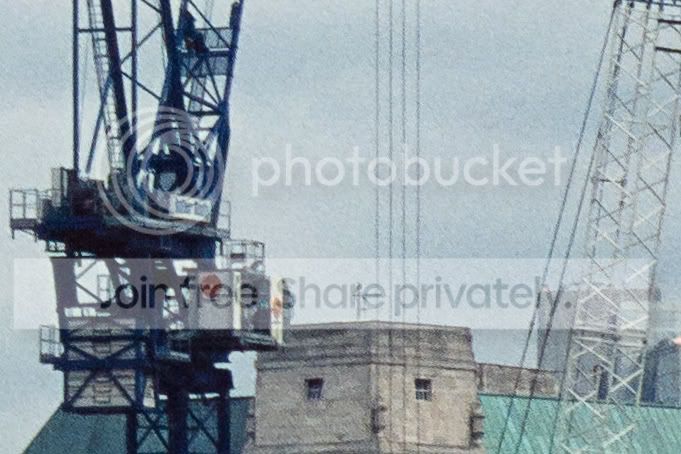
Not the most stunning photo in the world, but it has some useful detail. Took the DNG into Adobe Lightroom to crop the slide frame out, set the white balance and a little sharpening, and then into Photoshop for some spotting out a couple of bits of dust.

With the crop, it delivered a 54MB 16-bit TIFF, a smidge smaller than I'd normally get from a 35mm scan. With a bit more care in framing on a proper copy stand or tripod, I should be able to push that to close to the full imaging area that the camera is capable of capturing and work at ISO 100.

Considering how slapdash the whole setup was, I'm pretty impressed with the result. I reckon it matches what I'd get from the V700 with a lot less effort (especially with sharpening)
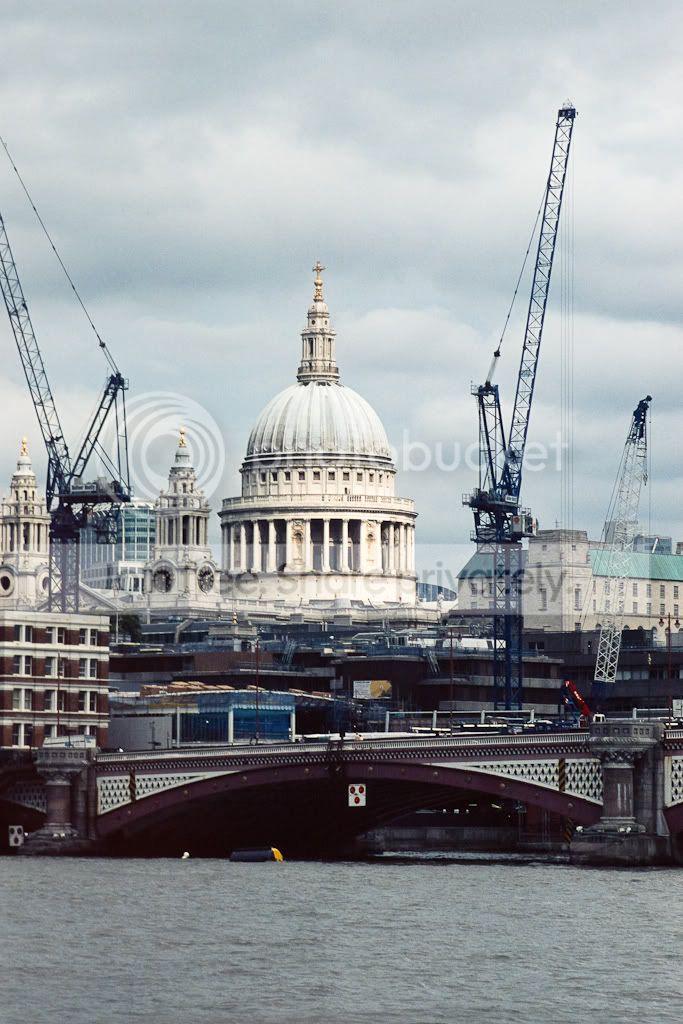
20111026_0004.jpg


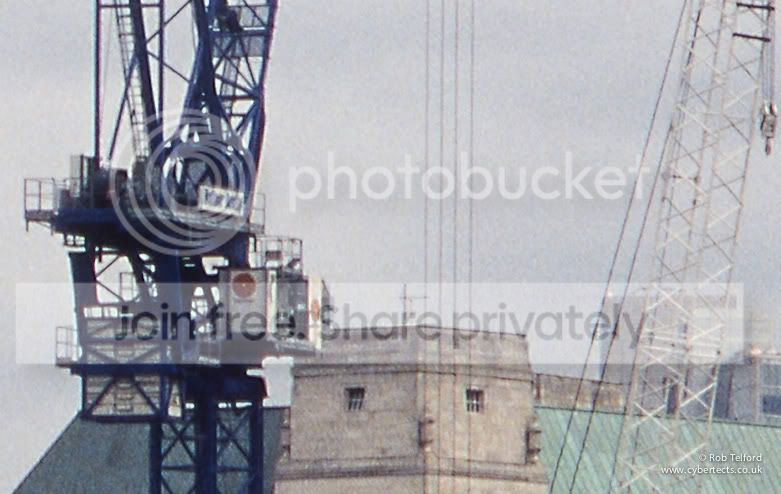
100% crop

20111026_0004-crop.jpg
 
Last edited:
That is rather impressive.

I have a cold-cathode type light box here at work and a Kaiser copy stand, might try this on some 4x5 negs with my 20D!!
 
That's surprisingly good...!

Now you've got that sorted...sell me your V700 ;) lol
 
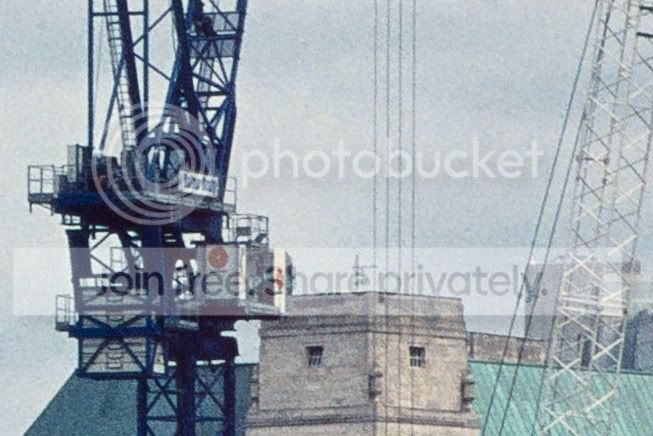
Re-shot with a tripod this evening - f/8 at 1/13 and ISO 100.

Noticeable tightening up of the details, though it's more apparent in the originals than a web JPEG.

20111026_0005-crop.jpg


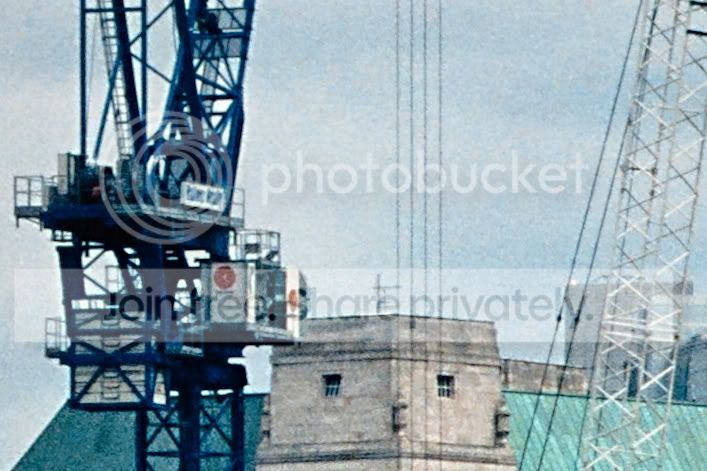
I've also been experimenting with HDR: multiple exposures of the same slide.

While the camera's dynamic range is capable of capturing all of the tones in the slide, in theory I think it should help reduce the noise in the shadow detail generated by the digital capture.

Seems to work quite well.

20111026_0023_enfuse.jpg


Now I need to get a macro lens for my Canon 5D and see what difference that makes... :thinking:

e2a: I also managed to 'scan' 18 photos in less than fifteen minutes, including the multiple exposures for HDR experimentation on several of them.
 
Last edited:
Ok I'm gonna ask it, not trolling. Why not shoot these with a digital camera in the first place if you're going to take digital pictures, of your film pictures, from now on?
 
Ok I'm gonna ask it, not trolling. Why not shoot these with a digital camera in the first place if you're going to take digital pictures, of your film pictures, from now on?

A guy on another forum uses Rob's method for his old slides and he reckons he gets VG results.
 
Ok I'm gonna ask it, not trolling. Why not shoot these with a digital camera in the first place if you're going to take digital pictures, of your film pictures, from now on?

I think occasionally we cant go back in time/ smart answer.

Tbh I think film to digi looks even better, theres just something about film it must just be me although I have no idea about film been a digital generation.:cuckoo:
 
Now I need to get a macro lens for my Canon 5D and see what difference that makes... :thinking:

e2a: I also managed to 'scan' 18 photos in less than fifteen minutes, including the multiple exposures for HDR experimentation on several of them.

Set of cheap macro tubes and a decent prime may be all you need. I'm going to have a bash with an enlarger lens and bellows to do this next week.

Ok I'm gonna ask it, not trolling. Why not shoot these with a digital camera in the first place if you're going to take digital pictures, of your film pictures, from now on?

Its a reasonable way of digitising the image, no different from scanning really. The 'why not use a digital camera' argument is valid for any image that end up digitally reproduced if you like, so anything on the net or printed in a mini-lab.
 
Ok I'm gonna ask it, not trolling. Why not shoot these with a digital camera in the first place if you're going to take digital pictures, of your film pictures, from now on?

Fair question.

There's a range of responses.

First, and probably most important to me, I like using my film cameras. Simply for the experience of using them. Whether it's one of my FD bodies, a Yashica rangefinder, a Mamiya 645J or whatever. I've been doing it for thirty-odd years and I don't feel like stopping now.

There's a certain thrill about putting a new set of transparencies on a light box and seeing them for the first time which I can never get over.

Second, film gets the image in a qualitatively different way to digital, though I'd be the first to admit that my personal style may not make the most of that.

Third is best served by asking a question: what, philosophically, is the difference between using a scanner to digitise my film photographs and using a camera? I'd argue there's none, the difference is purely technical. Some low-end 'film scanners' (the kind you can buy in Maplin for £50) are essentially CCD cameras with a fixed lens.

If you accept that, then it simply becomes a question of finding a way to best capture what is on the film within the limits of my available budget. Assuming I'm going to post them on the Interweb in a vain hope they'll amuse other people, rather than just keep them in a drawer, of course :)
 
Set of cheap macro tubes and a decent prime may be all you need.

That had been at the back of my mind as an option. I've a couple of fair EF primes that should fit the bill, so I may do that.
 
@ Mahoneyd187

Oh, and I have a lot of photos I've taken on film over the last few decades that I still want to get digitised. I can't go back to 1983 and re-shoot the scene with a digital camera.

And there's all my father's 35mm Kodachrome slides and my grandfather's 6x6 ones...

Anything that can help me do that quicker and better is something I'm interested in.
 
Last edited:
Hi Rob,

All very valid responses of course, I wasn't trying to troll in any way I just wanted to know why you were doing it, over using a scanner :)
 
Hi Rob,

All very valid responses of course, I wasn't trying to troll in any way I just wanted to know why you were doing it, over using a scanner :)

I would imagine speed and simplicity.. it takes me about an hour to scan one roll of 120 (pretty much independent of the number of shots, the number of scanner runs remains fairly constant for a roll) on a flatbed as each frame on a strip requires independent set-up after the preview and before the scan.

But consider the alternative for sharing film shots with the TP community.. .. projecting each slide bat-logo style is completely dependent on their being low, flat cloud cover.. and the searchlight energy cost is astronomical.. :nuts:
 
Set of cheap macro tubes and a decent prime may be all you need. I'm going to have a bash with an enlarger lens and bellows to do this next week.

I've just had a thought. I have a perfectly serviceable and very nice FD 50mm macro lens.

Cheap FD to EOS adapter with no glass. No worries about infinity focus as I don't care about that.

I'm off to eBay. Watch this space... :D
 
A few years ago, I fell out with my flatbed too and decided to use a sigma 50mm macro lens and My D200.
My negs are 6x6, so I cut a square hole in some black plastic and laid it on my lightbox, and used that as a carrier, it also cut down on edge of frame flare.
The results weren't fantastic but still better than the flatbed.

2s00q5w.jpg


a3fkwk.jpg
 
First effort with the FD to EOS adapter to put an FD 50mm macro lens on my 5D.

The EVF and magnification on the Panasonic makes focusing easier than with eyeballing it on an OVF.

Needs work on the setup (I was getting some reflections from office lights off the surface of the film) but I think it's a little better than the Panasonic - well, there's less digital noise getting in the way of the film grain.

20111101_0014-Edit.jpg


The last Panasonic version for comparison

20111026_0005-crop.jpg


I guess that I should next scan the slide on my V700 as a control.
 
Last edited:
Have scanned old family pics in the past and family members really appreciate it - not to this standard I must add, hmm hope they don`t see this thread.
 
Latest trial

Re-shot with 5D with measures taken to remove spurious reflections off the surface of the film.

20111103_0046-Edit.jpg


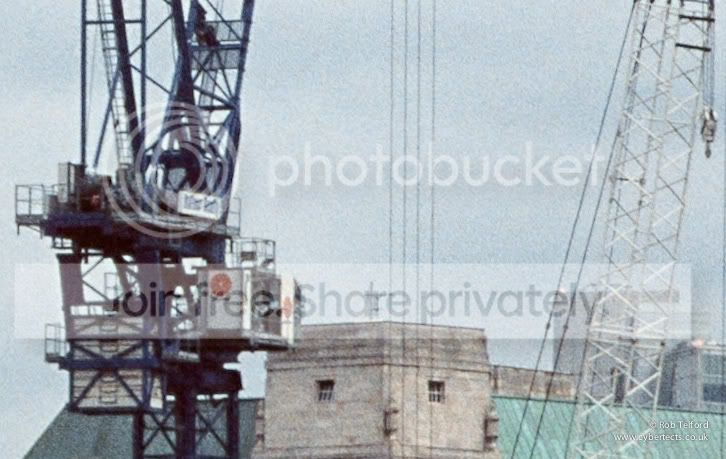
V700 scanned at 4800 dpi with Vuescan and downsized to 2400.

201110_F01_01.jpg


IMO, the 5D capture wins by a nose and requires much less PP.

I'm beginning to think it may be worth building a copying rig.
 
Last edited:
you should be able to get hold of some slide duplicators from fleabay which will work on your 5D, might only work with mounted slides though
 
Anyone tried one of these, Opteka HD² Digtal Slide Duplicator, the reviews on amazon seem a bit hit and miss with some loving it and others hating it.

I have tried using an old T2 mount slide copier on my Nikon D5000 before and was impressed with the image quality, was noticeably sharper than my V500 scans but since the old copier was meant for 35mm SLR bodies the image is cropped. If you have a Nikon or Canon full frame body though any old T2 mount (with the relevant adapter) would work with no crop issues, and you can usually find ones that do both mounted film and strips. Also usually under £20 on eBay as well, sometimes see them on rocky cameras for under a tenner.
 
Back
Top