A New Method to Fast Estimate Sharp and Bokeh

qqqwucheng

Suspended / Banned
Messages
21
Edit My Images
Yes
For auto focus lens, the distance scale is rough. It's hard to use depth-of-field scale to estimate DOF, because we don't know the focus distance.
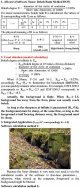
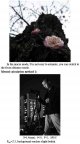
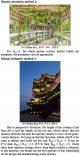
Here use reference height to fast estimate sharp and bokeh.
It's completely mental calculate.
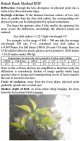
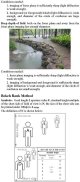
1.jpg
2.jpg
3.jpg
4.jpg
5.jpg

Software: https://play.google.com/store/apps/details?id=com.xiangcn.bokehrankdof&hl=zh-CN
gYF-U8EN1lutzN3OACJ_rlx7u4T4E-Cz-LD9RUHHHpUIhQLLd0OdGFDcHIpr_aGWag=h900
 
Or use focus peaking in live view / EVF and observe the range of sharp focus when DoF preview button is pressed, or use a scan of the magnified image to see where sharpness falls off.
 
Usually, we can mental calculate rather than using software, so it's very fast. If you have several lens and several cameras of different sensor size, it's hard to remember how to set the parameter, such as focus distance, aperture.
 
Christ on a stick.... just use the depth of field preview. Failing that, take a shot.. look at it... adjust as necessary. Still faster than all this s**t.


Photographers today make me laugh.
 
all seems a lot of effort and thought for something that's basically just a device to get people to ignore the unimportant part of the shot...

as David says - use the DoF preview. Or, get a life and stop worrying about the "quality" of the out of focus bits.


(unless of course, it's your software on Google Play, and you're using this post to promote your business - in which case please don't until you've contacted us and paid to advertise...)
 
Last edited:
Christ on a stick.... just use the depth of field preview. Failing that, take a shot.. look at it... adjust as necessary. Still faster than all this s**t.


Photographers today make me laugh.

My method:

1) take enough photographs to get a feel for it with each of the lenses you use
2) take more photographs

It maybe helps that most of the time I use primes rather than zoom lenses, so I'm maybe more aware of the different character of each of them at various apertures than if I were using a zoom at different focal lengths, but then that's one of my arguments in favour of primes.

Otherwise, see Pookeyhead's comment above.
 
Last edited:
lol...
 
I'm new in photography. DOF is not related to sensor size here. It's contradicted to what I known before. Could you explain it to me?
 
I'm new in photography. DOF is not related to sensor size here. It's contradicted to what I known before. Could you explain it to me?
James.
Concentrate on the kit you have, the difference in DoF between formats is academic once you have a camera in your hand, when all you have to do is get the DoF you require for your chosen shot.

I'd go as far as to say, stop reading these type of threads and study great pictures.

As a general rule the great photographers aren't spending their lives contemplating gear and settings, they're finding inspiration.
 
:thinking::thinking: Did anybody actually read and understand the OP? For somebody who's is crap at maths, the last thing you should do is fill a page with equations and algebra and tell them it's easier than focusing a third of the way into the frame.
 
Last edited:
A. Look through viewfinder.
B. Press DOF preview
C. adjust aperture to achieve DOF required.
D. Take shot.


No DOF preview?

A. Take shot
B. preview shot on screen
C. If not enough DOF, stop down... if too much, open up.
D. Take shot.
E. Preview - repeat A to D until your happy.

It really is as simple as that.
 
I've never, ever had to try and calculate DOF. I'm not sure why I would?
 
Last edited:
This reminds me of the of the thread about where to crop a picture. That too was full of what some would call "gobbledygook" that nobody really understood. Wasn't that in reality a link to someone's personal website/blog/business. They are no longer with us. Life isn't anywhere near as complicated as this "easy" method makes out.
 
James.
Concentrate on the kit you have, the difference in DoF between formats is academic once you have a camera in your hand, when all you have to do is get the DoF you require for your chosen shot.

I'd go as far as to say, stop reading these type of threads and study great pictures.
You are right. I should concentrate on finding inspiration.But I have to repeat taking shot, magnifying image, checking sharpness and selecting until finding what I need. It's annoying and time-consuming.If the unreadable method mentioned above is correct, it's more convenient for me to deal with most conditions.
 
You are right. I should concentrate on finding inspiration.But I have to repeat taking shot, magnifying image, checking sharpness and selecting until finding what I need. It's annoying and time-consuming.If the unreadable method mentioned above is correct, it's more convenient for me to deal with most conditions.
Technique will lose you shots to sharpness, not understanding DoF tables.

See how many really experienced photographers above have never even looked at a DoF chart. The only time I ever use one is to give calculations in discussions like this.

I'll repeat, if you're worrying about sharpness, it's not DoF that'll help. It's technique, and for that you need practice.

Put the Internet down and pick up a camera and practice, practice, then practice some more.

Edit to add, read up on hand placement (weight in left hand), breathing (inhale, click, exhale) and squeezing the shutter, not to mention keeping your shutter speed up.
 
Last edited:
Thank you for your advice. The calculator is useless. Maybe the mental calculation method is useful for me.

No, forget calculation completely!!

Just get out and shoot, use wide apertures for shallow DOF and narrow ones for bigger DOF, then adjust in between as you need to. You'll soon then develop a working knowledge and you'll do it without thinking.

You really don't need to make it complicated as its so simple.
 
Thank you for your advice. The calculator is useless. Maybe the mental calculation method is useful for me.
If that's what you're choosing to read, all I can say is that if you're getting unsharp images it is not due to depth of field calculations.

Feel free to ignore me, but that is a simple fact.
 
You are right. I should concentrate on finding inspiration.But I have to repeat taking shot, magnifying image, checking sharpness and selecting until finding what I need. It's annoying and time-consuming.If the unreadable method mentioned above is correct, it's more convenient for me to deal with most conditions.

I'm not sure why you're having to check by magnifying each time for sharpness and re shooting? This sounds like a camera or lens fault if you don't have the confidence in it achieving a sharp shot without having to examine each frame after taking it in such detail. You shouldn't have to do this.
 
I'm not sure why you're having to check by magnifying each time for sharpness and re shooting?
In some large depth of field situations, I have to magnify image to make sure it's sharpness. Because the screen resolution is much less than the image I shot.
 
In some large depth of field situations, I have to magnify image to make sure it's sharpness. Because the screen resolution is much less than the image I shot.

But why do you have to check? How are you shooting it?
 
Last edited:
My three ha'porth: get your self to a Cartier Bresson exhibition, admire the genius of his pictures, forget about sharpness. It really is not that important.
 
But why do you have to check? How are you shooting it?
Sometimes, images are clear and sharp in my LCD, but they show mistiness in the background, when I copy them to my computer for post-treatment.
 
In some large depth of field situations, I have to magnify image to make sure it's sharpness. Because the screen resolution is much less than the image I shot.
If it's shot with the appropriate aperture, it's your technique at fault. Not the DoF calculation.

If you're shooting landscapes and you want them crisp to infinity, you need solid technique and hyper focal distance, it's a piece of cake.

And just for clarity, stop reading DoF threads, it'll not help you all you need is F11 and hyper focal distance. Beyond F11 your IQ will degrade but that's a whole other can of worms.
 
Sometimes, images are clear and sharp in my LCD, but they show mistiness in the background, when I copy them to my computer for post-treatment.
If you're shooting at narrow apertures, that's nothing to do with dof? I'd imagine thats simply atmospheric and / or technique. How are you shooting, and with what settings? Its very simple and easy to get full DOF on (for example) a landscape image, very!
 
The kind of people who obsess over this type of thing are not 'photographers', just look at the shots they use to illustrate their points.

Do you really want to be a rubbish photographer who can work out DoF calculations in your head, or would you rather be a great photographer with a broad understanding of the process?
 
Superb photography technique can help the photographer to create better works. If you want to exchange photography art, please go to other relevant threads. Here we should talk about the photography technique rather than photography art.
The bokeh rank method is a little hard to read. If you have something not understand, I'll be glad to communicate with you. After you master the method, I believe it could be helpful, or you don't think it's helpful, you can tell me why.
 
Superb photography technique can help the photographer to create better works. If you want to exchange photography art, please go to other relevant threads. Here we should talk about the photography technique rather than photography art.
The bokeh rank method is a little hard to read. If you have something not understand, I'll be glad to communicate with you. After you master the method, I believe it could be helpful, or you don't think it's helpful, you can tell me why.

Sorry, but just because you started the thread (probably to promote your dodgy android App) it doesn't give you the right to say who or what can be posted within the thread. Last time I looked you weren't on the staff here... and even staff members generally have a discussion behind closed doors before kicking people out of the thread.

It's not that we don't understand the initial post, it's that it's simply not relevant to photography as practiced by anyone worthy of the name "photographer" - it's simply a formulaic technical exercise for people who don't want to produce involving photo's - they simply want the irrelevant bits of the photo to go all nice and swirly or blobby...
 
Phil is right, I need to pick up a camera and practice, practice, then practice some more.
When I read the thread:
https://www.talkphotography.co.uk/threads/depth-of-field-full-frame-vs-crop.632810/
I found photography is much more difficult than I thought before.


James - really, just step away from technical threads like that, and read some books about what makes a great picture - be it photography books or painting... a brief study of art history will improve your composition and photography more than any discourse on "should I use f8 or f11 in this kind of shot."
 
Superb photography technique can help the photographer to create better works. If you want to exchange photography art, please go to other relevant threads. Here we should talk about the photography technique rather than photography art.
The bokeh rank method is a little hard to read. If you have something not understand, I'll be glad to communicate with you. After you master the method, I believe it could be helpful, or you don't think it's helpful, you can tell me why.
Mark has already posted what I was about to say :D. This is about technique - its about helping James realise that charts like this are wholly unnecessary, and posts like yours are filling his head with unnecessary charts / calculations and out of date theory. He should be concentrating on technique and composition, and going out and finding that shot, far more important that calculating dof when all you need to do (simplistically speaking) is stop down to - f/8 for large DOF and concentrate on everything else except dof calculations. IMVHO :)

Thats why that chart is unnecessary. Everyone knows wide aperture - shallow DOF and narrow - big dof, and everything in between. Whats the point in the chart exactly??
 
Last edited:
Phil is right, I need to pick up a camera and practice, practice, then practice some more.
When I read the thread:
https://www.talkphotography.co.uk/threads/depth-of-field-full-frame-vs-crop.632810/
I found photography is much more difficult than I thought before.
Get outside young man and enjoy yourself. I expect you have a nice camera, there will be mistakes, it doesn't matter as long as your enjoying photography. It can be difficult if you let, don't let it. Enjoy the summer by getting out and about, take all sorts of things, if you don't like any images, delete them and start again. Its a lovely hobby, enjoy it. Good luck.
 
Superb photography technique can help the photographer to create better works. If you want to exchange photography art, please go to other relevant threads. Here we should talk about the photography technique rather than photography art.
The bokeh rank method is a little hard to read. If you have something not understand, I'll be glad to communicate with you. After you master the method, I believe it could be helpful, or you don't think it's helpful, you can tell me why.
It might have helped if you'd posted 'superb photography technique' to prove your point, rather than some dodgy snapshots. Unfortunately, as you can see, this calculation is likely to cause more confusion than it solves. It seems there's only you that can see the 'benefit'.

There's plenty of DoF calculators out there for anyone unsure, I personally would rather people learned how to make great pictures than got tied up in this unnecessary nonsense.

I'm sorry to burst your bubble, but I'm a fairly bright bloke and I gave up half way through your 'simple method', OTOH I'm 30 years into this endeavour and I've got hundreds of satisfied customers. So really, how 'useful' and 'simple' is it?
 
I gave up half way through your 'simple method'
You don't have finished reading this method. So Your conclusion is too arbitrary.
James is a new one. He should learn a wider range of knowledge. Photography technique is also important. You couldn't give him the wrong guide.
 
You don't have finished reading this method. So Your conclusion is too arbitrary.
James is a new one. He should learn a wider range of knowledge. Photography technique is also important. You couldn't give him the wrong guide.

DOF is very simple, it doesn't need a chart, or complex calculations. It's a sliding scale on the aperture wheel! Which, if you're unsure, you can check with a DOF preview and or re shoot with slight adjustments. Jesus, if you followed all of this every time you'd miss the damn shot.

It's like someone creating a flow diagram on how to wash your hands or how much PSI I need to push at to take a dump, it's just not needed.
 
Last edited:
Phil is right, I need to pick up a camera and practice, practice, then practice some more.
When I read the thread:
https://www.talkphotography.co.uk/threads/depth-of-field-full-frame-vs-crop.632810/
I found photography is much more difficult than I thought before.


In the meantime, James, if you want a lot of depth of field, as Phil's said, stop down to f/8 or f/11 but if you want shallow DoF, open up as far as possible. Once you've got some shots under your shutter, play with the intermediate apertures so you get a feel for which get YOU the results YOU like.

Beware though, the quest for super shallow DoF gets expensive!
 
I'll throw my weight behind the "James, step away from this nonsense and just go and practice" vibe. Photography is not difficult unless you want to become obsessed with anality and produce turgid work that simply parrots others and shows no creativity. If that's your goal, rather than finding your own way and making pictures with heart, soul and character, just join a camera club. ;)

If you want to understand DoF stick your camera on a tripod in aperture priority and take a series of photos of the same thing ( a cup on a table, for example) altering the aperture alone by one stop with every photo. Repeat the experiment at different focal lengths and distances and observe the results.
 
Back
Top