A bit embarrassing

Barney

Suspended / Banned
Messages
3,043
Name
Wayne
Edit My Images
No
Well then,

My first foray into developing my own film was a bit of a nightmare. I had two rolls of film shot from two cameras.

First off I mixed them up and did not know which film was from which camera. I tried to get the first roll onto the spool for about an hour, I could get it on halfway and then it would stop for some reason. I ended up opening the bag to see what was going on then exposed the whole roll- it turns out it was the second roll with the half decent shots on it.
After several practice rounds with the exposed roll I made another attempt to wind onto the spool and succeeded. The developing went pretty well using the timer function on the app. I hung the film strip up to dry then it fell off the hanger in the bathroom onto a towel. I had given up swearing by this stage. :)

Everything that could go wrong did go wrong.

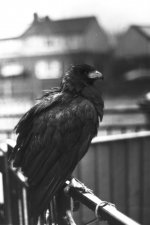
I think these two were the best of the bunch.

FILM B&W 5.jpg

FILM B&W 3.jpg
 
Don't worry Wayne, I think most of us have been there, I certainly have.

Is it 35mm or Medium Format? I find MF quite prone to going wrong frequently, and in many different ways.

The spools I have used, like to be really dry. A bit of time in the airing cupboard seems to do it.

The photos look interesting.
 
My first attempt, I was so nervous about messing it up that I poured the stop-bath in before the developer.

Luckily I realised my mistake straight away and was able to rescue the situation and the negatives came out perfectly fine.

My tip if you can't get the film on the reels is to put the film inside the developing tank if you can, making sure the lid is on properly, and then come back to it later.

I also find it helps to put some outward pressure on the reels as I wind the film on as it gives it a fraction more wiggle room and helps avoid getting stuck. Sometimes though, all you can do is split the reels apart, remove the film, put them back together, and then start again.
 
My tip if you can't get the film on the reels is to put the film inside the developing tank if you can, making sure the lid is on properly, and then come back to it later.

This.

Have an exit strategy. Just drop it into the tank, seal it up in the bag and have a minute. I ruined my first one the same way. I was hot, sweating, couldn't get it on the reel, got frustrated and just took my hands out. I had had enough. With a bit of planning and practice you get there and it goes on no problem. Now I do up to 4x5 at home but haven't tried 8x10 yet.
 
Another tip if getting it on is hard in the dark....

Use an extraction tool to pull the leader out of the can and get it started on the reel before popping it in the bag. It's a bit more awkward winding it on, and you risk scratching the film, but it's a lot easier. I do it routinely these days and occasionally get scratch marks, but my work isn't competition standard so it doesn't bother me too much.
 
Loading the spools does get easier with practice, but nowhere near as straight forward as the Lab Box

 
I tried to get the first roll onto the spool for about an hour, I could get it on halfway and then it would stop for some reason.
Did you make sure the reels were bone dry before you started?

If the reel is nylon or plastic, it's a good idea to cut a tiny diagonal off the both corners of the front of the film, to reduce friction as you feed in the film. A quarter of an inch is about right.

If metal reels, the trick is to get just the right curve from side to side as you load the film, so that the edges drop smoothly into the groove as you move outwards.
 
I rotate it for 10 seconds every minute.
So the developer covers the film entirely? That's a great improvement over the Rondinax design.
 
thank you all for kind words of support and encouragement.
 
The downside is it isn't cheap.
No, it isn't but perhaps surprisingly, it's not that much more expensive than the Rondinax was, in its day.

In the 1965-66 Wallace Heaton catalogue, the Rondinax is just over £7, which the Bank of England inflation calculator claims is £116 in today's money.
 
So the developer covers the film entirely? That's a great improvement over the Rondinax design.
I think that's up to you. The default (300 ml IIRC) is that it covers half the film. You can double that for full coverage, which would let you do stand or semi-stand dev.

I have both a Rondinax 35 and a Lab-box, set up for 120 use. With both, I make a small advance about once a second, and it seems to be fine, without tiring me. 85% of normal dev time. I did buy the handle (replacing the knob) for the Lab-box, but I don't use it for two reasons: it passes very close to the surface the LB is sitting on, and I noticed a tendency for the handle to be left in the same position after each turn. The general idea with these is, if you stop, the position is random. BTW the film is still wet with developer when it's out of the main solution, but that would get used up quickly so I definitely wouldn't stop for nearly a minute.

The real disadvantage of these is, only one film at a a time, ever!

It's also hard to get spares for the Rondinax EDIT Lab-Box, in the UK; they won't ship to UK, and distributors only ever seem to have the kits. When I wanted a spare reel, in the end Asha bought it for me and posted it on from France.
 
Last edited:
On a slightly different note, any time you're feeling embarrassed about something going wrong, have a look at the 101 ways to hooley a film thread. If nothing else it'll give you a laugh and show you you really aren't alone in messing things up
 
Anyone that has never F 'd up when developing a roll of film probably has not developed a roll of film, there is a twenty one page thread here that will make you smile.

101 ways to ruin a roll of film
I developed my own film both B&W and Colour for 20 years and never ruined a film or its content. However, I received some good advice when I started. Always practice loading a film in a bag. I was given an unwanted processed film to practice with. So did not try a live film until I was very confident. The only small error I can remember is not having left a colour (C41) film in the Bleach fix long enough but providing it is fixed (which it was), you can put it back in the solution later to complete the process.

Dave
 
You can double that for full coverage, which would let you do stand or semi-stand dev.
To be honest, I haven't developed a film for a few years now but were I to do so, I'd be using stand development (says the idiot who wasted a lot of time, in the 1960s and '70s, experimenting with high temperature development, to achieve the shortest dry-to-dry cycle).

:tumbleweed:
 
The only time I have found that I have a problem loading a spiral is with the non AF cameras I own (2 x Nikons and 2 x Minoltas) My AF cameras never give me a problem. The reason the non AF bodies can (not always)give the problem is the film wind, With the non AF bodies you load the film in the normal way but when the film is wound on in the normal course of exposing the frames it is actually wound on so that the natural curl created when the film is in the cassette is reversed! and this can catch on the insides of the spirals and jam up. If you were to open an AF camera you would see the shiny base of the film is outermost. Do the same with a non AF camera you would find the emulsion side is exposed outermost.
When I use the non AF cameras I always use two centre load spirals in tanks which are branded Durst. Once the film is clipped into the centre tab it almost loads itself.
 
Last edited:
The only time I have found that I have a problem loading a spiral is with the non AF cameras I own (2 x Nikons and 2 x Minoltas) My AF cameras never give me a problem. The reason the non AF bodies can (not always)give the problem is the film wind, With the non AF bodies you load the film in the normal way but when the film is wound on in the normal course of exposing the frames it is actually wound on so that the natural curl created when the film is in the cassette is reversed! and this can catch on the insides of the spirals and jam up. If you were to open an AF camera you would see the shiny base of the film is outermost. Do the same with a non AF camera you would find the emulsion side is exposed outermost.
When I use the non AF cameras I always use two centre load spirals in tanks which are branded Durst. Once the film is clipped into the centre tab it almost loads itself.
Not entirely due to AF or MF, my Leica M2 reverse rolls the film on loading and can be a right pain if I process a film recently re winded , my various manual focus Yashica and Contax cameras all load without giving the film a reverse curl irrespective of been manual loading or self loading like the Aria and RX.
 
The only time I have found that I have a problem loading a spiral is with the non AF cameras I own (2 x Nikons and 2 x Minoltas) My AF cameras never give me a problem. The reason the non AF bodies can (not always)give the problem is the film wind, With the non AF bodies you load the film in the normal way but when the film is wound on in the normal course of exposing the frames it is actually wound on so that the natural curl created when the film is in the cassette is reversed! and this can catch on the insides of the spirals and jam up. If you were to open an AF camera you would see the shiny base of the film is outermost. Do the same with a non AF camera you would find the emulsion side is exposed outermost.
When I use the non AF cameras I always use two centre load spirals in tanks which are branded Durst. Once the film is clipped into the centre tab it almost loads itself.
I musy be missing something here. If I open the back of my Pentax ME, MX or LX (eg while loading film), the shiny base of the film is uppermost, and the emulsion is underneath. It has to be (except for redscale film), in order to get exposed properly. It is true that the take-up spool winds the "wrong way", ie against the natural curl of the film, as it must for the wind-on lever to work conveniently (and so on the take-up spool for these cameras, the emulsion would be on the outside). So I guess your AF cameras are also auto-wind; not having a wind-on lever would allow the take-up spool to turn the other way...

I don't load spools by hand (I use Rondinax and Lab-box), but I've certainly seen no evidence that the film has become curly in the wrong direction.

I think I started out here disagreeing with you and came round to understanding what you perhaps meant. Hope so, anyway!
 
If you place a new cassette of film in a chamber of any common MF camera, the 'shiny' film base will always be uppermost. However! With most manual film the film leader is inserted into the take up spool and when you work the wind on lever this creates the reverse curl which is against the natural curl of the film when it is in the fresh cassette.

With AF cameras the loading is much simpler with the leader being placed over the top of the take up spool and the motor will wind the film on with the shiny side always showing outwards. This sequence appears with all my MF cameras but my AF Nikons always have the film base outwards. Actually because of this auto wind you don't actually need the film leader at all. When I bulk load for my F6 that is what I do, because to ensure a safe film advance it is best if both the upper and lower sprocket holes are engaged at the same time.

If you are out on a trek and using film-a-plenty and rewind the used cassettes during the day, will virtually nullify the reverse curl because it is returned to the original curl imposed by the manufacturer when loading the cassette. It doesn't have the time to curl in the opposite direction. It only becomes a real problem if you part use a film and then leave it in the camera for a week or two that is when the reverse curl can become a problem.
 
Last edited:
Back
Top