
Barn Owl Numbers.

Dale.

Bo Derek
Suspended / Banned
Messages
13,716
Name
Dale.
Edit My Images
Yes
Mav's image thread of the gorgeous Barn Owls he captured and the subsequent discussion about Barn Owl population numbers, prompted me to hopefully, shed some light on what might be happening.

I'm no expert but I have been involved with an ongoing project recently. I'm not ready to reveal all about that at the moment but if the images come, then the thread will come too.

One of the key factors for Barn Owl survival is weather. They can't fly in rain and will shelter, as they don't have waterproof feathers. This is a drawback of them having 'silent' feathers, the edges of the flight feathers are kind of serrated, which allows them to approach prey silently. The trade off is that they can get water logged, this can be enough to strand a Barn Owl. If there are consecutive and prolonged periods of rain, Barn Owls can starve as they will shelter rather than fly/hunt. They are not keen on flying in windy conditions either, which might affect sightings, as they are more than likely under shelter for that too.

The weather here has been very wet this year, prolonged periods of rain and wind too. 'My' Barnies are there, they're just not flying everyday. So far, they have been able to sustain themselves in the drier periods. It is possible to leave food out for Barnies, (defrosted dead frozen mice or day old chicks) but this should be a last resort.

This is a very brief account of things as they stand here but I'm also assuming this could be the case elsewhere, especially the north of England and here in Scotland.

The best place for facts and figures about Barn Owls is the Barn Owl Trust website, it is a real gem of information and provides way more info and knowledge than I ever could.

I'm hoping flight sightings will pick up for me as the daylight hours get longer, the weather becomes drier and the owls will have to feed/hunt during daylight hours, in the evenings and mornings soon.

@mav @davholla @russellsnr

HTH. (y)
 
Last edited:
Mav's image thread of the gorgeous Barn Owls he captured and the subsequent discussion about Barn Owl population numbers, prompted me to hopefully, shed some light on what might be happening.

I'm no expert but I have been involved with an ongoing project recently. I'm not ready to reveal all about that at the moment but if the images come, then the thread will come too.

One of the key factors for Barn Owl survival is weather. They can't fly in rain and will shelter, as they don't have waterproof feathers. This is a drawback of them having 'silent' feathers, the edges of the flight feathers are kind of serrated, which allows them to approach prey silently. The trade off is that they can get water logged, this can be enough to strand a Barn Owl. If there are consecutive and prolonged periods of rain, Barn Owls can starve as they will shelter rather than fly/hunt. They are not keen on flying in windy conditions either, which might affect sightings, as they are more than likely under shelter for that too.

The weather here has been very wet this year, prolonged periods of rain and wind too. 'My' Barnies are there, they're just not flying everyday. So far, they have been able to sustain themselves in the drier periods. It is possible to leave food out for Barnies, (defrosted dead frozen mice or day old chicks) but this should be a last resort.

This is a very brief account of things as they stand here but I'm also assuming this could be the case elsewhere, especially the north of England and here in Scotland.

The best place for facts and figures about Barn Owls is the Barn Owl Trust website, it is a real gem of information and provides way more info and knowledge than I ever could.

I'm hoping flight sightings will pick up for me as the daylight hours get longer, the weather becomes drier and the owls will have to feed/hunt during daylight hours, in the evenings and mornings soon.

@mav @davholla @russellsnr

HTH. (y)
One thing you missed there and that is the shortage of food, over the last 12 to 18 months here in Cumbria the vole population has gone down quite drastically even having an affect on the other owl species Short Eared Owls, have not seen any Barn or Short Eared owls in the numbers I have seen back in 2024. Russ.
 
One thing you missed there and that is the shortage of food, over the last 12 to 18 months here in Cumbria the vole population has gone down quite drastically even having an affect on the other owl species Short Eared Owls, have not seen any Barn or Short Eared owls in the numbers I have seen back in 2024. Russ.


Another valid reason, it all links to weather, habitat, farming methods etc. ..... the list goes on.

To be honest, voles seem to be numerous here, plenty of 'grass tunnels' in the now flattened, long grass from last year and on one occasion last autumn, I saw 2 voles scurrying away through the long grass, just as I was about to stand on them (Edit: hasten to add, not stand on them intentionally ;) ). Owls need to be able to fly to catch them though, which is when the owls are seen.
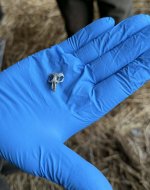
Just last week, found this in a Barn Owl pellet, a vole skull.


tp.jpg
 
Last edited:
I visited BirdWorld new Farnham with my daughter at the weekend, and there was a short talk on Owls at one point - the lady mentioned the decline in numbers, and also mentioned the issues with the prolonged wet weather as an issue.
She also mentioned that this is more of a problem these days as the 'traditional' solution for a Barn Owl is to seek refuge in a barn - where not only would they would be warm and dry, but would have numerous rodents likewise seeking shelter there, so had a good food supply.
As older barns get replaced with more secure, modern buildings (or get demolished, or converted to houses), the number of 'suitable' barns is significantly diminished.
 
I visited BirdWorld new Farnham with my daughter at the weekend, and there was a short talk on Owls at one point - the lady mentioned the decline in numbers, and also mentioned the issues with the prolonged wet weather as an issue.
She also mentioned that this is more of a problem these days as the 'traditional' solution for a Barn Owl is to seek refuge in a barn - where not only would they would be warm and dry, but would have numerous rodents likewise seeking shelter there, so had a good food supply.
As older barns get replaced with more secure, modern buildings (or get demolished, or converted to houses), the number of 'suitable' barns is significantly diminished.


The replacement of old barns with new modern ones has caused a big decline in numbers over the years. There is an easy fix and a lot of new barns are now having them built in, so to speak and that's putting up an internal nest box, like the ones on the Barn Owl trust website. I currently have 2 of their boxes up, ready for this year. The type of box used by the Trust are deep enough to prevent young owls being able to reach the entrance when they are really small and also, a ledge on the outside for them to exercise and strengthen their flight muscles before fledging when they can reach the entrance and are old enough by then to go back into the box and not fall to the ground. The depth of the box and the ledge are essential.

The owls at my locations are not flying often just now, remaining in their barns for shelter. Hopefully, they will get over this period soon as the weather (hopefully) improves.
 
Barn owl numbers typically vary on a cyclical nature based on the numbers of their main prey item( usually voles). Climatic conditions also impact as mentioned above. The cyclical nature of the owl population is very much a local thing and whilst some areas may have a booming population, other areas may be declining. If only things were simple. My brother in law has studied owls in north of England for many years.
 
I have been Enjoying what everyone has Been. contributing to this post ? and have Been studying my self I love seeing all owls The Barn owls in my locality have been very poor in the last five years in-fact the same with the short-eared as well this year a few Barn owls have turned up and had the pleasure of seeing them hunting very regular theirs been plenty of voles on what habitat is left ? the barns nowadays are so locked up with no entrance for the owls like they used to have because of thieves and all the land that the regular short-eared owls had been taken by energy companies and car parks and covered over now Mostly that came were migrant from over from Scandinavia countries and we used to. house between 20-30 birds now we only get one or two I have. been arguing for years to try and do something and make people aware of their situation well I am sorry to go on about it but owls are a passion of mine
 
Barn owl numbers typically vary on a cyclical nature based on the numbers of their main prey item( usually voles). Climatic conditions also impact as mentioned above. The cyclical nature of the owl population is very much a local thing and whilst some areas may have a booming population, other areas may be declining. If only things were simple. My brother in law has studied owls in north of England for many years.


I see the cyclical factor with Kingfishers too John......... 2024 was a bumper year for them but 2025, not many about at all. The nests I'm licenced at really struggled. I've not seen a single KF this year so far but that can be normal, as they head to the estuaries to overwinter, some don't make it of course.

Barn Owls are a new challenge for me this year, I'm having a change from Kingfishers, all will be revealed at some point if it works out. I am begining to see how tough winters can be on populations (both KF and BO) as well as other factors of course.


I have been Enjoying what everyone has Been. contributing to this post ? and have Been studying my self I love seeing all owls The Barn owls in my locality have been very poor in the last five years in-fact the same with the short-eared as well this year a few Barn owls have turned up and had the pleasure of seeing them hunting very regular theirs been plenty of voles on what habitat is left ? the barns nowadays are so locked up with no entrance for the owls like they used to have because of thieves and all the land that the regular short-eared owls had been taken by energy companies and car parks and covered over now Mostly that came were migrant from over from Scandinavia countries and we used to. house between 20-30 birds now we only get one or two I have. been arguing for years to try and do something and make people aware of their situation well I am sorry to go on about it but owls are a passion of mine


With Shorties, every year like clockwork, we'd get them from the continent, I'm guessing here, probably from Scandinavia, Northern Russia but from the begining of October, until about March, the Shorties frequented an area locally. I've not seen one there for 3 years or so now but they are still present, in lower numbers on the nearby moors. Again a guess but maybe there has been some kind of industrial development near their roosts that has driven them out.

The replacing of the old style barns with newer, modern ones has been very detrimental to the population of Barn Owls. Modern barns are very secure nowadays, to prevent theft as mentioned. All a Barn Owl needs though is a small entrance and some newer barn builds are now accomodating this by having a hole, roughly 120x120mm built high up, into the outer wall and also, a nest box put up inside. Interior nest boxes are better but external ones can be used too, if there is no suitable building. The external boxes are a different animal to the interior ones, being weatherproof and far more robust.

I'm not affiliated with the Barn Owl Trust in any way, I've just bought 2, internal nest boxes off them. They have been put into barns that I know had nests last year. Being Schedule 1 birds, I have to have a licence too, which is in place.

I have a suggestion though, maybe a plea but if you have Barnies in your area and get can permission off the landowner, put some kind of box up. They can be easily made, there are instructions on the Barn Owl Trust website and can be bought pre made from them too. If your going to build one yourself, remember the depth of the box to the entrance hole is very important, as is the exercise platform. (y)


:)
 
I had already down loaded their measurement for the barn owl boxes and when well enough I will be making some to put up were I can to give them a helping hand ?


Awesome, thank you.
 
Where I live in Essex, we have loads of tawnys and have seen barn owls, but not for a couple of years now. Habitat (medieval church/spire and 2 medieval wooden barns etc) support them and loads of prey (and competition - tawnys, kestrels, buzzards, kites etc) but also loads of rats. We only see voles in the garden when there are no rats about, wonder how that plays out across the territory/country?
 
Back
Top